





 Portuguese
  English
  Spanish
  6 min of reading
  2 comments


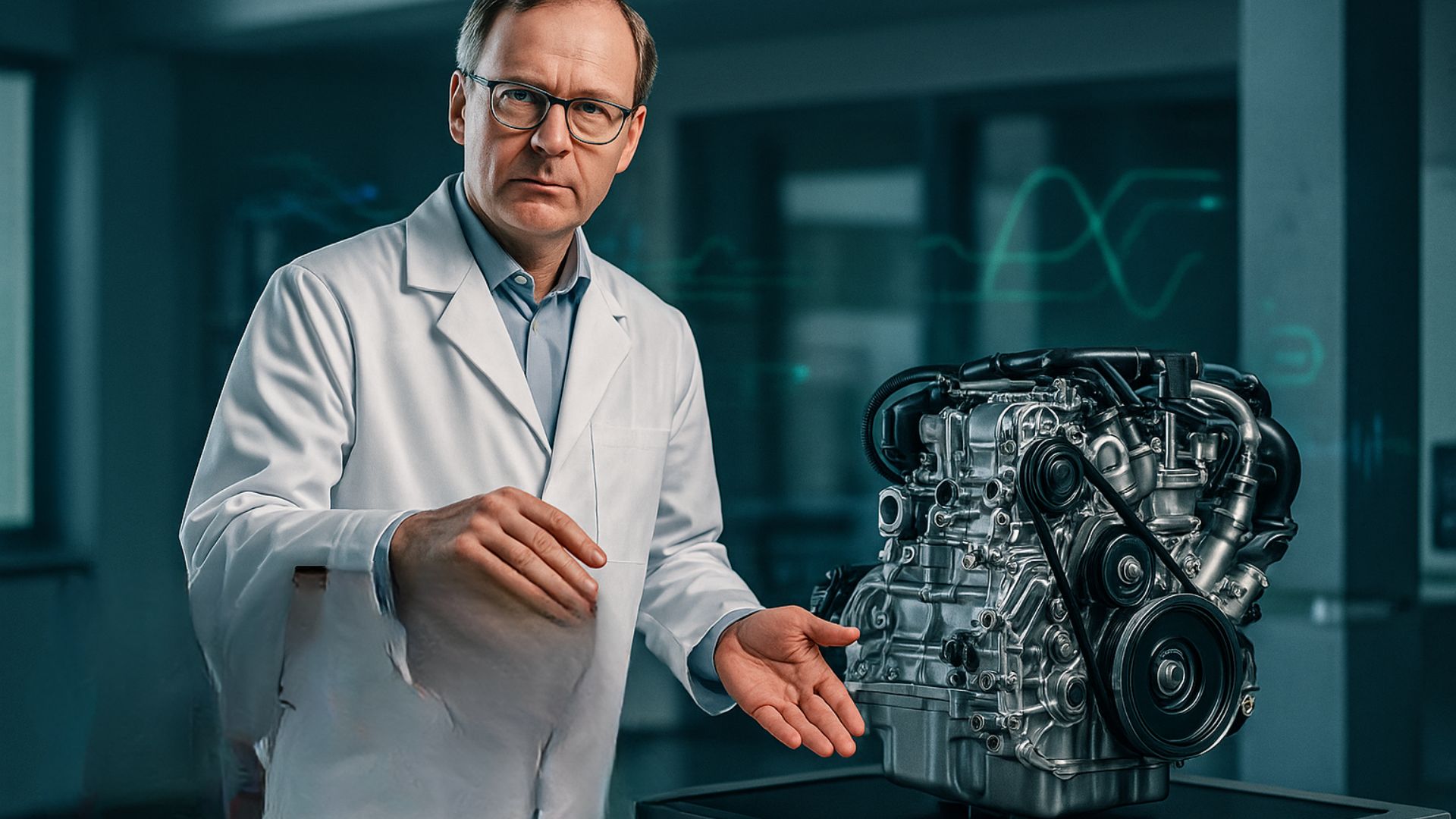


German Physicist Study Reignites Debate on Energy Efficiency, Synthetic Fuels, and Physical Limits of Traditional Engines Amid Global Automotive Transition, Regulatory Disputes in Europe, and Divergent Strategies of Major Automakers on Electrification.
A German physicist claims that by converting electricity into motion, an electric car utilizes more energy than a vehicle with a combustion engine.
According to him, the electric vehicle can travel up to six times further when the comparison involves synthetic fuels known as e-fuels.
The analysis is by physicist and science communicator Johannes Kückens, in an interview with the Austrian newspaper Der Standard, amid the revival of the European debate on targets for the automotive sector’s transition.
-
Returning to the Moon now costs a billion-dollar bill and reignites the competition between the USA and China for science, technology, and rare minerals on lunar soil.

-
While the world looks at oil, the war with Iran is already disrupting helium supply from Qatar, affecting car and iPhone chips, threatening AI expansion, and putting pressure on aluminum packaging at the highest value in four years.

-
Global warming will expose a treasure hidden under the ice of Antarctica and may spark an international dispute over gold and valuable minerals.

-
A street vendor from Praia Grande built a robot made of scrap from scooters and washing machines that pulls his popcorn cart on the beach, emits sounds, and interacts with customers, becoming an attraction on the coast of São Paulo.


The topic has gained centrality because it is no longer just technological and has begun to involve industrial costs, jobs, and environmental regulations.
While governments discuss deadlines and exceptions, automakers like Toyota advocate for diversified strategies, placing greater emphasis on hybrid vehicles.
The company’s board chairman, Akio Toyoda, has publicly stated that he does not expect battery electric cars to dominate the global market in the short or medium term.
Physical Limits of the Combustion Engine and the Second Law of Thermodynamics
In the interview, Kückens questions the recurring use of the expression “efficient combustion engines.”
According to the physicist, gasoline and diesel engines operate as thermal machines and are subject to restrictions imposed by the laws of physics, regardless of engineering advancements.
As he explained to Der Standard, these engines follow the second law of thermodynamics, which prevents the complete conversion of heat into motion.
In practice, a significant portion of the energy generated from burning fuel must be dissipated as waste heat.
This characteristic limits the maximum achievable efficiency.
According to Kückens, even modern engines developed over more than a century of improvements cannot surpass this structural limit.

The physicist points out that, under ideal laboratory conditions, gasoline engines can reach about 40% efficiency, while diesel engines reach approximately 45%.
In everyday use, however, this figure drops.
Considering accelerations, braking, and load variations, the useful efficiency on roads and urban areas is around 25%, according to the evaluation presented in the interview.
When discussing future perspectives, Kückens states that there is no physical basis to expect significant jumps beyond these numbers.
In a statement reproduced by Der Standard, he says that internal combustion engines “will never reach” levels close to 80% or 90% efficiency, adding that current levels are already approaching the physical limits of the system.
E-Fuels, Synthetic Fuels, and Cumulative Energy Losses
The debate over e-fuels has gained traction as an alternative to reduce emissions without completely abandoning the combustion engine.
These fuels can be produced from renewable electricity, hydrogen, and CO₂ captured from the atmosphere.
Still, according to Kückens, the process involves significant losses at each stage.
In the interview, he explains that production starts with electrolysis of water to generate hydrogen, passes through CO₂ capture, and proceeds to fuel synthesis.
Each phase consumes energy, reducing the final yield.
According to the physicist, “due to the complexity of their manufacturing, these fuels contain only half of the renewable electricity energy that was initially invested in their production.”
In addition to industrial losses, the synthetic fuel is used in a thermal engine, subject to the same efficiency limitations.
The combined result, according to the analysis presented, is that only a fraction of the initial energy effectively reaches the wheels.
Kückens summarizes this effect by stating that, at the end of the process, “just over 10% of the energy used reaches the road.”
Based on this comparison, he asserts that, considering electricity as a common starting point, an electric car can travel up to six times further than a combustion vehicle powered by e-fuels, using the same amount of renewable electrical energy.
Energy Efficiency of the Electric Car in Real Use
When addressing electric vehicles, Kückens distinguishes between the efficiency of the motor itself and the efficiency of the complete system.
Electric motors, according to him, can exceed 90% efficiency in the direct conversion of electrical energy into motion.
When accounting for losses in charging, transmission, and energy conversion, the figure drops but remains high.
According to the evaluation presented in the interview, the overall energy efficiency of an electric car in real use is around 70%.
Also, according to Kückens, even when compared to combustion vehicles powered by traditional fossil fuels, electric cars can travel about three times further with the same amount of primary energy.
These numbers help explain why some policymakers view electrification as a priority route for reducing emissions and energy demand.
However, large-scale adoption depends on factors such as infrastructure expansion, grid capacity, and regulatory stability.
Environmental Targets in Europe and Regulatory Impacts on the Automotive Sector

The technical debate occurs alongside political discussions in the European Union.
The bloc has set targets to reduce emissions from new vehicles, focusing on the horizon of 2035.
In recent months, however, governments and parties have begun to discuss possible relaxations, including more room for hybrids and other technologies.
Representatives of the European electric sector have warned, in recent statements to the international press, that frequent changes in rules may create uncertainty for investments.
The European Commission is expected to present a new package of measures aimed at the automotive sector on December 16, 2025, which could redefine the pace of the transition.
In this scenario, arguments based on energy efficiency have returned to the center of the debate.
For Kückens, increasing the use of e-fuels as a primary solution would require much larger volumes of renewable electricity to meet the same mobility demand.
Automakers’ Strategies and Toyota’s Position on Electrification
The original text mentions that automakers like Toyota express skepticism towards the accelerated expansion of electric cars.
Publicly, the company advocates for a strategy that combines different technologies, with a strong presence of hybrids.
In interviews given in recent years, Akio Toyoda has stated that he does not foresee an absolute dominance of battery electric vehicles.
In January 2024, the executive was quoted estimating that the global share of electric vehicles could stabilize around 30%, leaving room for other solutions.
The position reflects concerns regarding cost, infrastructure, and market diversity, especially outside Europe.
However, Kückens’ criticism is not directed at a specific company.
It focuses on the energy efficiency of the system as a whole and the physical limits involved in maintaining the combustion engine on a large scale.
Maintenance, Mechanical Simplicity, and Battery Recycling
Another point raised by the physicist concerns the complexity of the systems.
According to him, electric motors have fewer moving parts than combustion engines, which tends to reduce maintenance needs over the vehicle’s lifespan.
Regarding batteries, Kückens states that critical materials can be recycled and reused in the manufacture of new units.
He also mentions, in the interview with Der Standard, that recycling capacity has been growing in Europe and that new types of batteries seek to reduce dependence on certain metals.
With energy efficiency, industrial costs, and environmental regulations at the center of decisions, how should the balance between technology, public policy, and automakers’ strategies influence the future of mobility?





A Europa sempre no “caminho certo”, desativou usinas nucleares para depender de gás Russo, quem propôs isso deve ser a mesma mente genial que não percebe o custo de se produzir baterias gigantes atualmente, estações de recargas, custos absurdamente altos para desenvolvimento e implantação de uma nova matriz veicular. A UE teve que voltar atrás e permitir que carros a combustão fossem produzidos por mais tempo. Como no primeiro caso, ao que parece, não são feitos estudos de viabilidade futura. Baterias defeituosas são exorbitantemente caras para troca. E isso pode prejudicar a indústria europeia de carros exportados, caso mudem para carros apenas 100% elétricos, enquanto outras montadoras em outros países forneceram carros híbridos ou a combustão, principalmente carros de “alta performance”, que são mais adaptados a praticamente qualquer país. O problema não são carros elétricos, e sim a obrigação de que as montadoras da UE produzam apenas carros 100% elétricos, de forma que não é o mercado que está pedindo isso e sim sendo imposto pelo Estado.
O problema é preço e ponto de recarga. Se não fosse isso até eu teria um.