





 Portuguese
  English
  Spanish
  6 min of reading
  0 comments


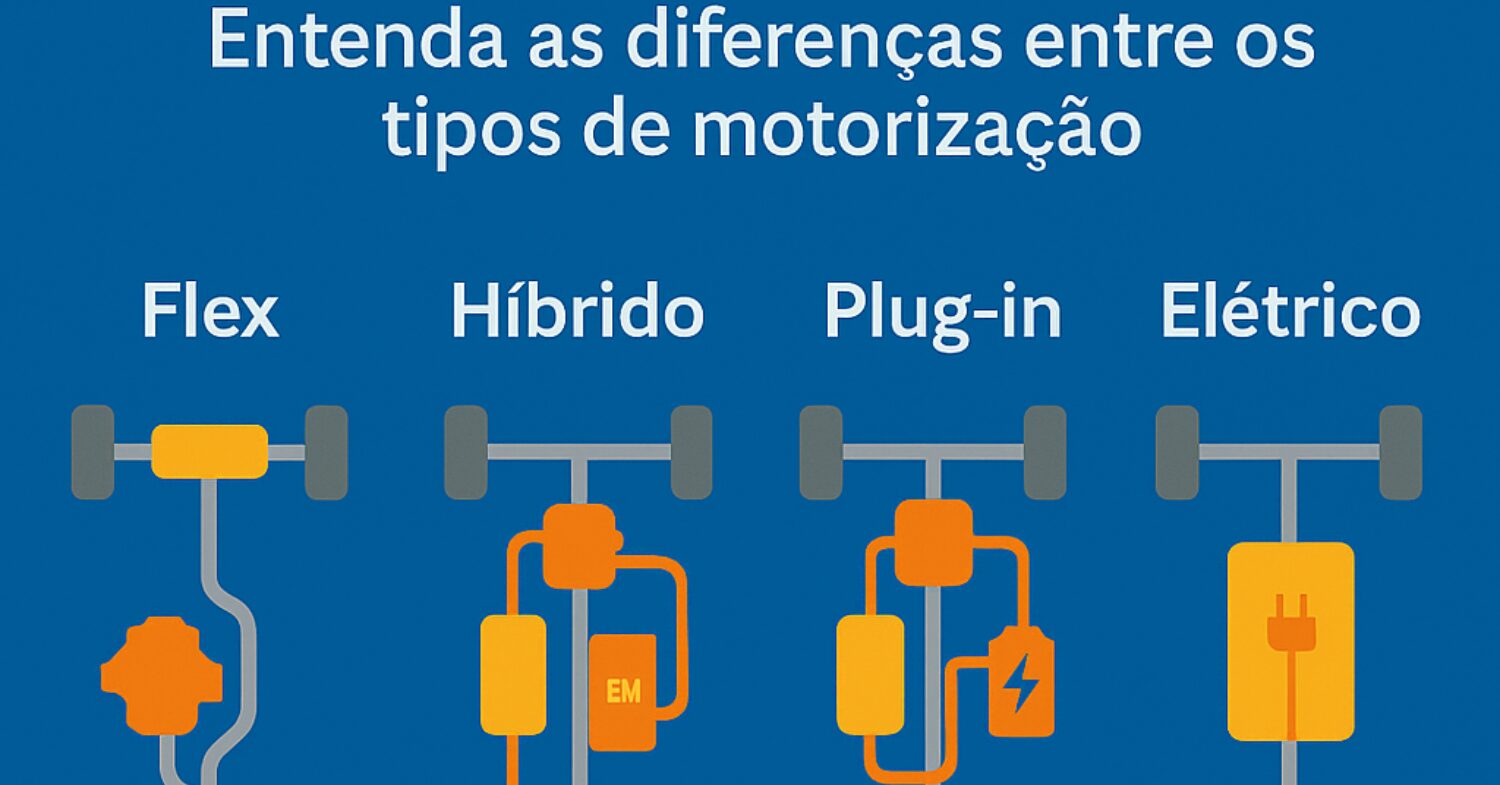
When it comes to changing cars, many people face an increasingly common question: should they choose a flex car, a hybrid car, a plug-in hybrid, or an electric car? With so many technologies emerging and the advancement of electrification in Brazil, understanding the differences between these types of drivetrains is essential to make the right choice — and avoid surprises in costs and maintenance.
The automotive market is undergoing an accelerated transformation. With new environmental laws, fiscal benefits, and a greater supply of sustainable models, consumers are confronted with various options that go beyond gasoline or ethanol. But what are the practical differences between a flex car and a hybrid? And what makes a plug-in hybrid different from an electric car?
In this article, we explain everything clearly and directly for those who are unsure about which type of drivetrain to choose in 2025.
-
Workers manually excavate 6 million kilograms of ice to open a cave that allows observation of how a glacier is melting from the inside.

-
Archaeologists find a colossal 2,000-year-old vessel at the bottom of the sea near Alexandria linked to the elite of Egypt and reveal a pleasure barge from the last dynasty of the pharaohs that the sea has hidden for centuries.

-
United Kingdom clears 40 tons of shells and concrete into the sea in an innovative project that promises to restore a marine ecosystem lost for over 200 years and improve water quality.

-
With emergency diversion to abandoned mining craters, engineers save villages from a devastating flood that was advancing through the desert and threatening to destroy entire communities in a matter of hours.


Flex Car: The Most Common in Brazil
The flex car is the most well-known type among Brazilian drivers. It can run on gasoline, ethanol, or a mixture of both in any proportion, thanks to sensors that automatically adjust the electronic injection. This technology originated in Brazil in 2003 and became a success, mainly due to the flexibility of refueling.
One of the main attractions of the flex car is its refueling convenience. Service stations are everywhere, and the price of ethanol can be advantageous in some regions, especially in the Midwest and Southeast.
Advantages:
- More affordable price;
- Ease of maintenance;
- Wide refueling network;
- Choice between gasoline and ethanol.
Disadvantages:
- Higher CO₂ emissions;
- Performance and fuel consumption vary with the type of fuel;
- Greater engine wear with continuous use of ethanol.
Who should choose: drivers who travel a lot in urban and rural areas and prefer vehicles with low initial cost and simple maintenance.
Hybrid Car: The Balance Between Electric Motor and Combustion
The hybrid car combines an internal combustion engine (usually flex or gasoline) with an auxiliary electric motor, which helps reduce fuel consumption and emissions. Electrical energy is generated during braking and deceleration, stored in a small battery that powers the electric motor.
Unlike plug-in hybrids, conventional hybrids do not need to be charged at a plug. They recharge themselves based on the movement of the car.
Popular examples in Brazil: Toyota Corolla Hybrid, Toyota Yaris Hybrid, Honda Civic Hybrid.
Advantages:
- Significant fuel savings;
- Lower emissions than flex;
- No dependance on external charging;
- Ideal for urban use.
Disadvantages:
- Higher initial cost than flex;
- Smaller battery than that of the plug-in;
- Reduced power on climbs or overtaking compared to plug-in or electric versions.
Who should choose: those who travel a lot in congested cities and want to reduce fuel costs without worrying about plugs or charging points.
Plug-in Hybrid: Power and Efficiency, but Needs a Plug
The plug-in hybrid (PHEV) also combines an internal combustion engine with an electric motor, but it has a much larger battery that can be charged from a plug. The main advantage of this system is that it allows for short distances to be traveled only on electric power, saving even more fuel.
Some models can travel up to 60 km in 100% electric mode, ideal for daily commutes such as going to work, the market, or taking the kids to school.
Known models in Brazil: Volvo XC60 Recharge, Jeep Compass 4xe, BYD Song Plus DM-i, BMW X5 Plug-in Hybrid.
Advantages:
- Impressive fuel savings;
- Can be used as an electric vehicle in daily life;
- Near-zero emissions over short distances;
- High performance thanks to the combined power of the two motors.
Disadvantages:
- High acquisition cost;
- Requires a charging point to fully utilize its potential;
- Greater mechanical and electronic complexity.
Who should choose: those who live in a house with a garage, have access to outlets or chargers, and want a powerful, eco-friendly, versatile vehicle.
Electric Car: Zero Emissions and Quiet Motor
The electric car (BEV) is powered exclusively by one or more electric motors, fueled by a rechargeable battery. These vehicles do not have an internal combustion engine, exhaust, or fuel tank.
They are quiet, agile, and much cleaner from an environmental standpoint, as they do not emit local pollutants. Charging is done via a plug, wallbox, or public chargers.
Featured models in Brazil: BYD Dolphin, Volvo EX30, JAC E-JS1, Renault Kwid E-Tech, Chevrolet Bolt.
Advantages:
- Zero emissions;
- Simpler maintenance (no oil, belts, filters);
- Instant performance;
- Exemption from IPVA in many states.
Disadvantages:
- Still high prices compared to flex models;
- Dependence on charging points;
- Range can vary with air conditioning use and terrain.
Who should choose: those seeking sustainability, living in urban centers with good charging infrastructure, and wanting to spend less on maintenance in the long term.
Direct Comparison Between Types of Drivetrains
To make the choice even easier, here’s a summarized comparison:
| Type of Car | Fueling | Emissions | Fuel Economy | Initial Cost | Recharges at Plug? |
|---|---|---|---|---|---|
| Flex | Ethanol/Gasoline | High | Medium | Low | No |
| Hybrid | Gasoline/Flex + Electric Motor | Medium | High | Medium | No |
| Plug-in Hybrid | Plug + Fuel | Low | Very High | High | Yes |
| Electric | 100% Electric | Zero | Maximum | High | Yes |
Maintenance: What Changes in Each Type?
Flex cars still require traditional maintenance, such as oil changes, spark plugs, timing belts, and fuel filters. Hybrid and electric cars have more streamlined maintenance, especially electric ones, which do not use an internal combustion engine and therefore do not need oil, exhausts, or clutches.
However, the batteries of hybrids and electric vehicles require attention. Despite having an estimated lifespan of 8 to 10 years, their replacement cost is still high, which can be concerning in cases of accidents or extreme wear. The good news is that, in Brazil, many manufacturers already offer extended warranties for the traction battery, which can exceed 100,000 km.
What About Insurance? Is There a Difference?
Yes. Generally, the insurance for electric cars is still more expensive than that of flex models due to the higher replacement value of parts and low availability in the secondary market. Hybrid cars, by using both internal combustion and electric motors, also tend to have insurance that is more expensive than flex — but cheaper than 100% electric.
However, the increase in the fleet and the popularization of these models should balance prices in the coming years, with greater competition among insurance companies and expanded coverage in workshops.
Which to Choose in 2025?
The ideal choice depends on where you live, how much you drive, and how much you intend to invest. For those living in areas with little charging infrastructure, the flex car is still the most practical and economical choice. Conventional hybrids work well for those who want to save without radically changing their habits.
If you have access to plugs and want to minimize fuel use, the plug-in hybrid is the ideal middle ground. But if you’re looking for the cleanest and most modern alternative — and can invest a bit more — the electric car is the present future.
With so many options available, choosing between flex car, hybrid car, plug-in hybrid, or electric car may seem complicated — but in practice, it’s about aligning your usage profile with the characteristics of each technology. The important thing is to be informed, do the math, and understand that the market is changing, and alternative drivetrains are becoming increasingly accessible.
Regardless of your choice, all models have their strengths — and the most important thing is to choose the car that meets your needs and fits your budget, without compromising safety, economy, and environmental responsibility.









Seja o primeiro a reagir!