





 Portuguese
  English
  Spanish
  5 min of reading
  0 comments


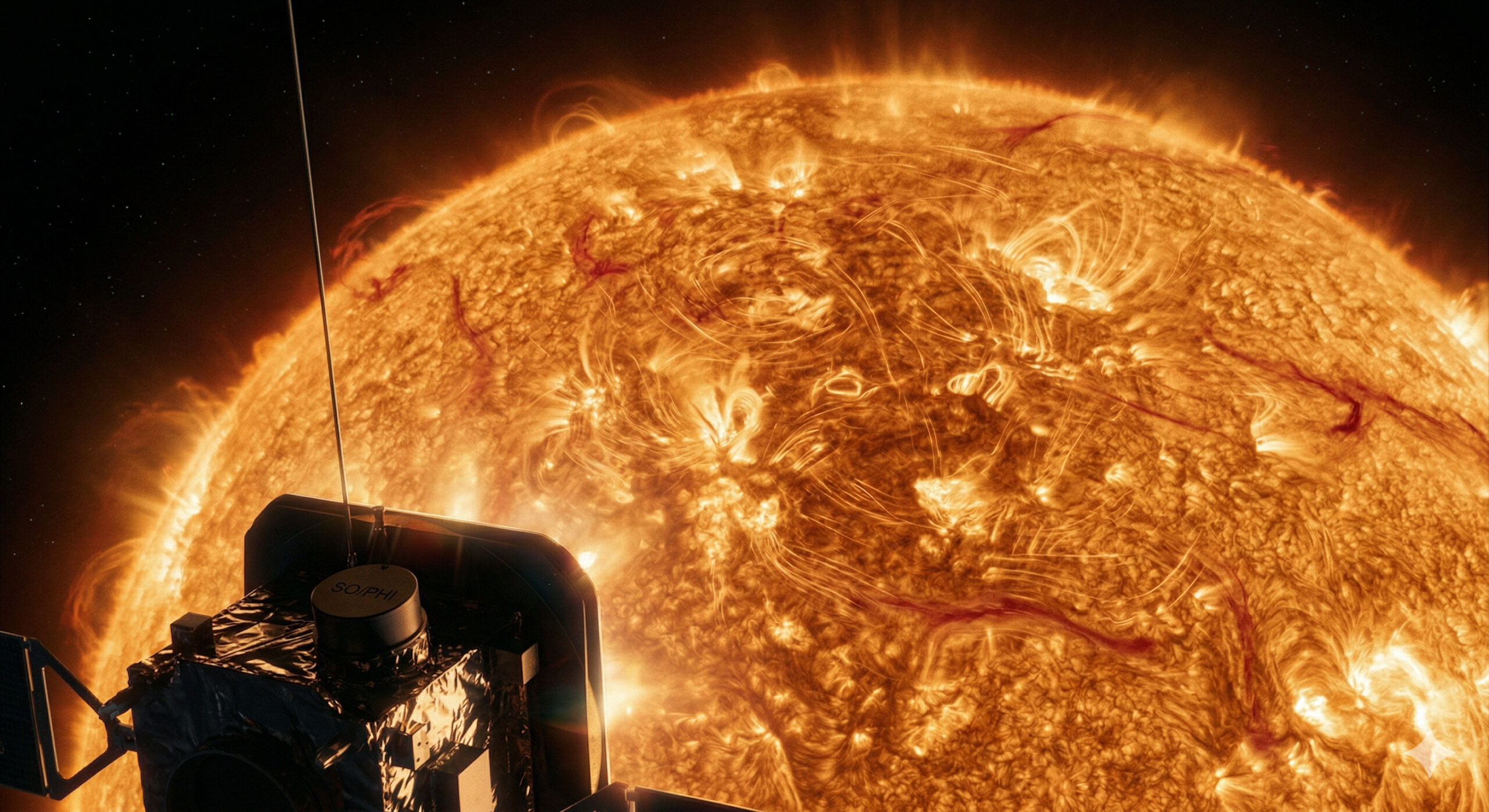
Solar Orbiter spacecraft photographs the Sun’s pole for the first time and reveals a disorganized magnetic field that may impact solar storm forecasts.
Every image of the Sun ever seen by humanity has been recorded from the equatorial plane. Not by choice, but due to physical limitation: Earth, the planets, and the spacecraft orbit within a disk called the ecliptic plane, with a maximum tilt of about 7 degrees relative to the solar equator. This limitation prevented direct observation of the poles of the star. According to ESA, Scientific American, Smithsonian Magazine, and BBC Sky at Night, in March 2025, the Solar Orbiter spacecraft, a mission costing approximately $1.5 billion led by the European Space Agency with participation from NASA, broke this barrier by tilting its orbit 17 degrees below the solar equator and, on June 11, released the first direct images of the Sun’s south pole.
The result represents a structural change in how science observes and understands the star.
Ecliptic plane limited solar observations for centuries and prevented vision of the poles
The solar system formed from a rotating disk of dust and gas, which determined the orbital orientation of the planets and other celestial bodies.
-
A law that no one knows requires oil companies to invest billions in technology in Brazil, and the result is autonomous robots, AI that predicts failures, and cameras that see danger before humans do on offshore platforms.

-
End of glue: this new laser uses the paper’s own composition to bond layers without external glue and could solve one of the most hidden problems of packaging recycling.

-
In Antarctica, scientists from Cambridge propose to install a tube on the bottom of the Amundsen Sea to release billions of bubbles and block the warm water that melts the Thwaites Glacier, an unprecedented attempt to contain ocean currents that could raise sea levels by meters, but which is still considered a scientific unknown.

-
New dual motor technology from Xiaomi features silent operation and voice control: meet the Mijia Smart Curtain 3 Pro.


As a consequence, all space missions followed this same plane. Leaving this geometry requires high energy expenditure and complex gravitational maneuvers.
The Ulysses mission, operated between 1990 and 2009, was the only one to study the solar poles previously, but it did not have cameras. It collected data on particles and magnetic fields but did not produce images, keeping the solar poles invisible until then.
Gravitational maneuvers with Venus allowed unique orbital tilt of the Solar Orbiter
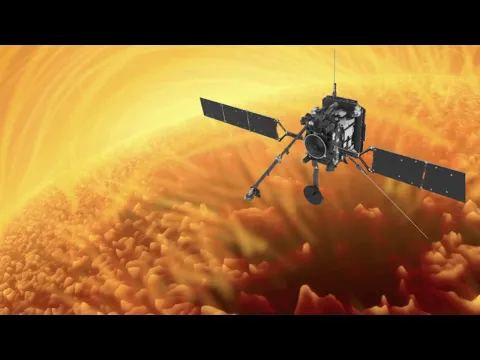
The Solar Orbiter was launched in February 2020 and used gravitational assists from Venus to gradually alter its trajectory.
After multiple passes by the planet, the spacecraft achieved a tilt of 17 degrees in relation to the solar equator in 2025, more than double what was achieved by previous imaging-capable missions.
This advancement allowed the poles of the Sun to enter the field of view of optical instruments for the first time in history. The first observations occurred in March 2025, with three instruments operating simultaneously.
The PHI recorded images in visible light and mapped the magnetic field of the surface. The EUI captured the solar atmosphere in ultraviolet. The SPICE measured the speed of material in different layers. The combination of this data allowed for an unprecedented three-dimensional analysis of the polar region of the Sun.
Solar pole magnetic field appears disorganized during maximum of solar cycle
The images revealed unexpected behavior of the solar magnetic field.
Instead of showing a dominant polarity, the south pole exhibited regions with mixed opposite polarities, indicating a highly disorganized state.
This phenomenon is associated with solar maximum, a phase of the approximately 11-year cycle in which the star’s magnetic field inverts.
Direct observation of this condition provides visual evidence of processes that were previously only theoretical.
11-year solar cycle still challenges forecasts and depends on polar data
The solar cycle regulates the activity of the star, alternating between periods of low and high intensity. During solar maximum, there is an increase in sunspots, eruptions, and coronal mass ejections.
Current models have limitations because they were built based on observations restricted to the equatorial plane. The inclusion of polar data represents a critical advancement to improve the forecasting capability of these cycles.
Collected data indicated that the magnetic material moves towards the poles at speeds between 10 and 20 meters per second.
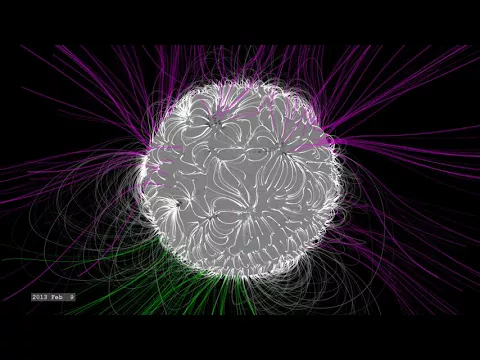
This value is significantly higher than predicted by previous models. This discovery directly impacts the understanding of the formation of future solar cycles, as polar flows are responsible for defining the intensity of the next cycle.
Solar storms can affect satellites, GPS, and electric grids on Earth
The relevance of these discoveries goes beyond theoretical science. Solar storms can have direct impacts on terrestrial infrastructure, including failures in satellites, interruptions in navigation systems, and damage to electric grids.
Historical events demonstrate this risk, such as the blackout in Quebec in 1989 and damage recorded in transformers in South Africa in 2003. Improvement in forecasts is essential to mitigate these impacts.
Observation of solar wind in three dimensions expands understanding of the heliosphere
The Solar Orbiter also measures the solar wind, a continuous flow of charged particles emitted by the star. The new perspective allows for the analysis of the expansion of this flow in three dimensions, contributing to the understanding of the heliosphere, the region that surrounds the solar system and protects against cosmic radiation.
This analysis is fundamental to understanding the space environment that influences satellites and crewed missions. The spacecraft had already demonstrated its capability by recording an M7.7 class solar eruption in September 2024.
The data revealed the formation of unstable magnetic structures before the eruption, indicating possible pathways to predict these events with greater lead time. The mission will continue to use gravitational assists to increase the orbital tilt.
The forecast is to reach 24 degrees in 2026 and 33 degrees in 2029, allowing for even more direct observations of the solar poles. Each advancement increases the quantity and quality of the data collected.
Possible existence of polar structures in the Sun may redefine stellar dynamics models
Initial data indicates the possibility of dynamic structures in the polar region, the nature of which is still under analysis.
If confirmed, these formations could represent new elements in the star’s internal dynamics and require a revision of current models.
The mission represents a milestone in solar science by providing a view that had never been possible before. Direct observation of the poles paves the way for advancements in understanding solar activity and its impacts.
The change in perspective revealed limitations in existing models and indicated the need for a revision of consolidated concepts. With unprecedented data and direct observations of the solar poles, science now has access to information that may redefine forecasts and risk mitigation strategies.
In your view, will these discoveries be sufficient to make solar forecasts more accurate, or are there still significant gaps to be filled?







Seja o primeiro a reagir!