





 Portuguese
  English
  Spanish
  5 min of reading
  0 comments


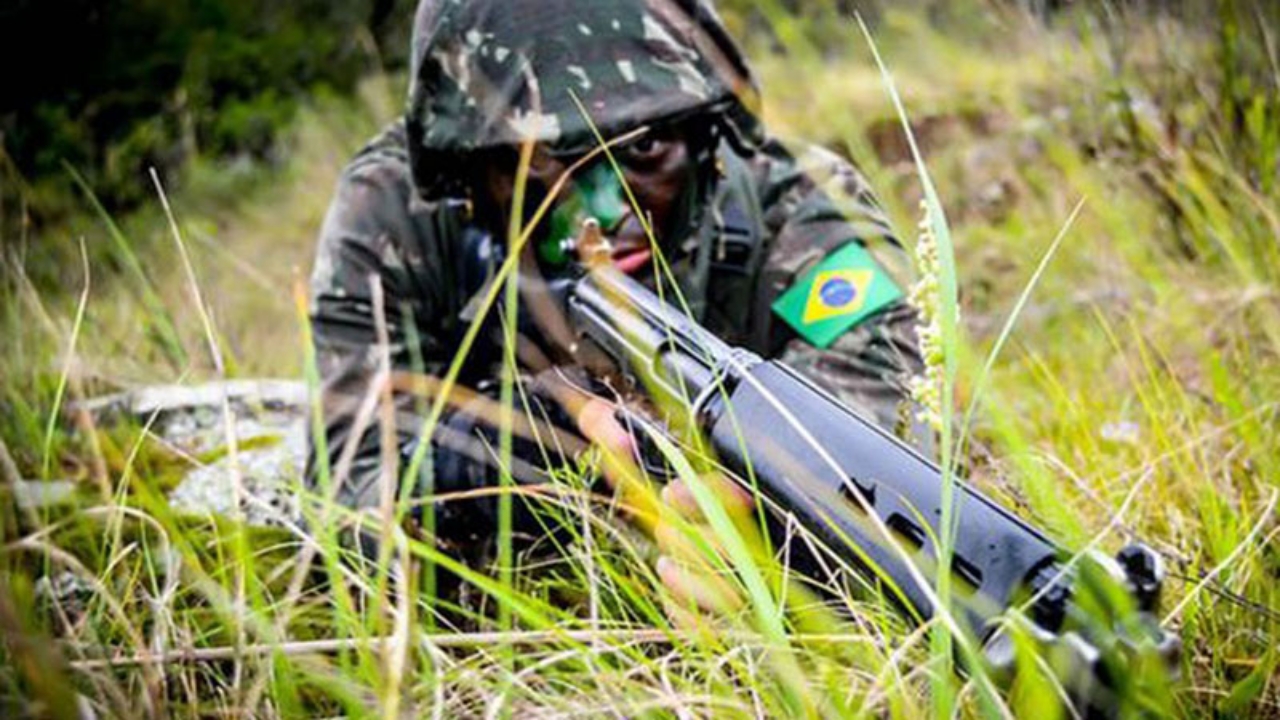
Secret Operation of FAB in Peru: How Brazilian Soldiers Rescued 71 Hostages in the Amazon Jungle
In a secret mission, the Brazilian Air Force (FAB) rescued 71 people held hostage by the terrorist group Sendero Luminoso, an action that nearly changed the course of history in South America in 2003. The operation, in collaboration with the Peruvian government, is still little known to the public but reveals the complexity and precision of Brazil’s military actions in foreign territory.


The Night Everything Started
On June 9, 2003, at the Anápolis Air Base in Goiás, a group of eight FAB soldiers boarded an Embraer R-99B, one of the most advanced reconnaissance aircraft at the time.
What they did not yet know was that they were about to participate in one of the most dangerous missions of their careers. The order for the flight was issued without details of the destination or objective, and the crew, composed of pilots and systems technicians, simply followed the takeoff instructions.
-
The Ukraine war exposes the strength of the M113 armored vehicle amid modern warfare with military drones.
-
Maritime geopolitics: China and the USA compete for strategic ports in Peru.

-
Iran shoots down two US aircraft: F-15 fighter crashes in mountainous area, one crew member is rescued and another is still missing; second crash in the Persian Gulf exposes still active air defense, says US intelligence.
-
USA and China compete for Brazil over resources that could be worth trillions — rare earths put the country at the center of a global dispute


At 8:40 PM that Monday, the Embraer 145 RS/AGS, known as R-99B in the FAB, departed from the base in Anápolis. After a first stop for refueling, the aircraft proceeded to Porto Velho and then to Lima International Airport in Peru.
A few hours later, the Brazilian soldiers would discover that their presence was requested by order of the Peruvian president, Alejandro Toledo Manrique, in a hostage rescue mission.
Peru Requested Brazil to Save Hostages from Guerrilla Hands
Upon arriving in Lima, the Brazilian soldiers were met by representatives of the Peruvian Air Force (FAP), who revealed the purpose of the operation. Employees of the Techint company, an Argentine firm responsible for constructing a gas pipeline in the Ayacucho region, had been captured by guerrillas from Sendero Luminoso.
The group, which demanded arms and a financial ransom of US$ 200,000, included three members of the Peruvian National Police among the hostages. The situation was urgent, and the cutting-edge technology of the FAB was the best alternative to locate the terrorists’ hideout.
FAB Initiated the Unprecedented Operation That Would Demonstrate Brazil’s Strength in Defending Its Territory and Allies in South America
The Embraer R-99B had state-of-the-art tools for reconnaissance missions. Equipped with Synthetic Aperture Radar (SAR), Hyperspectral Scanner (HSS), Multispectral Scanner (MSS), and Optical and Infrared Sensor (OIS), the aircraft could map large areas of the forest and track radio and cellphone transmissions, even under adverse conditions. These technologies made the R-99B an efficient weapon for missions in difficult terrains like the dense vegetation of the Amazon rainforest.
At 3:27 PM on June 10, the Brazilian aircraft, accompanied by an FAP officer, departed Lima towards Ayacucho. The mission required careful flying over the jungle to capture radio signals that might indicate the position of the kidnappers. Under total confidentiality, the FAB began an unprecedented operation that would demonstrate Brazil’s strength in defending its territory and allies in South America.
Identifying the Hostage Location: Peruvian Air Force Initiated a Siege with Helicopters and Other Aircraft on the Guerrillas’ Hideout
Flying over the Amazon rainforest, the advanced sensors of the R-99B picked up radio signals on the VHF frequency, and the on-board team began to monitor each transmission. In less than an hour, the exact coordinates of the terrorist camp, located in a small village called Toccate, were identified.
With the coordinates in hand, the Peruvian authorities were quickly informed, and the Peruvian Air Force initiated a siege with helicopters and other aircraft on the guerrillas’ hideout.
The Surrender and the Rescue of the Hostages: Embraer R-99B Successfully Completed Its First Real Mission
With the siege set up, Sendero Luminoso realized the imminent military operation and, fearing a direct confrontation, decided to gradually release the hostages. One by one, the names of those freed were announced by the kidnappers via radio.
After the last hostage was released, the guerrillas dispersed into the forest to avoid confrontation, escaping in small groups through alternative routes in the jungle.
The operation ended with total success and without a single shot fired, earning praise for the FAB and the FAP for their precision and speed. The R-99B successfully completed its first real mission, demonstrating its capability to conduct reconnaissance and surveillance operations on a large scale, even beyond Brazil’s borders.
Still on the night of the rescue, the aircraft returned to Lima International Airport, where the soldiers participated in a brief evaluation meeting with the Peruvian officials.
Brazilian Government Kept Confidentiality About the Involvement of the Brazilian Air Force – FAB
The success of the mission reinforced Brazil’s importance in the South American defense landscape. Although its participation was vital, the Brazilian government maintained confidentiality about the involvement of the FAB, leaving it to the Peruvian authorities to disclose information to the press. The Peruvian Minister of Defense, Aurelio Loret de Mola, praised the actions of the country’s security forces alongside some of the hostages, without mentioning the Brazilian contribution.
The following morning, Loret de Mola made a point of visiting the R-99B to get a close look at the technological structure that enabled the rescue, accompanied by representatives of the FAP. Despite speculations, the Brazilian government chose to remain silent about the operation, with the then Minister of Defense, José Viegas, refusing to comment on the events.
Even today, this operation remains an example of strategic cooperation and how the Amazon Surveillance System (SIVAM) can operate for the benefit not only of Brazil but of the entire region. According to an FAB officer, who spoke anonymously to Istoé magazine, the mission reinforced Brazil’s capacity to monitor and protect the Amazon rainforest, ensuring continental security.
A Milestone for the Brazilian Air Force
The rescue mission in Peru not only saved lives but also marked the debut of the Embraer R-99B in a high-complexity operation. With this action, Brazil showcased its technological strength and the importance of integration with neighboring countries in emergencies. Even under confidentiality, the operation serves as an example of dedication and efficiency for Brazilian military personnel.
This story, kept secret for nearly two decades, demonstrates Brazil’s relevance in the international security and defense scenario. It is a reminder that even away from the spotlight, the FAB is prepared to protect and support missions of national and international interest, always defending the values and integrity of friendly nations.








-

-

5 pessoas reagiram a isso.