





 Portuguese
  English
  Spanish
 5 min of reading
  12 comments


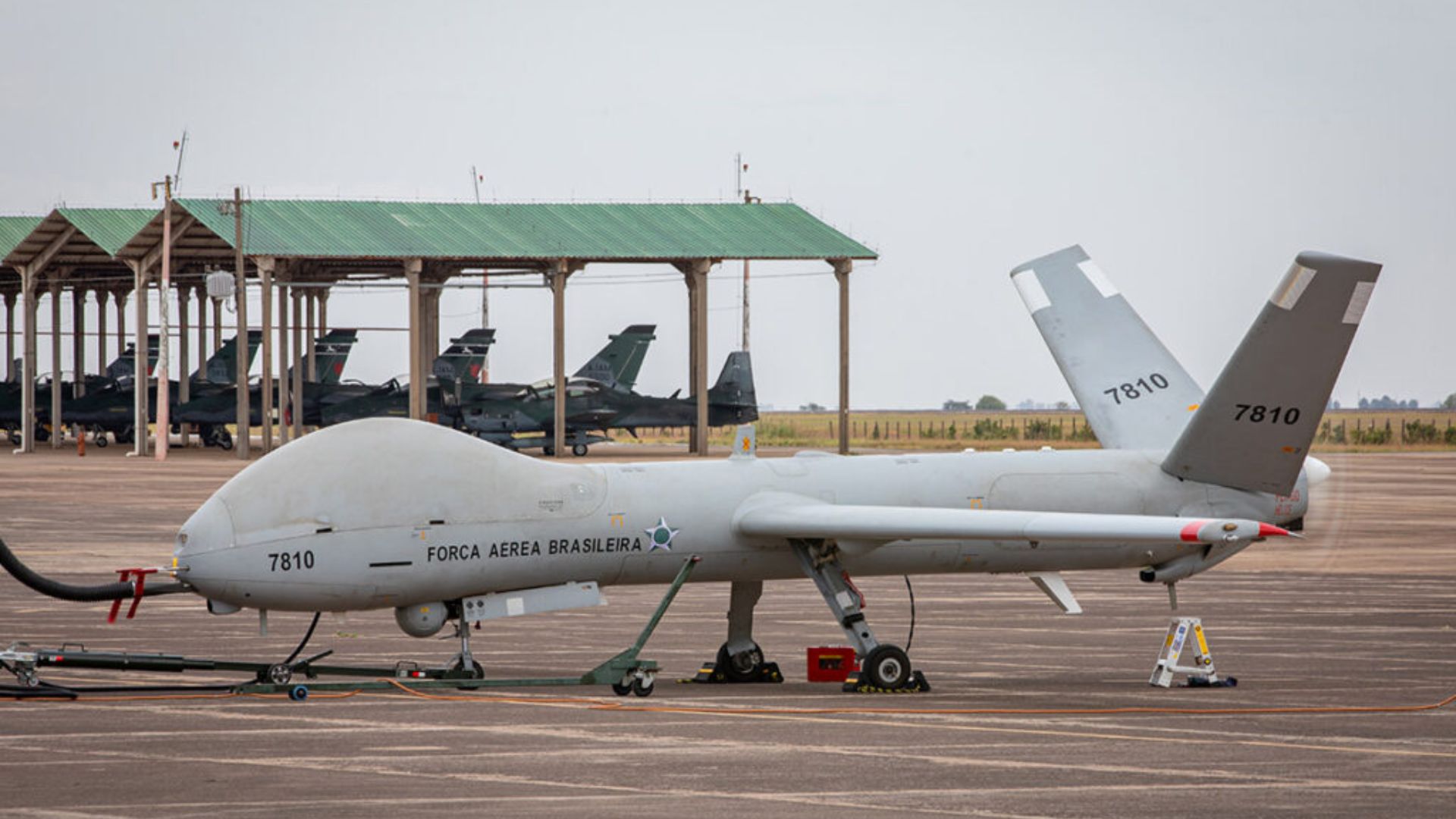


Military Training Gathers Combat Aircraft, Surveillance Systems, and Ground Troops in a Complex Scenario in Rio Grande do Sul to Enhance the Intelligence, Reconnaissance, and Joint Operational Capability of the Brazilian Armed Forces
Between March 2 and 16, the Santa Maria Air Base (BASM), located in Rio Grande do Sul, became the center of one of the most important military training exercises of the Brazilian Armed Forces. The site concentrated combat aircraft, drones, radars, and various operational means during the execution of the Operational Exercise for Intelligence, Surveillance, and Reconnaissance (EXOP IVR) 2026.
The training brings together capabilities from the Brazilian Air Force (FAB), the Brazilian Navy, and the Brazilian Army, practically demonstrating the evolution of interoperability among the three Forces. In total, approximately 300 military personnel participate in the activities, which involve ten operational units, including fighter, patrol, reconnaissance squadrons, and units for communications, control, and air defense.
The information was released by the Brazilian Air Force, which highlighted the exercise as one of the main training events of the Preparation Command (COMPREP), responsible for keeping aerial resources ready for operational deployment.
-
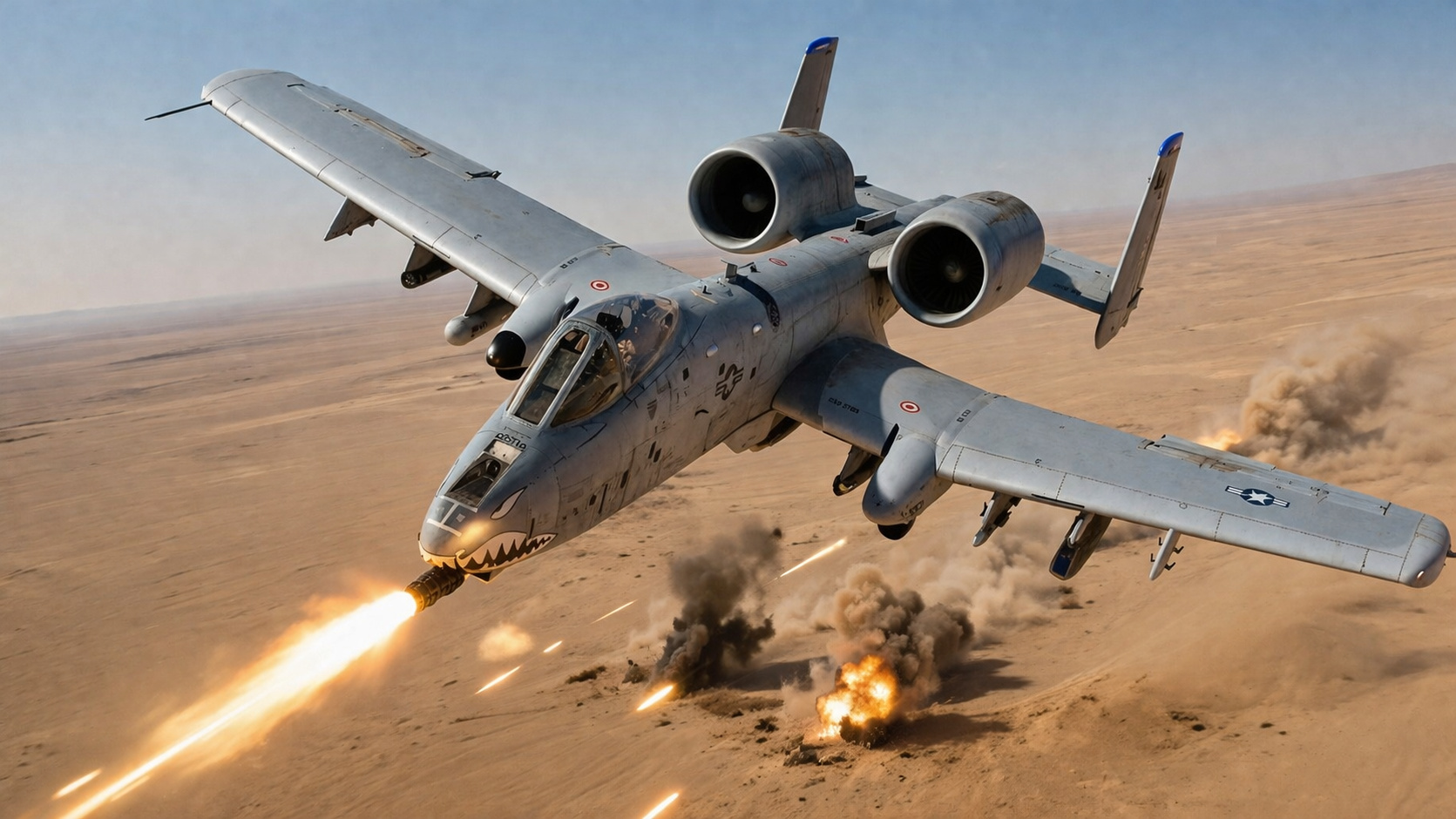
Few people know, but “mega burst” attacks from the A-10 in the Middle East are intriguing analysts and even experienced former pilots of the U.S. Air Force.
-
Manufactured in Brazil and exported to Saudi Arabia and Malaysia, the ASTROS system is renamed as Fogos in 2026, gaining AI, cruise missiles with a range of 300 km, and air defense costing R$ 3.4 billion, transforming a launcher from the 1980s into the most ambitious multidomain platform in Latin America.
-
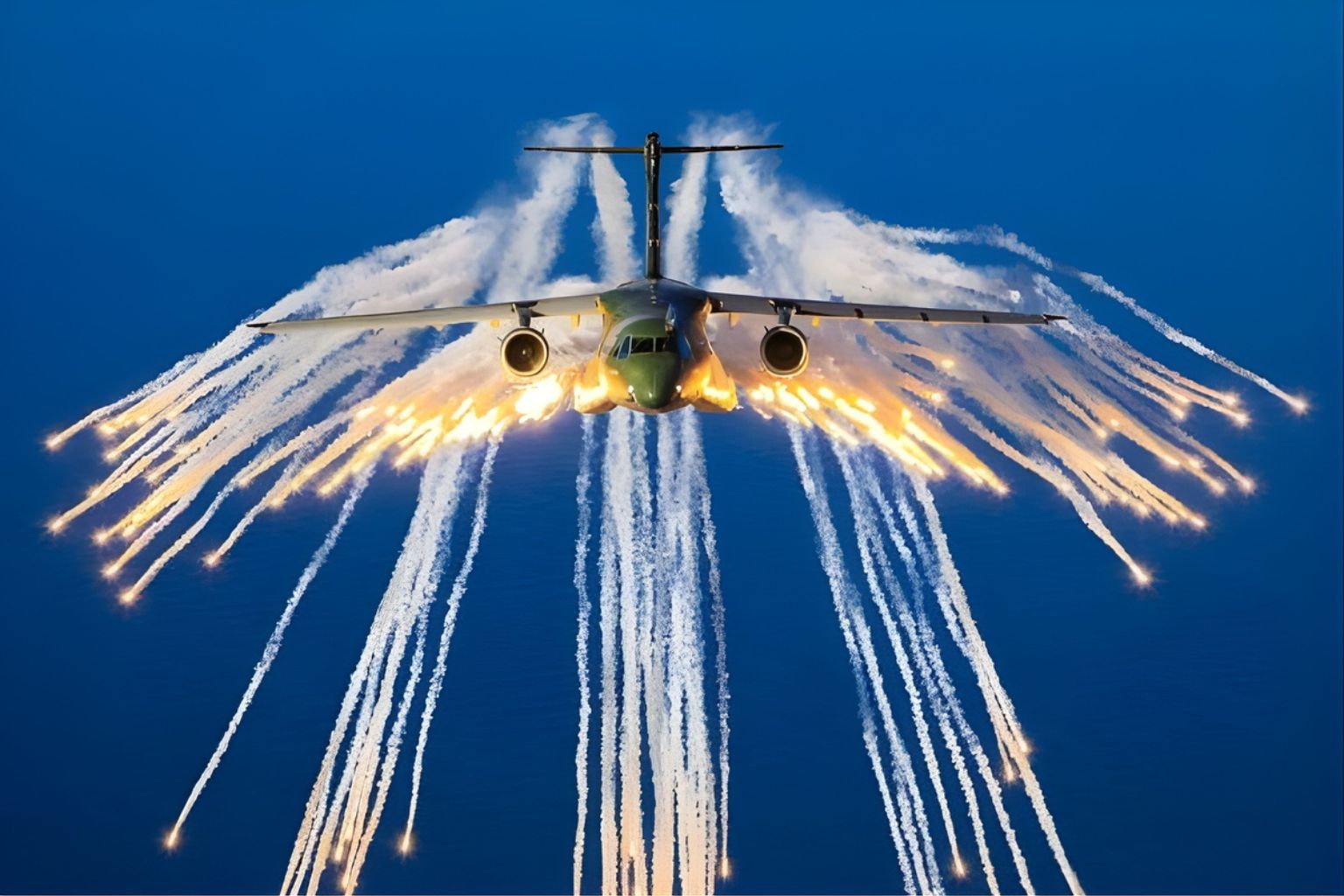
The largest military aircraft ever produced in Brazil, the KC-390 Millennium can carry up to 26 tons, refuel fighter jets in flight, and has already been exported to Europe and Asia, placing the country in the select group that designs and sells large military aircraft worldwide.
-
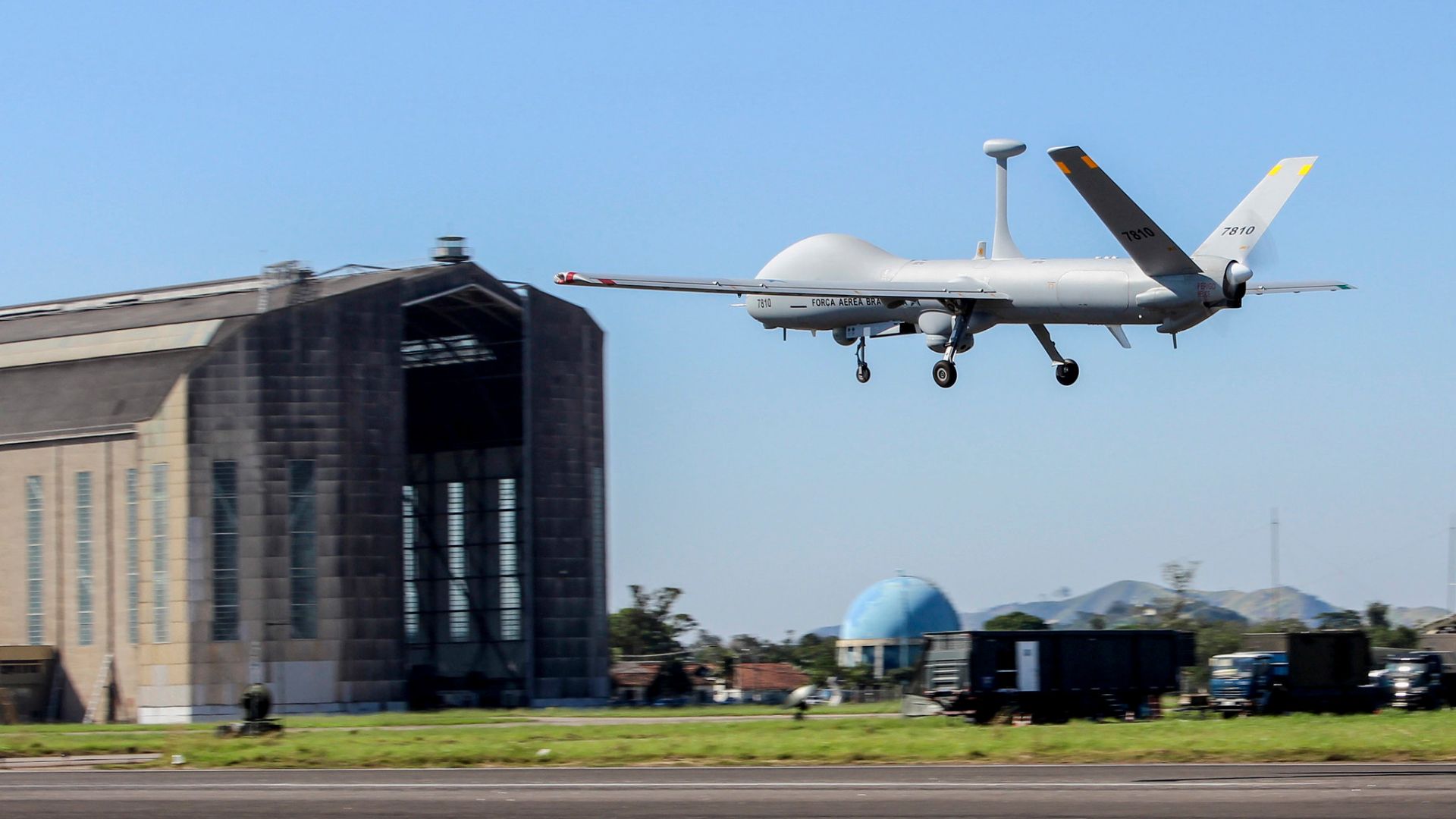
FAB loses Hermes 900 drone during multinational exercise in Mato Grosso do Sul and is left with only one active aircraft, raising concerns about operational fragility and strategic response capability.
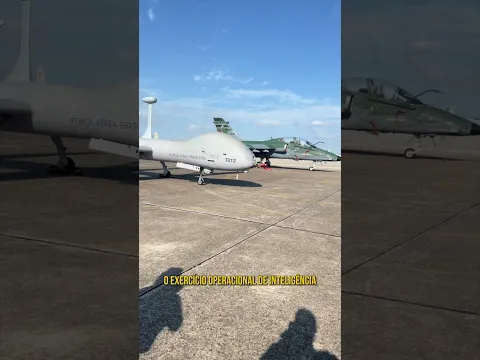

Training Simulates Conflict Scenario and Requires Total Integration Among the Armed Forces
According to Lieutenant Colonel Aviator Marcio Rassy Teixeira, the exercise manager, the main objective of EXOP IVR 2026 is to integrate different operational capabilities of the FAB in a unique training environment.
He stated that the exercise allows training in data collection, analysis, and intelligence production, fundamental processes to support decision-making during real missions. In this way, the crews and teams involved enhance their ability to transform collected information into strategic knowledge for military operations.
Furthermore, the exercise aims to train operational units and crews of combat units in Intelligence, Surveillance, and Reconnaissance (ISR) tasks, expanding the capability for joint action within the modern concept of multi-domain operations.
Colonel Aviator Arthur Ribas Teixeira, commander of the Santa Maria Air Base and exercise director, emphasized the importance of the training for the readiness of Brazilian military forces.
According to him, the exercise strengthens the response capability of the Armed Forces and contributes to a more efficient defense of national airspace. In addition, the integration among the Navy, Army, and Air Force demonstrates the commitment of these institutions to the security of Brazilian society.
Operation is Divided into Phases with Peace Scenario and War Simulation

The EXOP IVR 2026 was structured in two distinct operational scenarios, gradually increasing the complexity of military activities.
In Phase 1, called Peace Scenario, held between March 3 and 7, the activities focus mainly on information acquisition by airborne platforms, along with the employment of specialized forces within a fictitious border established in the context of the exercise.
In Phase 2, named Conflict Scenario, which occurs between March 9 and 14, the focus shifts to Enemy Air Defense Suppression (EADS), as well as tactical reconnaissance operations and data collection beyond the so-called Line of Contact.
At this stage of the training, the level of complexity increases significantly, requiring greater integration among the employed means and a higher degree of coordination between aerial and ground units.
Specialist Sergeant in Photo Intelligence Christiam Wincker Germani, a member of the Scenario Room of the exercise, explained that the team is responsible for assembling the entire planning structure of the operation.
According to him, the so-called Scenario Room drafts the fragmentary orders aimed at the air units that will carry out intelligence, surveillance, and reconnaissance missions. Additionally, the cell maintains direct contact with the Brazilian Army to coordinate the positioning of troops on the ground and the use of radars to simulate engagement situations.
Fighters, Drones, Surveillance Aircraft, and Helicopters Participate in the Operations
The exercise brings together a wide variety of strategic aerial resources from the Brazilian Air Force, including combat, surveillance, patrol, and transport aircraft.
Among the main platforms used are the A-1M and A-29 fighters, as well as specialized aircraft for early warning and intelligence E-99M and R-99, which enhance situational awareness in the operational environment.
Also participating are maritime patrol and reconnaissance aircraft, such as the P-3AM and P-95M, in addition to important logistical resources like the KC-390 Millennium and the H-60L Black Hawk.
Another highlight of the exercise is the use of remotely piloted systems, including the RQ-900 and RQ-1 ScanEagle, the latter operated by the Brazilian Navy. These equipment significantly enhance real-time data collection and fusion capabilities.
In the field of surveillance and control, the exercise also includes three-dimensional radars with medium and long ranges, such as TPS-B34, LP23SST-NG, and GM-200, capable of operating even in complex environments and under electronic interference.
Army Participates with Armored Vehicles, Air Defense, and Mechanized Troops
The Brazilian Army also plays a central role in the exercise, participating with resources from the Third Army Division and various armored and mechanized units.
Among the equipment used are the armored vehicles M-113 and Guarani, in addition to the air defense systems Gepard, which help to shape the land tactical scenario.
Units such as the Sixth Armored Infantry Brigade, the First Tank Regiment, the Sixth Mechanized Cavalry Squadron, the 29th Armored Infantry Battalion, and the Sixth Self-Propelled Anti-Aircraft Artillery Battery are also participating.
This integration between aerial, ground, sensors, drones, and cyber capabilities reinforces the concept of multi-domain operations, increasingly employed by modern armed forces.
Electronic Warfare, Air Defense, and Hybrid Threats Also Are Part of the Training
During the exercise, air defense units act as an opposing force, employing systems such as IGLA-S and Gepard, as well as mobile radars.
The objective is to create a dynamic and realistic training environment, requiring crews to have a high situational awareness and rigorous application of Techniques, Tactics, and Procedures (TTPs).
Additionally, the exercise includes specific training in electronic interference, with detailed analysis of electromagnetic emissions and the deployment of capabilities compatible with the available equipment.
This phase directly contributes to the doctrinal development in the field of electronic warfare, as well as supporting the improvement of systems embedded in the aircraft.
Finally, the entire exercise structure involves detailed planning in the areas of logistics, organic security, operational health, airspace control, and data communications, ensuring the efficiency of the operation.
By simulating an environment of hybrid threats, electronic warfare, and multi-domain integration, the EXOP IVR 2026 deepens knowledge about the capabilities of FAB sensors and analysts, strengthens doctrinal evolution, and contributes to the maintenance of national sovereignty.
At the end of the activities, technical reports are produced to identify strengths and aspects that can be improved in future exercises.







Imagine fazer treinamento com equipamentos ultrapassados,sem falar falta de investimento na marinha, exército e aeronáutica. Falta de combustível e munição. Quantas vezes não ouvimos falar que não era necessário investe nas forças armadas , e agora como proteger o país continental como Brasil?
O exército tem dinheiro para manutenção e treinamento da poucas armas que tem. Estamos só.
Vão pintar meio fio, roçar o mato e prender povo inocente.