





 Portuguese
  English
  Spanish
  5 min of reading
  0 comments


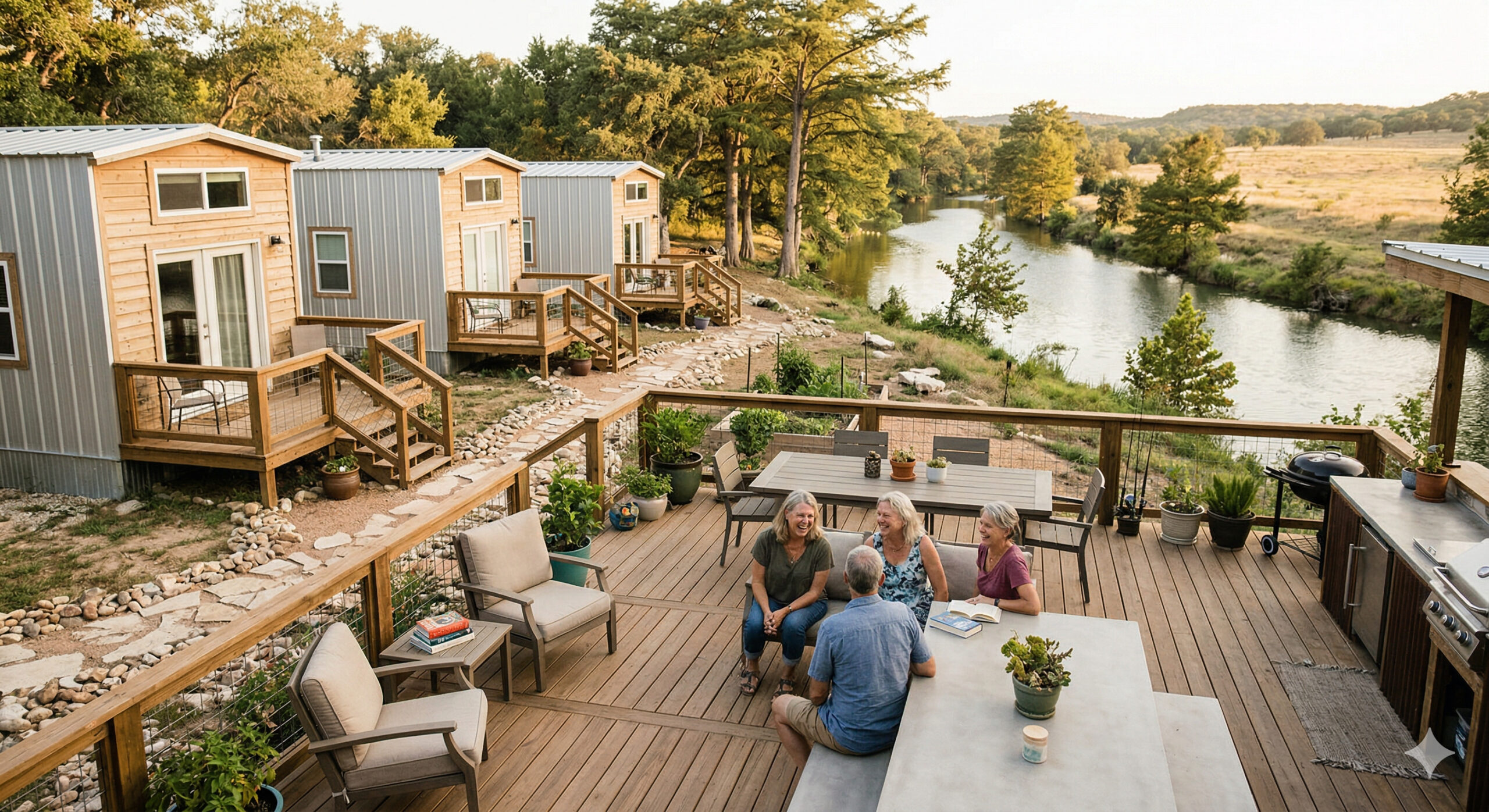
Bestie Row gathers friends who built a mini village in Texas with 32 m² houses and a common area, creating a new model of collaborative housing.
In 2015, in the Texas Hill Country, along the Llano River, in the United States, a group formed by four long-time couple friends, including names like Matt Garcia and his wife, along with three other close couples, decided to transform decades of friendship into a concrete project of shared living. According to reports published by outlets like The Spaces and the specialized platform Foundation for Intentional Community (IC.org), the group envisioned and built a small residential complex called Bestie Row, with the clear goal of creating an environment where they could age together while maintaining closeness, autonomy, and quality of life.
The most striking fact about the project is that each residence is only about 32 m², but the complex includes a spacious common structure that redefines how space, community, and privacy are organized. This model breaks with the traditional standard of isolated individual housing and proposes an alternative based on community.
32 m² compact houses redefine the concept of living space
Bestie Row consists of small individual houses, known as tiny houses, with approximately 350 square feet, equivalent to about 32 m². These units were designed to meet basic housing needs, with optimized environments and design solutions focused on functionality.
-
The ancient Japanese capital, planned over 1,200 years ago, still withstands earthquakes with colossal wooden temples and palaces, built without concrete or modern steel, by masters who created engineering capable of enduring centuries.

-
The lack of welders, electricians, and operators becomes a structural threat in 2025, with the construction industry and manufacturing already suffering from delays, cost pressures, and labor shortages in Brazil.
-
Brazil and Paraguay are just 46 meters away from a historic union on the bioceanic bridge that promises to revolutionize trade between the Atlantic and the Pacific.

-
With 55 km over the sea, a cost of US$ 20 billion, and enough steel to build 60 Eiffel Towers, China’s largest project has connected Hong Kong, Zhuhai, and Macau in a colossal bridge that defies the logic of engineering.


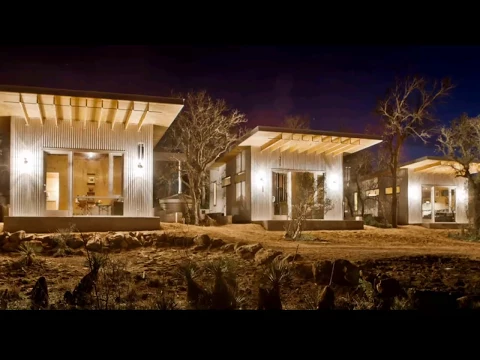

Each house includes:
- bedroom
- bathroom
- small living area
- integrated kitchen space
The proposal is not to maximize individual internal space, but to reduce private area in favor of a more efficient and socially integrated collective use.
This logic follows a growing trend in various countries, where the reduction in the size of individual residences is compensated by the expansion of shared areas.
Common living space is the center of the project
One of the most important elements of Bestie Row is the collective space. The complex includes a central structure of approximately 140 m², intended for interaction among residents.
This common space was designed to include:
- full kitchen
- dining area
- living room
- social interaction areas
This configuration allows daily activities to be carried out together, strengthening the bond between residents and reducing the need for duplicated structures in each residence.

The concept breaks with the traditional model of domestic isolation, replacing it with a logic of sharing.
Location along the Llano River reinforces the quality of life proposal
The project was built in a natural area in Texas Hill Country, a region known for open landscapes, low population density, and proximity to nature. The choice of location was not random. The proximity to the Llano River offers:
- access to outdoor activities
- more tranquil environment
- distance from urban pace
This context reinforces the project’s proposal, which seeks not only to reorganize housing but also to redefine the lifestyle of the residents.

The location also allows easy access to the city of Austin, maintaining a connection with urban centers without giving up tranquility.
Decades of friendship was the basis for the living model
Bestie Row did not emerge as a conventional real estate venture. It was built from personal relationships consolidated over decades.

The residents already had close ties before the project, which was decisive for the viability of the initiative.
The pre-existing trust among participants allowed for the creation of a living model based on cooperation, something difficult to replicate in contexts where residents do not share a common history. This characteristic differentiates the project from other forms of shared housing.
Model connects to global trends in collaborative housing
The concept of Bestie Row is aligned with international movements seeking alternatives to the traditional housing model.
Among these trends are:
- cohousing
- intentional communities
- collaborative housing
- reduction of individual space
These models arise in response to factors such as rising living costs, aging populations, and the search for greater quality of life.
In various countries, similar projects have been developed focusing on coexistence, sustainability, and efficiency in resource use.
Reduction of costs and sharing of resources are pillars of the model
One of the most relevant aspects of Bestie Row is the economic impact of the model. By reducing the size of individual residences and sharing common structures, residents are able to:
- lower construction costs
- reduce maintenance expenses
- optimize energy and resource use

This type of configuration can represent a viable alternative in scenarios of rising real estate costs and economic pressure on housing.
Moreover, the model reduces the need for duplication of equipment and spaces.
Project also responds to the challenge of aging populations
Bestie Row was conceived with a focus on the future of the residents, especially concerning aging. By living close to each other, participants create a support network that can be essential in later stages of life.
This type of arrangement allows for greater autonomy while providing social support, reducing dependence on formal care structures.
The model connects to global discussions on how to address the aging of populations in various countries.
Since its inception, Bestie Row has been widely publicized in international media, becoming a reference in alternative architecture and urbanism.
The visibility of the project contributed to:
- dissemination of the concept of collaborative housing
- inspiration for new similar ventures
- debate on new housing formats
The case demonstrates that solutions outside the traditional standard can gain scale and influence global trends.
Limitations show that the model depends on specific context
Despite its success, the model has limitations. The main one is the need for:
- trusting relationships among residents
- alignment of expectations
- compatibility of lifestyle
Without these factors, intensive coexistence can become a challenge, which limits the application of the model on a large scale without adaptations. Additionally, legal and urban planning issues may hinder replication in certain regions.









Seja o primeiro a reagir!