





 Portuguese
  English
  Spanish
  5 min of reading
  0 comments


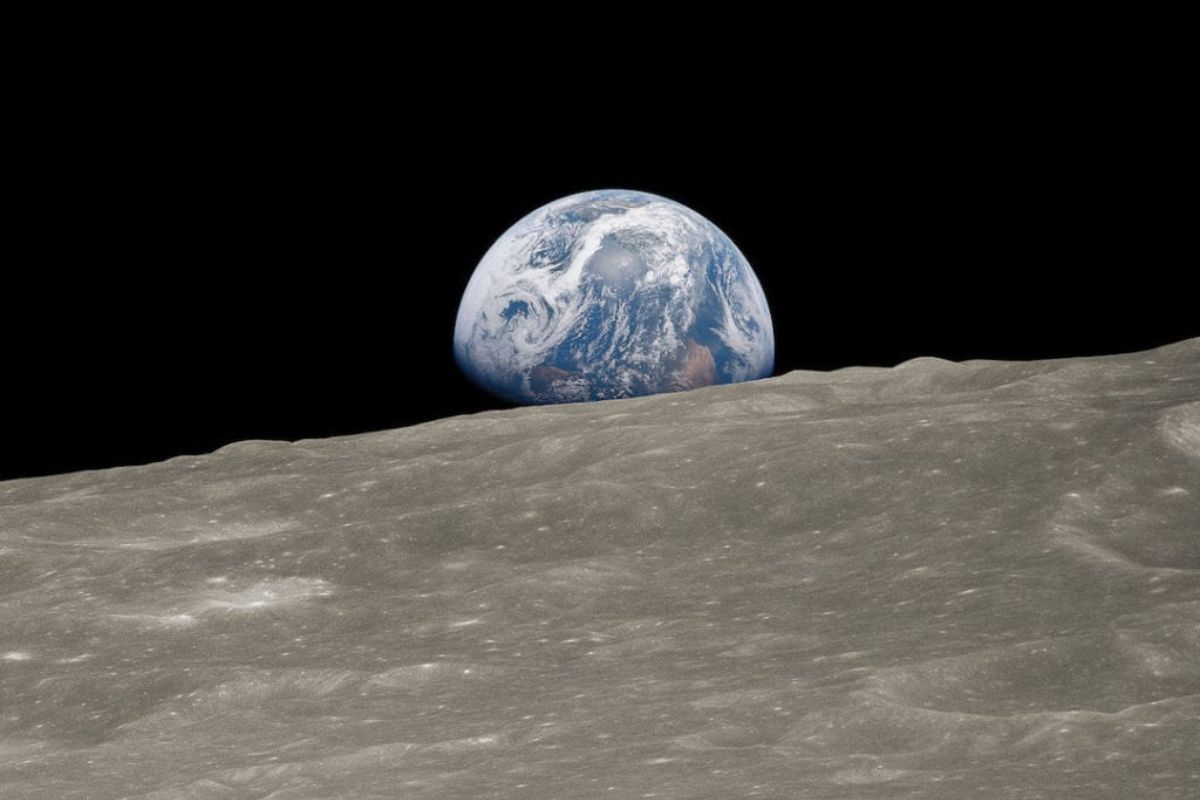
The Artemis II mission took off this Wednesday by the SLS rocket carrying four astronauts towards the Moon inside the Orion capsule, which on April 6 will pass by the dark side of the Moon, losing contact with mission control for up to 50 minutes
For the first time since 1972, humans are traveling towards the Moon. The Artemis II took off on Wednesday, April 1 at 7:24 PM Brasília time, carrying four astronauts inside the Orion capsule, launched by the SLS rocket from the Kennedy Space Center in Florida. The mission does not plan for a lunar landing, but will test all the spacecraft’s systems in crewed deep space flight for the first time.
According to g1, the most anticipated moment will occur on April 6, when the Orion capsule will pass between 6,400 and 9,600 kilometers above the surface of the Moon. At this point, the astronauts will see the satellite through the window, appearing the size of a basketball held at arm’s length, before disappearing behind the dark side of the Moon and losing all communication with Earth for up to 50 minutes.
The SLS rocket placed the Orion capsule in orbit in less than nine minutes
The launch of Artemis II occurred with precise timing. The SLS rocket, the most powerful ever operated by NASA, jettisoned its components in sequence during the first minutes of flight, following a trajectory that took the Orion capsule from the ground to outer space in rapid stages.
-
Worlds covered by water, atmospheres filled with hydrogen, and the possibility of life beyond Earth: ocean planets are rewriting the map of cosmic search and forcing scientists to rethink where to look.

-
Argentina achieves the unimaginable after more than 110 years and reintroduces the largest native herbivore of South America to the Chaco to restore a lost link in nature.

-
Returning to the Moon now costs a billion-dollar bill and reignites the competition between the USA and China for science, technology, and rare minerals on lunar soil.
-
While the world looks at oil, the war with Iran is already disrupting helium supply from Qatar, affecting car and iPhone chips, threatening AI expansion, and putting pressure on aluminum packaging at the highest value in four years.


Two minutes into the flight, the side boosters separated at an altitude of 13 kilometers. At three minutes, the capsule’s escape system was jettisoned at an altitude of 48 kilometers.
At eight minutes, the central stage of the SLS rocket detached at an altitude of 153 kilometers, with the spacecraft already traveling at 28,500 km/h.
Three hours and twenty minutes after takeoff, the upper stage also separated, and the Orion capsule was left alone in Earth orbit, ready for the next decisive maneuver towards the Moon.
The burn that points the Orion capsule to the Moon and already guarantees the return home
On the second day of the mission, this Thursday, the most critical maneuver of the initial phase will take place.
The main engine of the Orion capsule will be activated for the so-called translunar injection, a burn that takes the spacecraft out of Earth orbit and sets it on a definitive course for the Moon.
What makes this burn special is that it works in both directions. Astronaut Christina Koch explained that the same maneuver that points the spacecraft towards the Moon also sets up the free return trajectory, meaning that even if the engines fail after this point, the combined gravity of the Earth and the Moon will naturally bring the Orion capsule back.
From this burn onward, there is no turning back: Artemis II will be committed to the full trajectory to the lunar flyby and the return to the Pacific.
Three days in deep space testing systems that have never carried humans
Between April 3 and 5, the crew of Artemis II will continue traveling through deep space towards the Moon, out of reach of terrestrial satellites.
During this stretch, the astronauts will test critical life support, communication, and navigation systems that have never been operated with humans on board.
The crew will also practice emergency procedures and manual piloting maneuvers, with small trajectory adjustment burns along the way.
By the end of day 5, the Orion capsule will enter the gravitational influence sphere of the Moon, the exact point where the satellite’s attraction becomes stronger than that of the Earth.
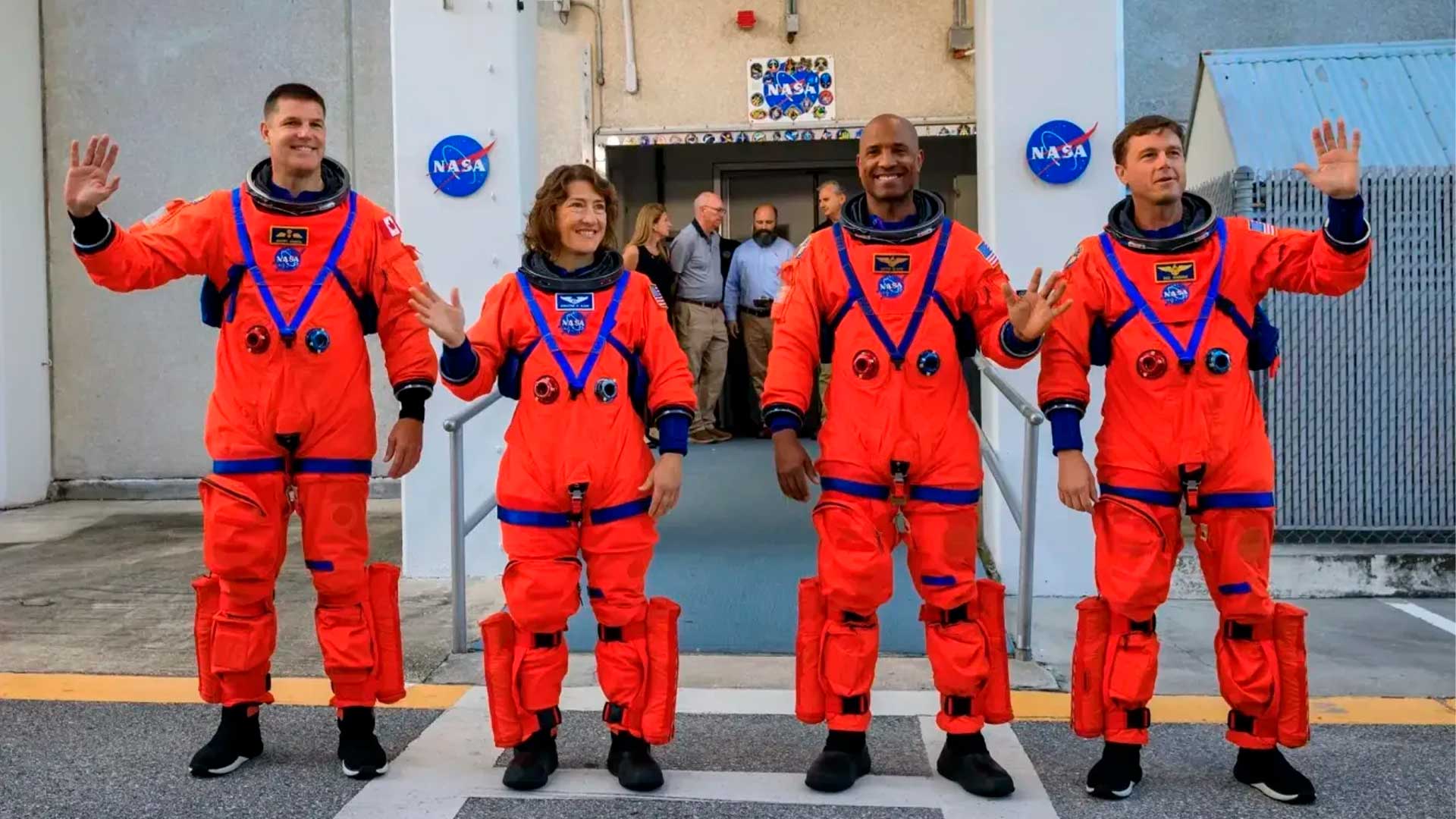
Aboard are astronauts Reid Wiseman, Victor Glover, and Christina Koch from NASA, and Jeremy Hansen from the Canadian Space Agency.
April 6: the dark side of the Moon and the most tense silence of the mission
April 6 is the highlight of the entire Artemis II. The Orion capsule will pass between 6,400 and 9,600 kilometers above the surface of the Moon, and from the spacecraft’s window, the astronauts will see the satellite occupying the field of view as no human has seen since 1972.
But the most intense moment comes right after. As it passes behind the dark side of the Moon, the spacecraft will be completely blocked by the lunar body and will lose all communication with Earth for an estimated period of 30 to 50 minutes.
Pilot Victor Glover said he would love for the whole world to be cheering and praying for the team to re-establish the signal after this silence.
During this period without contact, the astronauts will photograph regions of the dark side of the Moon that have never been observed by human eyes and will attempt to capture new images of Earth rising over the lunar horizon.
The return home at 40,000 km/h and the landing in the Pacific
After the flyby, the Orion capsule begins its return without needing a major engine burn, taking advantage of gravity to do the work.
Between April 7 and 9, the Artemis II crew will continue conducting piloting tests, evaluations of power systems, and thermal control during the return trip from the Moon.
The conclusion is scheduled for April 10. The service module of the Orion capsule will separate and be destroyed in the atmosphere, while the crewed capsule will re-enter at approximately 40,000 km/h, heating the thermal shield to about 1,650°C.
Parachutes will slow the descent until landing in the Pacific Ocean, off the coast of San Diego, California, where U.S. Navy teams will be positioned to recover the astronauts in less than two hours.
Daniel Flores, NASA’s testing director, said this is his favorite moment: bringing friends back to their families after flying around the Moon.
Will you follow the silence of day 6?
The Artemis II represents humanity’s return to deep space after more than five decades.
The SLS rocket has already done its part, the Orion capsule is on its way, and the dark side of the Moon awaits the four astronauts on April 6 for the most exciting and quietest moment of the entire mission.
Will you follow the mission in real time? What do you feel knowing that four people are traveling to the Moon right now? Leave in the comments what impresses you most about Artemis II.








Seja o primeiro a reagir!