





 Portuguese
  English
  Spanish
  5 min of reading
  0 comments


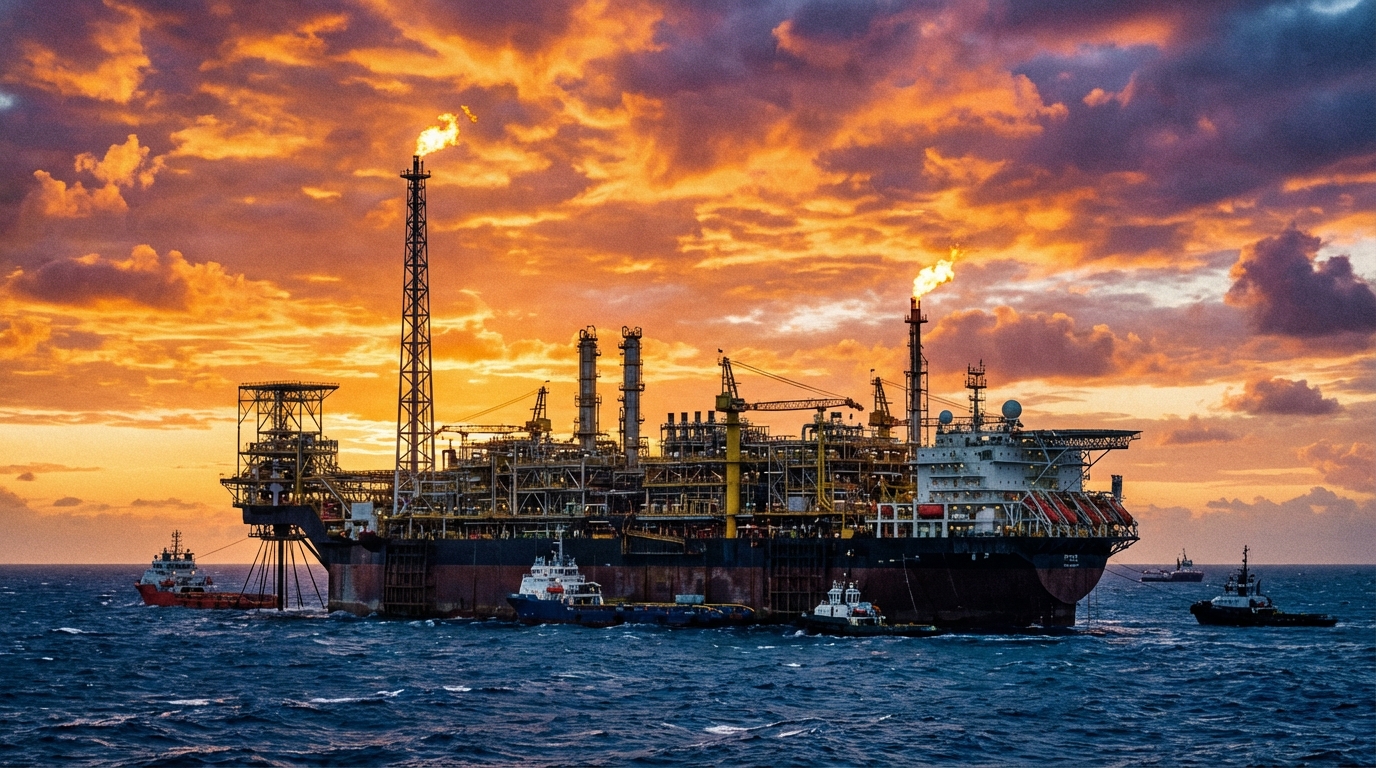
Seventh platform of the Búzios Field, Petrobras’ FPSO P-78 begins production with 180,000 barrels per day, 13 wells with intelligent completion, connection to the ROTA 3 pipeline, and CO₂ reinjection, consolidating the largest deepwater field in the world and driving the goal of 2.5 million barrels per day by 2026.
Petrobras started production of the FPSO P-78 in the Búzios Field on December 31, 2025. Thus, the platform became the seventh unit in operation in the largest deepwater field in the world.
Therefore, the installed capacity of Búzios rose to approximately 1.15 million barrels per day. According to Poder360, the P-78 is a key piece for Petrobras’ goal of 2.5 million barrels/day in 2026.
Furthermore, the field had already surpassed Tupi as the largest producer in the country in October 2025, when it reached the mark of 1 million barrels per day.
-
Big techs plan US$ 635 billion in AI data centers by 2026, but the crisis in the Middle East threatens investments, and Brazil is betting on natural gas to attract megacomplexes of up to 1,500 MW in Rio de Janeiro, Rio Grande do Sul, and Paraná.

-
The Moon has essential rare earth minerals for 99% of the electronics you use in your daily life and a future fuel that is almost nonexistent on Earth: now the race to explore the satellite has turned into a global competition among more than 70 countries.

-
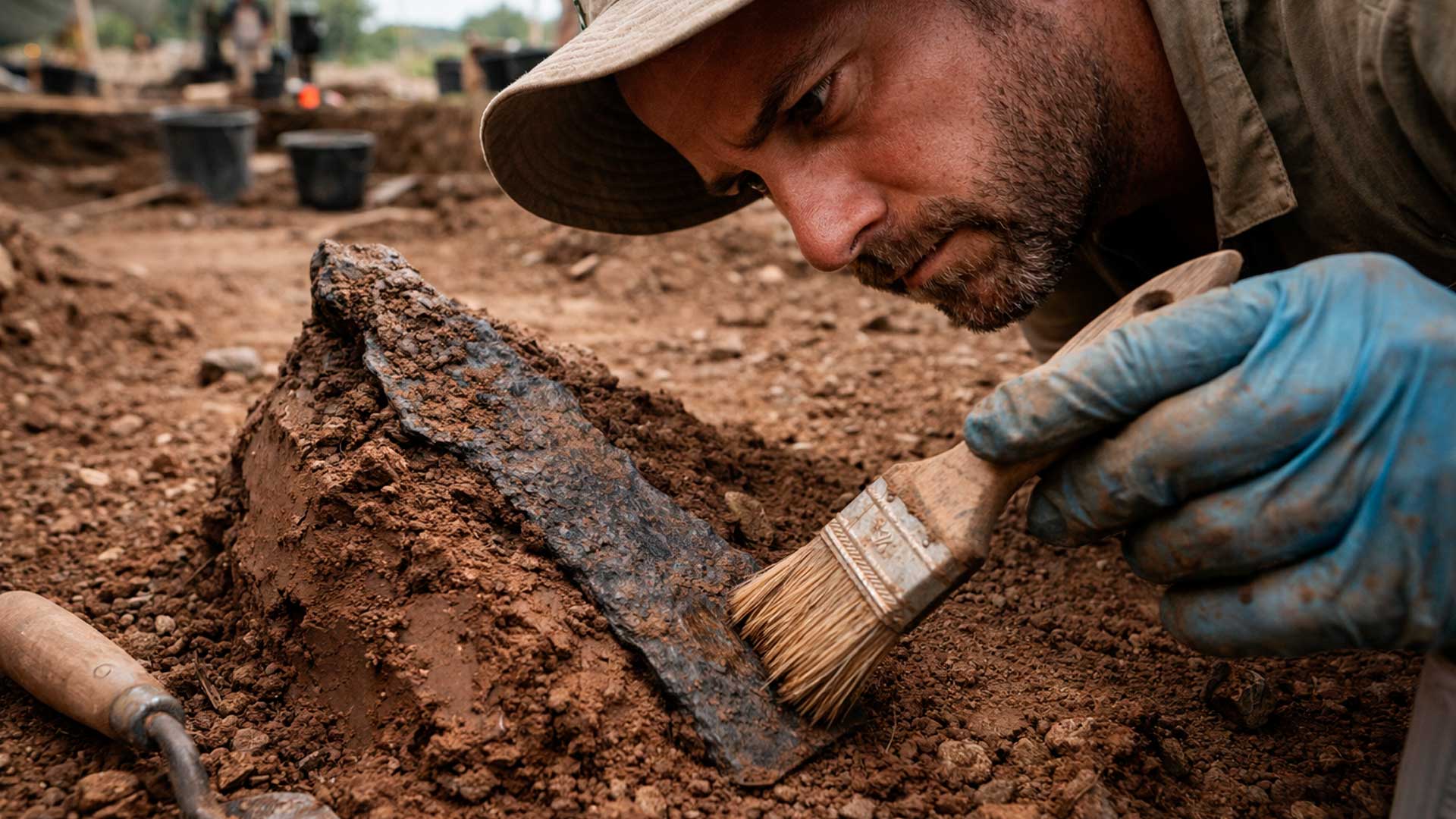
Scientists reveal an impossible artifact for its time made with iron from space, and the discovery reignites a historical debate about the Bronze Age in China.
-
The humanoid robot G1 has gained a new digital brain that has transformed it into a true domestic worker: it learns by observing the environment, interprets objectives, and executes complete tasks without receiving step-by-step instructions.

FPSO P-78 in the pre-salt of Búzios: technical specifications and capacity
The P-78 is an FPSO unit with 345 meters in length and 180 meters in height from the deck to the top of the flare. Thus, its nominal capacity is 180,000 barrels of oil per day and 7.2 million cubic meters of gas daily.
Additionally, the platform is connected to 13 wells: 6 producers and 7 injectors. All have intelligent completion with sensors and valves that allow remote control of pressure, temperature, and flow in real-time.
The P-78 inaugurates Petrobras’ “new family of proprietary unit projects,” a result of the PBRef (Basic Reference Project), which consolidated more than a decade of operational learning in the pre-salt.

Construction divided among 4 countries and 25% local content
The construction of the P-78 involved shipyards in China, South Korea, Singapore, and Brazil. Thus, the BrasFELS Shipyard in Angra dos Reis (RJ) manufactured 10 of the 23 topside modules.
However, the final integration took place at the Seatrium Shipyard (formerly Keppel) in Singapore. The contract stipulates a minimum of 25% local content.
On the other hand, a logistical innovation caught attention. The Brazilian crew boarded during the transfer from Singapore to Brazil, anticipating training by about two weeks.
Therefore, commissioning during the voyage reduced timelines. The P-78 departed from Singapore on July 13, 2025, and arrived in Brazil on September 30, 2025.
ROTA 3 pipeline connects Búzios to the mainland with 3 million m³/day
A strategic differential of the FPSO P-78 in the pre-salt of Búzios is the interconnection to the ROTA 3 pipeline. Thus, the platform exports natural gas to the mainland, expanding the national supply by up to 3 million m³/day.
This positions the P-78 not only as an oil asset but also as a vector for energy security in supplying natural gas to Brazil.

Búzios field tripled production between 2021 and 2025
Discovered in May 2010, Búzios is located 180 km off the coast of Rio de Janeiro. The field operates in water depths exceeding 2,000 meters and under more than 5,000 meters of salt and rock.
In March 2024, it reached the cumulative mark of 1 billion barrels of oil — in just 6 years of operation (2018–2024). No other modern offshore field matched this pace.
Additionally, the field tripled its production between 2021 and 2025. It rose from approximately 300,000 to over 1 million barrels per day.
As a result, in December 2025, Petrobras identified a new accumulation of oil in a zone below the main reservoir, at 5,600 meters depth.
Búzios accounts for 37% of the pre-salt and drives the goal of 2.5 million bpd
According to UBS BB, Búzios is expected to account for 37% of Petrobras’ pre-salt production in 2026. Therefore, the field is the main growth engine for the state-owned company.
Petrobras ended 2025 with an average production of 2.40 million barrels of oil per day, an increase of 11% over 2024. The pre-salt accounted for 82% of total production in the fourth quarter of 2025.
For 2026, the goal is 2.5 million barrels/day, and the P-78 — which began operations on the last day of 2025 — is a key piece to achieve it.
Still, three more high-capacity platforms are on the way. The P-80, P-82, and P-83 will have between 225 and 270 thousand barrels/day each. To understand how robots are already taking on dangerous inspections on these platforms, see the full report.
R$ 81 billion in royalties in 2025 and Petrobras’ record profit
Oil royalty revenue grew 6.8% in 2025, reaching R$ 62.2 billion. Adding special participations, the total transferred to the public sector was R$ 81 billion.
Thus, the distribution was as follows: R$ 24.5 billion to the Union, R$ 16.6 billion to states, and R$ 21.1 billion to municipalities. Rio de Janeiro concentrates 85.52% of state royalties.
Additionally, Petrobras recorded net income of R$ 110.1 billion in 2025, an increase of 199% over 2024. Revenue reached R$ 497.5 billion, and EBITDA rose 10% to R$ 237.1 billion.
On the other hand, the Business Plan 2026–2030 foresees US$ 109 billion in investments and the generation of 311,000 direct and indirect jobs.
CO₂ reinjection: the largest program in the world in deep waters
One of Petrobras’ greatest innovations in the pre-salt is the CCUS program. The CO₂ that comes with the oil is separated and reinjected back into the reservoir.
Therefore, this program is the largest in the world in operation in deep waters by reinjected volume. As of September 2021, 28.1 million tons of CO₂ had been reinjected, with a goal of 40 million accumulated.
Thus, the reinjection serves a dual purpose. Environmentally, it prevents emissions. Productively, it pressurizes the reservoir and facilitates oil flow, increasing the recovery factor.
With the FPSO P-78, the P-79 already positioned, and three more high-capacity platforms on the way, Búzios is on track to become one of the few fields in the world to reach 2 million barrels per day by 2030.
BrasFELS generates over 7,000 jobs in Angra dos Reis
The BrasFELS Shipyard (Seatrium Angra dos Reis) employed 7,200 direct employees and 1,000 outsourced in 2025. Additionally, there are plans for 1,800 additional hires.
For the Búzios 11 project (P-83), the contract with Subsea7 is for R$ 8.4 billion, with a minimum of 40% local content and an expectation to exceed 50%.
However, the challenges of the pre-salt remain significant. Drilling at a total depth of 7,000 meters requires dealing with extreme pressures, temperatures of 4°C at the ocean floor, a plastic salt layer, and highly corrosive CO₂. Also, check how Petrobras closed a US$ 180 million contract for underwater robots to operate under these conditions.




Seja o primeiro a reagir!