





 Portuguese
  English
  Spanish
  5 min of reading
  0 comments


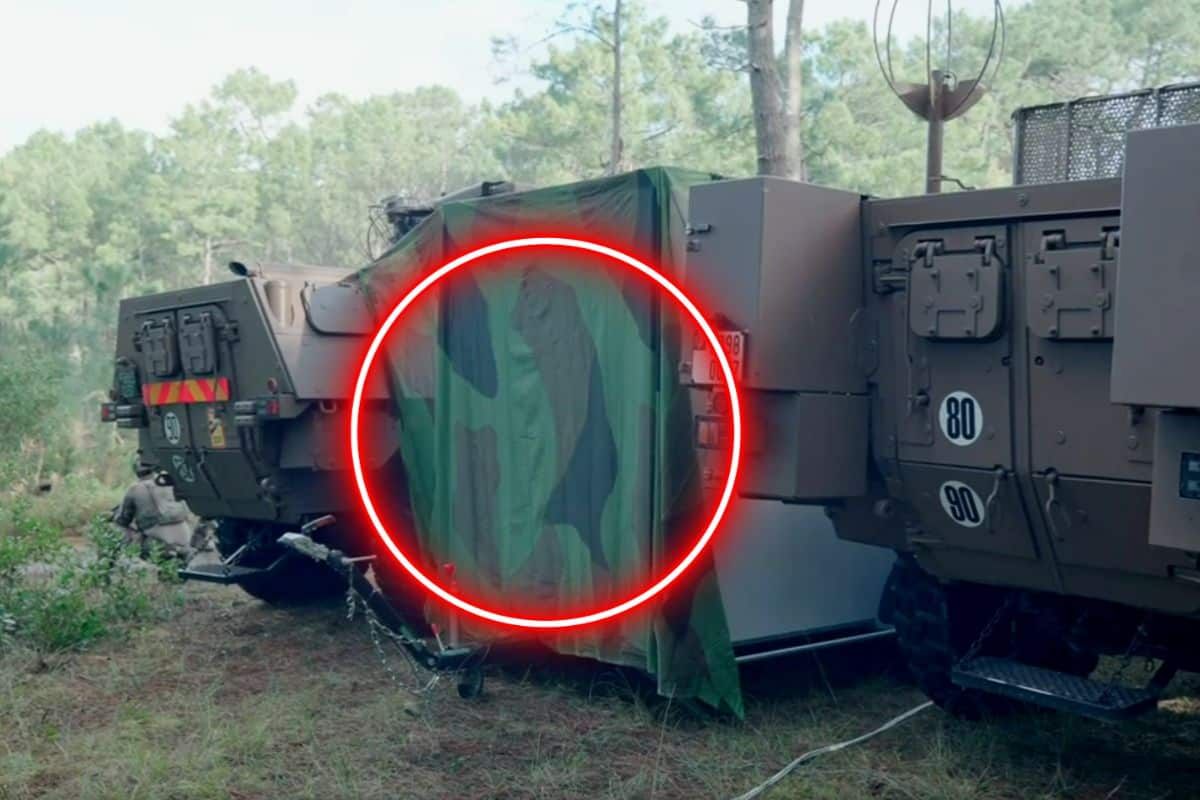
With a Mobile Trailer-Based Drone Factory, France Tests FPV Production Near the Frontline, With Printing in Up to Three Hours and a Rate of Ten Units Per Hour, While Evaluating Logistical, Doctrinal, Industrial Impact and Commercial Potential for Future Exports in Allied Defense Markets.
According to the jornalinside portal, the French drone factory emerges as a direct response to an age-old problem of modern warfare: the distance between those who design, manufacture, and those who need the equipment on the ground. By bringing production closer to combat, the country is testing a way to reduce critical delays.
In practice, the movement combines field engineering, military logistics, and continuous operational learning. Instead of relying solely on lengthy and vulnerable supply chains, the proposal is to create productive capacity where the pressure is greatest, focusing on rapid replenishment, technical adaptation, and mission continuity.
Tactical Innovation on Wheels: Produce at the Point of Use
The central change lies in the logic of employment: the drone factory does not remain in a distant industrial park, but in a trailer that can be moved by a light vehicle. Within this module, 3D printers work synchronously to manufacture FPV drones in up to three hours, peaking at ten units per hour when the operation reaches maximum pace. This turns time into tactical advantage.
-
Discovery at USP reveals how Brazilian arnica can revolutionize the production of silver nanoparticles with less environmental impact.

-
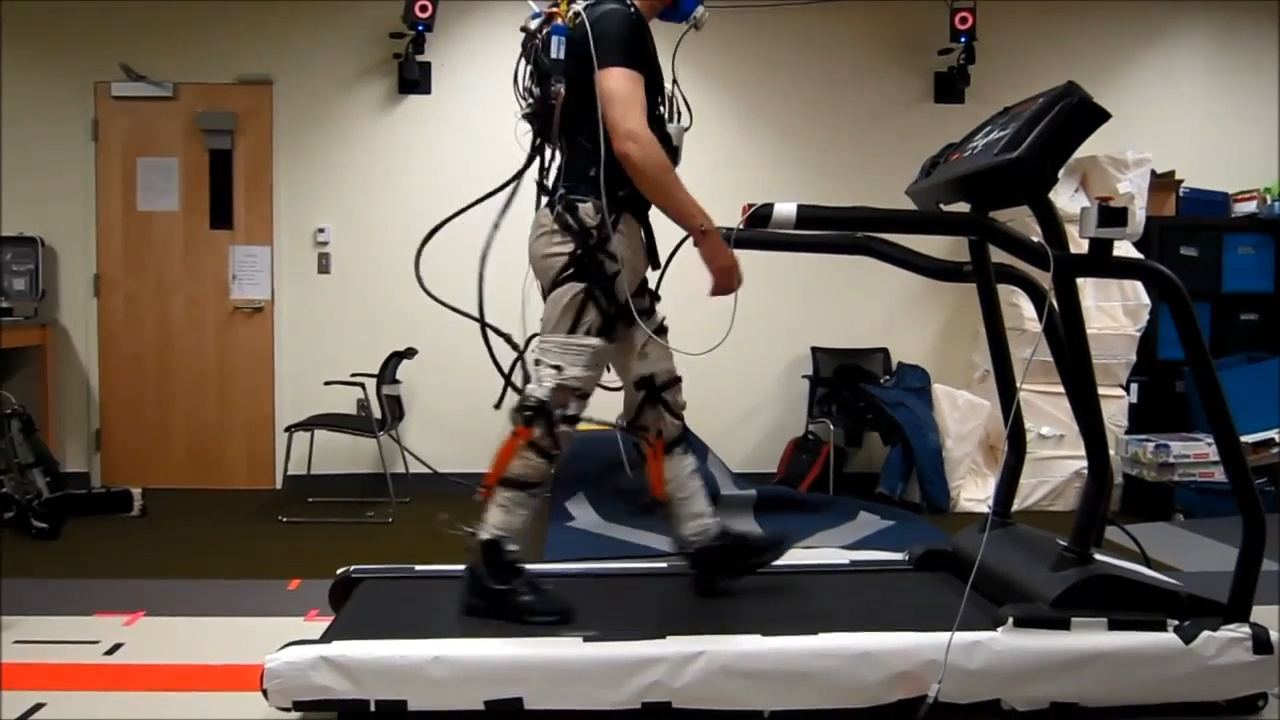
Harvard scientists have created a tissue exoskeleton that does not look like an exoskeleton, with no rigid parts and reduced weight, using flexible cables and miniaturized motors to assist the ankle and hip, reducing the effort of walking by up to 23% in controlled tests.
-
The Caspian Sea intrigues scientists as it is neither officially a sea nor a lake: the largest lake on the planet holds a hybrid crust, submerged cities, mud volcanoes, and billions of barrels of oil hidden at the bottom.

-
Why did the sky turn blood red in the west of Australia and it wasn’t sunset? Discover what is behind the change that took over the horizon for miles.


This architecture reduces dependence on long supply routes, which in high-intensity scenarios can be slow, costly, and exposed. Producing “at the point of use” does not eliminate all logistics but shortens the most sensitive stretch: the interval between real need in the field and equipment availability. The shorter this interval, the greater the capability to sustain continuous operations.
At the same time, the proximity between production and use allows for quick adjustments. If a drone configuration shows below-expected performance in a certain mission, the correction can be incorporated in short cycles, without waiting weeks for a new batch coming from another region. It is a model of innovation under pressure, with learning almost in real-time.
From the Workshop in Périgueux to Accelerated Military Testing
Behind the project is Per Se Systems, founded in 2023 by Paul Pelletier and Julian Faraut. The company accelerated its validation after demonstrations to the 3rd Marine Infantry Regiment and subsequently received a request from the 17th Artillery Group for a target drone for training. The result was the SL450, developed in a matter of weeks, with autonomous flight and use in live fire as a moving target. The institutional message was clear: there was delivery capacity within a short deadline.
This history helps explain why the drone factory advanced from concept to practical application swiftly. The decision chain was supported by operational evidence, not just technological discourse. In defense, this point is decisive: solutions gain traction when they demonstrate concrete utility in demanding testing environments.
There is also a relevant organizational element. The project does not rely solely on hardware; it requires coordination between military command, engineering, maintenance, and supply planning. In other words, the mobile platform is a visible piece of a larger transformation that involves processes, training, and technical governance.
Micro-Plant Engineering: Energy Autonomy, Discretion, and Continuity
The micro-plant has been designed to operate in a rugged environment, focusing on resilience. Among the reported features are a generator set with up to 19 hours of continuous production, a smoke extraction system to protect the team, and a solar panel dedicated to discreet lighting and efficient consumption. It’s not just mobility; it’s mobility with operational support.
The choice of a trailer towed by a light vehicle also has practical weight. It eliminates the need for trucks with cranes, simplifies movement, and expands positioning options. In the field, mechanical simplicity is often as valuable as electronic sophistication because it reduces points of failure and accelerates assembly/disassembly.
Another important technical aspect is the operational signature. The proposal seeks to reduce visual and sound exposure, maintaining discretion in employment. For a drone factory close to the front, discretion is not an aesthetic detail: it’s a factor for the survival of production capacity. Without adequate protection, any speed gain may be lost due to security interruptions.
What Changes in Doctrine: Rapid Replenishment, Adaptation, and Distributed Warfare
The advance of the drone factory relates to a scenario where FPVs have become first-line consumables. In certain sectors, there is talk of using hundreds of units per day, potentially reaching 10,000 per month. This volume puts pressure on centralized chains, which do not always keep pace with the rate of losses, adaptations, and replenishments demanded by intense operations.
In this context, producing close to consumption ceases to be an emergency solution and becomes a doctrinal component. The so-called distributed warfare favors speed, redundancy, and adjustment capacity, rather than relying solely on a few complex and expensive systems. Superiority now depends on the replenishment rate and the speed of iteration.
This also repositioned military logistics. Traditionally seen as “the rear,” it returns to the center of tactical decision-making. When production and use come closer, logistics cease to be just transport and stock; it becomes an active mechanism for generating combat power. It’s a structural change in mindset, not just equipment.
Scale, Exports, and Civil Use: The Next Maturity Test
Although ten drones per hour is a relevant milestone, high-intensity conflicts demand much larger scale. To sustain prolonged demand, it would be necessary to coordinate dozens or hundreds of mobile units operating in a network, with consistent quality, maintenance, and data integration standards. Scaling is the test that separates a promising prototype from a systemic solution.
Per Se Systems is working on patents to enhance system integration and reduce external dependence, aiming for a 100% French drone. If this ambition is technically solidified, the drone factory could transform into an exportable package: mobile platform, production process, operation software, and employment method. In this scenario, the export would not merely be of product but of applied doctrine.
There is also a possible civil overflow. The same logic of emergency manufacturing can support critical repairs in infrastructure, quick maintenance of energy and communication networks, as well as support for rescue teams with custom components produced close to the mission. When productive mobility meets urgent need, the strategic value transcends the military sector.
The French experience with the drone factory encompasses three axes that rarely advance together at the same pace: industrial capacity, operational urgency and doctrinal vision. The initial result points to a larger question than technology: those who dominate the entire cycle between need, manufacturing, and employment will have sustained advantage in high-pressure scenarios.





-

-

-

-

-

-

36 pessoas reagiram a isso.