





 Portuguese
  English
  Spanish
  4 min of reading
  0 comments


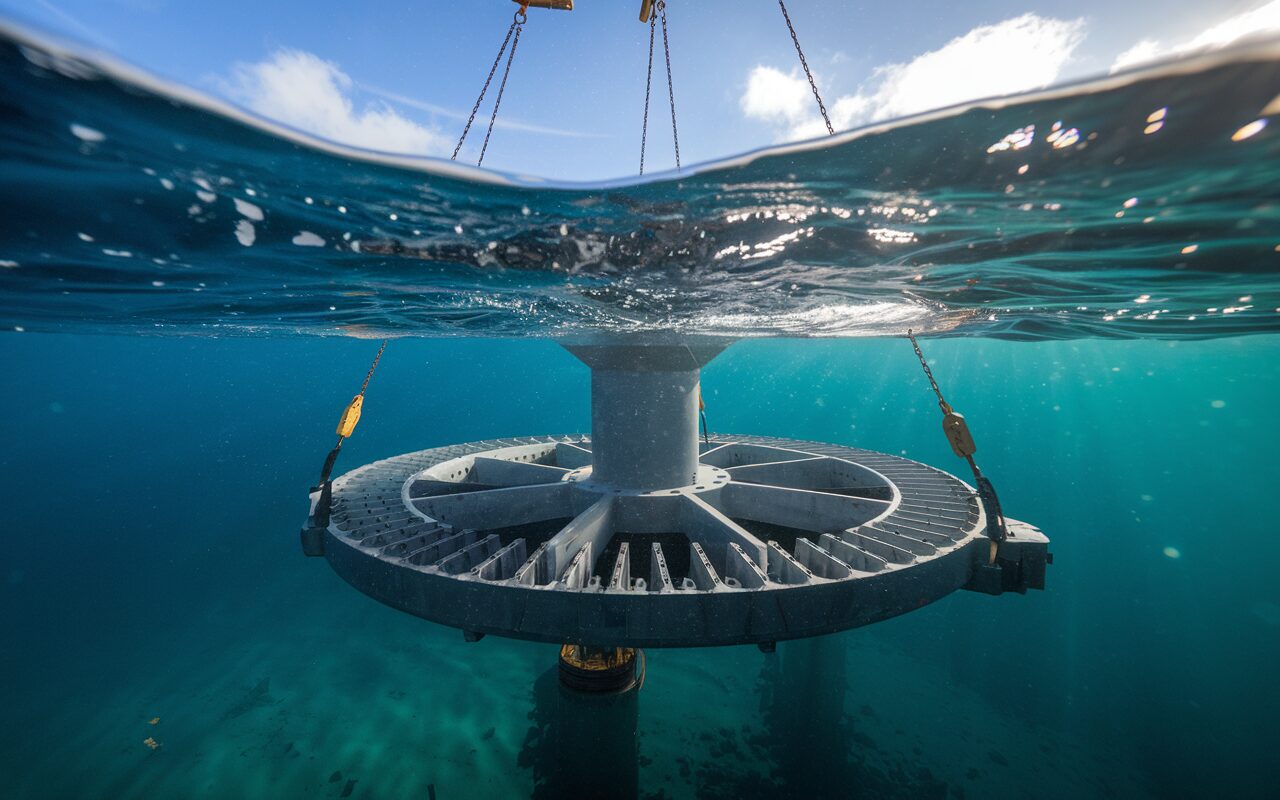
France Invests in Clean Energy with 24-Meter Submerged Tidal Turbines; Billion-Dollar Project Promises Rapid Installation and Continuous Generation on the Seafloor.
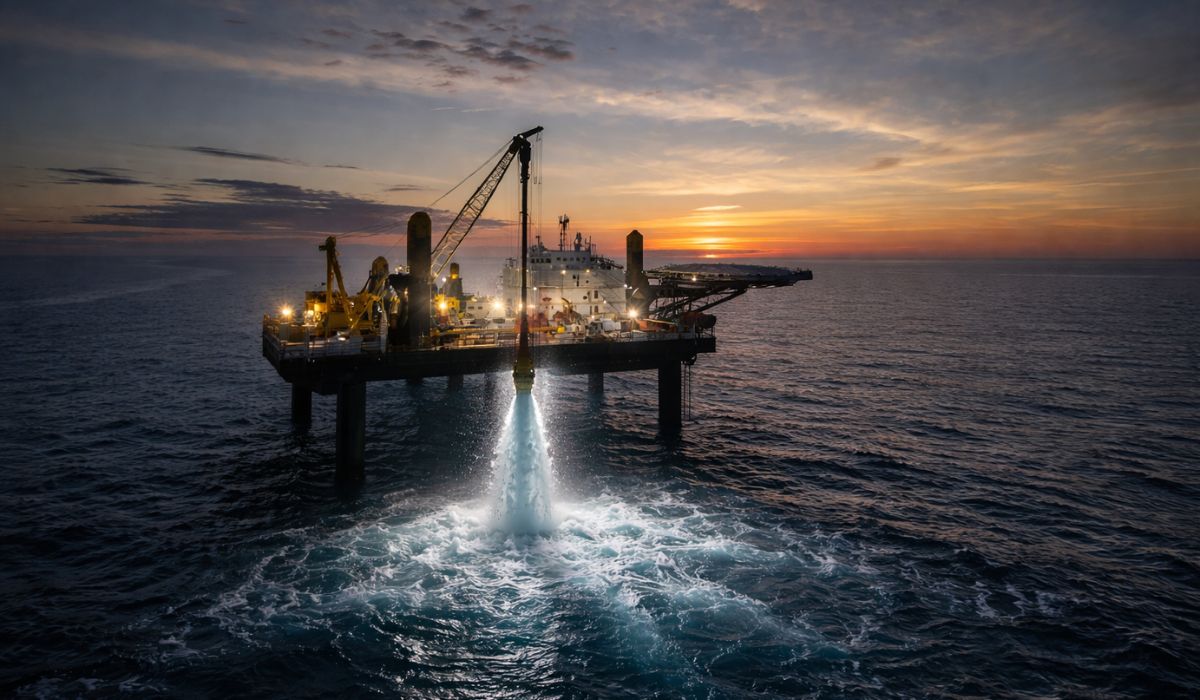
France is taking a decisive step in harnessing the natural forces of the ocean to produce clean energy. With an investment of €31.3 million, funded by the European Union, the country has begun installing 24-meter submerged tidal turbines in the English Channel, in one of the regions with the most intense sea currents in the continent. Each unit can be assembled in just 20 minutes, thanks to the advanced engineering involved in the project.
The initiative, called NH1, is led by the French company Normandie Hydroliennes and represents one of the first large-scale applications of tidal energy with commercial potential. The project aims to connect four turbines to the French electrical system by 2028, producing an estimated total of 34 GWh per year.
Tidal Energy Gains Prominence in the French Energy Matrix
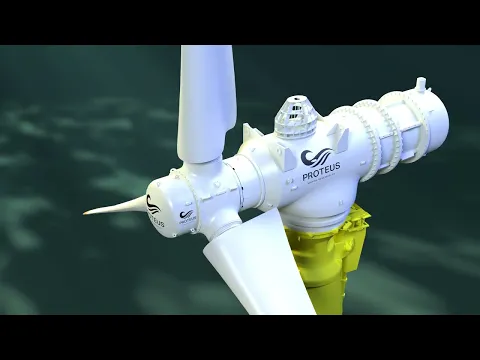

Tidal energy, also known as marine energy, has emerged as a stable and predictable alternative to intermittent sources like solar and wind. The French project stands out for utilizing AR3000 submerged turbines, considered the most powerful in the world in this segment. Each unit will have a capacity of 3 megawatts (MW) and will be positioned in the Raz Blanchard, a maritime strait north of Normandy.
-
Renewable energy advances over protected areas in Brazil, and a survey by the Energy Transition Observatory reveals silent impacts that challenge environmental conservation and pressure sensitive traditional territories.

-
Rio Grande do Sul accelerates energy transition: State invests in renewable technologies and consolidates decarbonization strategies and pathways to attract billions in new industrial investments.

-
With 160,000 m² of collectors, an area larger than 20 football fields, Silkeborg, in Denmark, hosts a solar thermal plant that heats 19,500 homes and could become the largest solar heating plant in the world.

-
A study reveals the expansion of renewable energy procurement in Brazil and shows how companies are taking advantage of opportunities to reduce expenses, ensure energy efficiency, and strengthen strategic environmental commitments.


The turbines powered by tidal energy use the gravitational force of the Moon on the oceans to move large submerged rotors. This natural, constant, and predictable force ensures stable energy generation — one of the major challenges faced by renewable energies.
Rapid Assembly and Automated Operation
Each AR3000 turbine has a rotor diameter of 24 meters, equivalent to the height of an eight-story building. Despite their size, one of the most notable innovations of the project is the assembly time: just 20 minutes per unit. The agility in installation drastically reduces costs and deployment time, facilitating the model’s expansion to other coastal areas in Europe.
The intelligent control system of the turbines automatically adjusts the speed and angle of the blades according to the intensity of the sea currents, maximizing electricity generation. This technology allows for efficiency even in challenging environments, such as the Raz Blanchard strait, known for its powerful currents.
Single Cable Transmits Power to the Mainland
All the energy generated by the submerged turbines will be transmitted to the French coast through a single export cable, a common solution in offshore projects in Europe. This type of cable is already used in interconnections between countries, such as between England and Denmark, and proves efficient both in transporting energy and reducing losses.
The centralization of transmission through a single cable also allows other turbines to be easily integrated in the future, creating an even larger network of tidal energy generation.
€31.3 Million Investment Could Generate Up to 100 GW by 2050
The NH1 project, with its initial investment of €31.3 million, is just the beginning of an ambitious bet by France and the European Union. According to estimates from the company Normandie Hydroliennes, the potential for tidal energy generation in Europe could reach 100 gigawatts (GW) by 2050, enough to power up to 94 million households.
This figure reinforces the role of tidal-powered turbines as a strategic solution for reducing dependence on fossil fuels and diversifying Europe’s energy matrix towards clean and sustainable sources.
Environmental and Technical Challenges
While the project has been designed with a focus on sustainability, it faces environmental and technical challenges. Normandie Hydroliennes highlights that the turbine design minimizes the impact on the marine ecosystem, but issues involving local fauna and flora are still being monitored.
Moreover, the maritime environment of the Raz Blanchard is known for its extreme conditions, which may hinder the installation of the structures and require constant maintenance. Nevertheless, the technology has been designed to withstand these conditions, and initial tests have shown good performance.
One of the main arguments in favor of submerged turbines powered by tidal energy is their ability to generate stable and reliable energy, regardless of weather conditions. Unlike solar, which depends on daylight, and wind, which requires wind, tides follow predictable natural cycles for billions of years.
This characteristic makes tidal energy a valuable option for complementing other renewable sources, helping to balance the electrical grid and ensure energy security over time.






Seja o primeiro a reagir!