






 Portuguese


From 600 Meters of Unsold Silk to One of Brazil’s Most Recognized Fashion Brands: Dudalina’s Story Began at Home with Resourcefulness, Seamstresses, and a Solution Found for Overstock.
Almost seven decades after its founding in a small town in Santa Catarina, Dudalina continues to sell clothes and shirts across the country.
Today, the brand is part of Veste Group, which also includes Le Lis, John John, BO.BÔ, and Individual, and ended 2025 with 22 Dudalina franchises operating.
However, the origin of this business is far from a large factory, investors, or a carefully crafted plan.
-
Employees Destroy Defective Refrigerators: A Turning Point for Haier’s Transformation from Near Bankruptcy to Global Giant

-
Archaeologists Unearth Rare 2,400-Year-Old Gold Coin in Ancient Greek Necropolis in Sicily: Coin Shows Hercules in Nemean Lion’s Skin, Minted in Syracuse During Carthaginian Invasion, Possibly Funding War Efforts in 5th Century BC

-
Harnessing South America’s Giant: Brazil’s Massive Concrete and Steel Undertaking on the Paraná River and the Itaipu Megaproject
-
Six Giant Modules, 12 Days of Operation, and Pieces Weighing Up to 3,320 Tons: New Terminal Takes Shape After Structures Travel Overnight for Over 800 Meters to Their Permanent Foundations


It all started with 600 meters of silk that Rodolfo Francisco de Souza, known as Duda, brought from São Paulo to Luiz Alves, Santa Catarina, in 1954.
The fabric seemed like a good purchase, but there was a problem: it was out of fashion and found no buyers.
Instead of letting that inventory take up space indefinitely, Adelina Clara Hess de Souza found another destination for the material.
She transformed the silk into shirts, realized they sold well, and three years later called in two seamstresses to work at home.
The sewing machines didn’t belong to the couple either.
With no money to buy equipment, the seamstresses brought their own machines from home and received an additional fee for their use.
It was from this improvised arrangement that, in 1957, the company that would later become known throughout the country as Dudalina began to take shape.
Dudalina’s Story Began in a Santa Catarina Grocery Store
Adelina was born in Luiz Alves in 1926 and started working in her family’s store at an early age.
As a teenager, she helped in her parents’ grocery store.
At 18, she took a tailoring course, knowledge that would prove useful years later.
In 1945, she met Rodolfo Francisco de Souza, known as Duda.
The two married in 1947 and had 16 children over the years. The couple also took over Adelina’s family’s business.
To keep the shelves stocked, they needed to travel in search of goods. São Paulo, especially the area around Rua 25 de Março, was part of this route.
It was during one of these trips that they came across the batch of fabric that would change the course of the business.

Duda Returned from São Paulo with 600 Meters of Silk
In 1954, Duda traveled alone to purchase goods.
On Rua 25 de Março, according to a report by Adelina in Empreendedor magazine, he found a merchant who offered 600 meters of silk, with payment spread over 12 months and terms considered advantageous by the buyer.
Duda returned to Santa Catarina thinking he made a good deal.
The market, however, responded differently.
The silk was no longer in demand, and the material remained unsold in the family’s inventory.
What was supposed to become merchandise sold by the warehouse started occupying space without bringing any return.
Adelina then took advantage of the sewing knowledge she had acquired years earlier.
The solution found was to transform the fabric into another product.
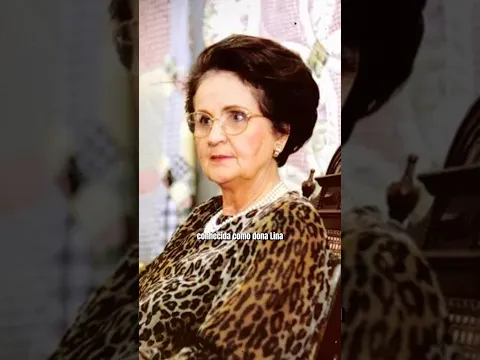

The first shirts revealed an opportunity in the unsold fabric
Accounts of the company’s history note that Adelina examined how a shirt was constructed and decided to experiment with the material on hand.
With the help of seamstresses, three pieces were produced in one of the early experiments and quickly sold in the local market.
The customers’ reaction opened a possibility that didn’t exist when the 600 meters of silk arrived at Luiz Alves.
The fabric ceased to be merely a difficult stock to sell and began to provide raw material for a small workshop.
Production began to take shape on May 3, 1957, a date associated with the founding of Dudalina.
Initially, there was no industrial warehouse waiting for the new employees.
A room in the house was adapted to accommodate the activity.
During the day, furniture was removed to create space for the seamstresses to work.
When the workday ended, the space would revert to its domestic function.

Seamstresses brought their own machines to produce the shirts
The next obstacle appeared quickly.
Producing more shirts required sewing machines, but the couple didn’t have enough capital to buy all the equipment they needed.
Adelina found a practical solution.
Two seamstresses were hired and began bringing their own machines to work in the family’s house.
In addition to payment for their services, they received an extra amount for the use of their equipment.
In an interview recorded in a 1994 report, Adelina explained that when a seamstress received a specific salary, the couple added a portion for the loan of the machine.
There was another unusual limitation for those observing an industry today: Luiz Alves lacked the electrical infrastructure necessary for that production.
To keep the machines running, the couple acquired a used generator.
Thus, the small home operation began, combining excess fabric, an improvised room, machines owned by the seamstresses, and self-generated electricity.
Dudalina left a room and began to grow
The space inside the house quickly became cramped.
As production increased, the couple rented another property nearby to accommodate the manufacturing.
In 1962, the company formally adopted the name Indústria e Comércio Dudalina S.A.
The name combined the founders’ nicknames: Duda and Lina.
As the structure grew, Adelina was also directly involved in searching for seamstresses and selling the pieces.
Production began reaching larger buyers.
One of the first wholesale orders recalled by Adelina involved 54 shirts for the Lages Road Battalion in Santa Catarina.
The transformation of that small workshop accelerated in the following decades.
In a report originally published in 1994, the magazine Empreendedor noted Dudalina had almost a thousand employees, five factories between Santa Catarina and Paraná, and was expected to produce around 1.8 million pieces that year.
The projected revenue was approximately US$ 27 million.

The 16 children also became part of Dudalina’s history
The expansion occurred while Adelina and Duda managed an unusually large family.
The couple had 16 children, and the company would become a family business, with various members from the new generation passing through the company.
Decades later, one of the daughters, Sônia Hess, would take over the executive leadership of Dudalina.
When Adelina passed away on October 31, 2008, at the age of 82, the company had already established a prominent position in the Brazilian shirt market.
The expansion continued after the founder’s death, but it also marked the beginning of a new phase in the company’s corporate structure.
In 2013, investors acquired a majority stake in Dudalina.
The following year, the company was incorporated into the portfolio of Restoque, alongside the brands Individual and Base.

The former Restoque later became known as Veste S.A. Estilo.
Dudalina remains part of the group’s portfolio and continues to operate its own e-commerce, alongside stores and franchises.
In 2025, the brand reemerged in Veste’s expansion plans.
According to information released by the company and its executives, Dudalina ended that year with 22 franchise operations, while the group was working on store renovations and expanding digital and multi-brand channels.
This update helps to put the original story into perspective.
The business that remains active in 2026 started in a reality where there was hardly any money to buy the first sewing machines.
Before the stores, the national expansion, and the changes in control, there was a house in the interior of Santa Catarina, two seamstresses arriving with their own equipment, and hundreds of meters of fabric that nobody seemed to want to buy.


