





 Portuguese
  English
  Spanish
  6 min of reading
  0 comments


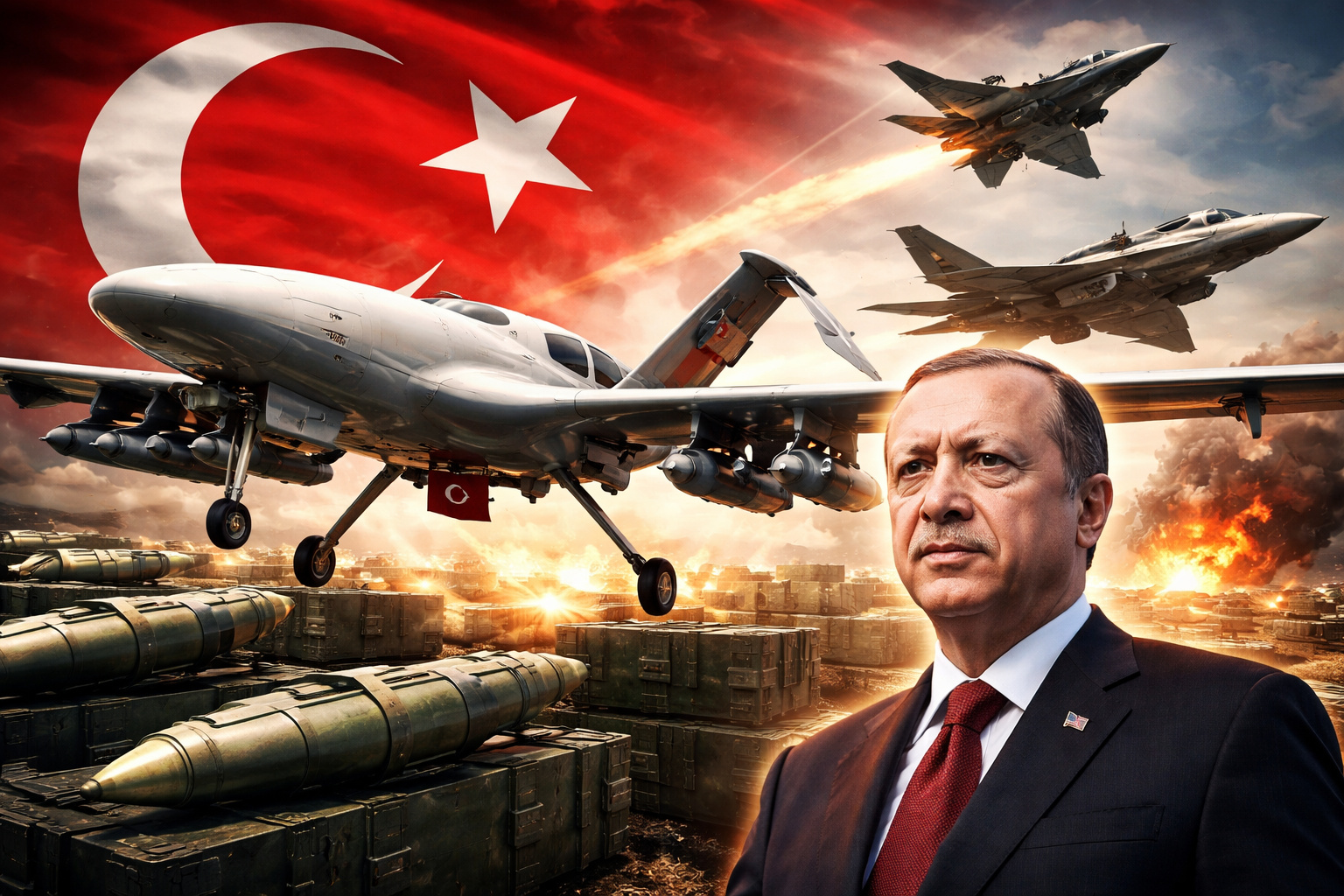
After US sanctions, Turkey became a global leader in combat drones, dominating 65% of the market and advancing with the 5th generation fighter KAAN.
In 2019, the US government expelled Turkey from the F-35 program, the most advanced fighter jet in the world. The decision was made after Turkey purchased the Russian S-400 system, deemed incompatible with NATO security, leading Washington to formally suspend and remove Ankara from the project, according to a statement from the US Department of Defense. Turkey had invested about US$ 1.4 billion in the program, planned to acquire up to 100 aircraft, and was involved in the supply chain producing over 900 components of the fighter. Everything was halted with the American decision, which also ended Turkey’s industrial participation and blocked the delivery of the planes.
Most military analysts predicted that the sanction would permanently weaken the Turkish Air Force. What happened was the opposite.
Most military analysts predicted that the sanction would permanently weaken the Turkish Air Force. What happened was the opposite. Five years later, Turkey became the largest exporter of combat drones in the world, controlling over 65% of the global market in the sector, sold arms to 170 countries, and generated US$ 7.1 billion in defense exports in 2024 — a number that the Turkish industry itself acknowledges could reach US$ 10 billion with the consolidation of data from 2025.
-
Attracting around 250,000 people a year, a lighthouse 200 meters from the sea, on a 60-meter high cliff, on the North Sea coast in Denmark, becomes one of the most impressive examples of how nature can threaten historical buildings.

-
The narrowest house in the world is only 63 centimeters wide, but inside it can accommodate a bathroom, kitchen, bedroom, office, and even two staircases.

-
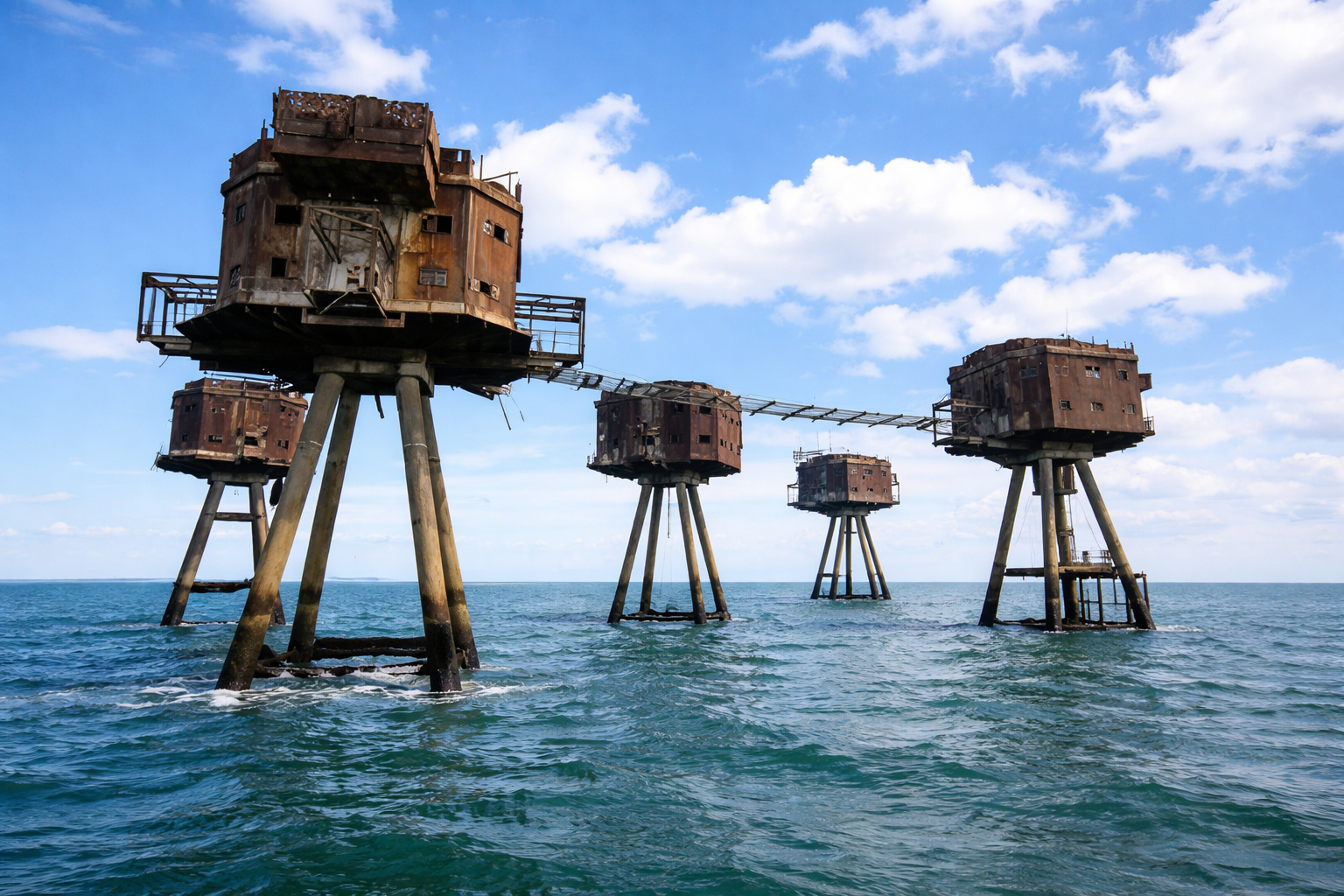
In the middle of the sea, these enormous concrete and steel structures, built by the British Navy to protect strategic maritime routes, look like they came straight out of a Star Wars movie.
-
For years, no one could cross a neighborhood in Tokyo because of the tracks, but an impressive solution changed mobility and completely transformed the local routine.


Turkey’s defense industry grows from US$ 1 billion to over US$ 11 billion in two decades
To understand what happened, we need to go back to 1974. That year, Turkey intervened militarily in Cyprus. The United States responded with an arms embargo. Turkey, a NATO member since 1952, began to face severe restrictions on access to American military equipment during the Cold War.
Turkey’s response was to create SAGEB, an agency dedicated to developing national defense capability. The goal was straightforward: never again depend on a single foreign supplier.


In the 1990s, Germany banned exports of armored vehicles to Turkey. In the 2010s, the US Congress blocked arms sales for political reasons. Each embargo reinforced the same strategic conclusion: autonomy would only be possible with domestic production.
The Turkish defense sector generated US$ 1 billion per year in 2002. By 2022, that figure had reached US$ 11 billion, driven by a long-term industrial policy, consistent subsidies, and an ecosystem that now includes about 3,000 companies.
Four of them became central to this process: TUSAS, responsible for the KAAN fighter; Aselsan, specialized in defense electronics; Roketsan, a missile manufacturer; and Baykar, which established itself as the main asset of the Turkish drone industry.
Bayraktar TB2 boosts Turkey’s leadership in the global combat drone market
The Bayraktar TB2 was developed by Baykar with its own resources, without direct state subsidy in its initial phase. The company was led by Selçuk Bayraktar, an MIT graduate engineer, who would later become a central figure in the country’s defense industry.
The drone entered the market with an approximate cost of US$ 5 million per unit. For comparison, American systems like the Predator cost around US$ 30 million, while the Reaper exceeded US$ 30 million.

Even with a significantly lower cost, the TB2 provided prolonged surveillance, precision strike capability, and operation in real conflict zones — and, most importantly, demonstrated effectiveness in combat.
In 2020, it was used by Azerbaijan in the Nagorno-Karabakh conflict, destroying defense systems and armored vehicles. In 2022, it played a significant role in the early phases of the war in Ukraine, targeting Russian convoys and enhancing the country’s aerial observation capability. Images of these attacks circulated globally and served as an operational showcase for the product, driving international demand that few analysts had predicted.
Today, the TB2 is part of the military inventory of dozens of countries, while the more advanced Akinci model has already been exported to multiple markets, including a billion-dollar contract with Saudi Arabia.
How Turkey conquered 65% of the global military drone market
Before Turkey’s rise, the global combat drone market was dominated by the United States, Israel, and China. American systems came with severe operational restrictions. Israel limited technology transfer. China offered lower prices but with less reliability and logistical dependence.
Turkey filled this gap with a distinct proposal: more affordable drones, with proven combat performance, without strict political restrictions, and often accompanied by technology transfer agreements.
The result was accelerated expansion. In 2024, data from analysis centers indicated that Turkey controlled about 65% of the global combat drone export market, surpassing historical competitors.
US sanctions accelerate the technological independence of the Turkish industry
In December 2020, the United States imposed sanctions on the Turkish defense industry under the CAATSA law, following the acquisition of the Russian S-400 system. The intention was to limit the country’s technological advancement. The effect was the opposite.
With restricted access to foreign components, Turkey intensified the domestic development of critical technologies. Baykar began investing in its own engines, Aselsan expanded the production of AESA radars, and Roketsan increased its missile manufacturing capacity.
In March 2025, monthly exports from the sector reached US$ 884 million, representing a 147% increase compared to the same period the previous year.
Fighter KAAN places Turkey in the restricted group of countries with 5th generation technology
In February 2024, the prototype of the KAAN fighter made its first flight, remaining in the air for 13 minutes and landing without incidents. With this, Turkey joined an extremely restricted group of countries capable of developing and testing fifth-generation fighters.

The project still depends on foreign engines, but there is an ongoing program for the development of a national engine, with integration expected by the end of the decade.
Even before entering operation, the KAAN has already secured its first international contract. In 2025, Indonesia signed an agreement for the acquisition of 48 units, with local industrial participation and technology transfer.
Kizilelma inaugurates a new generation of jet combat drones
Alongside the KAAN, Baykar developed the Kizilelma, a turbojet-powered combat drone designed to operate from the Turkish aircraft carrier TCG Anadolu.
In 2025, the system achieved an unprecedented feat: an air-to-air kill using a long-range missile against a jet target.
During the same period, prototypes executed autonomous flights in closed formation, without direct human intervention. According to the company, this is a platform with no operational equivalent in the global scenario.
Arms exports expand Turkey’s geopolitical influence
The export of defense systems significantly expanded Turkey’s international influence. Countries operating Turkish drones now depend on technical support, maintenance, and system upgrades — creating long-term strategic ties.
Turkey’s presence has expanded to regions where it previously had limited influence, including conflicts in Africa, the Middle East, and Eastern Europe.
This indirect action, based on technology rather than troops, has become a new tool of foreign policy.
Limitations of the Turkish industry: chips, engines, and external dependence
Despite the progress, Turkey still faces significant bottlenecks. The country relies on the import of semiconductors for advanced systems and foreign engines for heavier platforms. The KAAN still does not have fully national propulsion, and part of the logistics chain remains vulnerable to external sanctions. The issue of the F-35 remains open. There are signs of a possible rapprochement, conditioned on the fate of the S-400 system.
Turkey, which once produced components for foreign aircraft, now exports complete systems that compete with major global players. The country has transformed decades of embargo into a consistent industrial policy.
The result is a defense industry with its own capacity, global presence, and growing geopolitical influence. This is not just industrial development. It is strategic autonomy.






Seja o primeiro a reagir!