





 Portuguese
  English
  Spanish
  5 min of reading
  0 comments


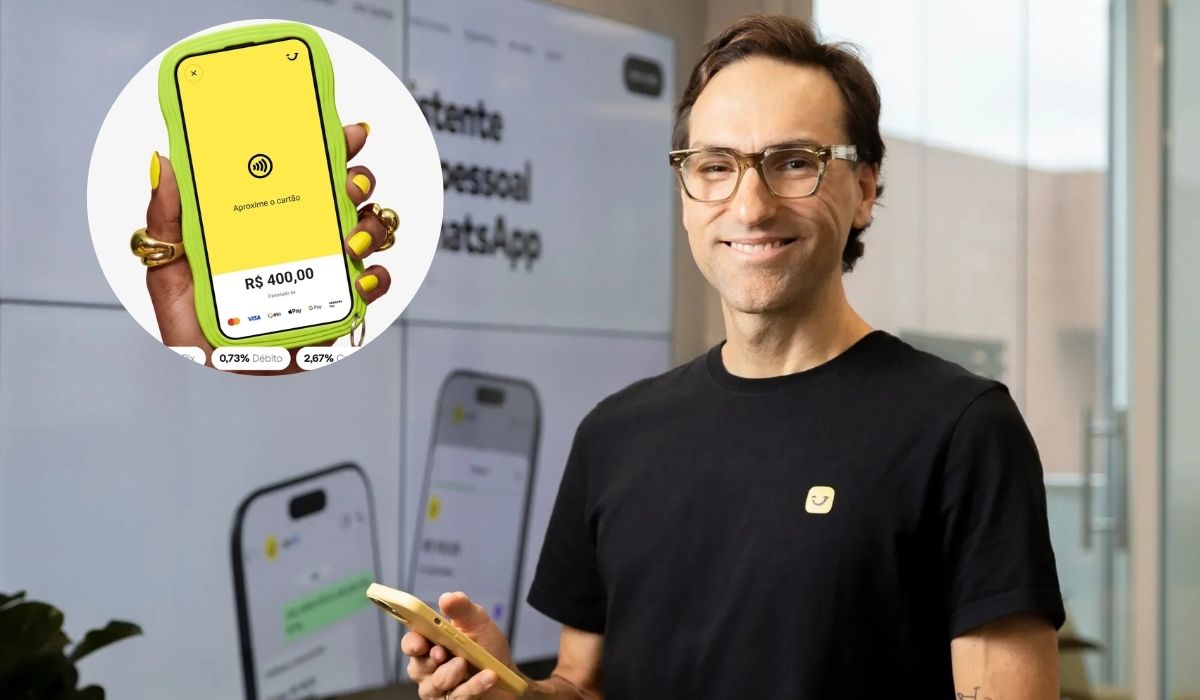
New bet from Jota brings proximity payment with voice command to mobile and expands the competition among fintechs for solutions that promise to reduce operational steps in the routine of freelancers, retailers, and small entrepreneurs.
Jota, a startup created by Ceará native Davi Holanda, launched an app that turns the mobile phone into a proximity payment terminal and adds voice command to the payment process.
The feature, called Fala Tap, combines tap to phone technology with a conversational artificial intelligence interface.
According to the company, the proposal is to reduce operational steps in the routine of freelancers, retailers, and small entrepreneurs when it comes to charging, receiving, and organizing cash flow.
-
Beneath Bermuda, scientists have found a colossal rock structure 20 km thick that looks unlike anything ever seen on Earth and may explain one of the strangest geological mysteries of the Atlantic.

-
For the first time in history, electrical discharges have been recorded in the atmosphere of another planet, and the discovery by Perseverance on Mars now forces NASA to completely rethink the safety of all equipment and habitats sent to the Martian surface.

-
Artemis II astronauts return from space and request Uncrustables after ten days for their first meal, and the Navy supplies the ship with an “abundant amount,” the manufacturer promises a lifetime supply.

-
Japanese mission uncovers the secret behind a 50-year astronomical mystery and reveals who was really emitting the X-rays from the star γ Cas.

The launch comes at a time when some fintechs have begun to focus not only on payment methods but also on everyday financial operations.
After the popularization of cards, the digitization of wallets on mobile phones, and the advancement of Pix, companies in the sector have started directing products towards tasks such as billing, reconciliation, and management of receivables.
In this context, Jota is trying to position itself with an offering based on voice, text conversations, and file sending.
WhatsApp, mobile, and proximity payment
The company started operations focusing on WhatsApp, a platform that, according to Davi Holanda, occupies a central space in communication between small businesses and customers in Brazil.
From this perspective, the startup structured services aimed at tasks such as paying bills, making Pix transfers, generating invoices, and checking financial transactions within a conversational interface.
With the new app, the company expands its operations beyond the messenger but maintains the same usage logic.
In Fala Tap, the billing can start by voice.
Instead of manually filling in each field, the seller informs the amount and payment method, and the system organizes the transaction for proximity payment.
The technical base used by the company is not new in the market.
Tap to phone, also known as tap on phone, already allows smartphones with NFC technology to operate as payment terminals without the need for a card reader.
The difference presented by Jota lies in the conversational layer applied to this process.
The startup claims that this is the first solution of its kind with voice command on mobile.
This point, however, appears as information from the company itself and has not been independently confirmed in public databases consulted.
The journey of Davi Holanda and Jota’s proposal
The journey of Davi Holanda in the sector helps explain the company’s thesis.
Before founding Jota, he worked at PagBank and Bankly.
In interviews and institutional materials, the executive states that previous experience showed that products such as digital accounts, credit, and electronic receipts did not eliminate the administrative work that continues to be concentrated, in many cases, on the business owner.
Activities such as closing cash, checking statements, billing customers, paying suppliers, tracking expenses, and organizing the company’s financial operations fall into this group.
For Holanda, artificial intelligence can take on part of this execution.
In an interview with Exame, he stated that, until now, the operational burden was on the customer and that, with artificial intelligence, this weight shifts to the company.
The construction of the brand follows this positioning.
Instead of presenting itself merely as a financial institution, Jota has begun to describe itself as a platform supporting financial routines.
Within this model, the user can send invoices, receipts, spreadsheets, text, or audio to trigger tasks such as payments, balance consolidation, invoice generation, and expense inquiries.
The company also promotes functions described as “smart statement”, aimed at reading transactions and transfers.
Startup growth and scaling goals
In its first year of operation, Jota reported reaching 150,000 customers and a run rate of R$ 2.2 billion in TPV, an acronym used by the market for total processed volume.
The goal announced by the startup is to end the year with a run rate of R$ 10 billion and ideally approach 1 million users.
To expand distribution, the company combines digital acquisition with content production aimed at entrepreneurs.
This strategy includes short videos, usage demonstrations, customer testimonials, and its own podcast.
According to the company, this material serves as a product promotion channel and also as education on the financial routines of small businesses.
The growth projected by Jota was presented after the seed round announced in 2025.
At that time, the company reported having raised US$ 8.9 million, in a round led by Maya Capital and accompanied by other investors.
The funding was announced as part of the expansion plan for the WhatsApp-based operation and the development of new product fronts.
New app expands fintech operations
The launch of the proprietary app indicates that Jota intends to expand its operational channels.
In addition to proximity payment, the app includes the feature My Team, which allows the registration of sellers, the release of charges directly from the mobile phone, and tracking everything in a central account.
According to Holanda, the reference for this design is in retail models where the final purchase step occurs at the service point, without the need to direct the customer to a separate checkout.

The company’s stated intention is to adapt this logic to the Brazilian small entrepreneur with the support of automation resources.
More than just replacing the card reader with a mobile phone, Jota claims it seeks to simplify the execution of financial tasks.
According to the proposed model, the user no longer has to go through manual steps within a traditional banking app and can trigger the system through direct commands.
The company maintains that this interface can reduce the time spent on routine operations and make management more integrated into the environment already used by entrepreneurs in their daily lives.








Seja o primeiro a reagir!