





 Portuguese
  English
  Spanish
  5 min of reading
  6 comments


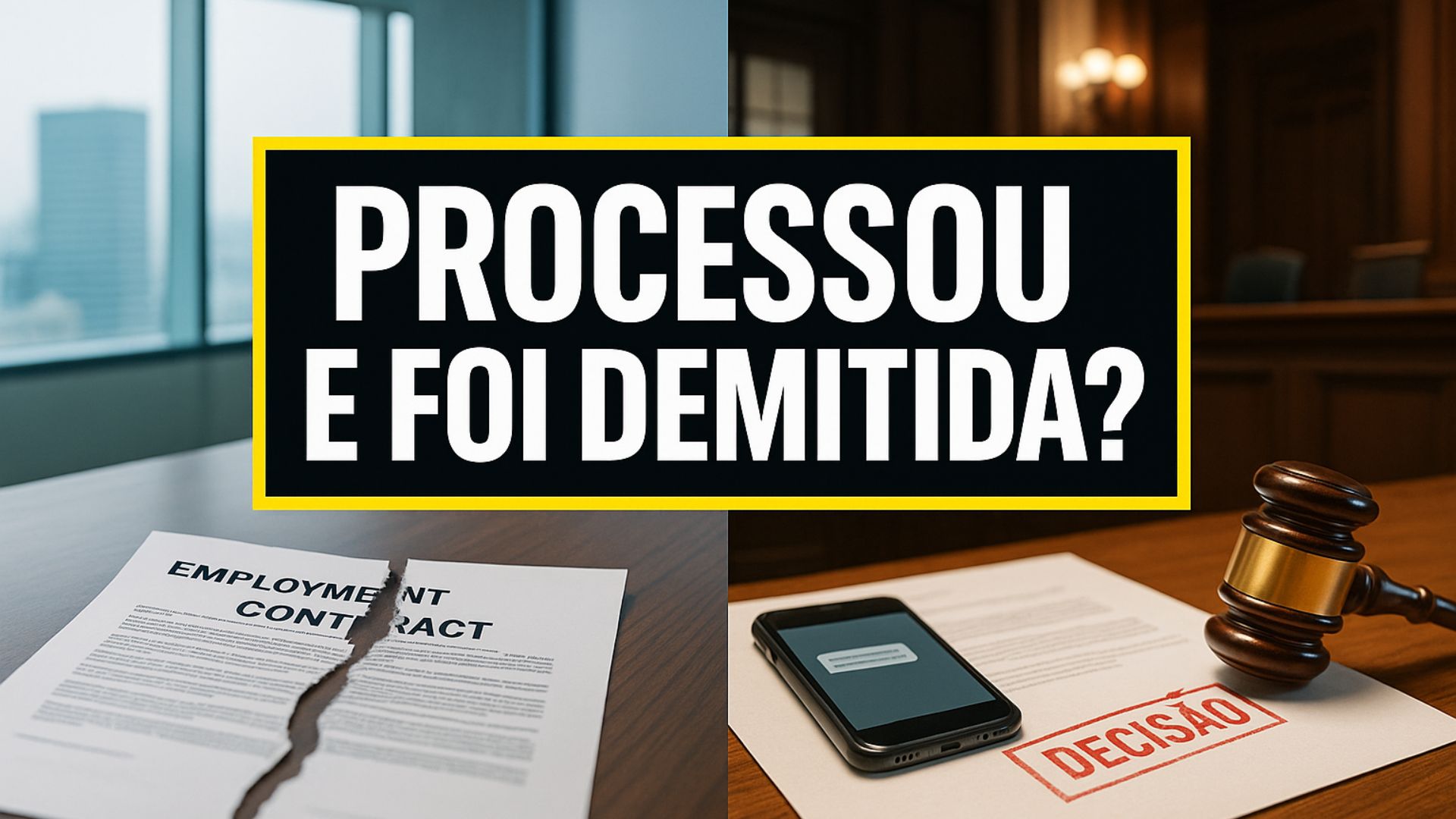


Dismissal After Legal Action, Delayed Payment, and Message via App Led Labor Court to Recognize Retaliation and Violation of Fundamental Rights, with Compensation for Moral Damages and Maintenance of Fines Provided for in Labor Legislation.
A worker from a telemarketing company in Joinville, in northern Santa Catarina, will be compensated for moral damages after being dismissed without cause the day after the company became formally aware of a labor lawsuit filed by her.
For the 5th Panel of the Regional Labor Court of the 12th Region (TRT-SC), the dismissal constituted retaliation and violated the right of the employee to seek the judiciary without facing penalties.
The panel also upheld the application of fines provided for in the Consolidation of Labor Laws (CLT) for delays in settling severance payments and for the failure to pay undisputed amounts.
-
Government enacts new law: paternity leave increases from 5 to 20 days with gradual increases until 2029, and Social Security pays the paternity salary; companies no longer bear the absence cost, estimated at R$ 5.4 billion.

-
End of the 1-hour lunch break in the CLT? Current labor law maintains the break, allows for negotiated reductions, and defines rules for working hours and home office in Brazil.

-
Employee Fired After Accumulating 114 Days of Medical Leave in One Year, Labor Court Upholds Company’s Decision

-
Employee Fired While Treating Depression Wins in Court and Vale Is Required to Rehire Him Following Decision Based on the CLT and INSS Benefits

Upon reviewing the case, the judges understood that the company could not condition payment on the progress of a process that did not address the settlement of the termination.
Labor Action and Dismissal After Company Awareness
According to the process, the employee was still employed when she filed an initial labor complaint.
Among her requests, she sought recognition of indirect termination of the contract, a modality in which the bond is broken due to serious misconduct by the employer, with effects similar to those of a dismissal without just cause.
After the company was formally notified of the action, the worker was dismissed the following day.
The proximity between the notification of the lawsuit and the termination weighed on the judges’ evaluation.
For the court, the sequence of events indicated reprisal for exercising a fundamental right.
Message via App and Delay in Severance Payments
Besides the dismissal, another decisive point in the ruling was how the company handled the payment of the severance.
At the time of settling the severance payments, the employee received a message via app stating that, “due to” the action filed, the payment would only be made through the judiciary.
As a result, she went without receiving her salary for that month.
She also did not receive the severance payments within the legal deadline.
This context led the worker to seek the Labor Court again.
This time, the request was for compensation for moral damages, arguing that she had been punished for having resorted to the judiciary.
Company’s Defense and Denial of Retaliation
In its defense, the company denied that the dismissal occurred as a form of retaliation.
It also claimed to be facing financial difficulties.
Additionally, it attributed to the employee a supposed misconduct that, according to the version presented, would justify the dismissal.
This argument was not accepted by the judicial instances.
The judges understood that it was not sufficient to claim difficulties or inappropriate conduct.
It would be necessary to prove the facts, especially given the timeline of the termination and the content of the message sent to the employee.
First Instance Recognizes Abuse and Sets Compensation
In the 3rd Labor Court of Joinville, Judge Eronilda Ribeiro dos Santos concluded that the company’s conduct was abusive.
In the ruling, the magistrate stated that “the stance adopted by the defendant was effectively abusive and authoritarian and evidenced the intent to retaliate, violating the plaintiff’s right of access to the judiciary.”
With this understanding, compensation for moral damages was set.
The ruling also determined the payment of fines provided for in Articles 477 and 467 of the CLT.
The fine under Article 477 was imposed for delay in paying severance payments.
The fine under Article 467 resulted from the failure to settle, at the first opportunity, undisputed amounts owed to the worker.
TRT-SC Confirms Right to Compensation of the Worker


Dissatisfied, the company appealed to the court.
The 5th Panel of TRT-SC upheld the obligation to compensate.
In the vote, the rapporteur, appointed judge Karem Mirian Didoné, highlighted the violation of the so-called right to compensation.
This right guarantees the worker the exercise of fundamental prerogatives, such as access to the judiciary, without facing retaliation from the employer.
For the panel, the company did not prove the alleged misconduct of the employee.
It also did not demonstrate the supposed financial difficulties used as a justification for the delays.
The lack of evidence, coupled with the one-day interval between the notification of the action and the dismissal, reinforced the understanding that the termination had a retaliatory character.
Compensation Amount is Reduced, but Sentence is Upheld
Despite upholding the sentence, the court altered the amount set in the first instance.
Considering the limits of the request and the circumstances of the case, the panel reduced the compensation.
The amount was adjusted from R$ 10,000 to R$ 5,000.
According to the judges, the reduction addressed the pedagogical nature of the sentence without detracting from the recognition of moral damage.
CLT Fines Are Upheld by the Court
The company also questioned the application of the fines in Articles 467 and 477 of the CLT.
The argument was that the payments would be made only in court, due to the existence of a previous labor action.
The 5th Panel rejected this argument. According to the rapporteur, the initial action filed did not address the settlement of the termination.
For this reason, the severance payments could not be withheld. The court understood that the obligation to pay within the legal deadline remained valid.
The maintenance of the fines was a direct consequence of the delay and failure to pay the amounts owed.
Given decisions that reaffirm the right to seek justice without facing penalties, how can companies and workers structure working relationships that reduce conflicts and avoid retaliatory practices?









Indenização desproporcional aos danos sofridos. Tanta coisa pra nada. Não paga a diligência do oficial de justiça.
Lamentável!
Também achei que a indenização foi pouca diante dos abusos ocorridos e danos causados a empregada. A empresa ainda tentou desmoraliza-la acusando-a de mal comportamento sem comprovação.
Achei que a indenização foi pouca, não basta ser pedagógico a condenação tem que ser punitiva para servir de exemplo, é verdade que tem muito funcionário ruim mas o mesmo vale para empresas abusivas, se dependesse de algumas o pagamento seria pão e água, 5 mil é troco de pão para uma empresa.
Concordo com você e reforço a sua opinião.