





 Portuguese
  English
  Spanish
  5 min of reading
  0 comments


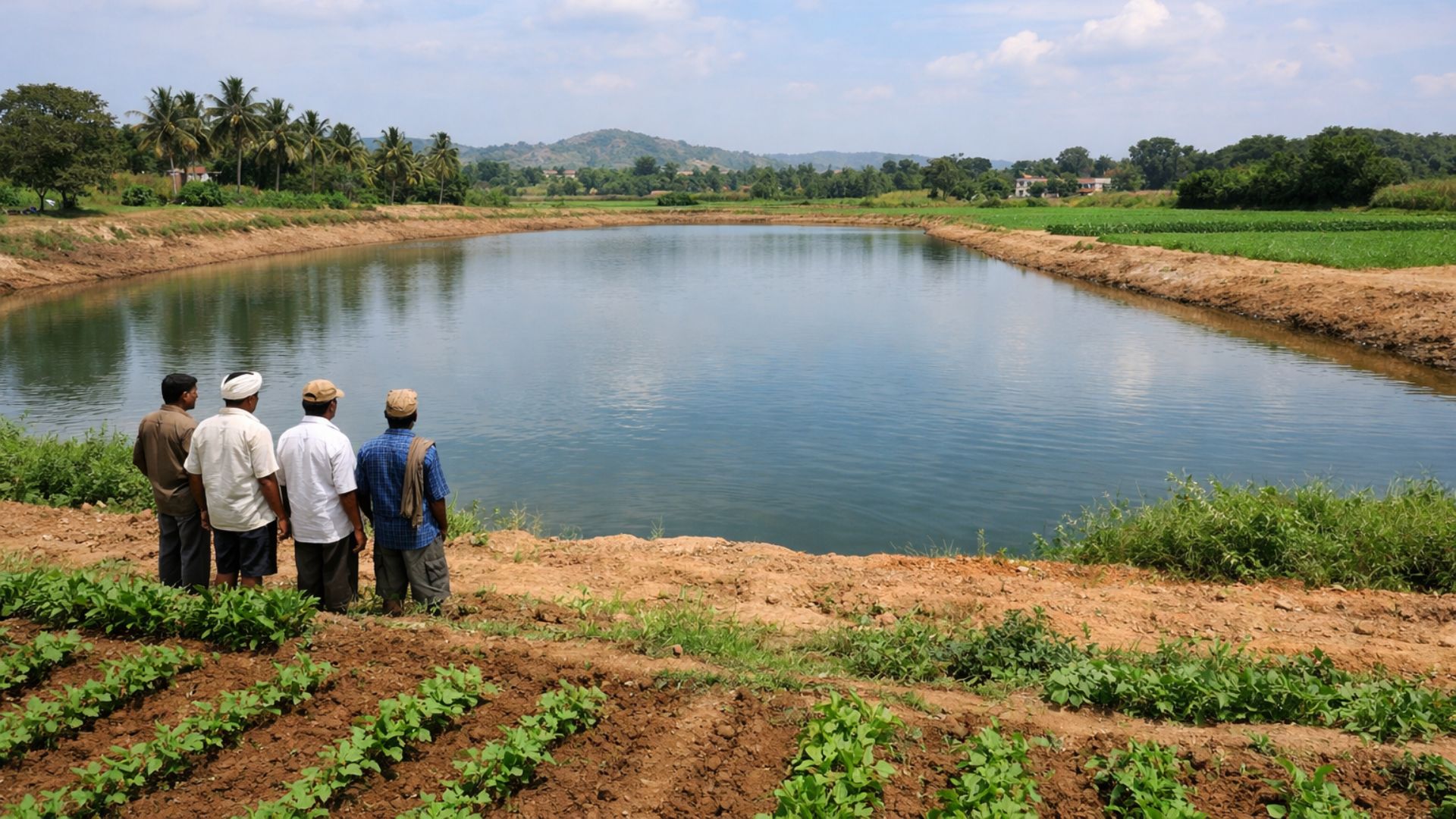
Community Mobilization in Southern India Recovers 12 Lakes Without Public Funds, Reactivates Dry Reservoir for Nearly Two Decades and Expands Water Supply for Consumption and Agriculture. Initiative Funded by Local Donations and Sale of Silt Boosts Aquifer Recharge and Strengthens Rural Production.
Twelve lakes in Gauribidanur, in the Chikkaballapur district of Karnataka, in southern India, have resumed storing water after a recovery effort driven by local donations, community support, and desilting, without any state government funding, according to a report by the Times of India published on June 13, 2025.
The initiative was led by public servant B. N. Varaprasad Reddy, an officer of the Karnataka Administrative Service, and began with a specific reservoir, Mudugaanakunte, described as dry for 18 years and which has replenished after the works and rains of 2021.
Throughout the process, residents contributed amounts both small and large, there was the provision of machinery with only fuel costs charged, and the group turned the silt removed from the bottom of the lakes into a source of revenue to fund new stages, as reported by local media.
-
These living root bridges and ladders are over 700 years old and help indigenous people survive in one of the rainiest regions in the world.

-
From sertanejo star to international investor: Ana Castela invests millions in a mansion in the USA, creates a themed accommodation in Orlando, and shows that the “boiadeira” also wants to grow away from the stage.

-
The 10 most stunning motorhomes in the world: a $3 million trailer with a rooftop nightclub and garage for a Ferrari, “palaces on wheels” with Italian marble, private cinema, and five-star hotel luxury for billionaires.

-
Trump wanted to spend $400 million on the White House, but the courts prohibited the million-dollar construction.


With water retained for longer, nearby wells and boreholes began to show recharge, and farmers began to report conditions for planting and harvesting two crops per year, in areas previously limited by fluctuations in the water table and the reliance on deeper pumping.
Community Mobilization and Local Leadership in Karnataka
The story took shape from conversations by Reddy himself with community members, when he worked in the region during the pandemic years, and from the decision to choose an objective goal: to restore storage capacity to the lakes and prevent water from running off quickly through sediment-filled beds.

Instead of waiting for a state program, the strategy was to set up a local fundraising and execution arrangement, using trust built in the community to gather resources and labor, in a rural context where the cost of lack of water is directly reflected in the families’ expenses.
According to the reported account, some residents donated symbolic amounts, while others contributed larger sums, and there was in-kind support, providing earthmoving equipment, in a format that reduced immediate costs without removing the community nature of the work.
The first test was Mudugaanakunte, described as a lake of 84 acres, where the team removed accumulated silt, reopened connecting channels, and cleared paths where water should enter, allowing the reservoir to function again when the rain arrived.
Desilting and Recovery of Storage Capacity
A large part of the work focused on the basics of rehabilitating small water bodies: removing layers of sediment that reduce depth, restoring slopes, and recovering entrances and exits, actions that determine how much the lake can hold during short rain windows.
When a reservoir loses depth, it becomes more susceptible to evaporation and rapid overflow, and also reduces the gradual infiltration that feeds the underground, so cleaning is not just aesthetic but a way to recover the supply and recharge function.
In the described experience, the team removed the material deposited at the bottom and cleaned connecting channels, a step which, in regions dependent on wells, is usually decisive for water to remain for weeks or months instead of disappearing in days.
Subsequently, success in the first lake served as a boost to move on to the other 11, carefully prioritizing areas with natural water flow and without legal disputes or occupations, a factor noted as a criterion to avoid administrative hurdles and reduce the risk of setbacks.
Sale of Silt and Crowdfunding of the Work

The absence of direct public budgeting did not mean a lack of cost, but rather that the bill was assumed locally through donations, fuel, and logistics, along with a revenue source linked to the desilting itself, which transformed a waste product into an asset for the work.
The Times of India recorded Reddy’s explanation of this mechanism: “In addition to public donations, we raised funds by selling excavated silt to farmers and brick manufacturers at Rs 30 per tractor load”, in an attempt to keep the work running without external funding.
In addition to financing subsequent stages, the material removed was utilized in agriculture, as silt tends to carry nutrients and organic matter beneficial to the soil when applied correctly, which helped create a practical incentive for producers to participate in the collective effort.
According to the report, the group raised over 50 lakh rupees to recover the 12 lakes and formalized the organization under a registered trust named Gauribidanur Seva Prathistana, outlining a structure to maintain coordination and continuity.
Recharge of Wells and Impact on Agricultural Production
With deeper reservoirs and cleared channels, part of the stored water tends to infiltrate slowly and reinforce the water table, which reduces the energy cost of pumping and restores predictability, especially for those reliant on open wells and pumps.
In the description provided by the Times of India, the change was evident in wells and boreholes that had dried up for years and have started supplying water again, while farmers began to sow twice a year, using the underground recharge as a basis for planning irrigation.


The report also attributes part of the result to the group having avoided lakes with litigation and choosing areas with natural water inflows from nearby elevations, reducing the chance of the reservoir relying solely on isolated events of heavy rain.
The president of the trust, identified as Venugopal M, summarized the selection criteria in a statement reproduced in the text: “We chose lakes with good water sources and no encroachments”, indicating an attempt to combine quick execution with basic protection of the banks.
In regions like Karnataka, where rural reservoirs historically play a role in supply and agriculture, cases of siltation, irregular dumping, and haphazard occupation of the banks often shorten the lifespan of lakes, making community maintenance and oversight a recurring necessity.
If a set of 12 lakes managed to operate again with donations ranging from symbolic amounts to larger contributions, the sale of silt and use of machines provided by residents, what other areas with forgotten reservoirs could replicate the model with transparency and persistence?







-

Uma pessoa reagiu a isso.