





 Portuguese
  English
  Spanish
  5 min of reading
  2 comments


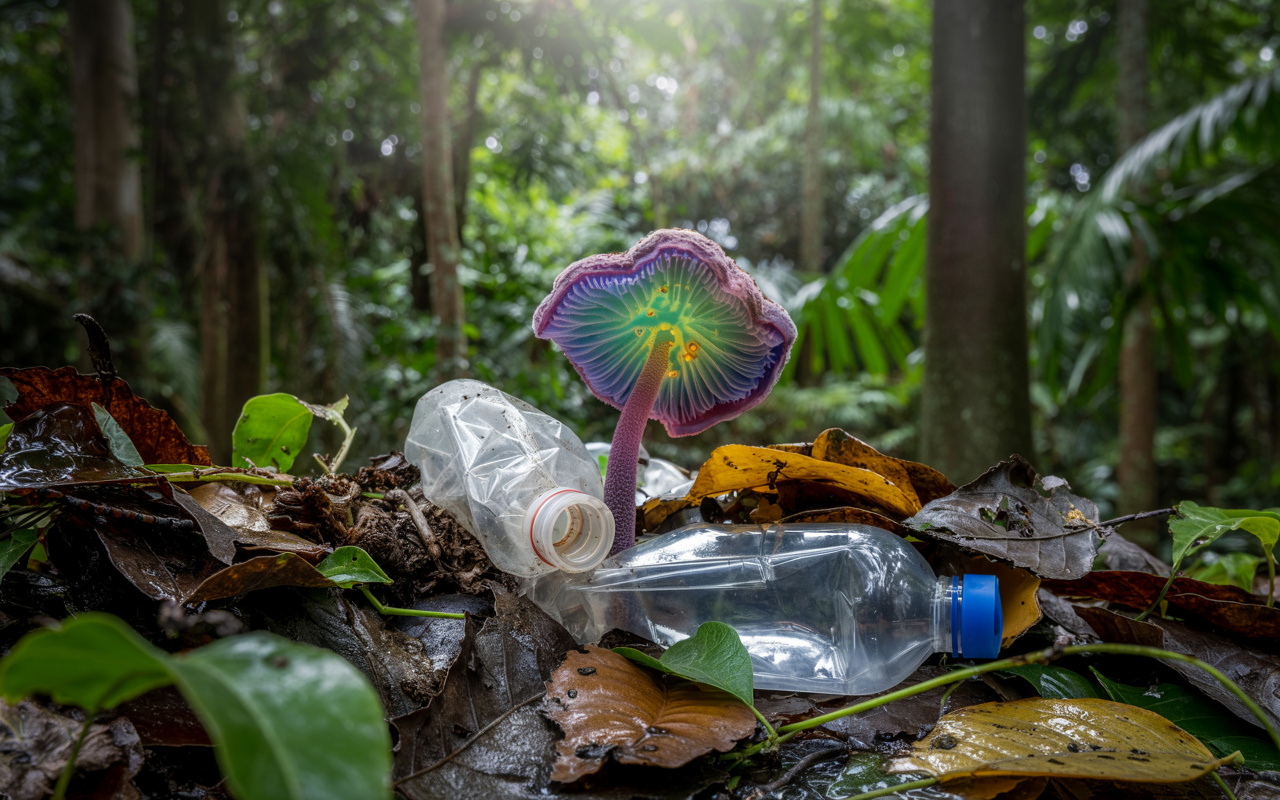


Fungus Discovered in the Amazon Can Devour Plastic and May Revolutionize Pollution Control. Understand How Pestalotiopsis microspora Works and Its Potential to Save the Planet.
In the silent vastness of the Amazon Rainforest, a microscopic organism may hide one of the greatest promises against the environmental crisis that suffocates the oceans, soils, and cities: a fungus discovered in the Amazon that naturally devours plastic. Known as Pestalotiopsis microspora, it was identified by scientists from Yale University in 2011, and since then has been studied as a potential biotechnology weapon to combat one of the greatest threats of the century: the massive accumulation of non-recyclable plastics in nature.
The discovery occurred during a scientific expedition in the forest, searching for microorganisms with biotechnological potential. Among leaves, wood, and damp soils, the researchers found the fungus capable of breaking down polyurethane, one of the most resistant and polluting plastics used in modern industry.
Fungus Discovered in the Amazon Devours Plastic: A Silent Revolution
The Pestalotiopsis microspora surprised scientists not only for its ability to degrade polyurethane — present in foams, paints, shoe soles, and thermal insulators — but also because it can do so even in anaerobic environments, that is, without the presence of oxygen.
-
How the terraforming of Mars can transform the planet: artificial aerosols can increase the temperature by up to 35°C in 15 years, creating conditions for liquid water.

-
Scientists drilled nearly 8,000 meters into the ocean floor above the fault that caused the 2011 tsunami in Japan and discovered that a layer of clay 130 million years old was responsible for making the wave much worse than any model had predicted.
-
Thousands of years after causing the largest eruption of the Holocene, one of the world’s largest supervolcanoes is rebuilding itself beneath the sea south of Japan, receiving new magma and alarming scientists with its transformation.

-
China has activated a magnet 700,000 times more powerful than the Earth’s magnetic field that operates for over 200 consecutive hours while consuming little energy, and now the world wants to know what Beijing plans to do with this technology in 2026.


This characteristic makes it especially valuable for application in landfills, where air is limited and waste accumulation is constant.
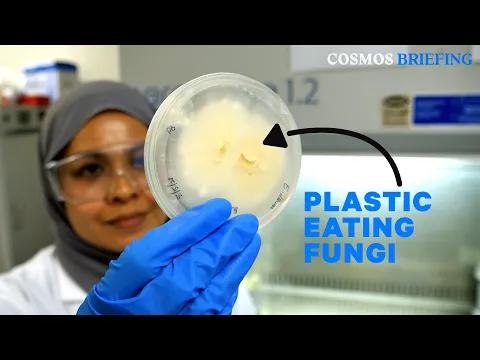

In laboratory tests, the fungus demonstrated its ability to use polyurethane as its only carbon source, literally “eating” plastic for nourishment. It secretes enzymes capable of breaking complex molecular bonds of the material, transforming it into simple compounds that are absorbed and processed by its metabolism.
Fungus That Devours Plastic: The Impact of Polyurethane and the Difficulty of Recycling It
Polyurethane is everywhere. Due to its durability, lightweight, and versatility, it has become a cornerstone of modern industry — but its durability is also its biggest problem. Unlike other plastics that fragment over the years, polyurethane does not degrade naturally and can persist in the environment for centuries.
Today, the treatment of this type of waste relies on costly and polluting industrial processes, such as incineration, which generates toxic emissions.
The discovery of a fungus capable of biodegrading this material naturally offers a potentially revolutionary alternative — especially on a planet producing over 400 million tons of plastic per year, of which less than 10% is recycled.
The Potential of the Amazon Fungus in the Fight Against Plastic Pollution
The greatest challenge humanity faces with plastic is its resistance to degradation. In rivers, seas, and landfills, it accumulates, poisons ecosystems, and enters the food chain.
The Amazon fungus could become a biotechnological ally to treat precisely the plastics that currently have no viable destination.
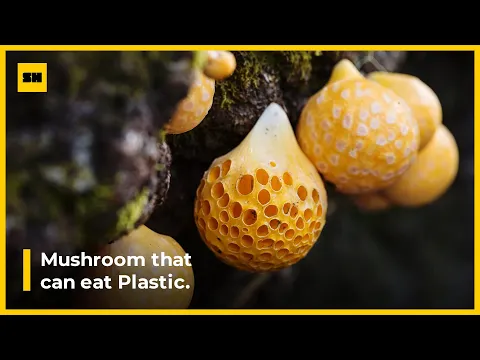
Imagine bioreactors in landfills using fungi to digest plastic waste that would otherwise accumulate for centuries. Or recycling plants specialized in composting enzymatically treated materials. While this is still a future scenario, it is absolutely viable given the advances in biotechnology.
From Laboratory to the Real World: The Challenge of Large-Scale Application
Despite the enthusiasm, tests with Pestalotiopsis microspora are still restricted to the laboratory environment. The conditions of temperature, humidity, and substrate concentration need to be carefully controlled to ensure efficiency.
Another delicate point is the ecological impact: the fungus is native to the Amazon, and any attempt to use it outside its habitat requires rigorous biosafety studies. There is a risk that, when in contact with new materials or ecosystems, it may behave unexpectedly, degrading not only plastics but other synthetic or organic compounds.
Furthermore, large-scale production of fungi requires robust infrastructure. Cultivating, feeding, and maintaining living strains with high efficiency for urban waste treatment is a technical and logistical challenge.
Paths to Enable the Use of the Fungus in Industry
Researchers from Yale University and other institutions are already advancing on two main fronts:
- Genetic sequencing of the fungus, with the aim of identifying the genes responsible for the plastic-degrading enzymes. From this, it would be possible to replicate these enzymes in the laboratory, without depending on the living organism, making the process safer and more controllable.
- Development of specialized bioreactors that simulate the ideal conditions for the fungus to act efficiently. These devices could be deployed in waste treatment centers, recycling plants, or industrial parks.
In addition, partnerships between biotechnology and environmental engineering are beginning to outline hybrid solutions, combining the fungus with complementary bacteria, creating biological systems capable of degrading multiple types of plastics in synergy.
Other Discoveries Reinforce Nature’s Role in Combating Plastic Waste
The Pestalotiopsis microspora is not the only microorganism with environmental superpowers. In 2016, researchers in Germany identified a bacterium of the genus Ideonella capable of decomposing PET, the plastic used in disposable bottles. This enzyme was later modified by Japanese scientists in 2020, accelerating the degradation process.
These discoveries show that nature offers solutions to problems caused by humanity itself — and that the key to a sustainable future may be hidden in the soil of forests, in roots, or in microorganisms invisible to the naked eye.
The discovery of the fungus that devours plastic is also a reminder of the strategic importance of Amazonian biodiversity. It is estimated that less than 15% of the microorganisms in the forest have been cataloged. Amid the climate crisis, environmental degradation, and the search for sustainable alternatives, protecting this biome is more than an environmental issue — it is a bet on innovation.
Education and Awareness: The Other Side of the Environmental Equation
No biological solution, no matter how promising, solves the plastic problem alone. Reducing consumption, changing habits, responsible legislation, and environmental education remain fundamental pillars.
By disseminating discoveries like that of Pestalotiopsis microspora, schools, universities, and media have an essential role: inspiring young scientists, forming conscious citizens, and showing that science and nature can work together to transform the world.
The fungus discovered in the Amazon that devours plastic reminds us that the most innovative solutions may be found in the most unlikely places. A microscopic organism, found by chance during a scientific expedition, may offer a real answer to one of the greatest environmental dilemmas of the modern era.
There is still much to be done for this promise to become a reality on a large scale, but the first step has been taken. And perhaps the most important: recognizing that nature, when respected and studied ethically, offers paths for the regeneration of the planet.










Cada vez, no campo ambiental, boas notícias surgem. A natureza sempre tem seus “mecanismos de defesa”. Isto que ainda nós, humanos, temos muito mais a aprender aqui, do que em missões espaciais, cada vez mais dispendiosas e inúteis.
Sem contar o quanto gastamos com armas