





 Portuguese
  English
  Spanish
  5 min of reading
  0 comments


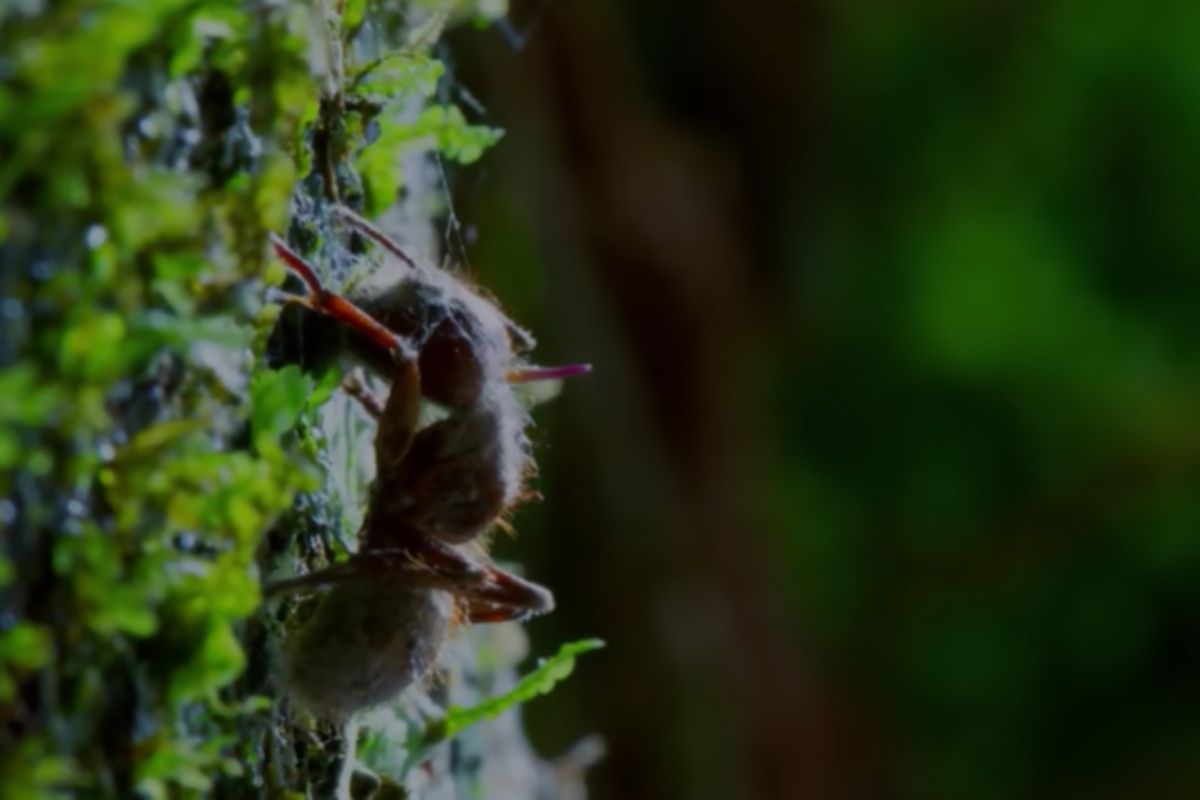
The Parasitic Fungus Ophiocordyceps Manipulates Insects For Millions Of Years, Inspired The Last Of Us And Helps Understand Why Animals Can Totally Lose Control Of Their Own Body
A parasitic fungus can turn an ant into a kind of real zombie in the forest: it moves away from the colony, climbs to a strategic point, latches onto a leaf, and waits for the end while the invading organism takes control of its body.
The scene seems fictional, but it happens in nature. And it was exactly this kind of phenomenon that inspired one of the most famous stories in recent pop culture, raising a troubling question: what if a parasitic fungus could do something similar to humans?
How The Parasitic Fungus Creates The “Zombie Ant” In Practice
The process is as bizarre as it is efficient. The infected ant shows signs of erratic and abnormal behavior until it starts to perform a sequence of actions that favors the parasitic fungus.
-
With a cost per shot close to zero, the DragonFire laser could change naval warfare in 2027 and provide British ships with nearly unlimited defense against drones.

-
A British startup creates tires that generate electricity in electric vehicles when passing over potholes, speed bumps, and cracks.

-
Scientists have created robots made with living cells that have their own nervous system, swim on their own, explore the environment, and self-organize without any genetic engineering, and now they want to do the same with human cells.
-
Students create a solar-powered ambulance that operates without a plug, without fuel, and still keeps medical equipment running in remote areas.


Instead of remaining protected in the anthill, it moves away, positions itself in an elevated spot, and latches onto a leaf, as if it were following an external command.
After the insect’s death, the parasitic fungus consumes the body and then emerges from the head, releasing spores into the environment. This increases the chance of new ants getting contaminated, keeping the cycle active in the ecosystem.
What The Parasitic Fungus Controls: Brain, Muscles And Nervous System
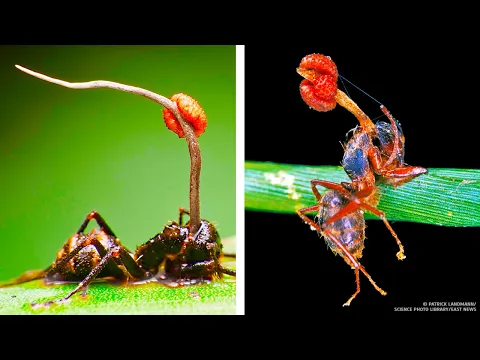

A hypothesis is that the parasitic fungus does not “pilot” the insect’s mind like in a movie, but interferes with body control. Scientists suspect that it grows around the brain and hijacks the nervous system, commanding muscles and movements.
The most impressive detail is that it is still not entirely clear how this command occurs. It may involve the release of chemical substances, may involve changes in the biological functioning of the host, and there are questions about whether any deeper changes occur, but the central point remains: the host loses motor autonomy.
How Long Has This Parasitic Fungus Been Doing This
The control did not arise out of nowhere. The most accepted explanation is that this type of parasitic fungus has been refining its manipulation method over an enormous period.
The specialists’ hypothesis is that they have co-evolved with their hosts for about 45 million years, enough time for the parasite to become extremely specialized.
This specialization helps explain why there are various “models” of zombification. It is known that about 35 fungi of the Ophiocordyceps type can transform insects into zombies, but there may be up to 600 species with this potential.
The Last Of Us: The Parasitic Fungus In The Game Is Real, But The Leap To Humans Is Another Story
The idea of a parasitic fungus dominating people, as in The Last Of Us, is built on a true point: there is a fungus capable of controlling insects, and that is real.
The game’s creator would have been inspired by a nature video showing Ophiocordyceps unilateralis infecting an ant.
However, in real life, the jump to warm-blooded mammals would require an enormous evolutionary leap. Experts point out that, if this parasitic fungus “wanted” to infect mammals, it would take millions of years of genetic changes.
Moreover, each species of this parasitic fungus is usually tailored to a specific host. One example cited by researchers is that a cordyceps adapted to one ant species in a region cannot easily infect a different species elsewhere.
If it is already difficult to switch from one ant to another, the jump to humans falls into the realm of science fiction.
The Real Risk Is Not Zombie, It’s Fungal Infection Worsening With Global Warming

Even without an apocalyptic scenario, there is a serious warning related to fungi: rising temperatures can favor fungal infections in indirect ways.
It is estimated that there are millions of fungus species in the world, and hundreds are dangerous to people.
A “natural shield” has always been our body temperature. Around 36 °C, the human body is usually too warm for most fungi, which prefer a range of 25 °C to 30 °C.
However, with the planet warming, there is growing concern that the difference between ambient temperature and body temperature will decrease, facilitating the adaptation of fungi to warmer conditions, even inside the body.
Candida Auris: An Example Of An Emerging Parasitic Fungus That Is Worrisome
One case cited by specialists is that of candida auris, a species capable of infecting people and which, according to scientists, may have links to adaptation to higher temperatures over time.
It was little known until 2007, but in 2011 and 2012 it was unexpectedly found in three different continents.
When fungi reach the bloodstream, the symptoms may resemble bacterial infections. In people with a healthy immune system, the body usually manages.
But there is a large group of vulnerable patients, and the numbers are heavy: the CDC estimates that 30% to 60% of infected patients have died, although it is difficult to isolate the role of the fungus when other health conditions are involved.
And there is a point that troubles researchers: a global fungal outbreak is not an impossible scenario.
The central concern is not about a “zombie,” but rather the emergence of an unknown fungal disease with the potential to widely affect people.
In the end, the parasitic fungus that transforms ants into zombies serves as a brutal reminder of how sophisticated and relentless nature can be, and how changes in the environment can create space for real threats, even without a video game script.
Do you think that rising temperatures could lead to seeing new parasitic fungi emerging more strongly in the coming years?







-

-

3 pessoas reagiram a isso.