





 English
  Francês
  Alemão
  Italiano
  Japonês
  Norueguês
  Portuguese
  Spanish
  3 min of reading


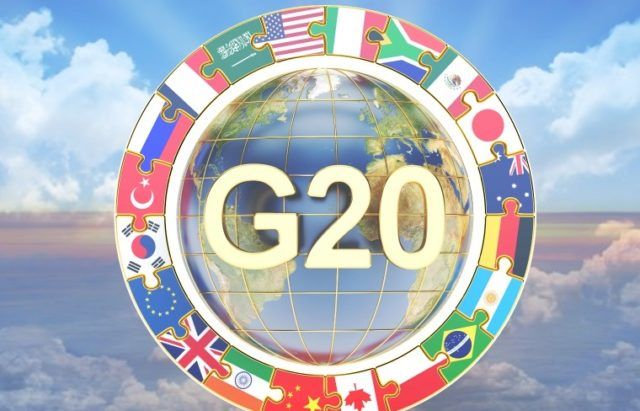
The U.S. and the G20 are preparing to support plans for the largest oil supply contract in history, putting their weight behind production cuts from Opec and Russia and offering additional contributions to stabilize an industry devastated by the coronavirus.
See Also
- Professionals with Experience in Petrobras Construction and Assembly Contracts Called to Submit Resumes to Oil and Gas Multinational
- Many Job Openings in São Paulo for Manufacturing, Assembly, and Industrial Maintenance Professionals
- Petrobras Halts Oil Production at Six Platforms in the Campos Basin, RJ
Oil demand has fallen by about a third, as some of the world’s largest economies effectively shut down to try to prevent the spread of the virus, leading oil prices to their lowest level in 18 years and threatening millions of jobs in the energy sector and long-term damage to supplies.
Saudi Arabia and Russia, whose alliance leads the so-called Opec + group, agreed on Thursday to cut production by a record 10 million barrels per day, with contributions from G20 members – including the purchase of crude oil to fill emergency stocks and cuts to investments in new oil supplies – expected to raise the total further towards 15 million b/d, or nearly 15% of global supplies.
-
Alert in the global energy market: Severe tropical cyclone hits the coast and disrupts gas production at major plants in Australia, threatening global supply.

-
Petrobras finds high-quality oil in the pre-salt at 113 km from RJ and reignites expectations about strategic reserves in the Campos Basin.

-
Ocyan opens registrations for startups focused on innovation in the oil and gas sector and will select projects for Innovation Day with the support of Nexio.

-
Petrobras announces new oil discovery in the pre-salt of the Campos Basin and reinforces Brazil’s prominence with high-quality reserves that can increase production and energy revenues.


At the G20 energy ministers’ emergency online meeting on Friday, Fatih Birol of the International Energy Agency said that the “shockwaves” from the virus created the oil crash and threatened “global economic stability.”
“The oil world has suffered many shocks over the years, but none has hit the sector at the level we are witnessing today,” said Birol, who leads the world’s top energy agency.
“No one should have the idea that these measures provide a quick solution… [But] just as the effect of lockdown on the spread of Covid-19, actions to counteract the oil market imbalance will help to reduce the peak and flatten the curve.
The expected agreement will mark a diplomatic victory for U.S. President Donald Trump, who pressured Saudi Arabia, the most powerful Opec member, and Russia to end a month-long price war that exacerbated the crisis in energy markets.
He held talks with Saudi Crown Prince Mohammed bin Salman and Russian President Vladimir Putin on Thursday and Friday, threatening tariffs on oil sales if they did not reach an agreement.
U.S. production is already declining due to the collapse of oil prices, but the U.S. and Canada have stopped committing to additional supply restrictions from the government, pointing to large-scale cuts in capital spending by private energy companies.
Dan Brouillette, U.S. Secretary of Energy, said at the conference that he estimated U.S. oil production would be reduced by nearly 2 million barrels/day this year, or at least 10% of the country’s production.
“This is a time for all nations to seriously examine what each can do to correct the imbalance between supply and demand,” Brouillette said.
Negotiations were still ongoing on Friday afternoon, UK time, after more than three hours, with some minor issues being resolved before a statement was issued, according to a person familiar with the negotiations. But the group is still expected to support the overall plan, the person said.
Roger Diwan of IHS Markit said the scale of the crisis forced the U.S. to at least offer support for cuts to supply, despite Trump’s long-standing animosity towards Opec. He often blames it for trying to raise oil prices at the expense of American drivers.
“Reality and pragmatism have finally arrived,” Diwan said, adding that the supply agreement was “about seven times larger than measures taken during the financial crisis of 2008-2009.”
Despite G20 support, doubts remain that the measures taken will be enough. The oversupply still threatens to maximize storage facilities worldwide within months, even as supply cuts have bought time.
This could still potentially force uncoordinated shutdowns of oil fields, which may cause long-term damage to reservoirs and future supplies.
Widespread bankruptcies are still expected in the U.S. shale sector, threatening the U.S. position as the top oil producer and Trump’s doctrine of “U.S. energy dominance.”
Oil traders are also skeptical about the count of production cuts caused by lower prices as contributions to decrease supply, since they would occur regardless of any agreement.
Brent crude oil, the oil benchmark, initially recovered on Thursday before dropping nearly 15% from its peak, back to around $30 per barrel.
It traded at $70 a barrel in January, before falling to nearly $20 earlier this month. Markets are closed on Friday for Easter.
But an oil market in which the world’s most powerful energy producers are coordinating, at least to some extent, is widely seen as more stable than the rest in free fall.
“Even if poorly implemented, the agreement is substantial and will make a difference in the market,” said Ann-Louise Hittle of Wood Mackenzie.
The crisis has forced a rapprochement between Saudi Arabia and Russia, which started a price war after Moscow rejected calls to cut production in early March before the extent of the demand collapse was fully understood.
Some analysts question whether cooperation will survive beyond the crisis. Mexico delayed the Opec + agreement on Thursday by refusing to make large cuts, at a stage threatening to disrupt the deal.
Alexander Novak, Russia’s Energy Minister, said in a statement to the meeting that “the G20’s role is to comprehensively support these efforts [agreed by Opec +].”
“In this difficult moment, all states must act in a spirit of partnership and solidarity.”








Seja o primeiro a reagir!