





 Portuguese
  English
  Spanish
  3 min of reading
  0 comments



The Identification of a Fully Formed Spiral When the Universe Was Only 1.5 Billion Years Old Surprises Astronomers and Reignites Discussions About Cosmic Evolution
An astronomical discovery of great scientific relevance has gained prominence and attracted worldwide attention.
Astronomers from the National Center for Radio Astrophysics of India (NCRA-TIFR) identified a fully formed spiral galaxy — emerged when the Universe was only 1.5 billion years old.
The team classified the structure as Alaknanda, which has about 12 billion years, approximately 30 thousand light-years in diameter, and a collection of 10 billion stars, according to a study published in November in the journal Astronomy and Astrophysics.
This discovery surprises the scientific community because it shows that the first galaxies did not follow the small, irregular, and chaotic pattern that many models predicted.
Technical Analysis Reveals Unusual Organization in the Primordial Universe
The researchers Rashi Jain and Yogesh Wadadekar analyzed images from the James Webb Space Telescope, launched in 2021 by the space agencies of the United States, Europe, and Canada.
They examined a set of 70 thousand objects, until Jain identified the only giant spiral among all the records, according to BBC.
-
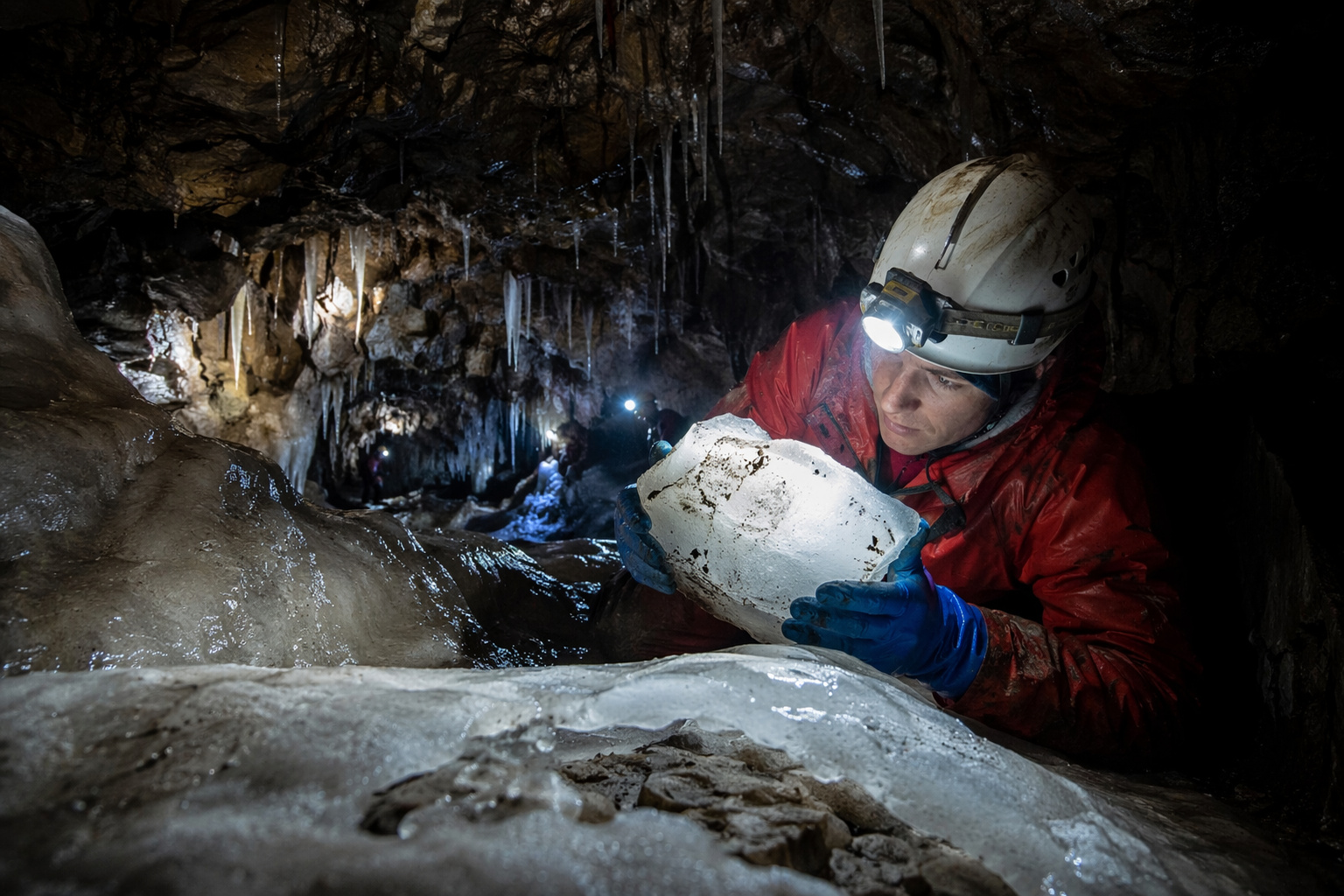
5,000-year-old bacteria found frozen in a cave in Romania already shows resistance to modern antibiotics and raises a global scientific alert about the future of infections.
-
Scientists thaw microbes trapped in Alaska for 40,000 years, discovering that they reorganize, become active again, and start releasing greenhouse gases in a troubling climate alert.

-
China is erecting a mega project in Tibet worth $167 billion and 60 GW that could become the largest individual source of energy in the world and, at the same time, one of the biggest geopolitical bombs in Asia.

-
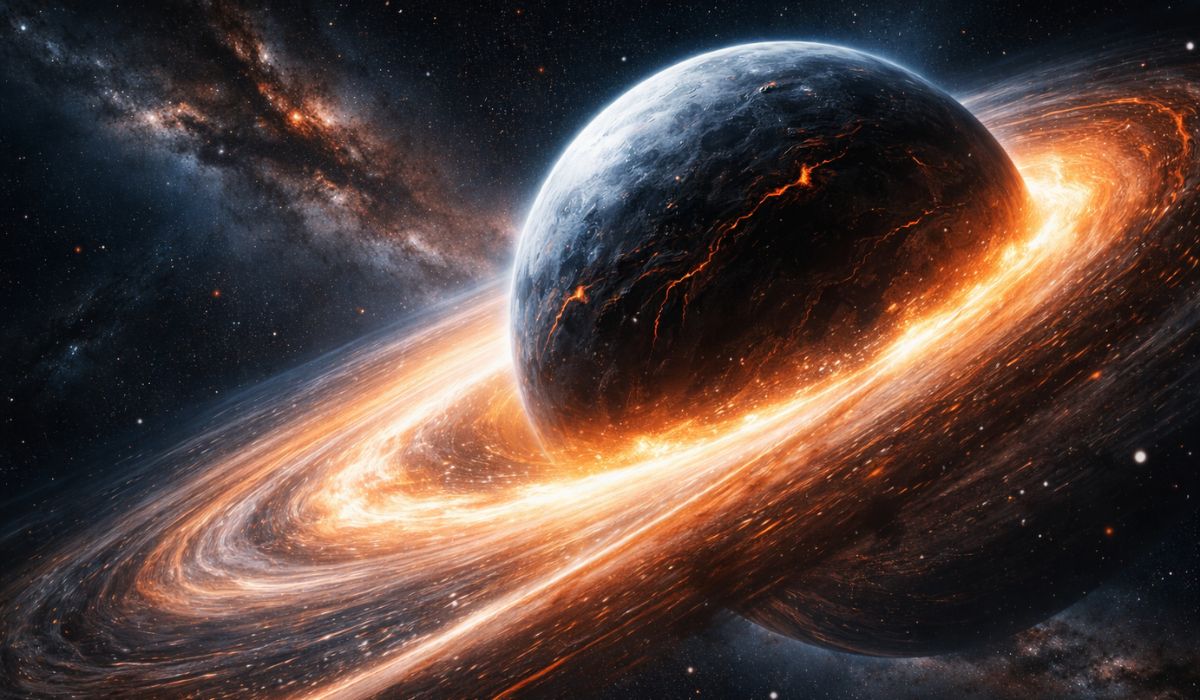
Alone in space, a wandering planet without a star is consuming 6 billion tons per second, setting a record that challenges astronomy and reignites the debate on how planets and stars actually form.
The astronomer expressed excitement at observing two symmetrical arms and a bright core, typical elements of mature galaxies.
Wadadekar emphasized that Alaknanda “looks remarkably like the Milky Way” and highlighted that it emerged when the Universe was only 10% of its current age.
Scientific and Theoretical Impacts of the Discovery
The well-defined shape of Alaknanda reinforces the idea that the primordial Universe exhibited more organization than described by prevailing theories. The rapid development of the structure — in just a few hundred million years — indicates an unexpected efficiency in the formation of the first galaxies.
Jain states that the galaxy, although rare, questions traditional interpretations of cosmic evolution. Old images from James Webb have already revealed that blurs and red spots were hiding complete spiral galaxies, but Alaknanda stands out for its scale and symmetry, reinforcing its scientific importance.
Conceptual Contrasts Reignite Debate in the Academic Community
The discovery directly contrasts with the classical view of the “cosmic dawn,” a period shortly after the Big Bang. Many researchers believed that only young and disorganized galaxies dominated that early phase.
The presence of a mature spiral — like Alaknanda — challenges this expectation.
The finding reopens debates about efficiency in the formation of the first structures and raises questions about established cosmic evolution models.
Scientific Planning to Broaden Investigation
The researchers plan to request new observations with the James Webb or the Alma Observatory in Chile. They aim to understand how Alaknanda developed spiral arms so early in universal history.
There is still no forecast for new observational campaigns. Even so, scientists emphasize the importance of rigorous analysis to avoid hasty interpretations and ensure greater theoretical precision.
The Discovery in Global Context
The identification of Alaknanda accompanies the trend of new images from James Webb revealing fully formed galaxies in remote periods of the Universe. Older photographs only showed red blurs, but the evolution of instruments has allowed the revelation of previously invisible details.
These discoveries reinforce the importance of astronomical research in understanding the origin of cosmic complexity. They also strengthen the role of continuous observation in advancing scientific theory.
What Does the Future Hold for Cosmology?
Astronomers claim that Alaknanda may mark a turning point in modern cosmology.
They argue that new observations, greater technical precision, and theoretical revisions may clarify the evolution of the first cosmic structures.
Meanwhile, the central question arises: how did the Universe produce complexity so quickly after the Big Bang?
What do you believe should guide science: invest in deeper observations of ancient galaxies or cautiously revise the theoretical models that shape our understanding of the cosmos?










-

Uma pessoa reagiu a isso.