





 Portuguese
  English
  Spanish
  4 min of reading
  0 comments


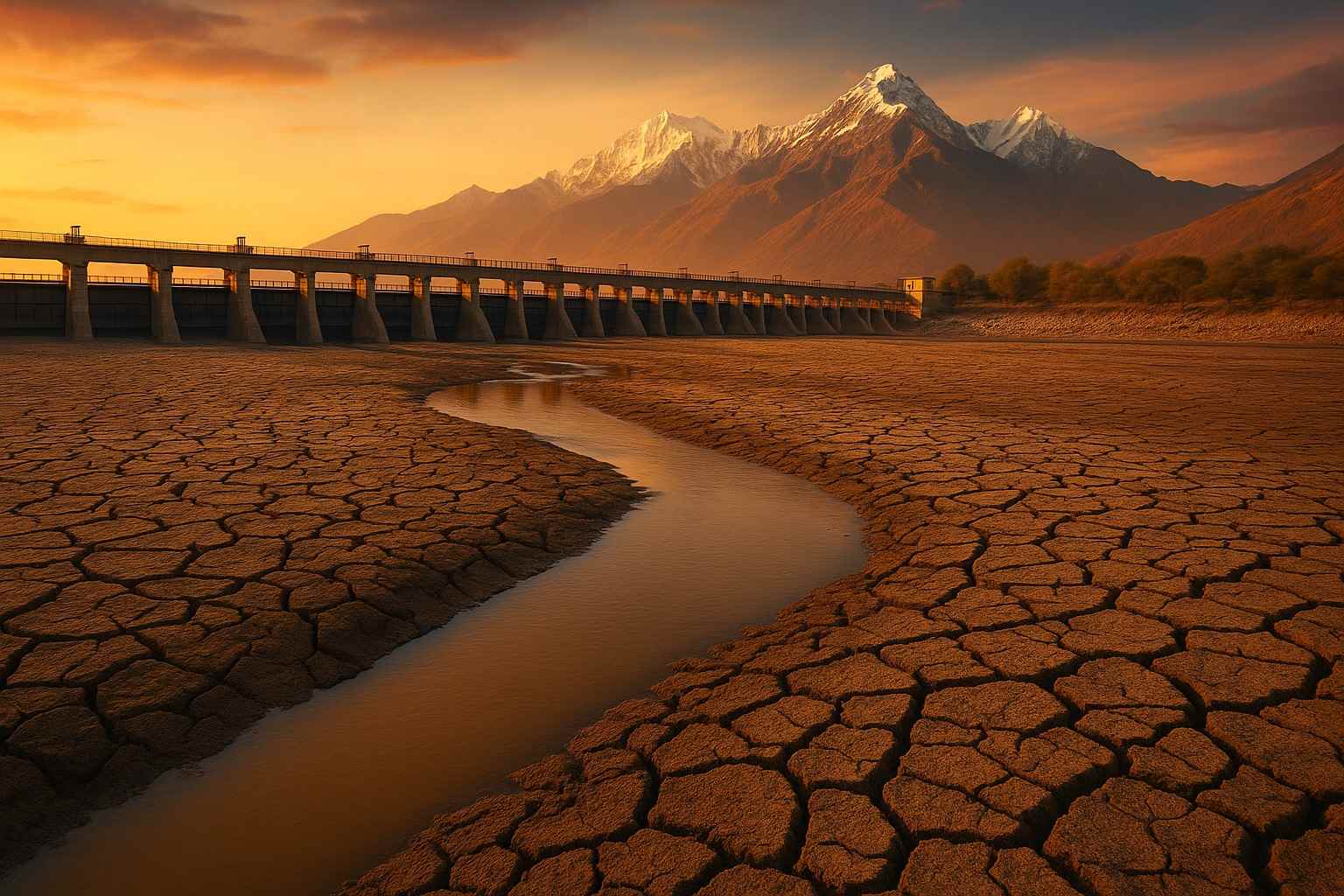
With Record-Low Flows and Melting Glaciers, the Ganges Faces an Unprecedented Water Crisis Threatening Agriculture, Cities, and Ecosystems.
The Ganges River, considered one of the greatest sources of life on the planet, is facing an alarming depletion process. Born in the Himalayan glaciers and flowing into the Bay of Bengal, the watercourse that has fed civilizations and driven economies for centuries is suffering from declines in its flows to unprecedented levels.
This change directly threatens food security, urban supply, and the survival of ecosystems across South Asia.
According to an analysis published in The Conversation, the Ganges sustains more than 650 million people in a densely populated region with a strong agricultural dependence.
-
Support during childbirth advances in Brazil and strengthens the role of doulas: expectant mothers gain more comfort, guidance, and support from the beginning to the postpartum period.

-
Independence from an early age, plenty of time outdoors, and zero pressure for performance: the Dutch method of parenting has produced the happiest children on the planet and challenges everything other countries believe is necessary for good education.

-
A view from space in a NASA image shows a gigantic volcanic crater 1 km wide in the middle of the Sahara, revealing a frightening formation that resembles a giant skull looking out into the universe and turning the desert into an otherworldly landscape.

-
The Chinese translator said that the time has come for China to understand Brazil beyond trade, and now The Brazilian People by Darcy Ribeiro is receiving its first edition in Mandarin with a ceremony in Beijing and the delivery of the volume to six of the largest academic institutions in the country.

The river guarantees irrigation for fields, water supply for industries, and consumption for cities. However, scientists warn that the flow is decreasing rapidly, driven by climatic and human factors.
Himalayan Glaciers and Accelerated Melting
Experts highlight that the retreat of the Himalayan glaciers, especially the Gangotri — the main source of the Ganges — is one of the main drivers of the crisis.
This glacier has lost nearly one kilometer in length over the past two decades, drastically reducing the volume of water released steadily. The result is paradoxical: during melting, there are sudden floods; outside this period, the river faces prolonged droughts.
As a result, several stretches of the Ganges no longer allow regular navigation, and the irrigation of crops becomes irregular.
Agricultural communities that depend on the river see their production cycles compromised, with direct impacts on income and food security in the region.
Unpredictable Monsoons and Severe Drought Periods
The study points out that the monsoons — once predictable and regular — have become highly variable. This instability brings drought periods outside the historical norm.
Cities and towns situated along the river face long intervals without rain and an increasingly limited water supply.
The change in rainfall patterns exacerbates water stress and worsens the inequality between regions that still receive abundant precipitation and those that dry up completely.
Human Interventions and the Weight of Dams
Another critical point highlighted in the report is the role of human intervention. Agricultural expansion, industrial intensification, and the construction of over a thousand dams and reservoirs have deeply altered the natural flow of the Ganges.
These structures reduce the amount of water reaching lower areas, hindering the river’s recovery during recharge seasons.
According to the article, these works, combined with massive water withdrawal for irrigation and urban supply, cause ecological imbalances and reduce the ability of the river system to self-regulate.
Depletion of Groundwater
Excessive use of groundwater further exacerbates the situation. The Ganges-Brahmaputra Basin has one of the highest rates of aquifer depletion on the planet, with annual drops between 15 and 20 millimeters. Deep drilling and intense pumping, driven by agricultural and urban needs, compromise the natural recharge of groundwater.
The study also warns of contamination of aquifers by heavy metals such as arsenic and fluoride. This pollution poses risks to human health and reduces the quality of water used in crops, with detrimental effects on agricultural productivity and food security.
Impacts Beyond Borders
The Ganges crisis is not limited to India. According to The Conversation, the lack of effective international agreements exacerbates the situation in neighboring countries such as Bangladesh and Nepal. The Farakka Dam, located in India, drastically reduces the volume of water reaching Bangladesh during the dry season, causing increased soil salinization in the delta and affecting ecosystems such as the Sundarbans — the largest mangrove forest in the world.
Small rural communities in border areas suffer from scarcity. Many smaller tributaries have completely dried up for part of the year, and traditional wells now provide minimal water volumes. For researchers, these signs indicate the progressive collapse of the entire river system unless urgent measures are implemented.
Need for Coordinated and Immediate Action
Experts assert that the magnitude of the crisis requires a coordinated response at multiple levels.
Among the recommended measures are reducing groundwater extraction, defining minimum ecological flow rates to ensure the survival of aquatic fauna, and improving climate models to integrate human and meteorological variables.
Furthermore, the study highlights that only effective transboundary cooperation among India, Bangladesh, and Nepal can address the challenge sustainably.
This involves data sharing, integrated dam management, and joint climate planning, with participation from governments, local communities, scientists, and international organizations.
A Spiritual Symbol at Risk
More than just a source of water, the Ganges holds profound spiritual and cultural value for millions of people. Its banks are home to ancient rituals, traditions, and ways of life.
However, changes in its water regime threaten not only biodiversity and regional sustainability but also the symbolic heritage that the river represents.
The analysis concludes that the depletion of the Ganges is a global emergency. The continuation of this trend threatens the social and economic stability of South Asia and could render irreversible environmental damage.
According to the report, only a joint, strategic, and sustained action — with political will and international cooperation — can avert the collapse of one of the most iconic and essential river systems on the planet.








-

-

-

-

-

-

98 pessoas reagiram a isso.