





 Portuguese
  English
  Spanish
  4 min of reading
  0 comments


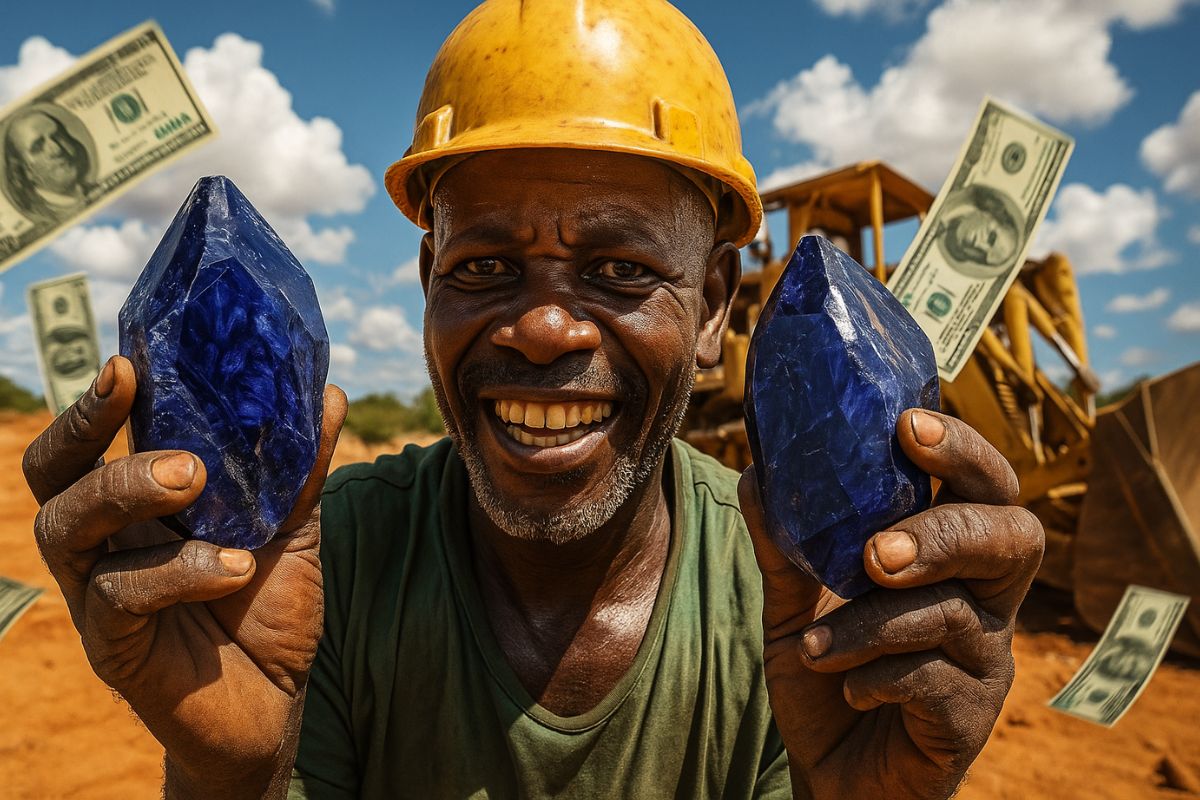
The Two Rare Gems of Pure Tanzanite Exclusive to Northern Tanzania Earned Miner Saniniu Laizer More Than US$ 3.3 Million Each, Making Him a National Symbol of Perseverance and Success
The miner Saniniu Laizer, from Tanzania, experienced what many would call a modern miracle. In June 2020, he discovered two extremely rare gemstones, the largest tanzanites ever found in the country’s history. The find, weighing 9.2 and 5.8 kg, transformed the small-scale miner into a millionaire overnight.
The stones were sold to the Tanzanian government for US$ 3.4 million (7.74 billion Tanzanian shillings). The feat not only changed Laizer’s life, but also reinforced the strategic value of tanzanite — a gem considered a thousand times rarer than diamond and found in only one spot on the planet: the Mirerani region, at the foot of Mount Kilimanjaro.
The Miner Who Became a National Symbol
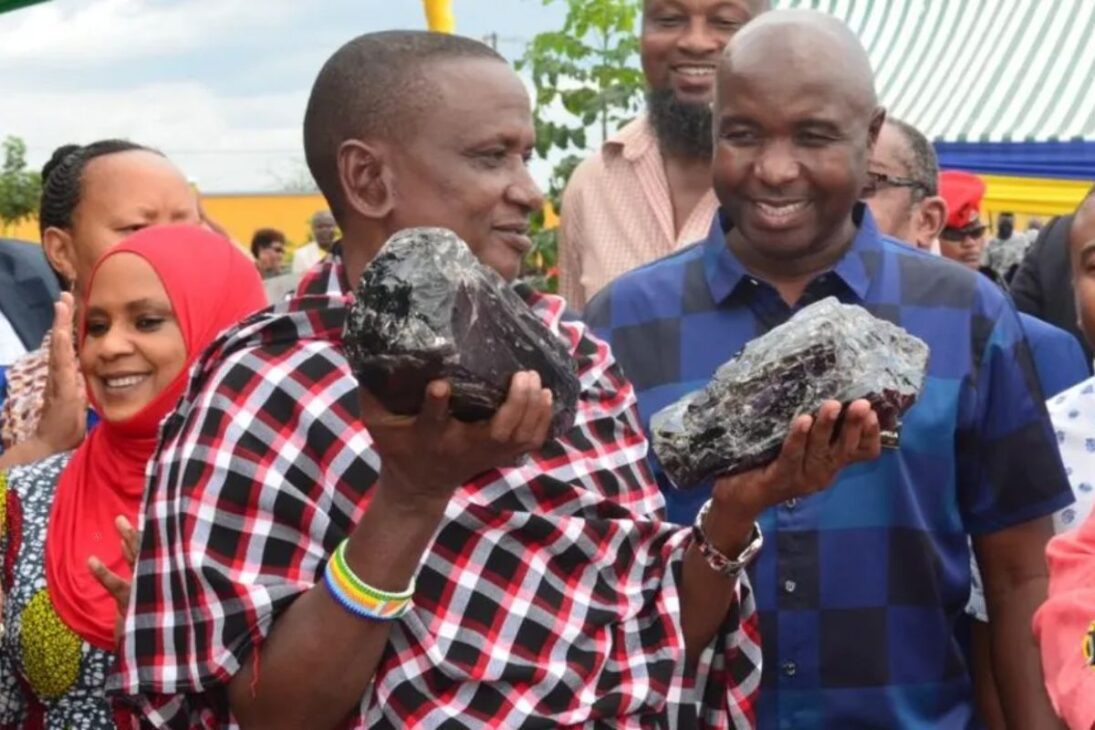
Saniniu Laizer was a small miner and farmer, owning more than 2,000 heads of cattle and a father of more than 30 children.
-
Archaeologists find a colossal 2,000-year-old vessel at the bottom of the sea near Alexandria linked to the elite of Egypt and reveal a pleasure barge from the last dynasty of the pharaohs that the sea has hidden for centuries.

-
United Kingdom clears 40 tons of shells and concrete into the sea in an innovative project that promises to restore a marine ecosystem lost for over 200 years and improve water quality.
-
With emergency diversion to abandoned mining craters, engineers save villages from a devastating flood that was advancing through the desert and threatening to destroy entire communities in a matter of hours.
-
It seems simple, but it enriches: from R$ 500 to R$ 6,000 per piece and up to 10 days of handcrafted production, how is the couple from Praia Grande making a high income with hyper-realistic miniatures and turning a hobby into a money-making machine?


His simple routine and hard work in the mines contrasted with the magnitude of the discovery.
Upon identifying the blocks of rough tanzanite, Laizer followed the protocol and reported the find to the government, selling the gems officially.
The then-president John Magufuli personally congratulated him on national television, praising his honesty and commitment.
The miner became a popular hero, a symbol that legal and transparent mining can benefit ordinary citizens.
The Context That Made the Find Possible
Laizer’s success was not just a matter of luck.
In 2017, the Tanzanian government built a 24 km wall around the Mirerani mines, with the aim of combating tanzanite smuggling and allowing local miners to sell their finds safely.
This public policy created the scenario for independent miners, like Laizer, to negotiate directly with the State and receive the full value of their stones.
The discovery of the giant tanzanites was, therefore, also a result of incentive policies and the formalization of artisanal mining.
A Third Discovery and an Even Greater Fortune
A few weeks after the first sale, Laizer found a third stone weighing 6.3 kg, valued at around US$ 2 million, raising his total fortune to more than US$ 5.5 million.
The new find solidified his name as the largest tanzanite discoverer in history and brought even more attention to the Mirerani region, now recognized as one of the most important mineral hubs in Africa.
With the profit, Laizer promised not to change his lifestyle. Instead of luxury, he invested in the community, building a school for 600 children in the Simanjiro district and a local shopping center to generate jobs and boost the economy.
His attitude was praised by authorities and turned him into a model of solidarity and patriotism.
What Makes Tanzanite So Valuable
Tanzanite is one of the rarest gemstones on the planet, found only in a strip of approximately 7 km² in northern Tanzania.
Scientists believe that reserves may be exhausted in the next two decades, increasing its value and interest in the international market.
The stone is known for its pleochroism, a phenomenon that causes the color to change depending on the angle and light, ranging from shades of blue, violet, and green.
The more intense and pure the blue color, the higher the value of the gem.
In 2025, AAAA grade tanzanites could reach US$ 1,500 per carat, while diamonds of similar quality cost over US$ 5,000, but the rarity of tanzanite is incomparably greater.
The Impact of the Discovery on the Local Economy
The sum received by Laizer, US$ 3.3 million per stone, amounts to more than 4,600 years of the average annual income of a Tanzanian citizen.
The average monthly salary in the country is around US$ 200, making Laizer’s case an extraordinary exception.
The sale was conducted publicly and supervised by the Tanzanian Ministry of Mining, ensuring complete transparency.
The government classified the episode as a landmark of ethical and nationalist mining, capable of inspiring other small miners to follow the same path.
Tanzanite vs Diamond: A Revealing Comparison
Despite being far rarer, tanzanite is still undervalued compared to diamond.
While a one-carat cut diamond can cost between US$ 3,000 and US$ 5,000, a high-quality tanzanite sells for between US$ 800 and US$ 1,500 per carat.
The difference lies in the market scale and distribution control, with large conglomerates dominating the diamond trade, while tanzanite is mined on a small scale.
Laizer’s discovery reignited the debate about the real value of rarity in the gemstone market.






-

-

-

-

-

9 pessoas reagiram a isso.