





 English
  Francês
  Alemão
  Italiano
  Japonês
  Norueguês
  Portuguese
  Spanish
  5 min of reading
  0 comments


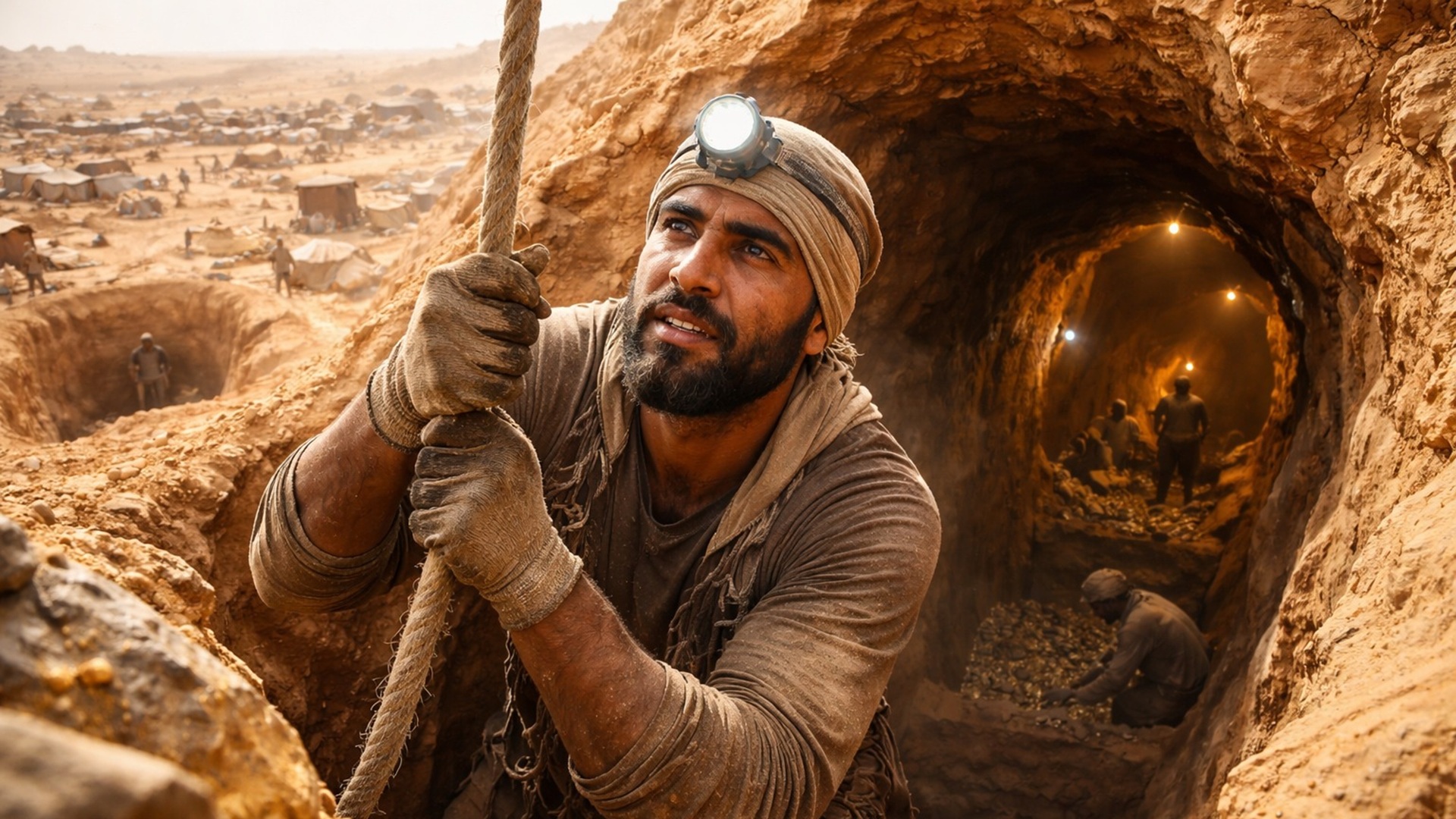
In The Mauritanian Desert, Gold Miners Work In An Extensive Underground Network Formed After An Accidental Discovery In 2016. Hundreds Of Mines And Tunnels Connected Form A City Below The Sand, Where Workers Spend Up To Two Days Below Ground Extracting Rocks That Are Then Refined To Obtain Gold
Gold miners work in an extensive mining area in the Mauritanian desert, where hundreds of mines and tunnels form a kind of underground city that began after an accidental discovery of gold in 2016, later regulated by the state.
The activity gathers workers who go down daily into deep tunnels to extract rocks containing gold. In many cases, miners stay for up to 24 hours or even two days underground, bringing food and supplies to continue the work.
The location is near the city of Chami, which has become a mandatory stop for those heading to the mining areas. There, prospectors buy equipment used in the excavations before entering the isolated regions of the desert.
-
A $3.5 billion megaproject in Latin America pumps desalinated seawater at 1,050 liters per second over 194 km to keep a copper supermine in the Andes operational for another 20 years.
-
A hidden mine in the Andes valued at nearly R$ 1 trillion is starting to attract global attention, containing copper, gold, and silver, and raises an intriguing question: why do Argentina and Chile need to act together to exploit this gigantic wealth?
-
A silent discovery in the interior of Bahia could change the future of energy in Brazil: a uranium reserve in Lagoa Real has an estimated capacity to produce 400 tons per year and is already attracting the attention of energy sector specialists.
-
What’s Behind the Rise in Iron Ore? China Announces Economic Plan for 2026 with Growth Goals, Changes in the Steel Industry, Carbon Market Expansion, and Measures to Stabilize the Real Estate Market That May Shift Commodity Balance Worldwide.
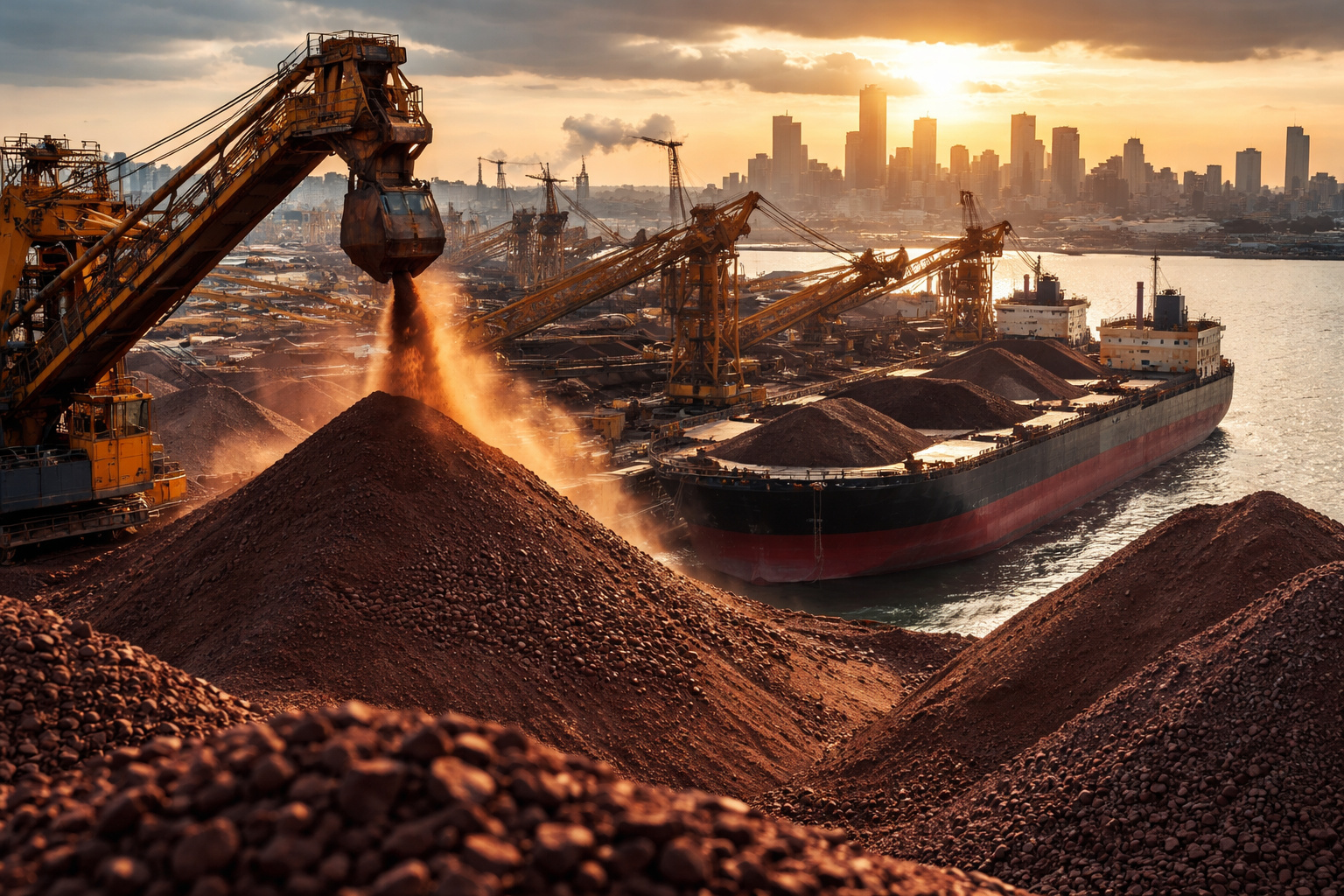

Gold exploration has gained economic relevance in the country, being pointed out as an activity that contributed to reducing unemployment and generating revenue for the national economy. With the growth of the activity, the government created specific institutions and laws to regulate the sector.
Discovery Of Gold In The Desert Led To The Formation Of A Network With Hundreds Of Mines
The history of mining in the region began when a man accidentally found gold in 2016 and reported the discovery in the capital of the country. The news quickly spread and attracted people interested in searching for the metal in the desert.
Over time, the location began to concentrate hundreds of mines and tunnels, forming an underground network that houses workers and circulation routes. The set of excavations is described by the workers themselves as an underground city formed by corridors and galleries.
Gold miners descend through narrow openings using ropes and simple equipment. From these entry points, they travel through branched tunnels extending in various directions inside the rock.
In many areas, the excavations go several meters below the surface. Some descents reach about 50 meters, while certain shafts can reach depths of up to 400 meters.
Gold Miners Spend Up To Two Days Below Ground During Extraction
Working inside the mines requires physical endurance and experience gained over time. Many miners report staying up to 24 hours within the tunnels, sleeping, eating, and working without returning to the surface.
There are cases where workers spend up to two days inside the underground galleries. To do this, they bring food, water, and basic utensils that allow them to stay underground during the exploration period.
At certain points, the inside of the mines includes makeshift areas that function as rest spots. The tunnels also have spaces used as toilets, forming a minimal structure for the workers’ stay.
One of the miners presented in the area, named Moulay, claims to have descended between 600 and 700 times in the mines. On one occasion, he reached about 48 meters deep inside a narrow shaft.
Underground Structure Forms A Kind Of City Below The Sand
The number of tunnels in the region creates an underground network compared by workers to a city. The corridors connect different extraction areas, allowing for circulation between various points below the surface.
Gold miners extract blocks of rock from the walls of the galleries and transport them to the surface. These rocks are later sent to refining centers where the metal is separated.
In some mining areas, several workers operate simultaneously within the same shaft. There are cases where five people work together in an excavation located about 22 meters deep.
The underground environment also requires equipment for air circulation. Tubing is used to bring oxygen to the workers who remain in the galleries for long periods of excavation.
Gold Miners Use Simple Equipment To Extract Rocks
A large part of the work is done with tools considered simple or improvised. Among the equipment used are iron pulleys with ropes that allow workers to descend and ascend within the shafts.
To facilitate the removal of rocks, some points use tubing that brings gas into the excavations. The heat produced helps to break or soften the rocky material before removal.
After being extracted, the rocks containing gold are transported to specialized refining locations. One of these areas is the city of Alchami, described as a large center dedicated to processing the material.
At the site, mills crush the stones until they are transformed into a liquid mixture. This substance then undergoes a chemical process in which mercury is added, a metal that reacts quickly with gold.
Refining Process Transforms Rocks Extracted From The Mines Into Gold
After grinding, the liquid mixture is placed in tanks where the reaction with mercury occurs. The process allows the separation of the gold present in the rocks extracted by gold miners.
The refining area functions like an open-air industrial city. Various houses and workshops carry out the processing of material from the mines scattered throughout the desert.
Once separated, gold can be measured in small quantities. In one of the demonstrations held on-site, a portion equivalent to one gram was presented during the selling process.
According to reports on-site, a piece of gold obtained during the activity was estimated to be worth around $800. The metal extracted from the mines is sold to the authorities responsible for the mineral sector.
The miners themselves sell the gold to government institutions linked to the Ministry of Minerals. Despite this, workers claim that part of the production can also circulate in the parallel market.
Gold Exploration Became Regulated By The State In Mauritania
With the growth of mining, the government of the country created a specific institution to organize and regulate the activity. The aim was to establish norms and monitor the exploration of gold.
The activity has come to be considered official and subject to laws that determine rules for the workers and for the commercialization of the metal. The regulation also seeks to organize the exploration that expanded rapidly after the initial discovery.
Gold mining adds to other mineral resources in the country, such as iron, copper, and phosphate. These materials are exported to different regions of the world from the ports of Mauritania.
The country also has economic activities related to fishing and the export of various types of fish to international markets. However, the discovery of gold altered the work dynamic in parts of the desert.
Among the gold miners working in the mines, many report that the job requires skill, strength, and willingness to face constant risks. In some areas, accidents and deaths have been recorded during underground exploration.
Mining continues to attract workers interested in finding the metal deep within the sand. The network of mines and tunnels remains active and continues to gather people who travel to the desert in search of gold.
This article was written based on information presented on the Joe HaTTab channel on YouTube.









Seja o primeiro a reagir!