





 Portuguese
  English
  Spanish
  4 min of reading
  0 comments



New Ethanol Blending Rule Promises to Reduce Gasoline Prices and Boost the Biofuels Sector with Job Creation and Lower Dependence on Imports.
The federal government approved, in an extraordinary meeting of the National Energy Policy Council (CNPE) on Wednesday (June 25, 2025), the increase of the mandatory anhydrous ethanol blending in gasoline from 27% to 30% (E30), and of biodiesel in diesel from 14% to 15% (B15).
The new rules will come into effect on August 1 and are expected to reduce gasoline prices by up to R$ 0.11 per liter, according to the Ministry of Mines and Energy — which could represent savings of R$ 0.02 per kilometer driven for drivers traveling 7,500 km monthly, totaling R$ 150 in relief per month or R$ 1,800 per year.
Impact of New Fuels Policy on the Geopolitical Scenario
The decision comes amid instability in the Middle East, which has raised international oil prices, especially after tensions between Iran and Israel.
-
Larger than entire cities in Brazil: BYD is building a 4.6 km² complex in Bahia with a capacity for 600,000 vehicles per year, but the discovery of 163 workers in conditions analogous to slavery has shaken the entire project.

-
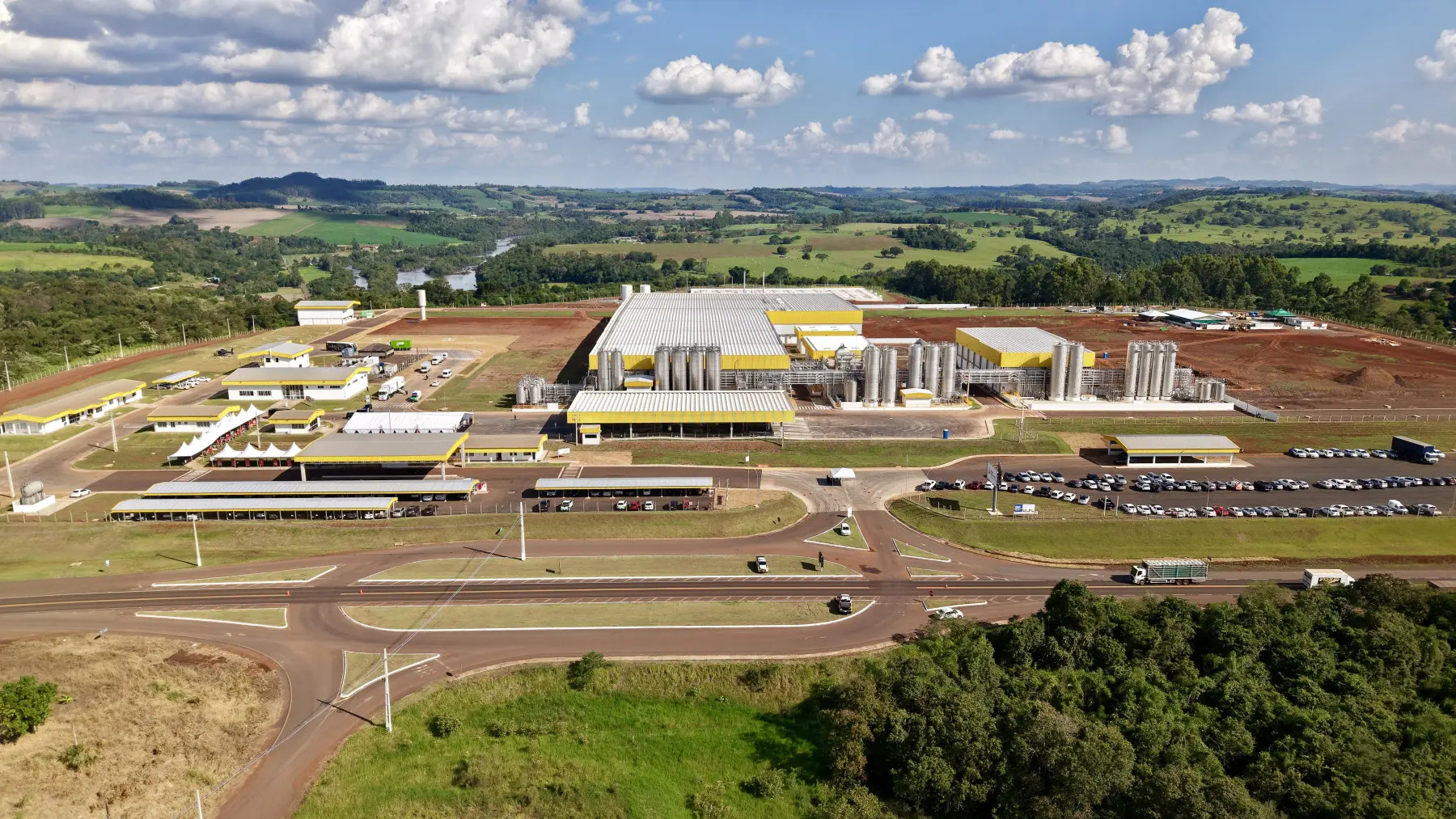
With an investment of R$ 612 million, a capacity to process 1.2 million liters of milk per day, Piracanjuba inaugurates a mega cheese factory that increases national production, reduces dependence on imports, and repositions Brazil on the global dairy map.
-
Brazilian city gains industrial hub for 85 companies that is equivalent to 55 football fields.

-
Peugeot and Citroën factory in Argentina cuts production by half and opens a layoff program for more than 2,000 employees after Brazil drastically reduced purchases of Argentine vehicles.


According to Secretary Pietro Mendes (Oil, Natural Gas and Biofuels), “the volatility in world oil prices has reinforced the need for energy resilience”.
In addition, he emphasized that Brazil can regain self-sufficiency in gasoline production and even become a net exporter of the product.
The new E30 composition, combined with biodiesel B15, is expected to create over 50,000 jobs over the coming years, including investments of R$ 10 billion in the sector related to the expansion of plants, harvesting, and agricultural production.
Economic and Fiscal Benefits of the Measure
Cost Reduction for Drivers: the MME estimates savings of R$ 1,800 per year for those traveling 7,500 km per month, with a reduction of R$ 0.02 per km.
Fuel Prices at the Pump: the drop in price per liter may vary between R$ 0.11 and R$ 0.13, according to data from Broadcast Agro and the newspaper O Globo.
Impact on Diesel: the increase in biodiesel (B15) is expected to have a negligible effect on the final diesel price at gas stations, with an estimated variation of R$ 0.01 per liter — offset by adjustments in the international oil price.
Advancement in Self-Sufficiency: the MME expects to avoid the import of 760 million liters of gasoline per year, covering this volume with the production of about 1.36 billion liters of ethanol — paving the way for the country to become a net exporter of around 700 million liters annually.
Job Creation and Incentives: in addition to investments in plants, the increase in B15 is expected to enhance the production of soybean meal, generating protein for the animal production chain, and create about 17,200 direct jobs.
Emission Reduction and Technical Feasibility
Environmental Benefits: E30 can decrease gasoline’s carbon footprint by up to 2.8%, a reduction equivalent to 3 million tons of CO₂ per year.
The increase in biodiesel B15 could cut 1.2 million tons of emissions annually.
Technical Tests and Legal Limits: studies by the Mauá Institute of Technology (IMT), validated with support from Anfavea, Sindipeças, Abeifa, and Abraciclo, have confirmed the technical feasibility of E30 without performance loss in flex vehicles.
Brazilian legislation allows for a mix of up to 35% of ethanol in gasoline, provided technical neutrality is proven.
History of Ethanol and Public Policies
Brazil has been a pioneer in the use of ethanol as a biofuel since the late 1970s, with the launch of the National Alcohol Program (Proálcool).
The obligation to blend anhydrous ethanol into gasoline peaked in the 2000s, reaching 27.5% since 2015.
Flex-fuel vehicles, introduced in 2003, allowed the widespread adoption of this type of fuel in the national market.
The initiative to raise the blend to 30% aligns with the policies of RenovaBio (Law 13.576/2017), which aims to reduce emissions, stimulate energy efficiency, and ensure predictability for the sector.
Common Questions About the New Measure
Why Does Mixing More Ethanol Reduce Gasoline Prices?
This happens because anhydrous ethanol has a lower tax burden than Type A gasoline, making it a cheaper option for consumers.
Was the Increase to 30% Already Expected?
Yes. The current legislation already allows for up to 35%. However, the increase was only approved after technical studies confirmed safety for engines, further spurred by the current geopolitical pressure.
Expected Results in the Short and Medium Term
Immediate Relief for Consumers: Drivers are noticing a significant decrease in cost per km driven and in the price per liter.
Stimulation of National Production: boosts the sugar-energy sector and chains related to agribusiness.
Strengthening Energy Sovereignty: reduces external dependence, especially in times of conflict in the Middle East.
Environmental Advancement: significant reduction in greenhouse gas emissions.
Do you think that the increase in ethanol blending will effectively reflect in lower prices at the pumps and bring tangible benefits to the average driver?






-

Uma pessoa reagiu a isso.