





 Portuguese
  English
  Spanish
  5 min of reading
  0 comments


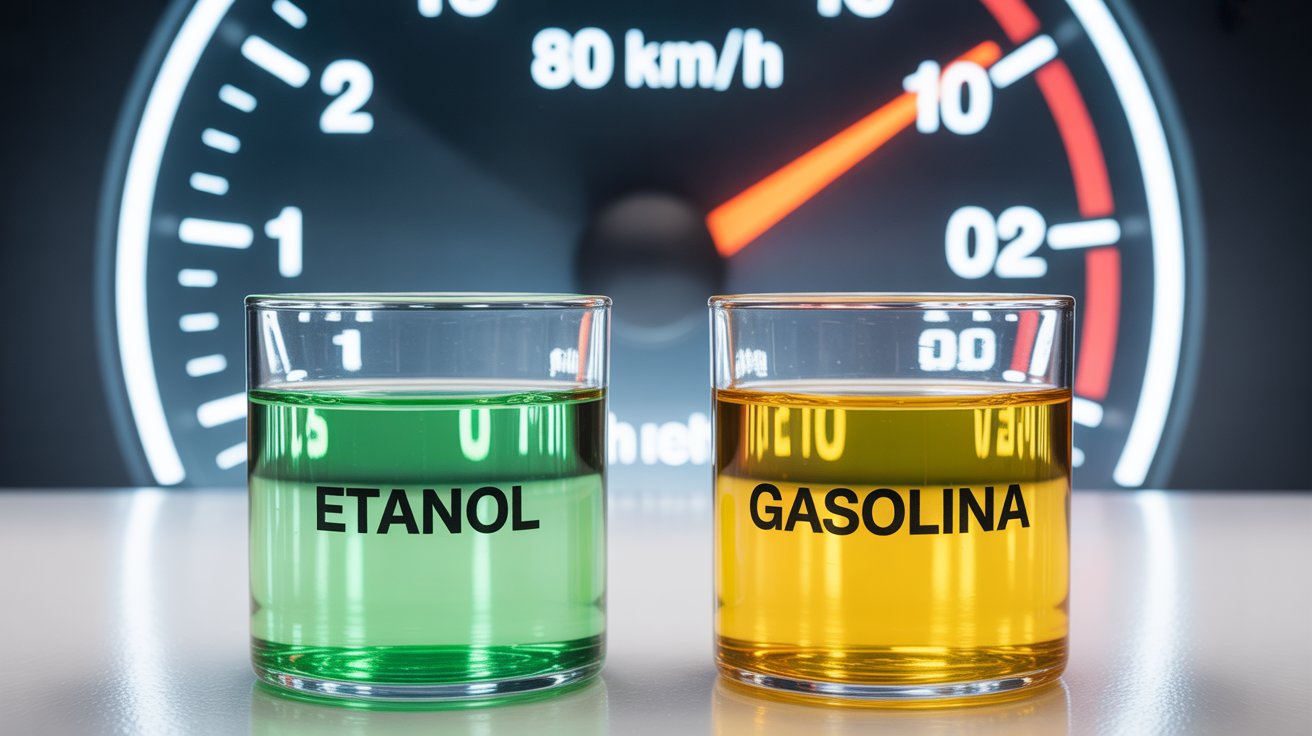
Learn How to Identify When Ethanol Is More Economical and Discover Common Practices That Increase Fuel Consumption, Compromising Your Budget and Vehicle Range. Also Understand the Impact of Maintenance and Driving Habits.
The decision between filling up with gasoline or ethanol continues to create uncertainties among drivers in Brazil.
The starting point is objective: ethanol tends to be financially advantageous only when it costs up to 70% of the value of gasoline, due to the difference in energy efficiency between the fuels.
Add to this driving habits and basic vehicle care that, when neglected, increase consumption, especially sudden accelerations, which can raise expenditure by up to 25% in urban traffic.
-
“No one will make us change the Pix,” says Lula after the US report.

-
Lula responds directly to Trump and says that Pix is from Brazil and will not change under pressure from anyone, after a report from the United States pointed out the Brazilian payment system as an American trade barrier.

-
Amazon has just announced a new fee on all deliveries, and your online purchases will become more expensive starting April 17, including for those buying from the United States here in Brazil.

-
He sold his share for R$ 4 thousand, saw the company become a giant worth R$ 19 trillion, and missed the opportunity of a lifetime.


When Ethanol Really Pays Off
The 70% rule serves as a shortcut to compare cost and yield. Since ethanol delivers less energy per liter than gasoline, the price needs to be proportionally lower to equal the cost per kilometer driven.
In practical terms, if gasoline costs R$ 6.00, ethanol only becomes worthwhile when it is around R$ 4.20 or less.
This simple calculation reduces the risk of paying more to travel the same distance and helps guide decisions in cities where price variation is frequent.
Although many drivers consider ethanol a “naturally cheaper” option, the advantage depends on the price at the pump and usage.
Urban trips with frequent stops, hills, and air conditioning tend to highlight the efficiency of gasoline. On the other hand, fluid routes and higher temperatures usually favor ethanol. Correctly reading the context makes a direct difference to the wallet.
Additives: What to Expect from Real Results
Another point that generates expectations is the use of additives. The belief that products added to fuel produce relevant and consistent savings is not widely confirmed.
There are additives that help with cleaning and performance, but there is no guarantee of a noticeable reduction in consumption under normal usage conditions.
The safe guidance is to follow the recommendations in the vehicle manual and, when indicated by the manufacturer, use approved additives for the specific engine. Beyond that, the promise of “miracles” does not hold.
Economical Driving: Accelerations, Shifts, and Rhythm
Your behavior behind the wheel accounts for a significant portion of the expenses. Suddent acceleration in traffic jams and take-offs can elevate consumption by up to 25% in urban use.
Anticipating flow, maintaining a safe distance, and using the accelerator pedal with gradual pressure reduce unnecessary rotation peaks.
In manual transmissions, shifting at the right revs avoids forcing the engine. In automatics, smooth driving favors shifts to higher gears earlier, which is usually more economical.
Maintaining a constant speed is another ally. Continuous fluctuations, even small ones, can be costly by the end of the route.
When choosing routes, sections with fewer stops and better flow tend to optimize performance, even if the total distance is slightly longer.
Preventive Maintenance and Its Impact on Consumption
Taking care of basic components is crucial for efficiency. Tires with pressure below specifications increase rolling resistance and can raise consumption by about 5%.
Checks should be made with the vehicle cold, respecting the pressure indicated in the manual and considering adjustments for load.
Clogged air filters and worn spark plugs compromise the mixture and burning of fuel, harming the engine and the range per liter.
Timely part replacements and periodic inspections keep the system in order and prevent small failures from turning into larger expenses.
Additionally, using appropriate parts as specified by the manufacturer preserves the intended performance.
Extra Weight, Air Conditioning, and Range
Excess weight is the enemy of savings. Transporting unnecessary items every day increases inertia and requires more energy for movement.
Air conditioning imposes additional load on the engine and can reduce mileage per liter by up to 20%, depending on usage intensity, ambient temperature, and type of route.
One way to mitigate loss is to turn on the system at moderate settings and ventilate the vehicle before starting in very hot weather.
How to Apply the Calculation When Filling Up
At the gas station, the decision should consider three elements. First, compare the displayed prices and apply the 70% ratio between ethanol and gasoline.
Next, evaluate the usage pattern during that period. If short trips, heavy traffic, and intense air conditioning use prevail, gasoline tends to provide better mileage per liter.
Finally, observe the condition of the vehicle. Properly inflated tires, well-maintained filters and spark plugs, and absence of unnecessary weight help any fuel perform better.
This combination creates a robust method for choosing fuel rationally.
This way, it avoids decisions based on isolated perceptions or clichés. It is a quick process that can be repeated with every fill-up as prices vary in the city.
Savings Throughout the Year: The Accumulated Effect of Good Habits
The sum of practices like smooth driving, stable speed, properly inflated tires, clean filters, and shedding unnecessary weight yields concrete results.
For those who drive 2,000 kilometers per month, combined savings can represent an annual savings of up to R$ 2,000.
Part of this amount comes from avoiding everyday waste, without relying on additional technologies or large investments.
Changing habits, and not just isolated measures, tends to offer more stable gains over time. Choosing fuel, therefore, is not an isolated act.
It integrates with how you drive and how you take care of your vehicle. When the driver checks prices, applies the cost-per-kilometer ratio, keeps the car in order, and drives consistently, they reduce expenses per trip and also decrease unnecessary emissions.
This set of actions provides predictability for mobility budgets and avoids decisions based on myths.
Have you compared how much your car spends per kilometer with gasoline and with ethanol using the 70% rule, and which driving and maintenance adjustments have reduced your costs over the month?








Seja o primeiro a reagir!