





 Portuguese
  English
  Spanish
  8 min of reading
  0 comments


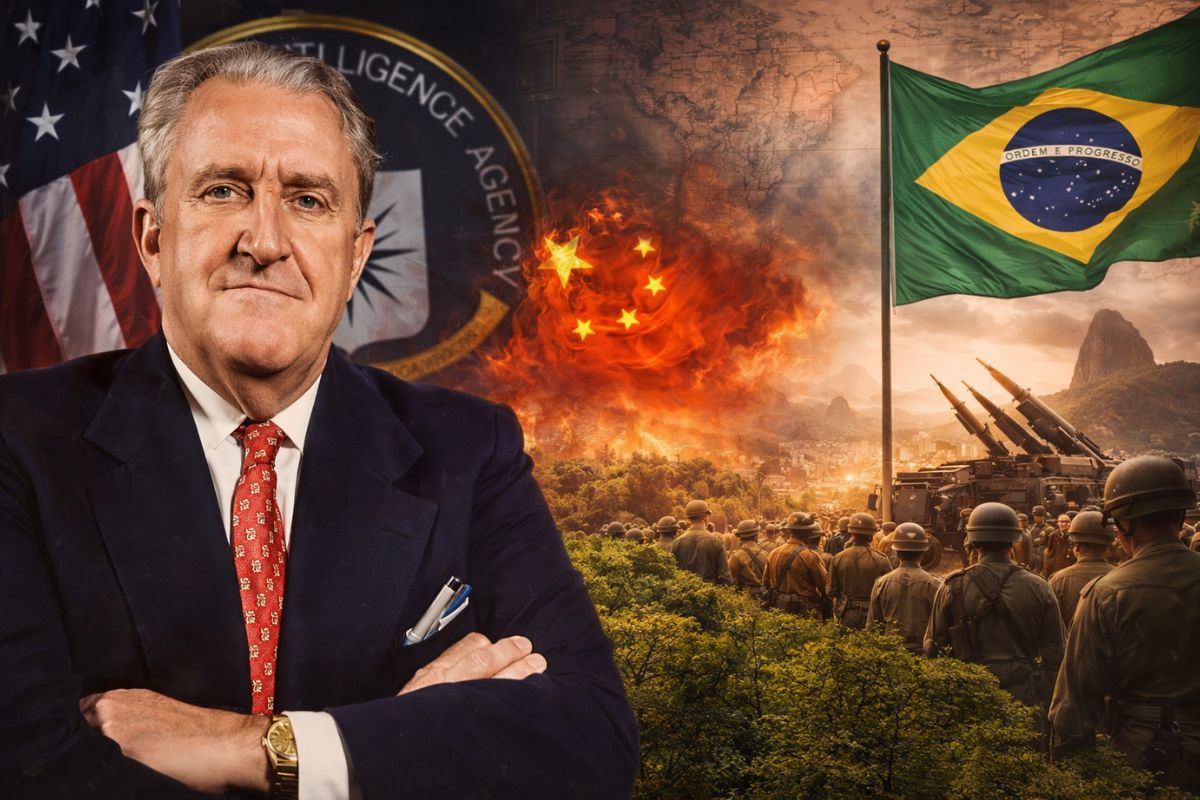
The Statement by CIA General Vernon Walters, Recorded in a Memorandum from 1968 and Reinforced in an Interview from 1998, Condensed the American Logic About Brazil During the Cold War, When the Country Was Seen as a Key Territory to Contain the Left and Preserve the Hemispheric Influence of the United States
The CIA General Vernon A. Walters succinctly captured a profound strategic perception of the United States regarding Brazil by stating that, without support for the military regime, the country could become “a new China.” The statement was not merely rhetorical. It revealed Washington’s fear of losing the largest nation in Latin America to a potentially hostile alignment amid the Cold War.
Behind this interpretation was the conviction that Brazil was not treated as a peripheral actor. It was seen as a continental scale player, capable of influencing the political balance of the Western hemisphere. That is precisely why Walters’ trajectory, his ties to Brazilian military officials, and his movements before and after 1964 help to understand how the United States viewed the country well beyond its formal borders.
What the CIA General’s Statement Really Revealed
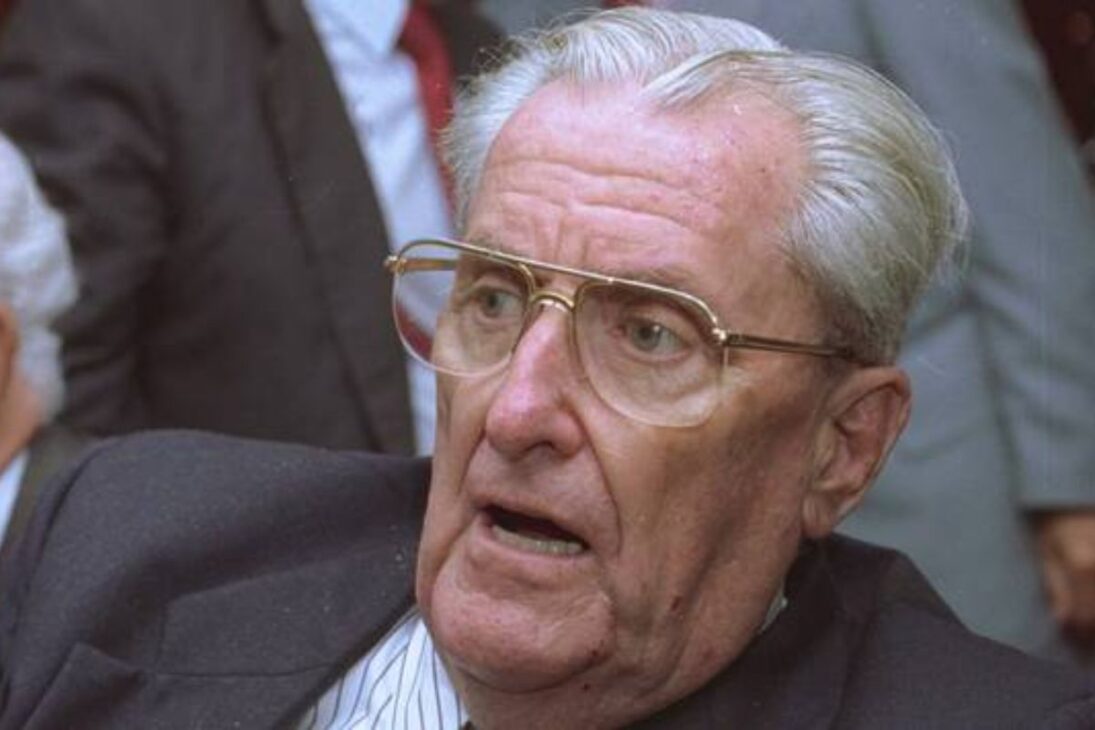
The CIA General’s statement that Brazil could become “a new China” exposed a logic typical of the Cold War. Washington did not evaluate merely governments, elections, or internal crises.
-
It seems simple, but it enriches: from R$ 500 to R$ 6,000 per piece and up to 10 days of handcrafted production, how is the couple from Praia Grande making a high income with hyper-realistic miniatures and turning a hobby into a money-making machine?

-
Artisanal well erupts with water in the sertão of Bahia, revealing a surprising flow with six active fissures underground and changing the landscape in the Bahian semi-arid region.
-
NASA published a photo taken from space of a mountain range in the interior of Goiás, and the whole world wanted to know what it was: beneath it lies the largest hot water spring on the planet, with temperatures reaching 70 degrees in the middle of the Cerrado.
-
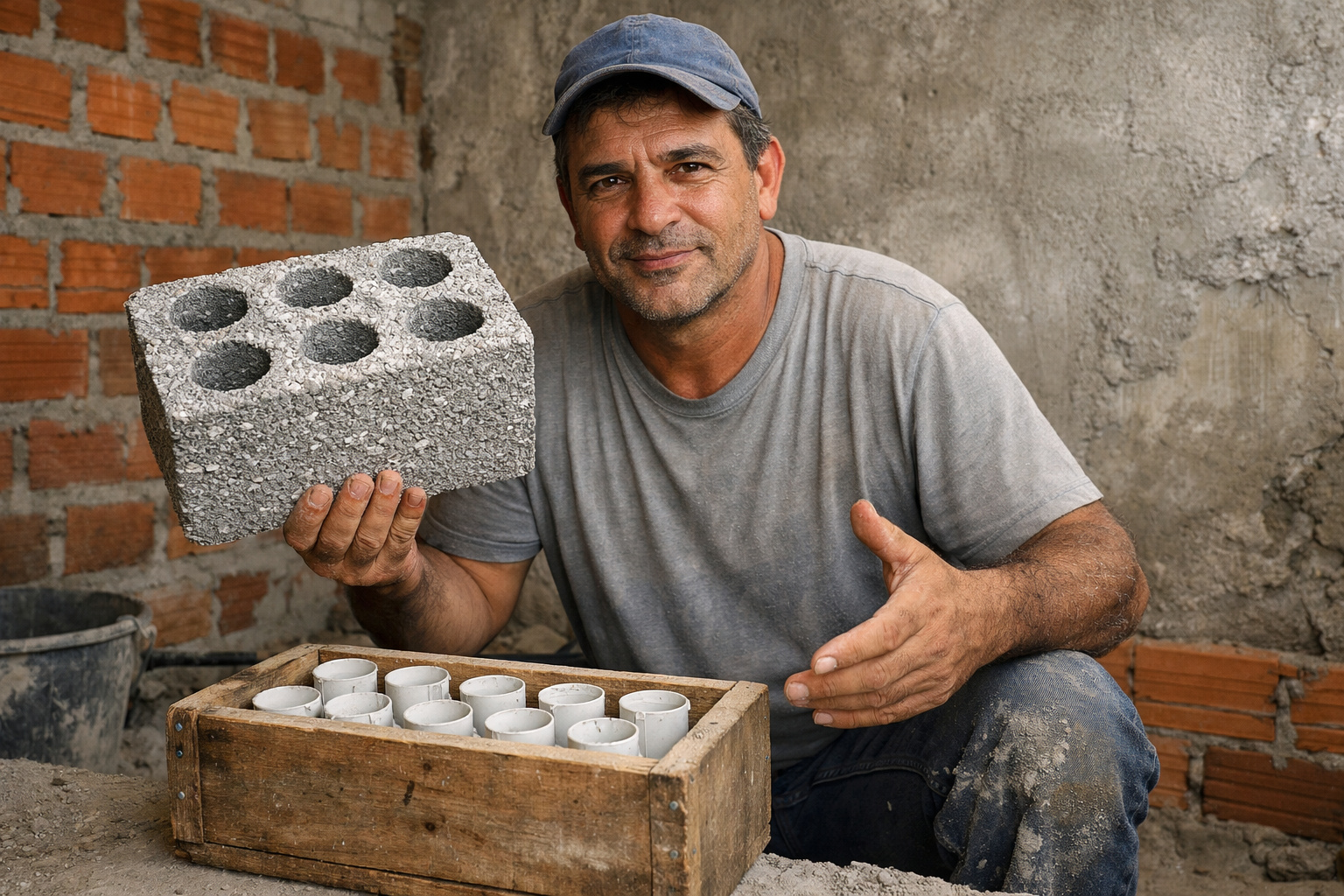
A thermal block costing only R$ 0.40 catches attention by reducing heat by up to 80% using recycled styrofoam, a common kitchen ingredient, and a manual technique capable of producing 50 blocks from a single bag of cement.
It assessed territorial size, population, economic weight, regional position, and a country’s capacity to radiate ideological influence.
In the Brazilian case, the fear was not of a simple change of government, but of a lasting geopolitical inflection.
The comparison with China, and not just with Cuba, illustrates the dimension of this fear. Cuba represented, for Americans, a communist focal point of regional reach.
China, on the other hand, symbolized much greater territorial mass, population scale, and strategic projection.
When Walters used this imagery decades later, he made it clear that Brazil was perceived as a potential power, capable of altering the hemispheric game if it escaped Washington’s orbit.
This reasoning helps to understand why the CIA General’s statement was much more than a personal recollection. It functioned as a summary of policy.
The United States did not sustain the military regime merely out of abstract ideological affinity, but because they believed the country needed to remain firmly aligned on the global chessboard.
This also explains why support for the regime appears, in this reasoning, as a measure of containment.
The central objective was to prevent strategic displacement, even if that meant sustaining an authoritarian order in the name of a greater calculation about the Cold War balance.
Who Was Vernon Walters and Why Was His Relationship with Brazil so Close
The CIA General Vernon A. Walters was born in 1917, in New York, and joined the United States Army in 1941.
Fluent in several languages, he was directed to intelligence service and gained prominence in tasks that required negotiation, political reading, and interaction among officials from different countries.
This circulation ability was decisive for his later influence.
During World War II, Walters served as an interpreter in negotiations between Brazilian and American military officials.
It was during this period that he built ties with important figures in the Brazilian Armed Forces, including Humberto Castelo Branco, who would later become the first president of the regime established in 1964.
The closeness did not arise at the moment of the coup; it had been built long before.
After the war, Walters served as military attaché in Brazil until 1948. This period was important because it consolidated a network of relationships at a time when military connections between Brazil and the United States were still marked by the experience of war and the rise of post-war anti-communist concerns.
When he returned to Brazil in 1962, appointed by Ambassador Lincoln Gordon, he was no longer merely a well-connected foreign officer.
The CIA General arrived in Brazil amid growing tension surrounding the João Goulart government, precisely when Washington was amplifying its suspicions about the political directions within the country.
From Return in 1962 to the 1964 Coup
Walters’ return to Brazil occurred in an environment of political radicalization, social polarization, and increasing American anxiety towards any movement interpreted as closeness to the left.
João Goulart was viewed in Washington with strong suspicion, and the country began to be observed as a possible turning point in the continent.
Historical documents mentioned in the provided base indicate that the CIA General collaborated in the arrangements that led to Jango’s deposition.
This point is significant because it helps position Walters not just as an observer of the process, but as a relevant agent in a diplomatic and military machinery that sought to keep Brazil within the strategic sphere of the United States.
In this context also emerged the so-called Operation Brother Sam. The plan included sending an American naval task force, led by the aircraft carrier USS Forrestal, to support Brazilian military officials in case there was resistance to the coup.
The operation was deactivated after Goulart’s fall was consolidated on April 2, 1964, but its formulation already indicates the level of American commitment to the internal outcome in Brazil.
The importance of this episode lies in what it reveals about Washington’s political calculation.
Brazil was not treated as a distant domestic issue, but as a strategic area where indirect intervention, logistical support, and military coordination were seen as legitimate instruments to prevent a shift in political direction.
The 1968 Memorandum and the Defense of Regime Support
Four years after the coup, the CIA General reinforced this view in a memorandum sent on the last day of 1968 to then-Secretary of State Henry Kissinger.
In this document, he suggested that the United States should continue supporting the military regime established in 1964. The warning was clear: without this support, Brazil risked aligning itself with the communist bloc.
This moment was not just any moment. The end of 1968 marked a phase of intensification of the Brazilian regime, and the memorandum appears precisely when the dictatorship was deepening its repression mechanisms.
By advocating for external support in this context, Walters showed that geopolitical calculations weighed more than concerns about the nature of the supported regime.
The logic was consistent with the prevailing American perspective at that time.
During the Cold War, anti-communist rhetoric often served as a key to justify support for authoritarian governments deemed useful to the strategic interests of the United States.
Brazil, due to its size and regional position, played an even more sensitive role in this formula.
Therefore, the CIA General’s memorandum should not be read as an isolated document but as part of a broader policy of containment.
The focus was not only on Brasília but also on the signal that Brazil could emit to all of Latin America if it followed a different political path.
“It Wouldn’t Be Another Cuba, It Would Be Another China”
Decades later, in an interview given in 1998, Walters reaffirmed his conviction with a phrase that would become one of the most emblematic of his trajectory.
He said he would like to be remembered for doing what he could, as a soldier, to keep the peace, because if Brazil had been lost, “it wouldn’t be another Cuba: it would be another China.”
This formulation is revealing because it underscores the maximum scale of importance he attributed to the country.
Cuba was the classic example of American trauma in the Caribbean; China, the example of a historical transformation of continental proportions.
By choosing the latter image, Walters emphasized that Brazil was seen as too significant to be left outside Washington’s orbit.
This choice also helps to understand the mentality that underpinned much of the indirect American interventions in Latin America.
Instead of evaluating each case merely by its national dynamics, the reasoning anchored itself in a global dispute between blocs.
The CIA General clearly articulated this by transforming Brazil into a large-scale geopolitical hypothesis.
It was, therefore, not just a matter of fearing a leftist government in the Southern Cone. It was about preventing the largest country in the region from acquiring political, territorial, and ideological density capable of reconfiguring the balance of the Western hemisphere in favor of a rival camp.
Conspiracy, Documents, and Historical Memory
Over the decades, the release of official documents strengthened evidence that American authorities conspired to keep Brazil aligned with their strategic interests.
The actions of the CIA General fit precisely into this environment, marked by diplomatic arrangements, covert support for military movements, and readiness to interfere in the internal political trajectory of sensitive countries.
This process fueled a memory of distrust in Brazil that blends historical documentation, public perception, and conspiracy culture.
It is no coincidence that the 1964 coup continues to be revisited as an episode where domestic factors and international interests intersected decisively.
Walters’ presence in this story serves as a connecting point between the two planes.
Walters’ own international trajectory broadens this reading. He was present in other delicate moments of the Cold War, such as in Iran in 1953 and in Chile before the fall of Salvador Allende, although the provided base emphasizes that there is no documented evidence of his direct involvement in those episodes.
Even so, his constant circulation through high-tension scenarios reinforces his profile as a trusted strategic operator within the American apparatus.
In the Brazilian case, the historical weight of the CIA General remains precisely because his words, his ties, and his movements help condense how Washington viewed the country.
Not as just any partner, but as a key territory whose political orientation could have effects far beyond national borders.
Vernon Walters’ statement about Brazil becoming “a new China” was not a simple verbal exaggeration or a curious archival note.
It revealed, with brutal clarity, the strategic value the United States attributed to the country during the Cold War and helps to explain why the military regime was treated as a useful piece in the global contest of that period.
The most uncomfortable aspect of this story may not just be what was said, but what the statement exposes about the logic of great powers towards fragile democracies and internal crises.
In your view, does this kind of document change how the 1964 coup should be interpreted today, or is the weight of American intervention still underestimated in public debate?







-

Uma pessoa reagiu a isso.