





 Portuguese
  English
  Spanish
 3 min of reading



Petrobras Faces Barriers In Exploring The Amazon River Mouth Basin: A Decision That Contradicts The National Interest Of IBAMA Or A Necessary Measure To Protect The Brazilian Equatorial Margin?
In an indignant interview with DCM TV, Felipe Coutinho, vice president of AEPET, launched a tirade against the IBAMA’s Restrictions On Petrobras. According to him, the limitations imposed on the exploration of the new frontier in the Amazon River Mouth Basin region, part of the Brazilian Equatorial Margin, can be interpreted as a contradiction to national interest. After all, Petrobras’s activities do not directly affect the Amazon region – the wells are located 160 km off the coast of Amapá – and the state company has rare cases of leaks, generally of low impact.
Restriction On Petrobras: A Threat To Development Or Environmental Defense?
Coutinho criticizes that environmental defense has been used to favor interests that do not encompass development and improvement of the population’s living conditions. As an example, he cites the progress already observed in Guyana. He characterizes as “genocidal” the attitude of denying the link between per capita energy consumption and human development.
Moreover, he argues that Brazilians’ per capita energy consumption needs to increase to reach the levels of developed countries. “The energy that fosters development must be accessible, reliable, and sovereign. Those who deny this are not acting in favor of preserving national interest, with both social and ecological responsibility,” he argues.
-
New escalation of tensions and oil crisis in the Middle East forces world powers to accelerate energy transition plans.

-
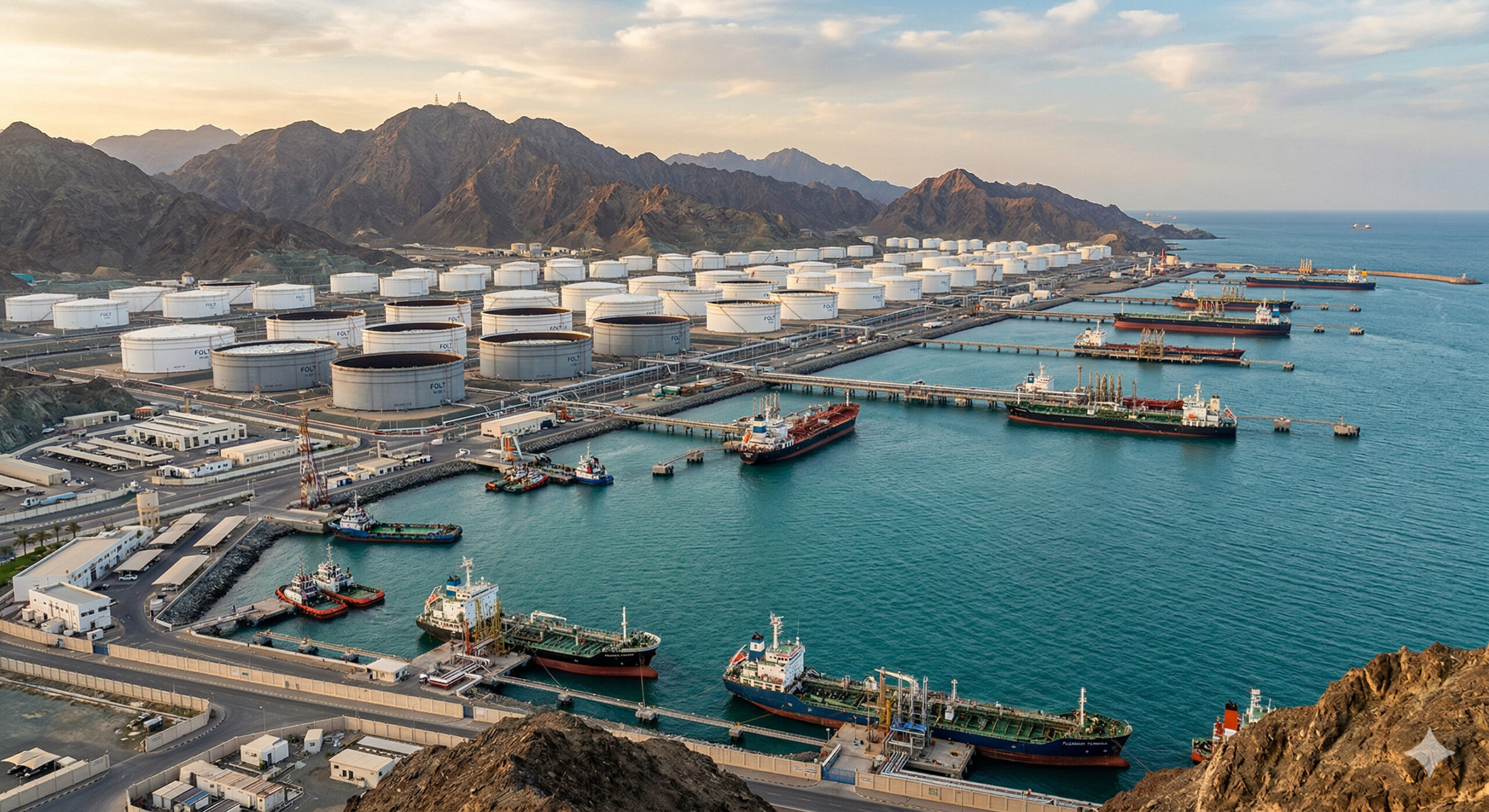
Giant reservoirs with a capacity of 18 million cubic meters have turned Fujairah into one of the largest energy vaults on the planet. This facility, located outside the Strait of Hormuz, stores oil on a colossal scale and has become a silent piece that supports the global flow of fuels.
-
The next exploration auction in the pre-salt will offer 23 blocks in the Campos and Santos basins and may change the interest of oil companies in Brazil.

-
The next exploration auction in the pre-salt will offer 23 blocks in the Campos and Santos basins and could change the interest of oil companies in Brazil.



State-Owned Companies vs Multinationals: The Duel In The Oil Industry
When it comes to safety in oil exploration, Coutinho emphasizes the difference between state-owned companies, like Petrobras, and multinationals. The latter, usually controlled by the financial system, focus primarily on short-term profit, often to the detriment of safety and the future of the company itself.
He notes that of the 25 largest oil companies, 19 are state-owned, and among the five largest, four are state-owned. Despite this, Petrobras’s recent practices, according to Coutinho, align with the logic of multinationals and financial capital, rather than with the expected profile of a state-owned company.
Brazil’s Energy Future: Fossil Fuels and Hydropower
With 85% of the world’s primary energy consumption provided by fossil fuels, Coutinho emphasizes that Brazil cannot forfeit its comparative advantage of having a clean energy matrix, due to the contribution of hydropower, to the detriment of its own development. He concludes by pointing out the need for a sovereign development project that focuses on high value-added products and skilled jobs. “Financial capital will not like it, but without confronting antinational interests, we will always be a country with unrealized potentials,” he concludes.









Seja o primeiro a reagir!