





 Portuguese
  English
  Spanish
  4 min of reading
  75 comments


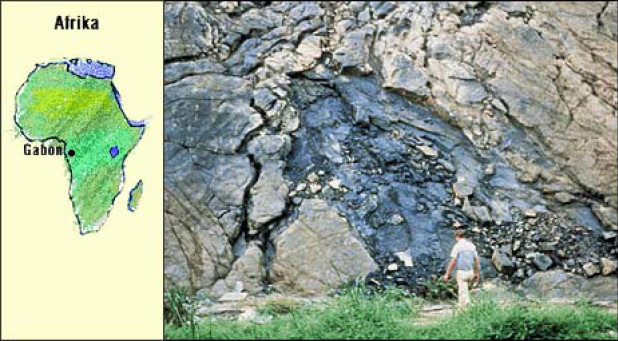


In the 1970s, scientists discovered natural fission nuclear reactors that operated for more than 150 thousand years, revealing a unique phenomenon on Earth.
In the 1970s, an impressive discovery in Gabon, West Africa, shook the world of geoscience and nuclear physics. Fifteen “fossils” of natural fission nuclear reactors were identified, dating back about two billion years.
Fourteen of them are located at the Oklo uranium mine, while the smallest is in the small deposit of Bangombé, 30 kilometers away distance.
While the Oklo reactors have been totally or partially mined and are now flooded, Bangombé has been preserved for scientific studies on radioactive waste in geological environments.
-
While the world looks at oil, the war with Iran is already disrupting helium supply from Qatar, affecting car and iPhone chips, threatening AI expansion, and putting pressure on aluminum packaging at the highest value in four years.

-
Global warming will expose a treasure hidden under the ice of Antarctica and may spark an international dispute over gold and valuable minerals.

-
A street vendor from Praia Grande built a robot made of scrap from scooters and washing machines that pulls his popcorn cart on the beach, emits sounds, and interacts with customers, becoming an attraction on the coast of São Paulo.
-
The specifications of the Xiaomi 18 Pro Max have been leaked, and the highlight is a dual 200 MP camera with a new 22-nanometer technology that promises to consume less energy and capture details in shadows and bright areas using LOFIC HDR.

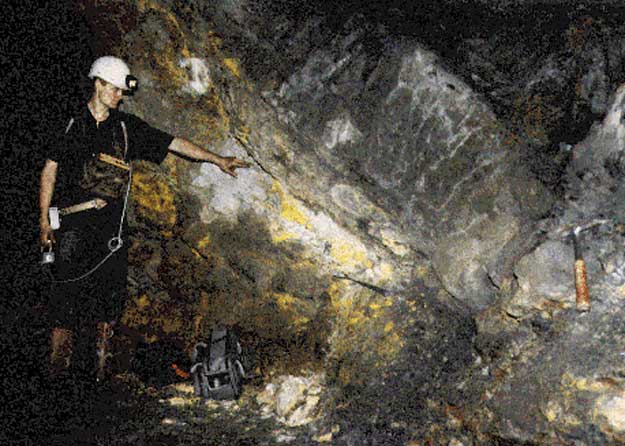
The Initial Discovery of the Nuclear Reactors
In 1972, French scientists analyzing uranium extracted from Oklo found something curious. The fraction of uranium-235 in the material was slightly lower than expected. Under normal conditions, terrestrial uranium contains 0.720% of uranium-235.
However, the uranium from Oklo showed only 0.717%. This difference, although small, raised a series of questions. Since uranium-235 is used in nuclear weapons, it was essential to uncover what had happened.
It was then that the scientists remembered a study from 1956 conducted by Japanese-American chemist Paul Huroda. He had suggested the possibility of natural nuclear reactors under certain geological conditions.
The answer was there: in Oklo, two billion years ago, the necessary conditions for natural nuclear fission were present, consuming uranium-235 and explaining the reduction in the isotopic enrichment observed.
How the Natural Reactors Worked
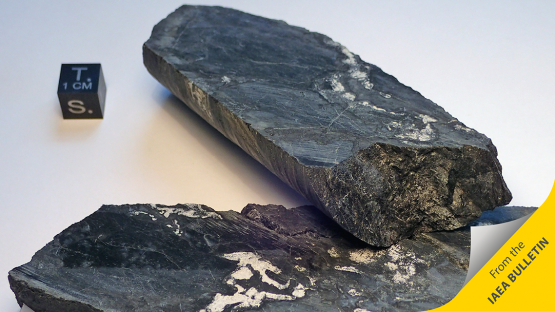
Scientists discovered that during the Proterozoic Era, about two billion years ago, two critical factors aligned:
- Uranium Enrichment: At that time, natural uranium had an enrichment of about 3.5% of uranium-235, the same level used in modern nuclear reactors.
- Increased Oxygen in the Atmosphere: This increase allowed geochemical reactions that concentrated uranium in high-quality veins.
With these two combined factors and other secondary conditions, the natural fission reactors came into operation.
This occurred about 1.95 billion years ago, at a time when uranium enrichment was sufficient to sustain chain nuclear reactions.
Why Are There No More Recent Natural Nuclear Reactors?
The key lies in the interaction between uranium enrichment and oxygen concentration. In times prior to two billion years ago, despite there being more uranium-235, the lack of oxygen in the atmosphere prevented the formation of highly concentrated uranium ores.
On the other hand, the natural enrichment of uranium has decreased over time due to radioactive decay. Thus, reactors could not emerge in more recent periods.
Currently, even in places with high-quality uranium like Bangombé, the enrichment is insufficient to sustain natural nuclear reactions. This makes the Oklo phenomenon unique in the geological history of Earth.
What Remains at Oklo?
The ancient reactors at Oklo now contain high-quality uranium ore with elevated levels of radioactive waste.
These wastes include fission products from uranium-235 and plutonium-239, as well as end products of their decay processes.
This unique environment provides a valuable opportunity for scientists to study how radioactive waste interacts with geological formations over billions of years.
The lessons from Oklo are useful for planning modern nuclear waste repository sites, which also depend on stable geological environments.
Operation of the Natural Reactors
Studies indicate that these reactors operated for about 150 thousand years, consuming more than five tons of uranium-235. Their average power was approximately 150 kW, comparable to that of modern small research reactors.
It is believed that water played an essential role, acting as a moderator. The moderator slows down the neutrons, allowing them to be absorbed by uranium-235 nuclei and sustain the chain reaction.
This process also had a self-regulating mechanism. When the temperature rose, the water evaporated, interrupting the thermalization of the neutrons and, consequently, the nuclear reaction. When the reactor cooled down, the water returned, restarting the reaction.
This generated activity pulses of 30 minutes, followed by 2.5 hours of inactivity, a pattern recorded in the isotopic signatures of xenon in minerals near the reactor core.
Impact on the Study of Radioactive Waste
One of the biggest challenges of nuclear energy is the fate of radioactive waste, which remains dangerous for thousands of years.
Many countries consider storing them in underground caves or other geological formations. In Oklo, Nature conducted this experiment on its own, offering important clues about the safety and stability of these environments.
Scientists continue to analyze what remains of the natural reactors to better understand how radioactive elements behave over time.
This information can help improve nuclear waste storage systems on a global scale.






É interessante como a natureza consegue produzir meios de ajustar o equilíbrio do planeta.
Imagine uma usina nuclear natural, ou seja, algo tão evoluído que não teve nenhuma contribuição ou interferência humana, funcionando em total equilíbrio e sem deixar expostos os rejeitos por ela produzidos.
A espécie humana ainda está engatinhando, quando o assunto é evolução.
” Essa informação é o penhor de antiga máxima de sabedoria : ‘Na natureza, nada se perde, nada se cria, tudo se transforma.’ “
Excelente matéria!