





 Portuguese
  English
  Spanish
  4 min of reading
  0 comments


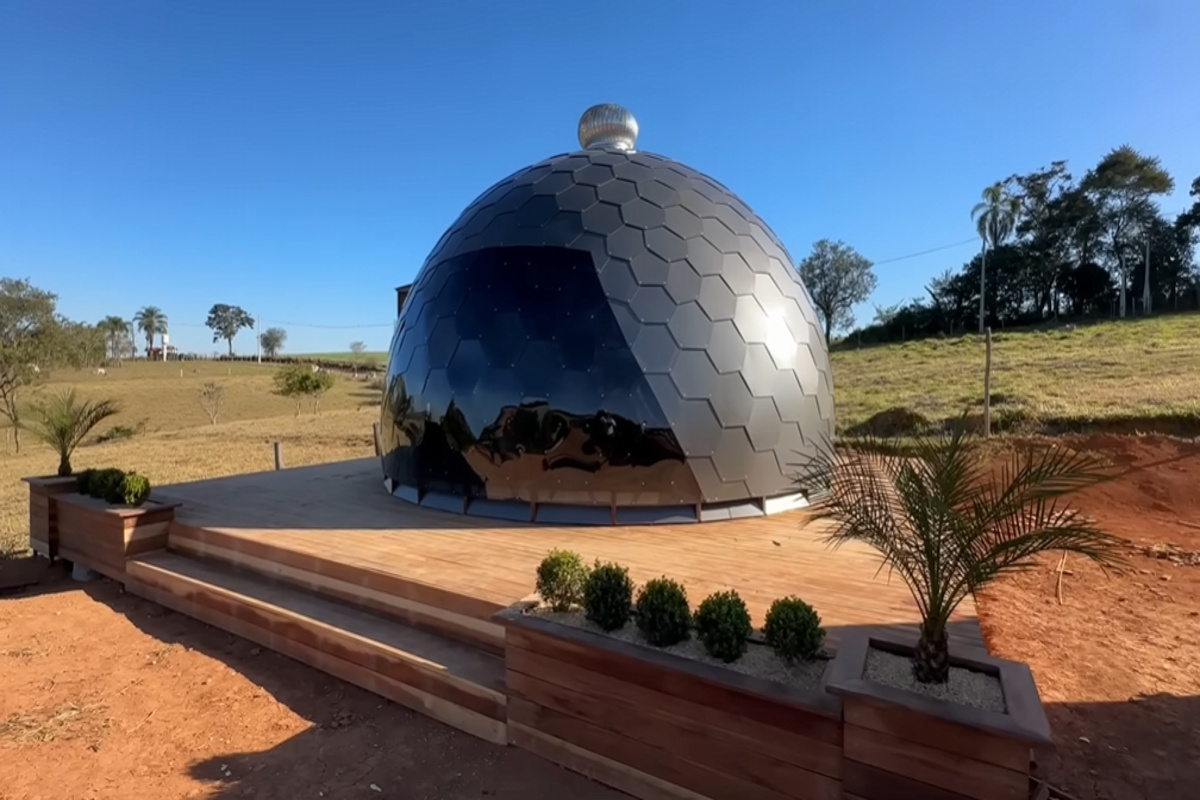
Construction System Uses Wood, EPS, ACM, and Polycarbonate to Create an Efficient Geodesic House That Is Well-Ventilated and Quickly Assembled
A residential construction with a geodesic shape attracted attention during the assembly of a 6-meter dome, recently completed in Brazil.
The structure was installed on a deck and progressed rapidly after the completion of the wooden frame. Next, the roofing and side cladding phase began, revealing how this type of construction utilizes technical solutions to accelerate the project.
The process occurred top to bottom, as the upper fittings need to be installed before the lower parts. This way, workers can access the top of the structure more easily and maintain precision in the fittings.
-
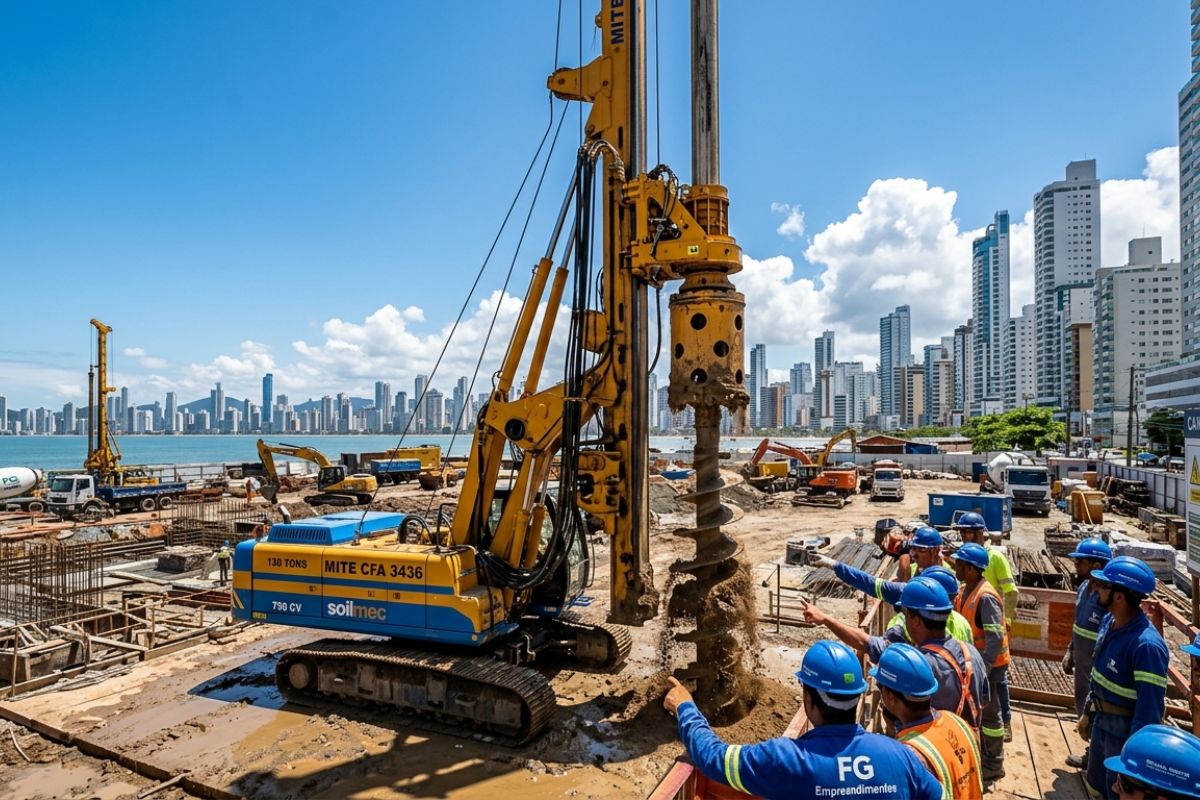
Italian giant of 130 tons arrives at the Senna Tower construction site and accelerates foundations: Mite CFA 3436 drills up to 50 m, 750 hp engine, investment of R$ 20 million, unique in Latin America.
-
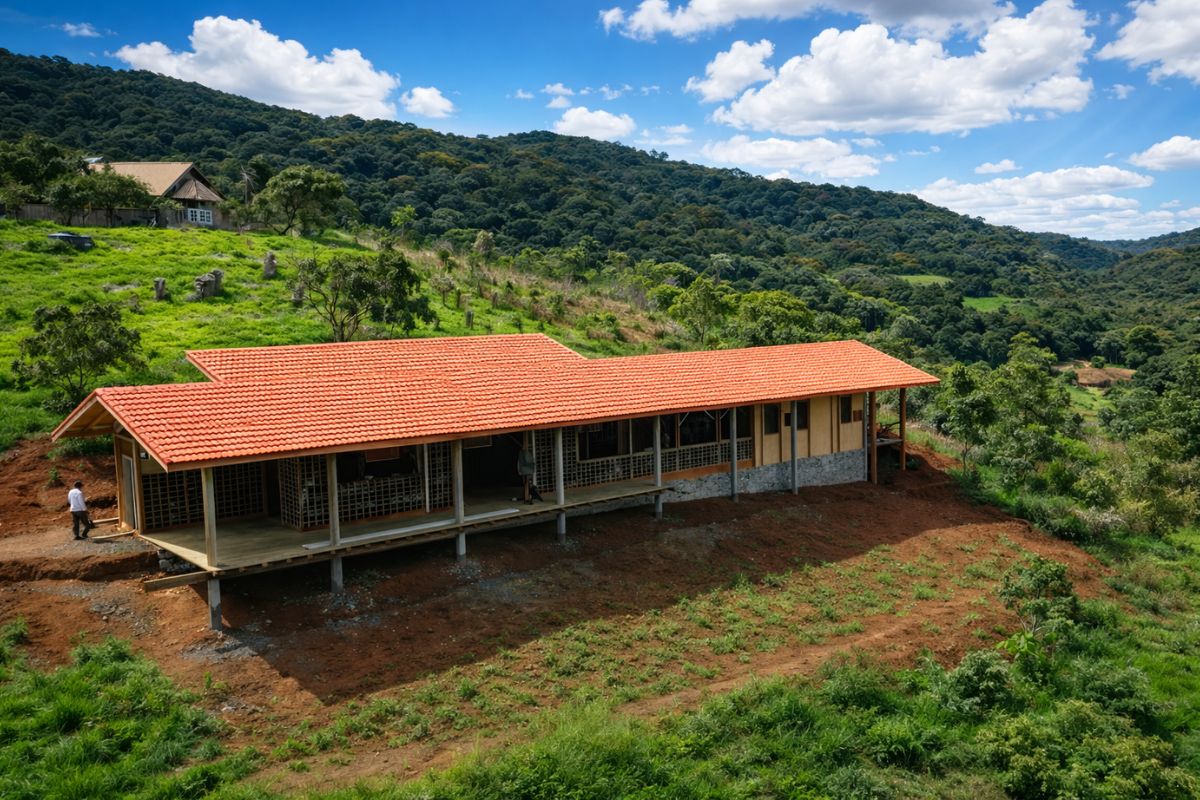
The adobe house in Monteiro Lobato takes shape with bamboo and clay from the land, a stone foundation, and a roof for the wind; cracks are normal, and finishing with lime turns it into a “common house.”
-
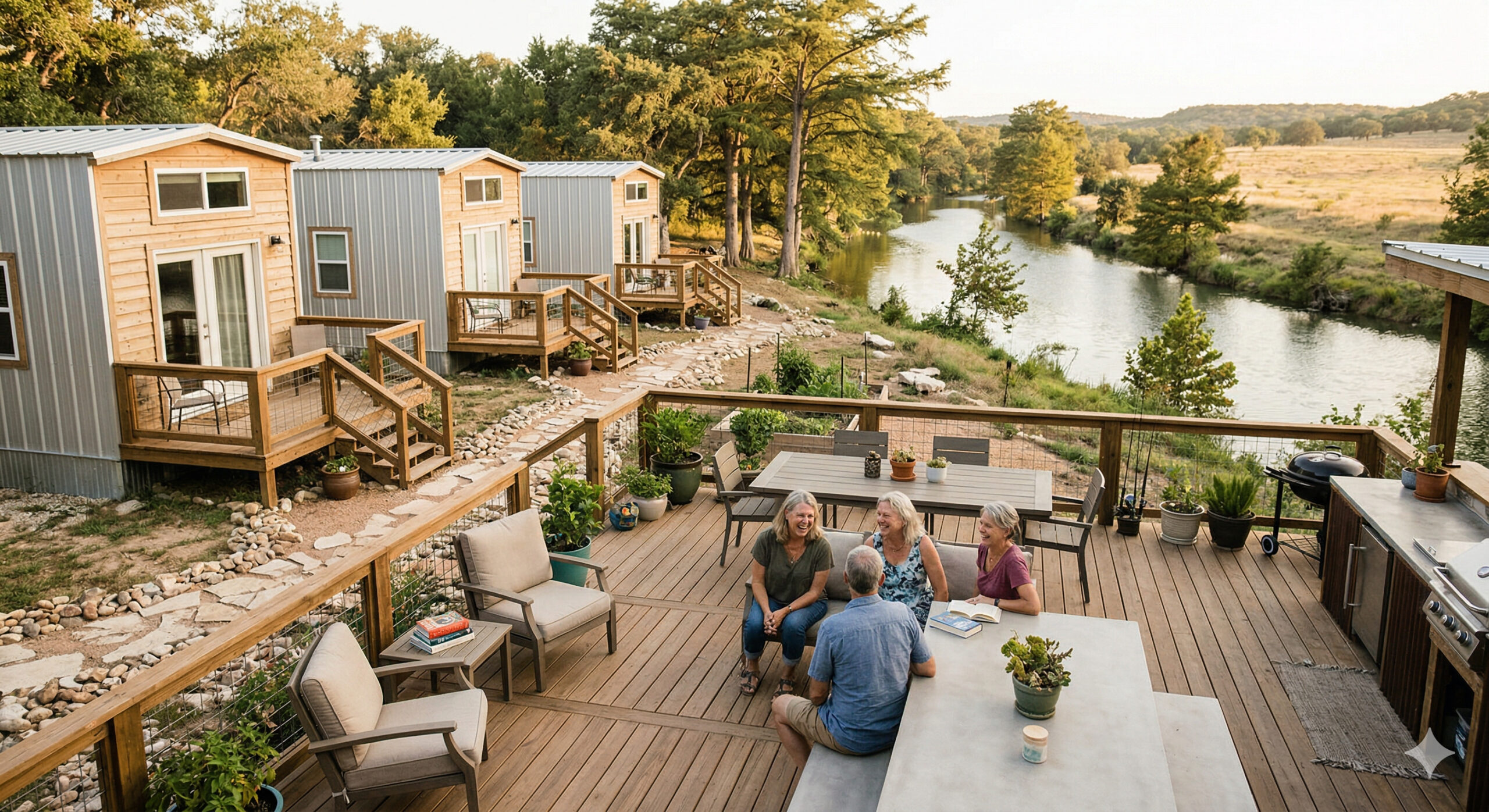
Four friends with over 30 years of friendship built a “mini village” by the banks of a river in Texas to grow old together, with houses of just 32 m² and a shared common space. The Bestie Row project has become a model of alternative living that is starting to spread around the world.
-
The ancient Japanese capital, planned over 1,200 years ago, still withstands earthquakes with colossal wooden temples and palaces, built without concrete or modern steel, by masters who created engineering capable of enduring centuries.


The project demonstrates that a round house can be built quickly and in an organized manner, using pre-measured parts and reducing unforeseen issues during execution.
Geometric Structure Defines the Dome’s Shape
The structural base of the dome is formed by a combination of triangles and pentagons, which create the characteristic geometry of geodesic constructions.
In the presented model, approximately 275 triangles make up the complete structure of a dome with a 6-meter diameter. These triangles form larger modules: five pieces create pentagons and six pieces make up hexagonal modules.
The wood used is marine cedar, a material described by the project team as lightweight, durable, and suitable for this type of construction.
All pieces arrive pre-cut and sized, eliminating the need for improvised adjustments on-site. Thus, there is no risk of material shortages during assembly.
Technical Cladding Improves Insulation and Durability
After the structural assembly, the installation of the cladding system began.
First, EPS boards combined with structural fabric were installed, responsible for creating thermal and acoustic insulation.
Next, the external covering received hexagon-shaped ACM boards. These boards are secured with rivets and sealed with adhesive to ensure complete sealing against infiltrations.
Each piece has specific cuts, as the angles of the structure demand different adjustments. This process demonstrates that the fitting of the panels depends on technical planning and precision in manufacturing.

Natural Ventilation Improves Indoor Comfort
Another important element of the project is the natural ventilation system.
An wind turbine was installed at the top of the dome, rotating with the wind and allowing hot air to escape the structure without the need for a motor.
At the same time, side openings allow cold air to enter. This flow creates continuous circulation inside the construction, keeping the environment more pleasant.
Part of the structure also received smoked polycarbonate panels, creating transparent areas that allow observation of the external landscape.
However, the larger the transparent area, the lower tends to be the thermal and acoustic insulation, since EPS is not present in these parts.
Construction Speed Draws Attention in the Building Process
Initially, the expected timeframe for this type of construction was approximately 20 days.
However, due to the modular system and team collaboration, the structure was practically completed in about five days.
Additionally, the team explains that the process begins with the fabrication of the pieces in the city of origin. Typically, this preparation takes between 30 and 40 days.
After that, the material is sent to the site. Then, assembly on-site usually takes between one week and fifteen days, depending on the size of the construction.
Clean Construction Reduces Job Waste
Another relevant point is the amount of waste generated during construction.
Since all pieces arrive pre-cut and organized, there is almost no material waste on the construction site.
Thus, assembly occurs in a clean and organized manner. Consequently, the final volume of waste remains very small compared to traditional constructions.
Self-Assembly Model Can Reduce Costs
In addition to the traditional model, the team is also developing a dome kit system for self-assembly.
In this format, all pieces arrive ready for fitting. Thus, the owner can assemble the structure directly on the site.
As a result, the process can reduce labor costs, lodging, and food for teams. Furthermore, the assembly tends to be completed even faster.
Therefore, the possibility of building a complete house in just a few days sparks growing interest in this type of structure.
Do you believe that rapid construction models like geodesic domes can become a more common alternative in the future of housing?







Seja o primeiro a reagir!