Portuguese
  Spanish




Isolated Water Before The Emergence Of Complex Life Reveals Secrets About Primitive Earth, Extreme Environments, And Even The Possibility Of Life Beyond The Planet
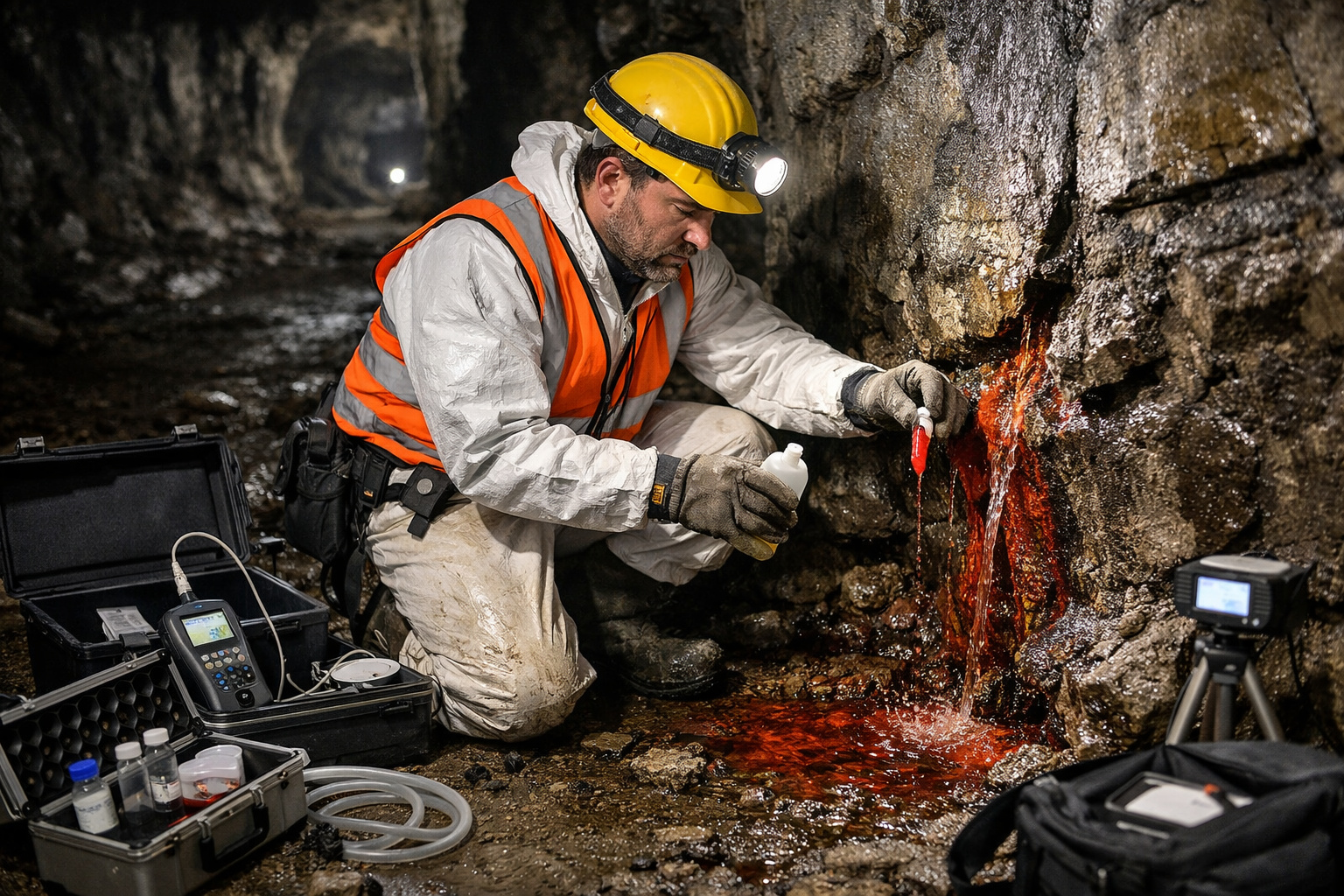
During a scientific investigation conducted at extreme depths in the Canadian underground, geologists identified what is now considered the oldest water reservoir ever found on Earth. The liquid remained isolated nearly 3 kilometers below the surface for approximately 2.6 billion years, a time so ancient that it predates the emergence of plants, animals, and even complex cells. The discovery, besides being impressive, raises fundamental scientific questions — including an inevitable curiosity: could this water be drinkable?
The information was originally disclosed by the IFLScience website, based on a scientific study published in the journal Nature in 2013, and quickly caught the attention of the international scientific community due to its geological, biological, and even astrobiological implications. Although the find seems like something out of a science fiction script, it is supported by solid technical data and extremely precise chemical analyses.
Where The Oldest Water On The Planet Was Found
The water was located in a deep mine in the Timmins area of Ontario, Canada, an area situated within the so-called Canadian Shield, considered the oldest section of the North American crust. This geological formation is made up of layers of volcanic and sedimentary rocks that have remained relatively intact over billions of years, experiencing little erosion or significant seismic activity.
-
Mozambican Teen Develops Drone Using Market Kits to Deliver Food and Medicine to Remote Areas

-
Experiment Shows Sea Water-Treated Ice Resists Melting Better from May to September

-
Israel Develops “Stone Battery” Using Crushed Rocks to Store Energy for Factories, Releasing Industrial Steam When Solar and Wind Power Are Unavailable
-
In the Desert, Nearly Black Solar Panels Could Trigger Rainfall: Researchers Aim to Prove if Heat from Solar Farms, Combined with Humid Winds and Artificial Dunes, Can Generate Clouds in Arid Regions




Precisely because of this exceptional geological stability, the region became an ideal place to search for ancient records of Earth’s history. It was there, in 2013, that researchers identified deep fractures filled with water, completely isolated from the modern hydrological cycle. The estimated depth of about 3 kilometers (1.8 miles) ensured that the liquid remained sealed for entire geological eras.
Additionally, initial analyses indicated that this water had not come into contact with modern surface sources, which immediately sparked scientists’ interest in determining its true age.
How Scientists Determined The Water Is Billions Of Years Old
To date the water, researchers used a sophisticated technique based on the analysis of noble gases, especially xenon, along with other chemically inert elements. These gases are considered excellent “time markers” because they do not easily react with other compounds and preserve a kind of “fingerprint” of the atmosphere at the time they were trapped.
By analyzing the specific ratio of isotopes present in the water, scientists compared this chemical profile with known models of Earth’s atmospheric evolution. The results were clear: there were no traces of modern water mixed with the found liquid.
According to geologist Barbara Sherwood Lollar, a professor in the Department of Earth Sciences at the University of Toronto and one of the authors of the study, the absence of modern contamination was decisive. In an interview with IFLScience, she explained that the isotopic analysis demonstrated that this water was completely isolated from the current hydrological cycle.
Initially, tests confirmed that the water was at least 1.5 billion years old. However, the presence of gases released by the surrounding rocks — formed about 2.6 billion years ago — indicated that the liquid could be even older, possibly dating back to the time when these minerals were forming.
Why This Water Could Never Be Drunk
In light of such an extraordinary discovery, a popular curiosity naturally arose: did anyone drink the oldest water in the world? The answer is straightforward and definitive: no. And there are good reasons for this.
Although Barbara Sherwood Lollar reported that small droplets occasionally splashed during fieldwork, she was emphatic that she never ingested the liquid. According to the scientist, the water had a extremely bitter and salty taste, noticeable even with minimal contact.
The explanation lies in its chemical composition. After billions of years in direct contact with deep rocks, the water became highly saline, potentially being many times saltier than seawater. In practical terms, this makes it completely unsafe for human consumption.
The geologist herself clarified that the story of someone drinking this water is a modern myth, arising after recurring questions from the media. When asked if people could consume it, her response was clear: not only would it taste terrible, but it also wouldn’t be safe.
What This Discovery Reveals About Earth And Life
Although not drinkable, the oldest water on Earth revealed something even more surprising: it contains chemical compounds capable of sustaining microbial life. This indicates that subterranean ecosystems can survive without sunlight, completely isolated from the external atmosphere for extremely long periods.
This finding is particularly relevant because it suggests that life may exist in environments considered extreme, as long as there is enough chemical energy. Consequently, the find strengthens hypotheses that similar environments may exist on other bodies in the Solar System, such as beneath the surface of Mars.
If microorganisms can survive on Earth in water isolated for billions of years, in complete darkness and under high pressure, the search for life beyond the planet gains new scientific parameters. Thus, a deep geological discovery ends up expanding frontiers that go far beyond our own world.