





 Portuguese
  English
  Spanish
  4 min of reading
  0 comments


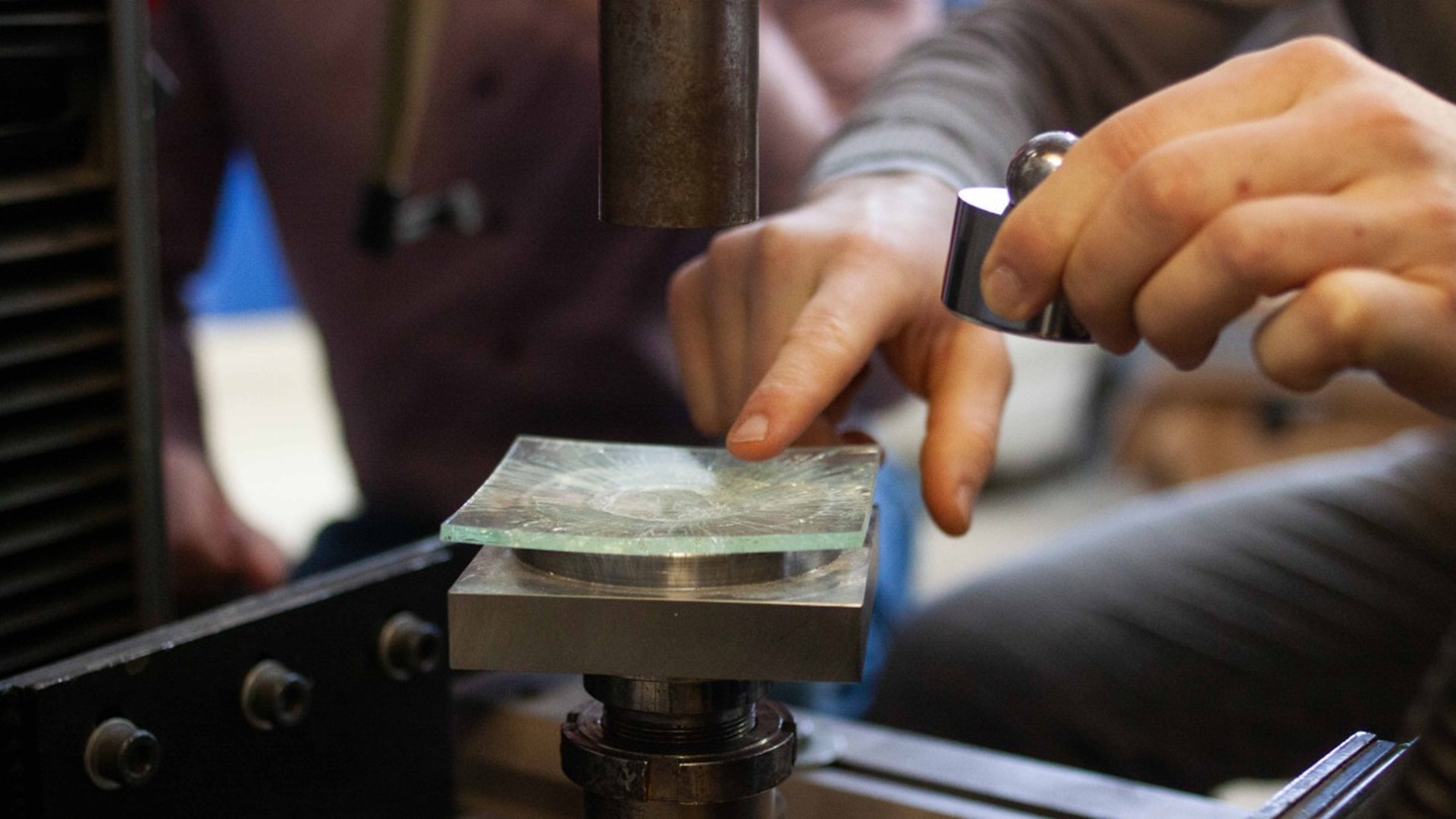
Germany has developed a method to reuse discarded window glass without having to melt the material, which can transform up to 220 thousand tons per year into new high-performance panels and give a more useful destination to waste from almost 150 million old windows about to be replaced
Germany could transform up to 220 thousand tons of discarded window glass per year into new high-performance panels, based on a method developed by researchers at the Munich University of Applied Sciences to accurately assess whether the used material still maintains sufficient strength to be reused in window systems.
The proposal eliminates the need for melting the material, an energy-intensive step, and paves the way for the direct reuse of millions of old flat glass. The initiative can also conserve raw materials and significantly reduce CO2 emissions associated with the sector.
Method seeks to close the loop of window glass
The work was conducted by a team from Hochschule München led by Sebastian Wernli, an industrial designer and associate researcher at the university. The group developed a procedure to verify whether the used flat glass meets the technical requirements necessary for reuse in new window sets.
-
China creates hypersonic engine that can make planes and missiles fly more than 6 times the speed of sound with less weight, more range, and without system change.

-
Mysterious object on Mars divides NASA and Harvard after Curiosity image reignites suspicions about what was really found on the planet.

-
Giant structures 14 meters beneath Egypt are revealed by satellites and expose a millennia-old secret buried in Buto.

-
Children have been making clay pieces for 15,000 years in Southwest Asia, and fingerprints preserved on 142 ornaments helped archaeologists prove this.

Martien Teich, PhD, a steel and construction specialist and professor at the university, stated that the goal is to close the material loop. The proposal arises at a time when almost 150 million old windows with uncoated insulating glass are about to be replaced, which could generate hundreds of thousands of tons of glass waste per year.
The scale of the available volume is central to the project. According to the estimates presented, the new approach could reuse up to 220 thousand tons annually, equivalent to about 11 thousand trucks loaded with discarded window glass.
Today, this material does not return to the same use for which it was produced. At best, the glass is melted down to become bottles, fiberglass, or used as fill material in road construction and other lower-value applications.
Tests linked superficial damage to mechanical strength
The main barrier identified for the reuse of old window glass in Germany is the lack of reliable quality standards. Manufacturers need to be assured that the material used meets the technical requirements of production, and until now, there was no method to test the properties of used flat glass.
To address this issue, researchers analyzed the optical and mechanical properties of hundreds of samples. Each piece was placed against a black background and backlit to make scratches and other superficial damage visible.
In addition to visual inspection, the team conducted bending tests on new and used glass up to the point of rupture. The force required to break each sample was used as a measure of strength, allowing for a direct comparison of the mechanical behavior of different materials.
The results showed a strong relationship between surface quality and mechanical strength. Glass with fewer superficial defects exhibited greater tensile strength, and this link was considered statistically significant for both old and new pieces.
This finding allowed for the proposal of a non-destructive quality control system. Instead of subjecting window glass to tests that lead to breakage, manufacturers can use detailed surface inspections to assess whether a panel can be reused.
Direct reuse can prevent waste and reduce emissions
The possibility of directly reusing flat glass in new window systems represents a significant change in the handling of this waste. By avoiding the melting of the material, the process reduces the energy demand of an industrial step considered intensive in consumption.
Reuse also enhances the value of discarded glass within the construction chain. Instead of going to lower-value products or being used as fill, the material returns to serve the same function in high-performance panels.
Teich emphasized that this alternative can prevent a huge amount of waste. The prospect of replacing millions of old window glass units reinforces the urgency of finding a solution capable of absorbing this volume without relying solely on conventional recycling routes.
The team claims that glass without defects can achieve the same quality as new glass. This point is crucial because it supports the possibility of incorporating recovered material into demanding applications, provided it goes through a reliable sorting system.
Next step is to adapt the technology to large-scale production
After demonstrating the technical feasibility of the method, researchers are now working to make it applicable in industrial environments. The current focus is on automation and the development of a scanning system capable of mapping glass surfaces and classifying defects more quickly and standardized.
In a subsequent project, the team aims to prove that remanufacturing can also be economically viable. The financial assessment is considered the next step for the solution to move out of the experimental field and be incorporated into the industry’s routine.
The conclusion presented by the researchers is that the main obstacle is no longer the technical possibility of reusing window glass. The challenge now is to integrate this use into the large-scale industrial production of windows so that discarded window glass can indeed gain a second life within the sector itself.







Seja o primeiro a reagir!