





 Portuguese
  English
  Spanish
  5 min of reading
  0 comments


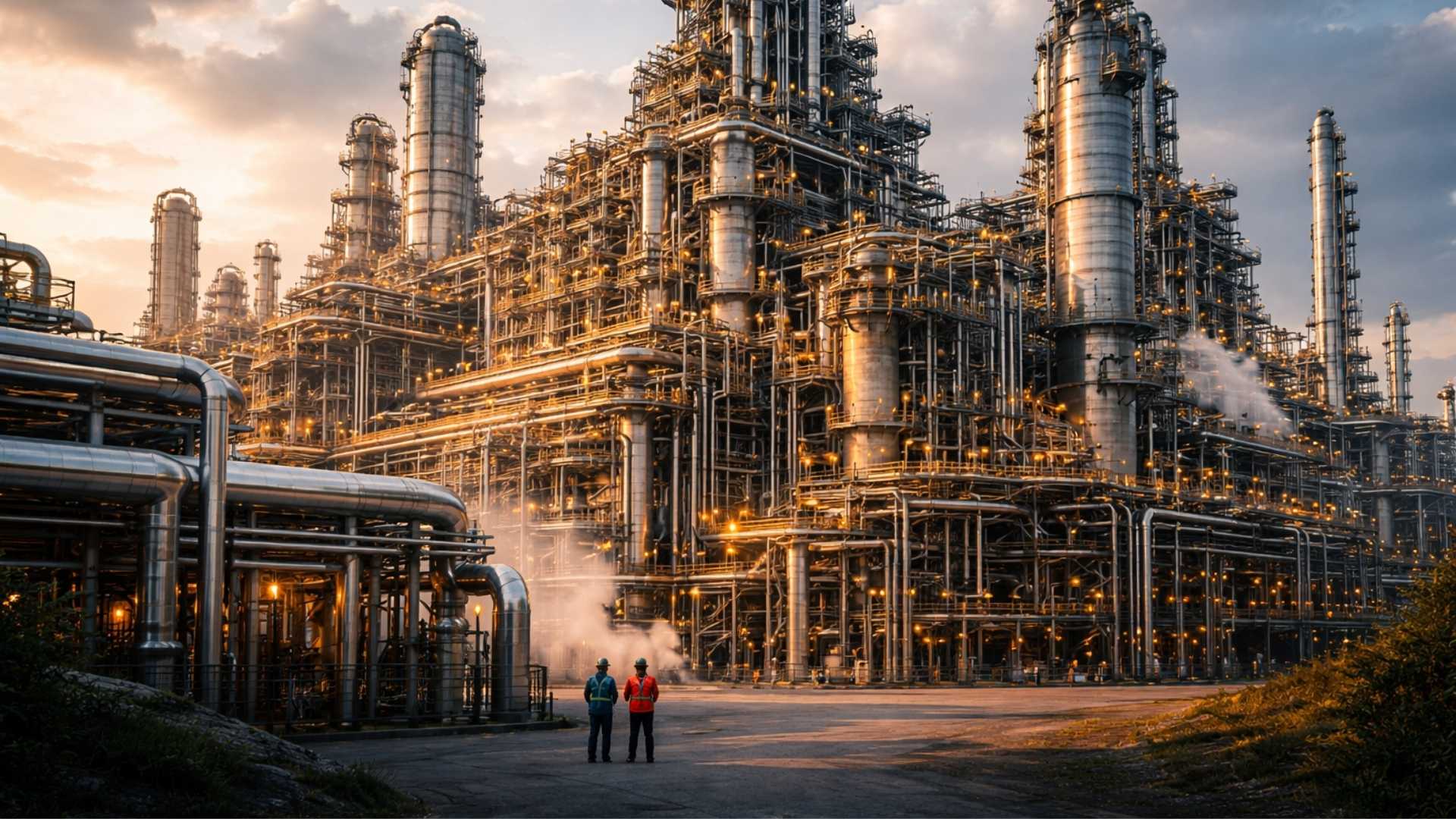
Billion-dollar industrial movement repositions BASF’s global presence in China, betting on production scale, technological integration, and proximity to the world’s largest chemical market, amid geopolitical uncertainties and challenges in supplying strategic raw materials.
BASF inaugurated its new integrated production base in Zhanjiang, Guangdong province, southern China, on Thursday, March 26, consolidating the largest international investment ever made by the German company.
The company reported that the project includes 18 factories, 32 production lines already in operation, and over 70 products, in an area of about four square kilometers, marking one of the group’s main industrial movements outside Europe.
Verbund complex increases efficiency and production scale
The venture operates under the Verbund model, a structure where different stages of chemical production operate in an integrated manner, sharing energy, inputs, logistics, and industrial infrastructure.
-
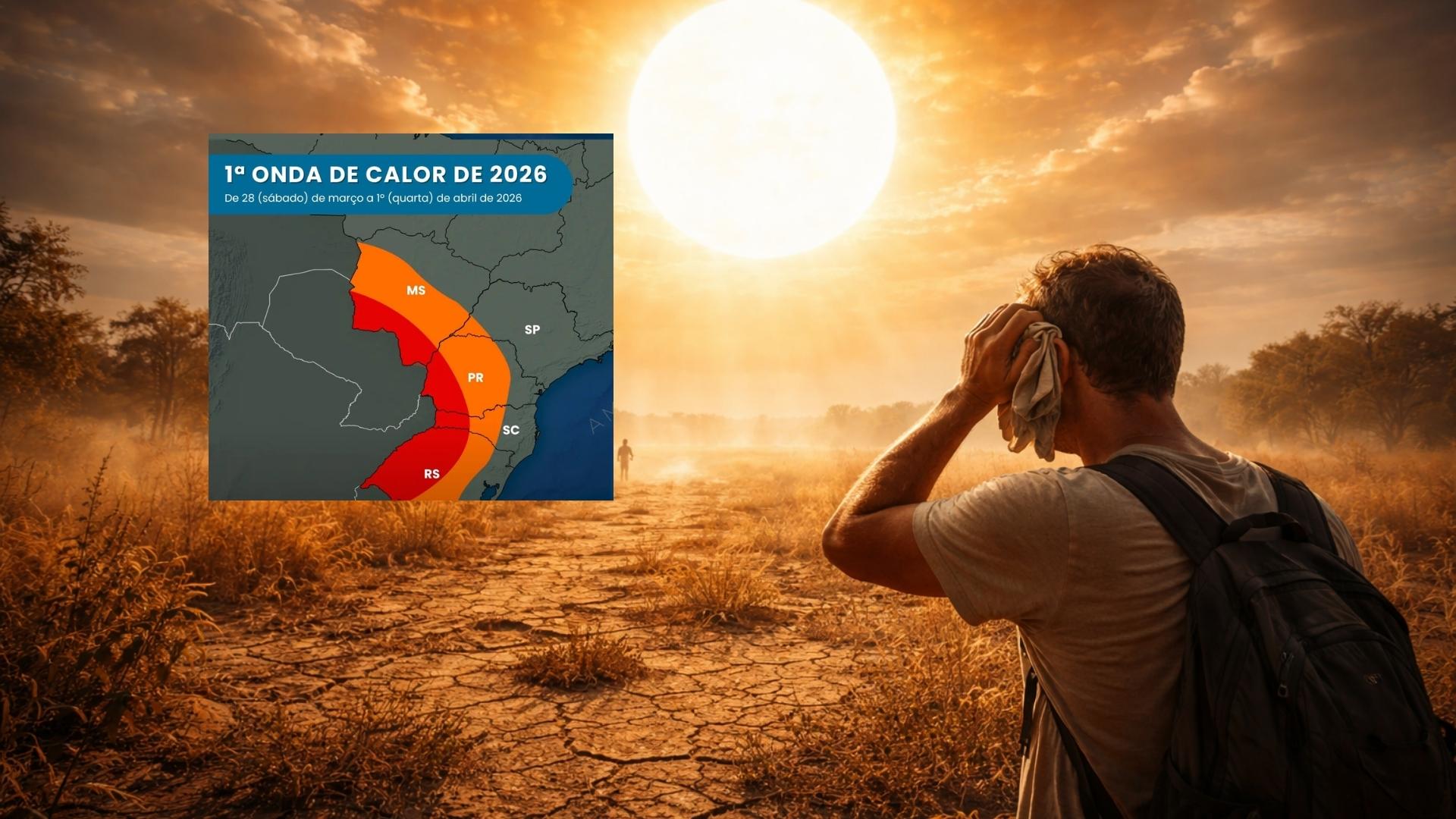
Brazilian regions will suffer from the heat: the first heatwave of 2026 raises temperatures to up to 38°C for 5 consecutive days, driven by a heat bubble between Paraguay and Argentina that blocks cold fronts and intensifies dry air.
-
Will Artificial Intelligence replace your job? 31 million are already at risk in Brazil, salaries are falling in technical roles, while AI specialists earn up to R$27,000 and companies are paying record bonuses.

-
Second Sphinx detected under Giza with 80% reliability: radar reveals giant structure, underground cavity, and network of tunnels aligned with the pyramids that could rewrite the history of Ancient Egypt.

-
In China, the world’s longest road tunnel is 22 km long, cuts through a mountain that has challenged engineers for 70 years, includes a 706 m ventilation tower, and reduces dangerous journeys from hours to just 20 minutes.

In practice, this design allows for cost reduction, operational efficiency gains, and increased capacity to serve multiple sectors simultaneously, such as transportation, electronics, consumer goods, and personal care.
According to BASF, the Zhanjiang unit is now the third largest Verbund complex of the company in the world, behind only the facilities in Ludwigshafen, Germany, and Antwerp, Belgium.
The group also classified the base as its seventh global integrated plant and highlighted that the project was developed under the company’s full control, without a joint venture with a local partner, a less common format among industrial multinationals established in China.
Geopolitical pressure challenges the petrochemical sector in Asia
The inauguration comes at a sensitive time for the Asian petrochemical industry, pressured by supply imbalances, tight margins, and new geopolitical risks.
Reports published in recent days indicate that the war involving Iran, the United States, and Israel has worsened instability regarding the flow of crude oil and naphtha in the Middle East, relevant raw materials for the region’s chemical chain.
This scenario adds cost and uncertainty to a sector that was already facing strong competition and excess capacity in several markets.
Flexibility in raw materials becomes a competitive differential
Still, analysts consulted by international media indicate that BASF enters this phase with an important operational advantage.
The Zhanjiang complex was designed to work with alternative raw materials, including naphtha and butane, which reduces dependence on a single supply route and tends to provide more flexibility in the face of external shocks.
This point differentiates the unit from older petrochemical models in Asia, which are traditionally more tied to naphtha.
Last month, BASF’s executive board chairman, Markus Kamieth, stated that the project remains strategically important for the group even with short-term pressures.
According to him, the expectation is that the base will have a “slightly negative” contribution to the results for 2026 due to startup costs, while the first positive results are projected for 2027.
This signaling shows that the company treats the operation as a long-cycle investment, with returns conditioned to industrial maturation and recovery of the sector environment.
China at the center of BASF’s global strategy
BASF’s bet is primarily linked to the growing weight of the Asia-Pacific region on the global chemical map.
In a recent institutional document, the company states that the region is expected to account for about 70% of the global chemical market by 2030, which helps explain the acceleration of investments on the continent.
The company itself acknowledges that it is still underrepresented in the fastest-growing market, especially considering China’s size in global consumption and production in the sector.
This reasoning is explicitly reflected in the corporate strategy.
BASF reports that Greater China accounted for about 13% of global sales in 2024, even though the country already represents approximately half of the global chemical market.
On another front, the company maintains that expanding local presence is crucial to follow clients, reduce logistical distances, and participate in the expansion of segments related to industry, electrification, domestic consumption, and energy transition.
Operation in China grows and gains weight in results
The latest figures from the Chinese operation reinforce this weight.
In the 2024 report for Greater China, BASF reported sales of €8.6 billion in the country and a total workforce of 12,687 employees, with significant industrial presence in Shanghai, Nanjing, Chongqing, and now Zhanjiang.
The volume of business in China continued to represent more than half of the company’s sales across the Asia-Pacific region, which totaled about €16.2 billion in the same period.
In addition to scale, the company tries to associate the project with a narrative of technological and industrial modernization.
At the inauguration, Kamieth stated that “Zhanjiang shows what the future of chemistry looks like: efficient, digital and sustainable by design,” describing the base as an example of large-scale industrial integration.
The statement aligns with BASF’s strategy to present the complex not only as an increase in capacity but as a showcase of operational efficiency, digitalization, and cleaner production design.
The project’s trajectory began in 2018 when the company announced the decision to invest in Zhanjiang and progressed in stages in the following years.
The groundbreaking was held in 2019, and the first plant began operations in 2022, before the expanded activation completed now.
At different times, BASF indicated that the total investment at the site could reach about €10 billion by the full closure of the development cycle, although the amount reported at the inauguration was €8.7 billion.
The opening of the unit, therefore, goes beyond an isolated industrial expansion.
It confirms BASF’s choice to concentrate capital in a market it considers crucial for its growth, even amid a more volatile external environment and doubts about short-term profitability.
With production already underway and the integrated operation gaining scale, Zhanjiang is set to occupy a central place in the strategy with which the company seeks to reposition its global presence in chemistry.




Seja o primeiro a reagir!