





 Portuguese
  English
  Spanish
  7 min of reading
  0 comments


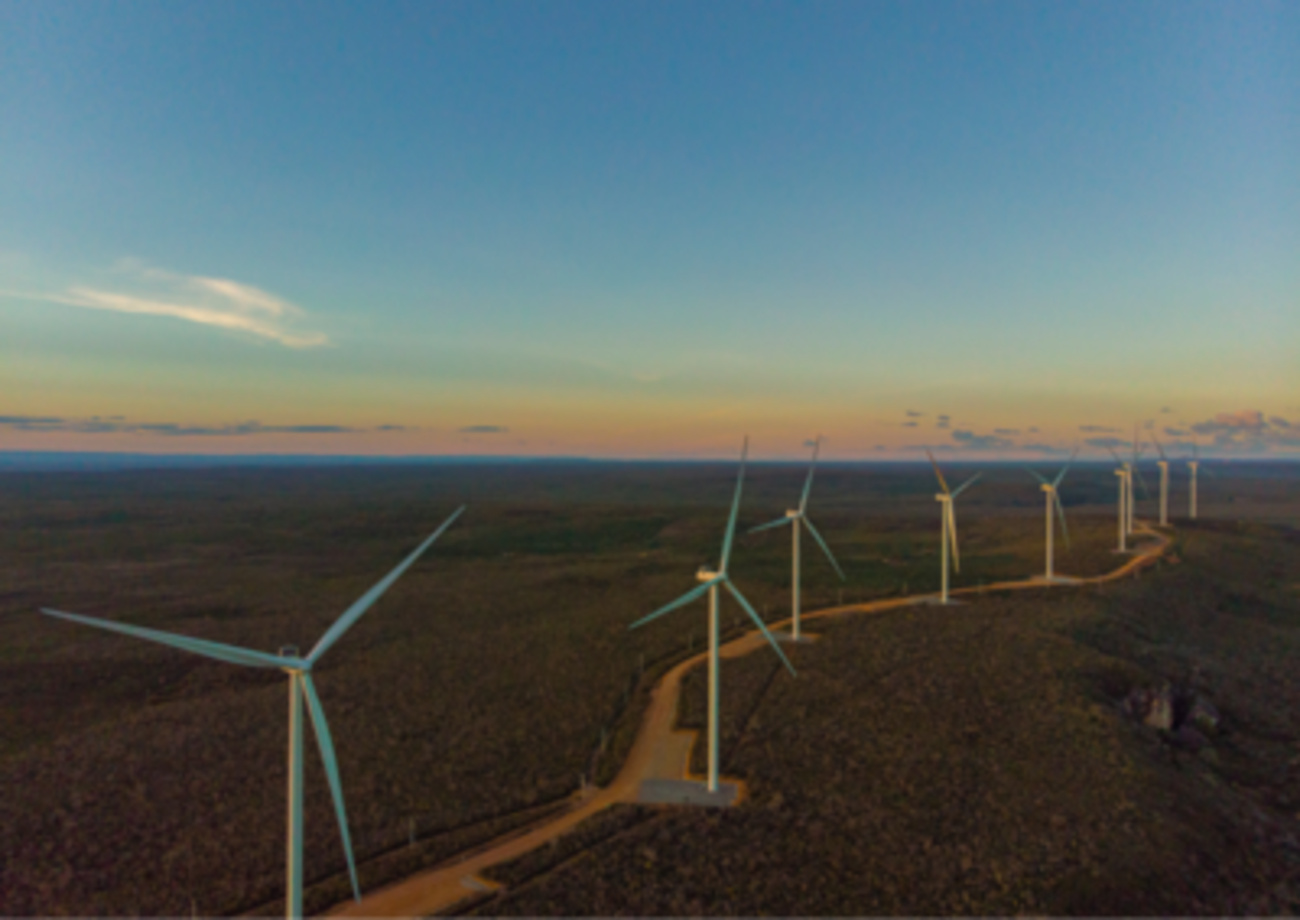
The Serra do Tigre project consolidates the Northeast as the largest renewable energy hub in Latin America and promotes the expansion of clean energy generation through the installation of state-of-the-art turbines that increase the efficiency of the national electrical grid.
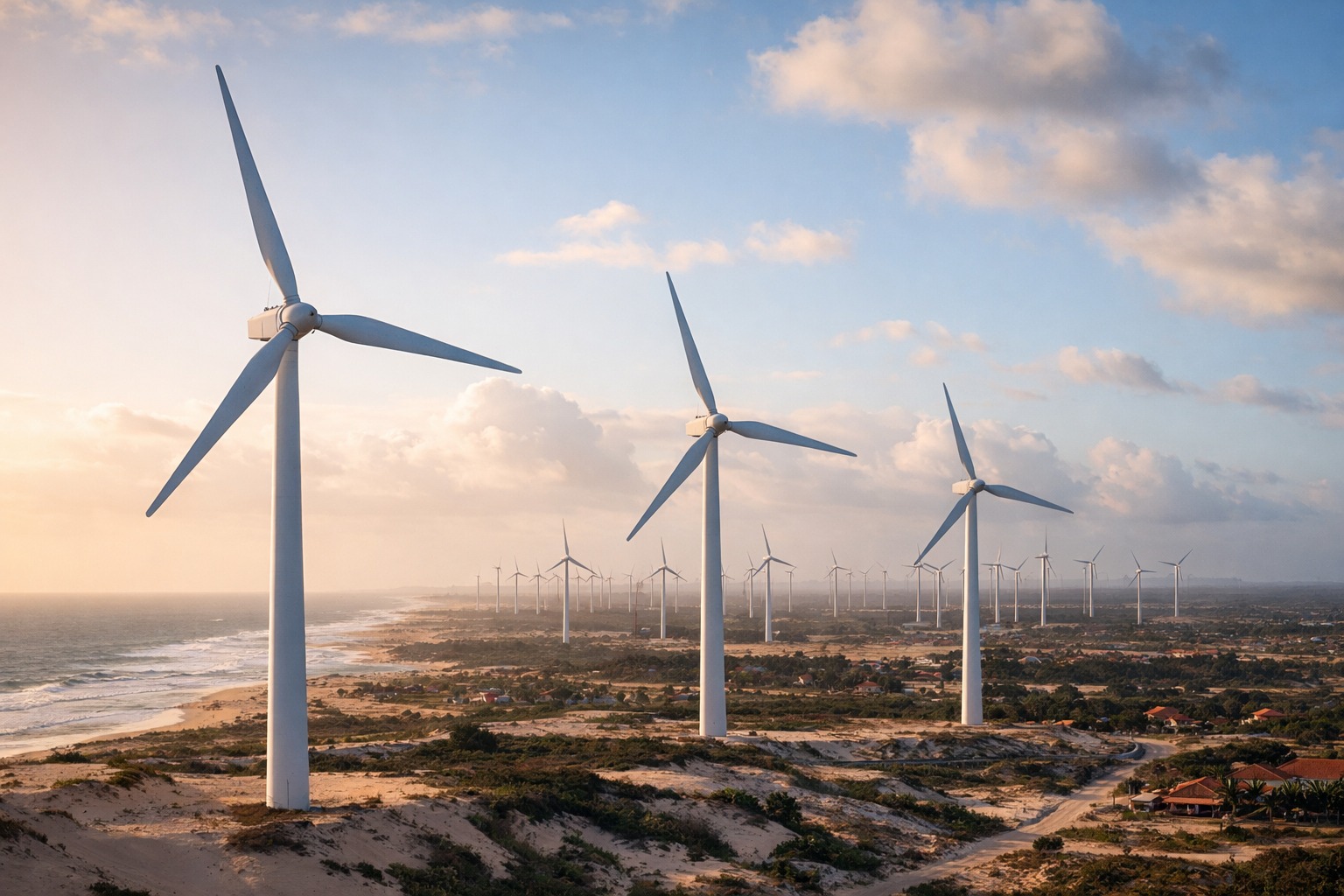
The Serra do Tigre Wind Complex, located in Rio Grande do Norte, has initiated a new operational phase that ensures the expansion of large-scale clean energy generation for the National Interconnected System (SIN).
The infrastructure includes hundreds of modern wind turbines that take advantage of the consistency of the region’s trade winds to produce electricity without emitting polluting gases. This billion-dollar project strengthens Brazil’s energy security in 2026, thus reducing the need to activate expensive and polluting thermoelectric plants.
With the commissioning of new wind turbines, the complex increases its installed capacity and positions the state of Rio Grande do Norte as the undisputed leader in renewable energy production in the country. In addition to the direct environmental benefit, the initiative boosts the local economy, generates skilled jobs in the interior of the state, and attracts new industries seeking sustainable energy certificates.
-
Urgent energy transition: Greenpeace advocates for massive investments and points to Brazil as a global leader in wind energy production in the coming years.
-
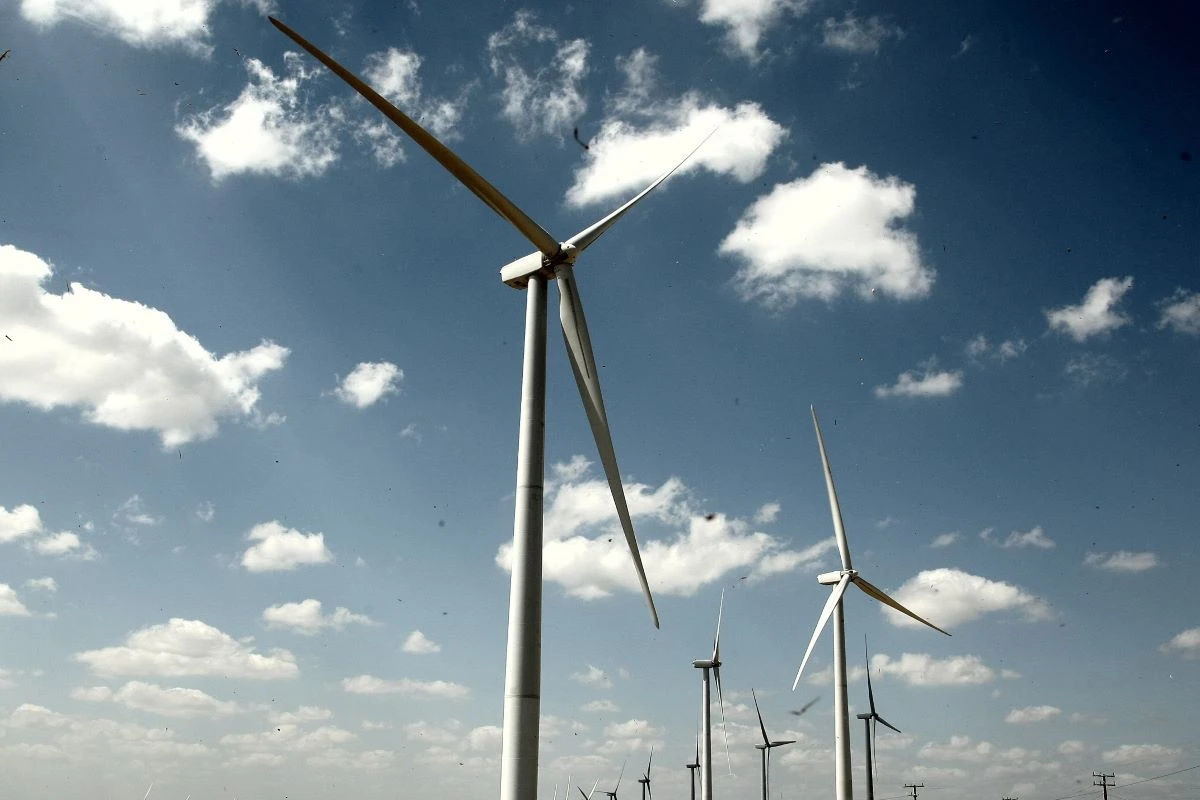
Conflict in the Sertão: Rural communities in Rio Grande do Norte report issues with wind farms and the new challenges of clean energy in the semi-arid region.
-
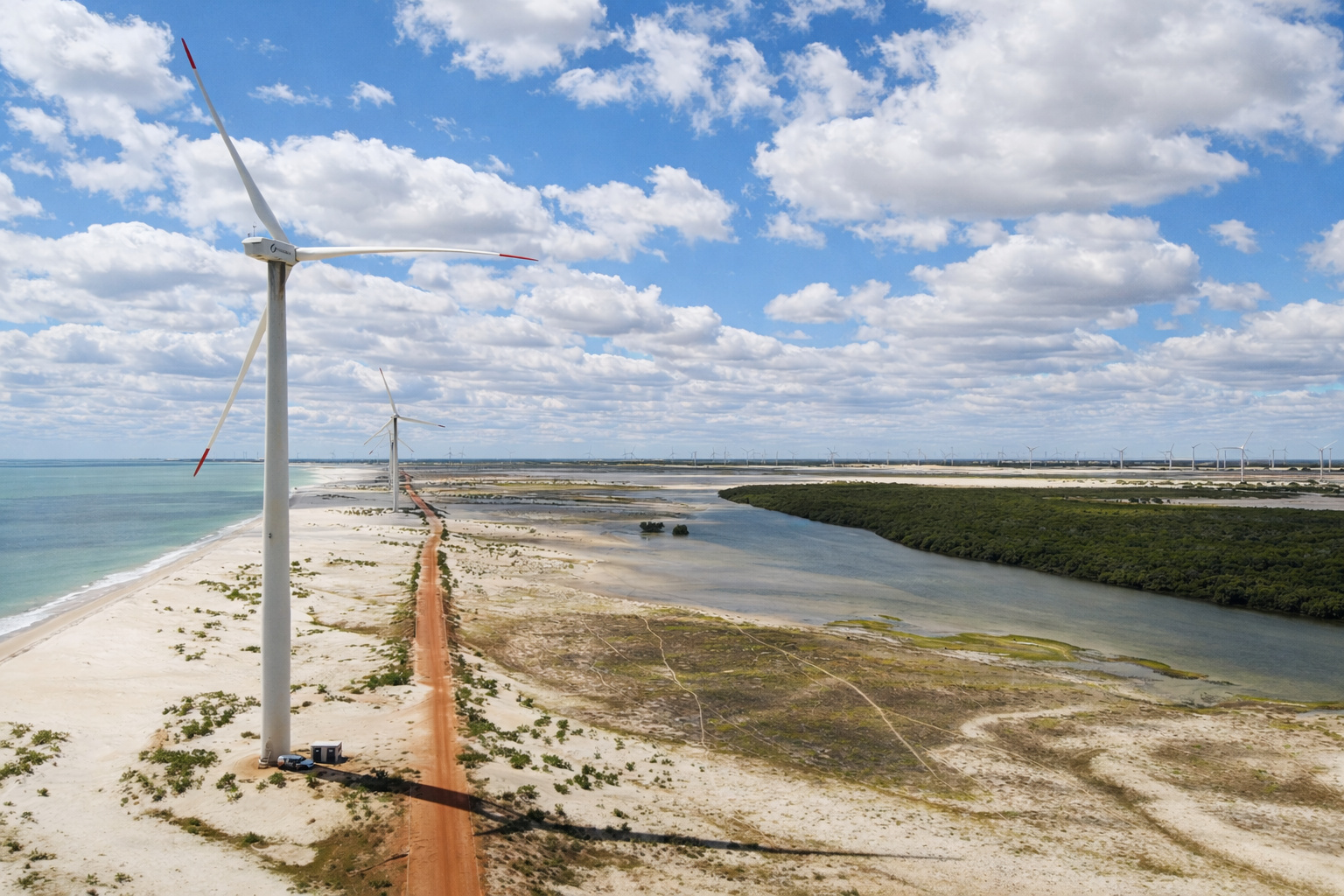
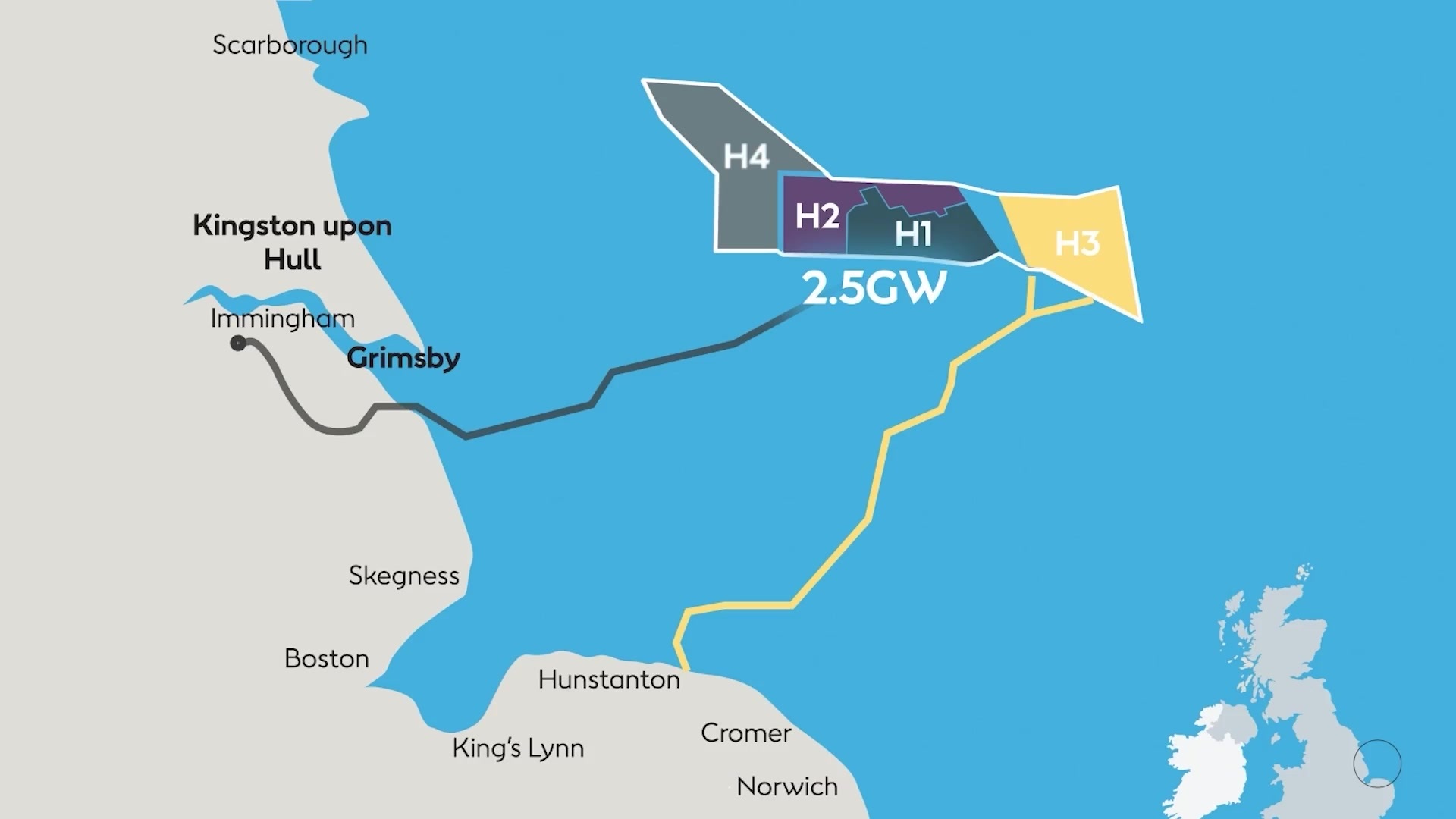
231 turbines of 260 meters at 160 km from the coast, monopiles weighing as much as nine blue whales embedded in the North Sea, and a crane ship taller than the Eiffel Tower: Hornsea 3 will be the largest offshore wind farm on the planet by 2027, and its first components have already arrived in England.
-
International Certification Puts Senai Norte on the Renewable Energy Map and Expands Access to Essential Training for Qualified Wind Power Professionals


The technological advancement of the turbines used at Serra do Tigre allows for wind capture at high altitudes, thus optimizing production even during periods of lower climatic intensity.
The strategic importance of Rio Grande do Norte in the expansion of clean energy generation
Rio Grande do Norte offers the perfect geographical conditions for those looking to invest in the expansion of clean energy generation. The state has a regime of unidirectional and constant winds, which minimizes equipment wear and maximizes energy utilization.
The Serra do Tigre Complex takes advantage of this competitive differential to deliver cheap and renewable energy.
Global investors view the Brazilian Northeast as the “Saudi Arabia of Wind.” While other countries face challenges with seasonal winds or unpredictable gusts, Brazil delivers enviable technical stability.

The Serra do Tigre infrastructure connects the Potiguar hinterland directly to major consumption centers, such as São Paulo and Rio de Janeiro, through high-voltage transmission lines. This constant flow of “green” electrons supports Brazil’s industrial growth without harming the local biome.
Cutting-edge technology and giant wind turbines at Serra do Tigre
The expansion of clean energy generation in the complex utilizes the most modern advancements in global engineering. The newly installed turbines have blades that exceed 70 meters in length.
Each rotation of these gigantic structures produces enough energy to supply an average household for several days. The technology embedded in the wind turbines includes artificial intelligence sensors that adjust the angle of the blades in real-time to capture the maximum wind force.
The maintenance of these giants has also evolved. Today, technicians use drones and thermal cameras to inspect the towers without the need for risky climbs or prolonged shutdowns. This operational efficiency ensures that the Serra do Tigre complex maintains a capacity factor above 50%, a figure much higher than the global average for wind farms.
The use of lighter and more durable composite materials in the blades allows the equipment to operate for over 25 years with minimal intervention.
Socioeconomic impact: Wind gold in the Potiguar hinterland
The expansion of clean energy generation transforms the reality of cities that previously suffered from a lack of economic opportunities. The construction and operation of the Serra do Tigre Complex create a service chain that involves everything from hospitality and food to heavy logistics.
Small municipalities see their tax revenue (ISS) soar, allowing for investments in health and basic education.
Many farming families now receive royalties for leasing their land for the installation of the towers. This monthly payment acts as a guaranteed “retirement,” allowing rural producers to remain in the field with dignity.
The project also funds technical training courses for young people in the region, training high-voltage electricians and specialized mechanics. Rio Grande do Norte stops exporting only raw materials and starts exporting intelligence and technological energy to the rest of the world.
About the Serra do Tigre Wind Complex
Did you know that the concrete base of a single wind tower consumes hundreds of tons of steel and cement? This structure needs to support not only the weight of the generator but also the lateral force exerted by the constant wind. Another curiosity lies in the transportation of the blades.
The trailers that carry these pieces along Brazilian highways can measure over 100 meters in length, requiring monumental logistical operations and escorts from the Federal Highway Police.
The Serra do Tigre Complex also rigorously monitors the local fauna. Radar systems detect the approach of migratory birds and can reduce the speed of the blades or even temporarily stop the turbines to avoid collisions.


This coexistence between industrial technology and biodiversity preservation defines the modern standard of sustainability advocated by international organizations and the Brazilian government itself in 2026.
The role of wind energy in the security of the electrical system
The expansion of clean energy generation through wind power serves as a vital complement to Brazilian hydropower plants. During the dry months, when reservoir levels drop, the wind in the Northeast blows stronger.
This phenomenon, known as complementary seasonality, prevents Brazil from suffering from rationing or abusive increases in electricity bills through tariff flags.
Plants like Serra do Tigre function as gigantic natural batteries. They preserve water from hydropower plants for times of real need, ensuring that the system always has a safety reserve.
Diversifying the energy matrix, focusing on increasing wind participation, protects the country against extreme climate variations caused by global warming. Thus, the more wind Brazil transforms into energy, the smaller the carbon footprint of each kilowatt-hour consumed in homes.
Sustainability and the green energy seal for industry
Large companies, such as automobile manufacturers and technology giants, seek power purchase agreements (PPAs) directly with complexes like Serra do Tigre. The goal is to ensure the expansion of clean energy generation in their production chains to obtain international sustainability seals.
Having a product manufactured with 100% renewable energy adds commercial value and facilitates export to demanding markets, such as the European Union.
The Potiguar complex issues certificates of origin that prove the provenance of the electricity. This allows a factory in São Paulo to declare that its machines operate thanks to the wind from the Northeast.
This market for carbon credits and clean energy injects liquidity into the sector and attracts investment funds that previously focused only on oil and gas. Serra do Tigre proves that environmental preservation is, today, one of the most profitable businesses on the planet.
Logistical challenges and the future of energy transmission
For the expansion of clean energy generation to continue growing, Brazil needs to invest heavily in “energy highways.”
The great challenge for Serra do Tigre and other northeastern parks is no longer generating electricity, but rather transporting it thousands of kilometers to the South and Southeast regions. The federal government plans new transmission line auctions to channel this excess production.

The High Voltage Direct Current (HVDC) technology emerges as the solution to reduce losses during transportation. These lines function as super-highways that carry energy from Rio Grande do Norte to industrial centers with maximum efficiency.
Without this investment in network infrastructure, the wind potential of the Northeast would be limited to regional consumption. The strategic planning for 2026 focuses precisely on the total integration of Brazilian territory through the winds.
Energy storage in batteries for the expansion of clean energy generation
The Serra do Tigre Complex is already studying the installation of large-scale battery energy storage systems (BESS). This innovation would solve the intermittency problem: when the wind blows strong at night and consumption is low, the excess energy is stored in the batteries.
During peak hours, such as early evening, this stored energy enters the grid to meet demand.
This evolution will transform wind farms into “firm” energy sources, capable of delivering electricity at any time, regardless of momentary weather conditions. Brazil is preparing to lead this technology in the southern hemisphere, leveraging its experience in lithium and niobium mining to manufacture national batteries.
Serra do Tigre will be one of the first complexes to test this integration on a commercial scale, raising the standard of Brazilian engineering.
The Northeast blows the future of Brazilian energy
The Serra do Tigre Wind Complex symbolizes the success of a state policy that has invested in renewables for two decades. The expansion of clean energy generation in Rio Grande do Norte is not just an environmental victory, but a triumph of engineering and the national economy.
Brazil shows the world that it is possible to grow, industrialize, and generate wealth while keeping the sky clean and the forests standing.
The future of the wind sector holds even larger turbines and the exploration of offshore winds, but the foundation of this revolution is on solid ground, in consolidated projects like that of Serra do Tigre.
As long as there is wind blowing on the Potiguar coast, Brazil will have the guarantee of cheap, sovereign, and inexhaustible energy. The Serra do Tigre project is the silent engine that drives the country towards a greener and technologically independent 2026.








Seja o primeiro a reagir!