





 Portuguese
  English
  Spanish
  5 min of reading
  0 comments



The Chinese Giant CMOC Announced a US$ 1 Billion Agreement for Gold Mines in Brazil from Equinox Gold, Raising Production to 8 Tons and Expanding Exposure to Precious Metals in South America in a Market of Strategic Assets Contested on the Global Stage.
On December 14, 2025, the Chinese giant CMOC confirmed a US$ 1 billion deal to acquire the gold operations of Equinox Gold in Brazil, a transaction that expands the group’s presence in precious metals mining and intensifies the competition for strategic assets in South America.
The operation, detailed in a market announcement, involves the control of gold mines and reserves in Brazilian territory and anticipates a payment of 900 million dollars in cash, as well as up to 115 million additional one year after the transaction closes. With this deal, the company projects that its annual gold production will reach 8 tons, consolidating a new front of results within a portfolio that has so far been focused on copper and cobalt.
Structure of the US$ 1 Billion Agreement with Equinox
The package closed by the Chinese giant CMOC includes the Leagold LatAm Holdings BV and Luna Gold Corp units, subsidiaries of Equinox that encompass different gold reserves and mines in Brazil.
-
Brazil extracts 26.3 million tons of ore from what was previously treated as waste, transforming residues into wealth, producing over 3 million tons of sand, and demonstrating how national mining is relearning to generate value.

-
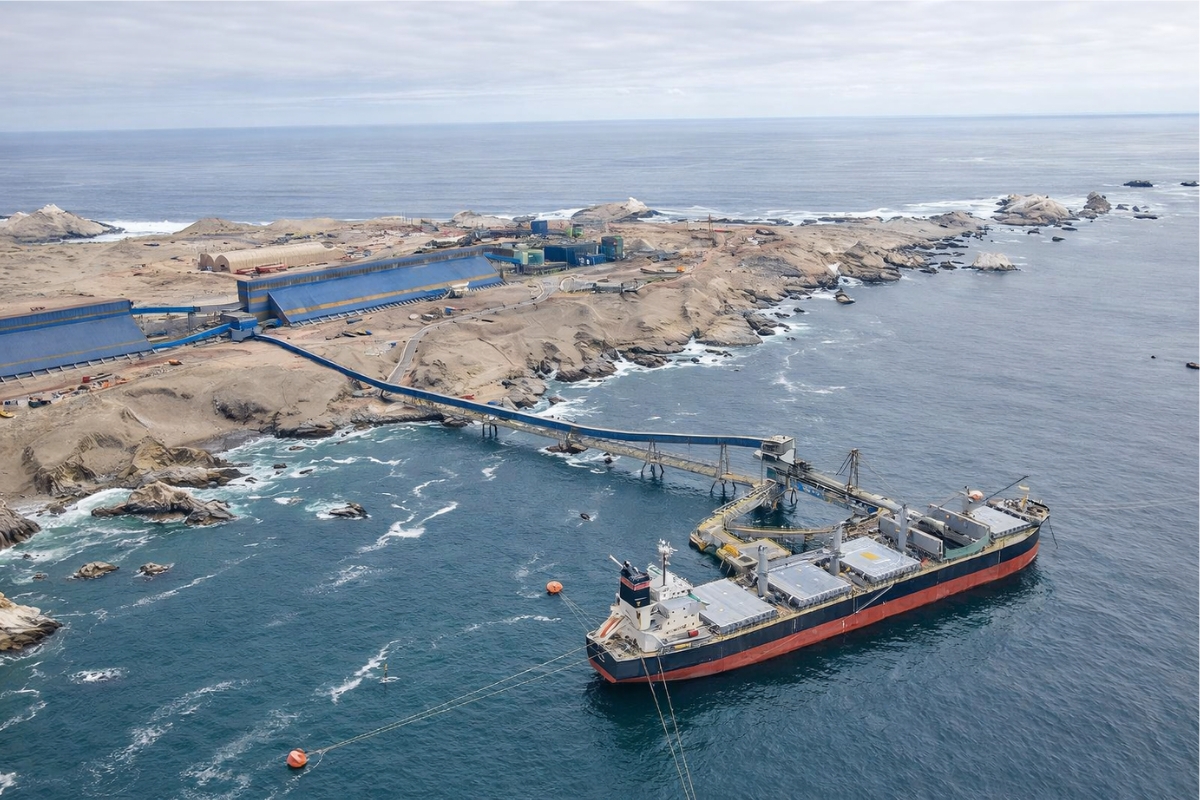
A $3.5 billion megaproject in Latin America pumps desalinated seawater at 1,050 liters per second over 194 km to keep a copper supermine in the Andes operational for another 20 years.
-
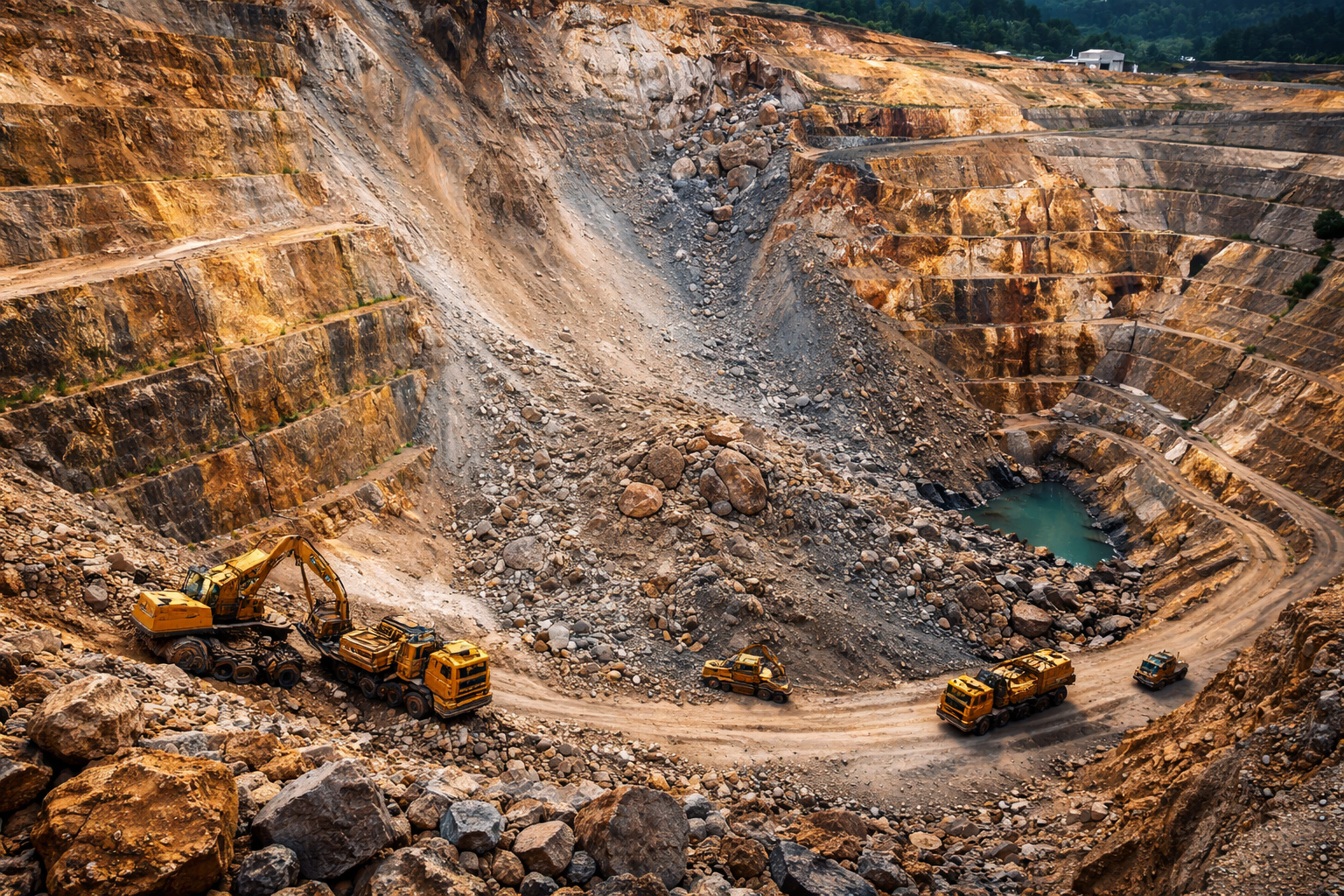
A hidden mine in the Andes valued at nearly R$ 1 trillion is starting to attract global attention, containing copper, gold, and silver, and raises an intriguing question: why do Argentina and Chile need to act together to exploit this gigantic wealth?
-
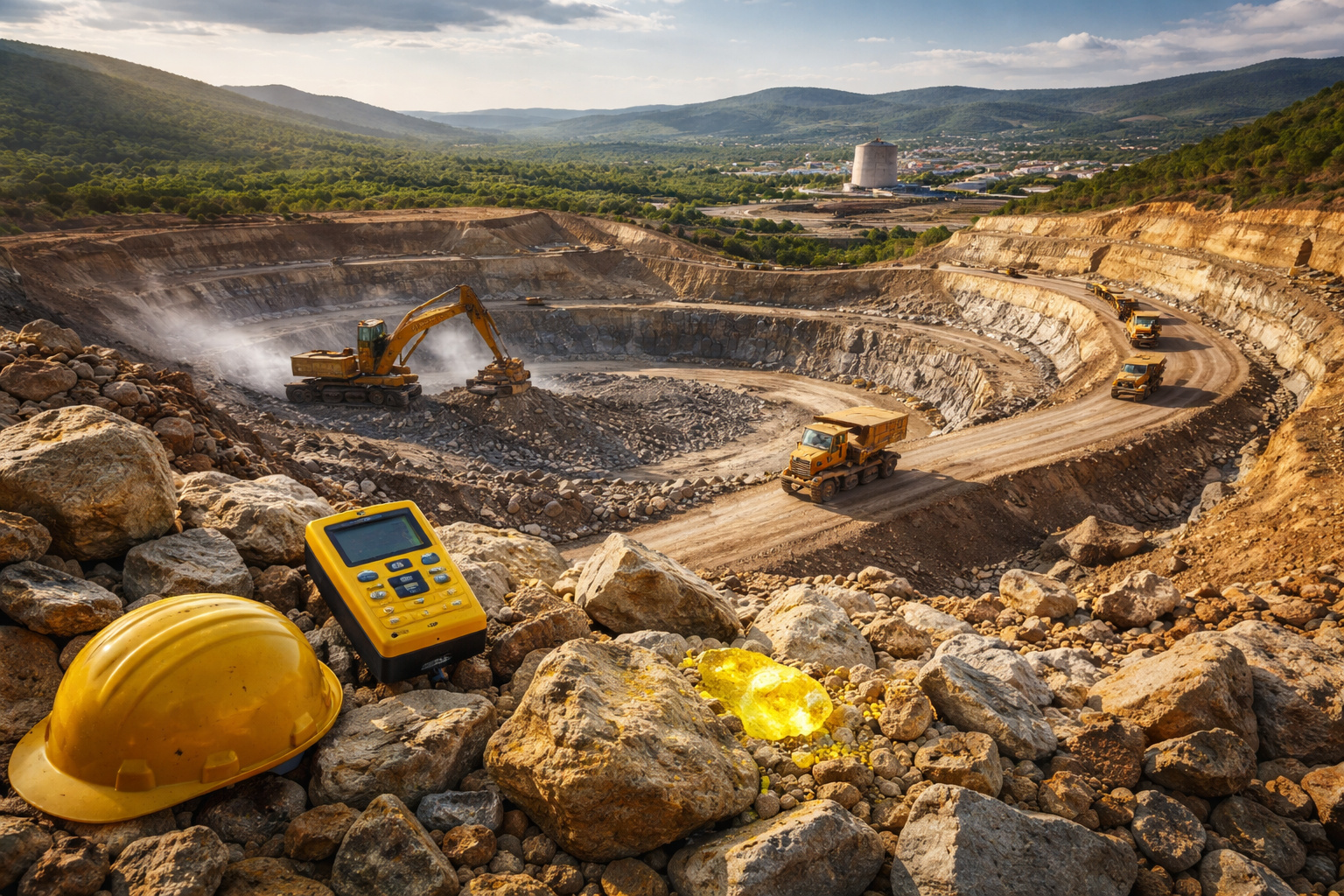
A silent discovery in the interior of Bahia could change the future of energy in Brazil: a uranium reserve in Lagoa Real has an estimated capacity to produce 400 tons per year and is already attracting the attention of energy sector specialists.

The financial structure of the deal calls for an initial disbursement of 900 million dollars in cash, an amount that guarantees immediate control of the assets after the conditions stipulated in the contract are fulfilled.
In addition to this upfront payment, the document establishes the possibility of an additional 115 million dollars one year after closing, linked to parameters agreed upon between the parties.
This second installment serves as a price adjustment component, modifying Equinox’s remuneration according to asset performance and market conditions after the transfer of control.
CMOC’s Advancement in Gold and Precious Metals
Traditionally focused on copper and cobalt, the Chinese giant CMOC has been executing a strategy to expand into gold and other precious metals to diversify revenue and reduce exposure to specific commodity cycles.
With the closing of the purchase of Brazilian operations, the company estimates that annual gold production will increase to 8 tons, a level that repositions the metal within its business matrix.
This move adds to the acquisition in 2025 of the Canadian miner Lumina Gold for 422 million dollars, a transaction that granted the group access to the largest gold reserve in Ecuador.
The combination of assets in Brazil and Ecuador strengthens the company’s presence in the Andean and Amazonian mining axes, consolidating under the same controller new exploration and production fronts in South America.
Regional Strategy and Impact on Competitors
By taking control of Equinox’s gold mines and reserves in Brazil, the Chinese giant CMOC expands its reach in one of the world’s main mining hubs and pressures competitors vying for quality assets in a limited supply market.
The absorption of already operational assets reduces the time between acquisition and the generation of operational cash flow, compared to projects still in the initial licensing phase.
For groups that had been considering expansions or consolidations in the gold segment, the purchase reinforces the perception that significantly scaled assets tend to be quickly absorbed by large global mining companies, leaving less room for medium-sized players in transactions of this size.
At the same time, the presence of Chinese capital in Brazilian gold projects is likely to alter the balance of power in future negotiations for new areas or listed companies in the region.
Weight of Brazil and Ecuador in CMOC’s Route
The transaction with Equinox confirms Brazil as a central platform for the Chinese giant CMOC’s South American strategy, alongside the project in Ecuador inherited from the purchase of Lumina Gold.
The combination of mines in two countries with mining traditions increases the group’s exposure to different regulatory environments, operational costs, and geological profiles, diluting specific risks of each jurisdiction.
By concentrating gold reserves and production in more than one country in the region, the company creates conditions to optimize logistics, negotiate supply contracts, and plan long-term investments, coordinating capital decisions across different operations.
Geopolitically, the group’s advancement in precious metals in South America reinforces the movement of large Chinese companies to secure direct access to strategic raw materials outside their territory.
Diversification Beyond Copper and Cobalt
In the announcement detailing the deal with Equinox, the group notes that its historical main focuses have always been copper and cobalt, essential inputs for sectors like energy, heavy industry, and the transition to electric vehicles.
The stronger entry into gold is presented as an additional revenue layer, in a metal that traditionally acts as a store of value in scenarios of economic and financial uncertainty.
By adding 8 tons of annual gold production to its portfolio, the Chinese giant CMOC creates a diversification cushion that can mitigate price fluctuations in industrial metal markets.
The strategy of balancing base mining and precious metals is likely to alter the company’s risk profile, bringing it closer to major global groups that already combine different types of commodities in their portfolios.
What’s at Stake for Brazil and South America
From a Brazilian perspective, the sale of Equinox’s operations to the Chinese giant CMOC introduces yet another large foreign group into the control of significant gold mines in the country.
This could mean new rounds of investment in technology, operational safety, and increased scale, but it also raises debates about the concentration of strategic mineral assets in the hands of global conglomerates.
Regionally, the fact that the same group has simultaneous access to significant reserves in Brazil and the largest gold reserve in Ecuador indicates that the dynamics of decisions regarding production expansion, extraction pace, and capital allocation will increasingly be processed by decision-making centers outside South America.
For governments and regulators, the challenge will be to balance an attractive investment environment with mechanisms for capturing economic benefits and socio-environmental benefits in the long term.
In your opinion, does the entry of the Chinese giant CMOC into gold mines in Brazil and Ecuador strengthen the security of the precious metals supply chain in the region or increase dependence on decisions made outside South America?










-

Uma pessoa reagiu a isso.