





 Portuguese
  English
  Spanish
  5 min of reading
  0 comments



The Planned Layoff by WiseTech Global Is Expected to Affect Around 2,000 Workers in 40 Countries, Advance Over the Next 18 Months, and Focus Cuts on Customer Service, Product, and Development, in a Move Where the Company Links Artificial Intelligence to a Smaller, More Efficient, and Scalable Structure.
The layoff announced by WiseTech Global marks one of the broadest changes ever communicated by the Australian logistics software company. It is expected that around 2,000 employees will be laid off over 18 months, in a process that will reach operations spread across 40 countries and affect 29% of the workforce.
Today, the company employs 7,000 people and has already confirmed that over 500 positions have been eliminated, with further cuts expected until 2027. The crux of the decision lies in the more aggressive adoption of artificial intelligence, which is now seen not just as technical support, but as a core element of the company’s reorganization.
Restructuring Affects Thousands and Changes the Internal Design of the Company
WiseTech Global made it clear that the reduction will not be isolated or limited to a single area. The plan involves a broader transformation of the corporate structure, with a direct impact on global customer service, product, and development teams.
-
The Federal Revenue Service now automatically cross-references everything you declare with data from banks, credit cards, brokerage firms, and insurance companies, and any discrepancy between your income and your expenses triggers an alert in seconds.

-
Amid global tensions, Brazil blocks the United States’ proposal at the WTO and paves the way for a trade crisis and possible retaliations.

-
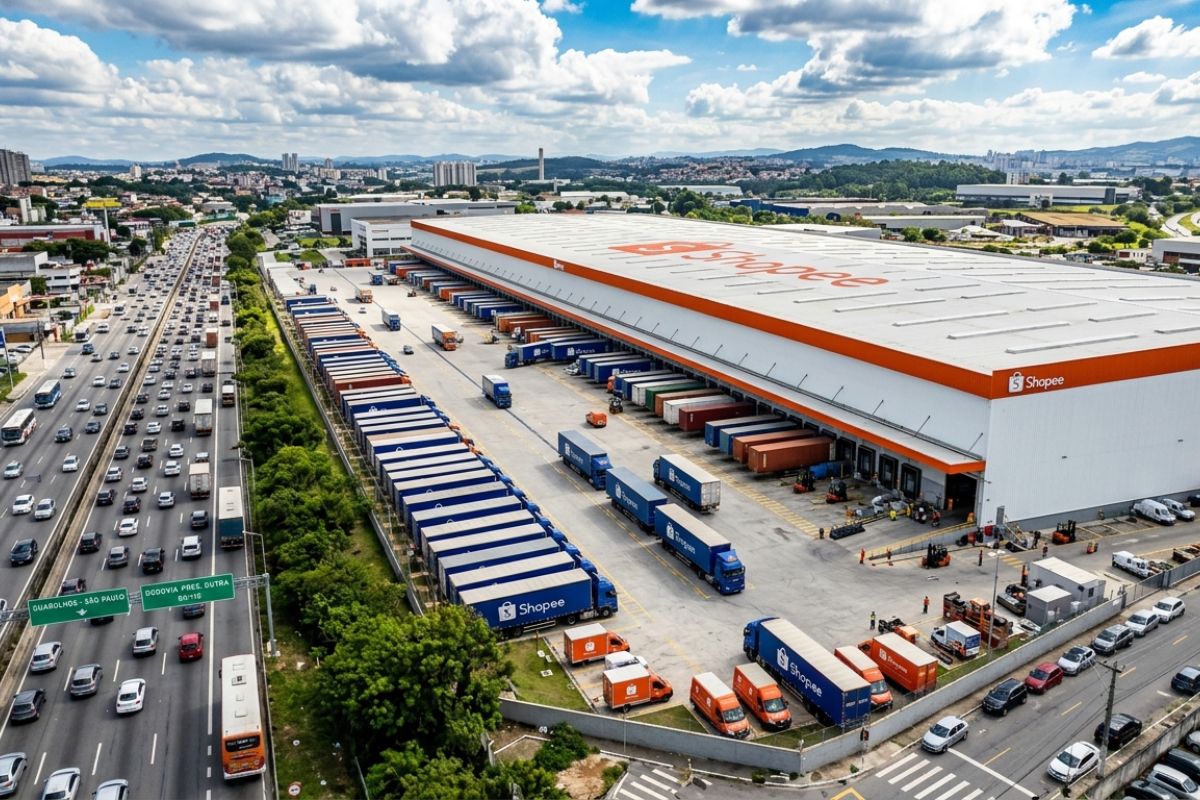
Shopee opens the largest logistics warehouse in Brazil in Guarulhos: 220,000 m² on Dutra, contract signed before construction, pays R$ 45/m² and accelerates deliveries at scale, putting pressure on Mercado Livre and Amazon.
-
After mistakenly transferring R$ 50,000 via Pix, a man will receive the amount back along with R$ 10,000 for moral damages from the recipient.

In some of these groups, the reduction may reach 50%, which shows that the change is not limited to marginal adjustments, but rather a deep restructuring of the workforce.
This move carries even more weight as it affects a company embedded in a large international logistics chain.
The company serves over 17,000 companies in the sector, including all 25 largest international freight forwarders and 46 of the 50 largest global third-party logistics providers. When a company with this reach enacts layoffs on this scale, the market inevitably observes not only the cuts but the logic behind them.
Artificial Intelligence Shifts from a Complementary Tool to the Center of the Strategy
The justification presented by WiseTech’s leadership is clear: artificial intelligence has become central to software engineering and the organization of the company.
CEO Zubin Appoo described the process as a deliberate journey of transformation through AI, indicating that the company sees a significant shift in how technology is produced. The message conveyed by management is that the traditional development model is being replaced by a more automated one that is less dependent on large structures.
This statement helps explain why the layoffs were linked, from the outset, to efficiency gains and structural cost reductions. According to the company itself, the expectation is to build a leaner, more efficient, and scalable organization.
In practice, this means replacing part of the team expansion logic with an operation driven by automation, with fewer people in certain areas and greater reliance on systems capable of accelerating tasks previously done manually.
Cuts Begin in Strategic Areas and Expose New Operational Focus
The first affected sectors clearly show where WiseTech intends to intervene more strongly. Customer service, product, and development are at the center of the global restructuring, suggesting a simultaneous review of support, solution creation, and engineering.
This is not just about reducing administrative costs: the company is making changes in areas crucial to client relations and software evolution.
This data also reveals the scale of internal risk in the process. Halving some teams might increase pressure on remaining professionals, require redistribution of roles, and accelerate the adoption of automated workflows.
In this scenario, the layoff represents not only a mass dismissal but a change in operational architecture, where the expected productivity gains from artificial intelligence offset the reduction of human capital in essential areas.
What the Decision Signals for the Technology and Logistics Sector
The case of WiseTech draws attention because it connects two sectors highly reliant on scale, integration, and rapid response: technology and logistics.
Companies of this profile operate in extensive networks, with large data volumes, multiple clients, and constant need for updates. In this context, artificial intelligence emerges as a promise of acceleration, standardization, and cost reduction.
The Australian company’s decision shows that this promise is already being translated into concrete changes in management and employment.
At the same time, the company’s international dimension amplifies the signal sent to the market. Companies from 183 countries are licensed to use WiseTech’s software, placing the company in a significant position within the global logistics digital infrastructure.
When a company with this reach links layoffs, automation, and structural cuts in a single plan, it reinforces a trend that could influence other companies in the sector.
Between Promised Efficiency and Real Human Impact
From a corporate perspective, the rhetoric is of additional efficiency over time, lower cost bases, and greater scalability.
These are common terms in technology-driven restructuring, especially when the company seeks to convince investors and the market that the new model will be more profitable. The narrative built by WiseTech points exactly in this direction: less structural weight and more capacity to grow with the support of AI.
But at the human level, the effect is immediate and difficult to soften. Around 2,000 workers are expected to be affected by a decision that spans 40 countries and extends until 2027.
Over 500 positions have already been cut, showing that the transition has moved from the planning phase to execution.
Behind the promise of efficiency lies a concrete change in the relationship between technology, work, and value within companies, and this is what makes this case so emblematic.
The layoff announced by WiseTech Global helps encapsulate an increasingly present debate in the market: to what extent will artificial intelligence be used to expand capacity without destroying jobs, and when will it start to justify deeper cuts?
In the case of the Australian company, the answer has already begun to be provided in practice. Do you believe that this type of restructuring will be an exception or should it become routine in large technology companies in the coming years?









Seja o primeiro a reagir!