





 Portuguese
  English
  Spanish
  8 min of reading
  0 comments


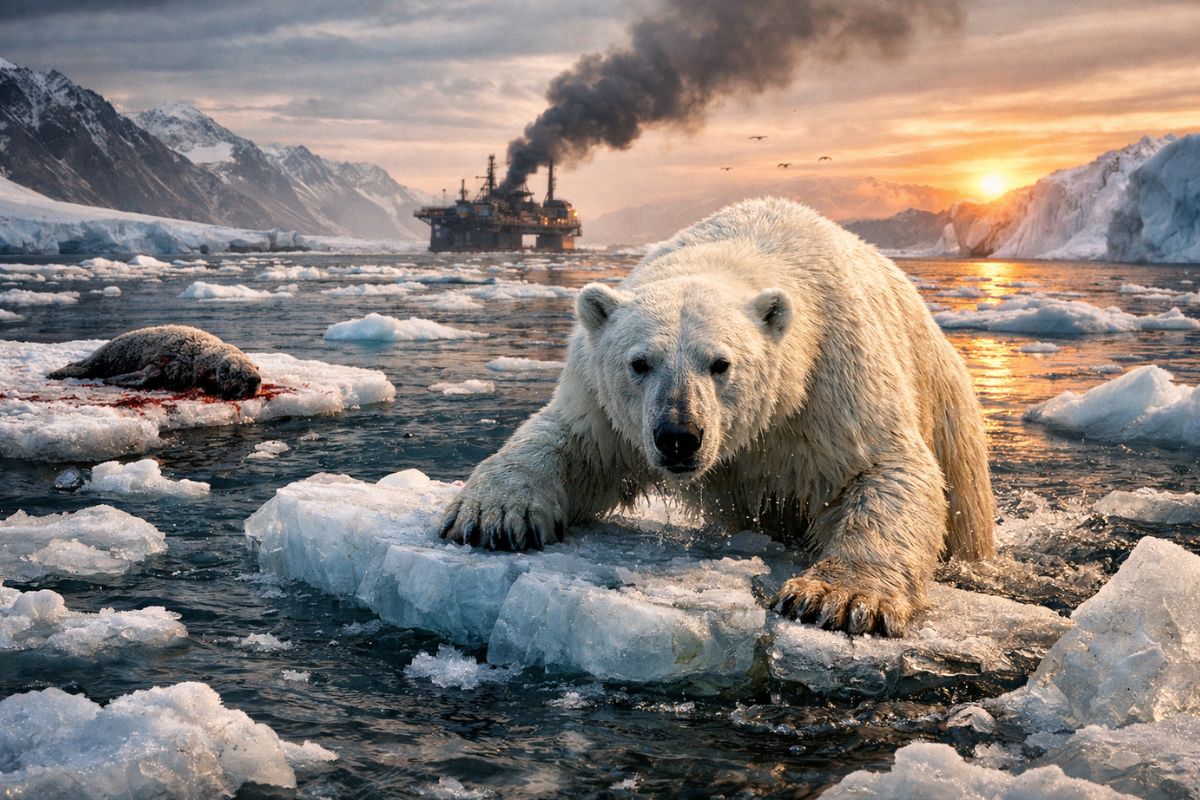
From Canada to Alaska, from Greenland to Russia, the polar bear depends on ice to hunt seals, raise cubs, and conserve energy. With less ice, it spends more time on land, faces hunger, pollution, and conflicts, and becomes a living thermometer of global warming in the Arctic with each shorter season.
The polar bear is a predator shaped for a world of ice, silence, and patience. It is not only large, it is specialized: hunting on sea ice, living by the edge of the frozen ocean, and relying on seals to keep its body fueled with energy, fat, and survival.
Now, with sea ice diminishing and the availability of seals pressured, the polar bear officially enters the list of vulnerable species and concretely represents what happens when an entire habitat becomes unstable at an accelerated pace.
Where Everything Happens and Why the Arctic Is at the Center of This Crisis

The polar bear is found in the circumpolar Arctic, with records in Canada, the United States in the Alaska region, Greenland, Russia, and Norway, including Svalbard.
-
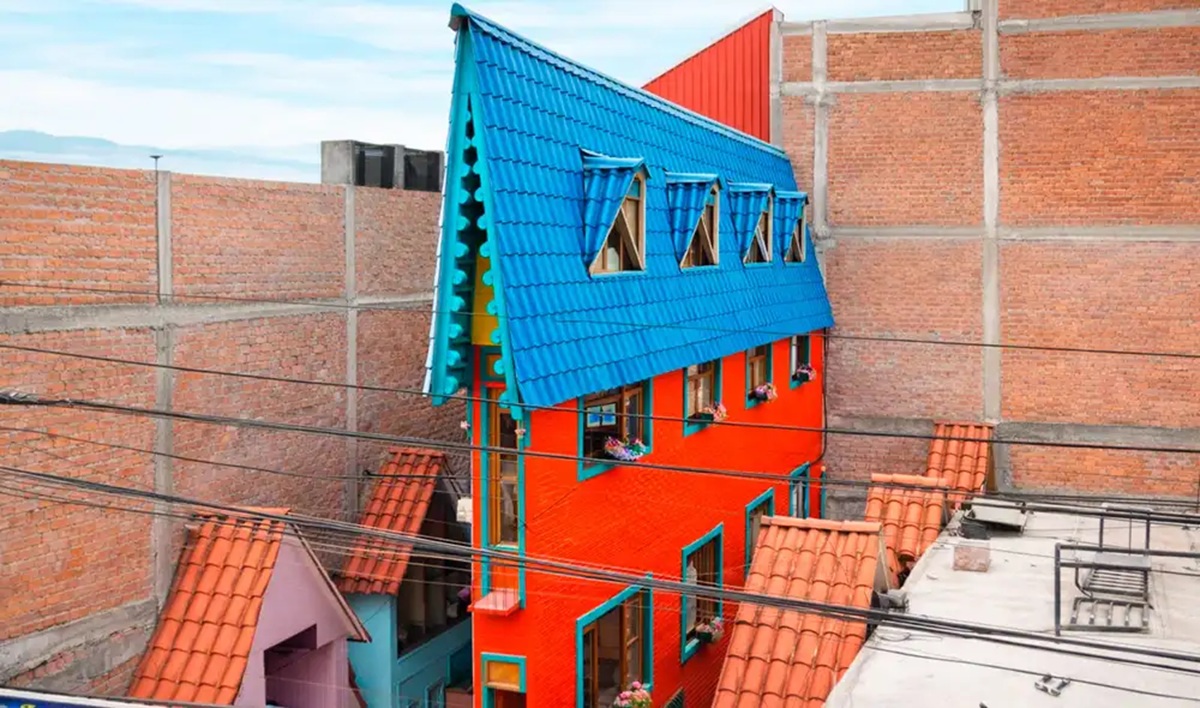
The narrowest house in the world is only 63 centimeters wide, but inside it can accommodate a bathroom, kitchen, bedroom, office, and even two staircases.
-
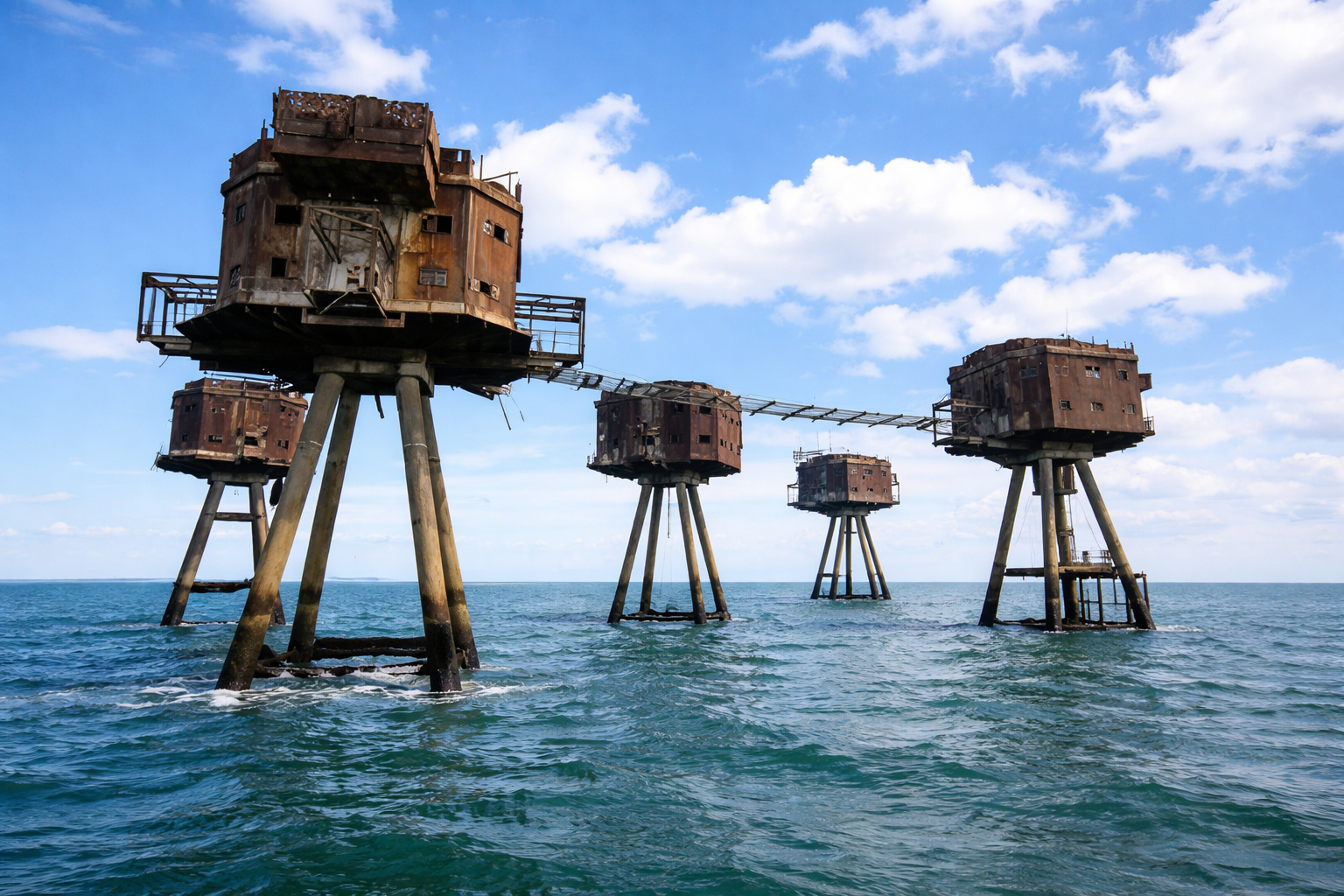
In the middle of the sea, these enormous concrete and steel structures, built by the British Navy to protect strategic maritime routes, look like they came straight out of a Star Wars movie.
-
For years, no one could cross a neighborhood in Tokyo because of the tracks, but an impressive solution changed mobility and completely transformed the local routine.

-
With 15 floors, an unusual building in Curitiba uses concrete, pilasters, and exposed roofs to create the effect of stacked houses.


Some individuals may occasionally appear in Iceland, but the main presence is linked to areas of sea ice.
For most of the time, the polar bear occurs in annual ice fields over shallow coastal waters.
In certain regions, it also uses multi-year permanent sea ice in the Central Arctic.
The issue is that, in recent decades, increased use of terrestrial habitats has been reported precisely due to the loss of sea ice, which pushes the animal into a less efficient hunting environment and more risky for survival.
The Classification That Puts the Polar Bear on Official Alert
The polar bear is classified as Vulnerable in the IUCN’s 2015 assessment. Additionally, it appears on the CITES Appendix II, indicating international attention for control and monitoring of trade and movement associated with the species.
In the wild, the population is estimated to be approximately 26,000 individuals, distributed across 19 subpopulations.
This number helps gauge the size of the challenge, as the species is not as abundant as many people imagine.
It is a relatively limited population for a predator that needs large areas to live, hunt, and roam.
Who the Polar Bear Is in the Tree of Life

The polar bear has the scientific name Ursus maritimus, which literally means “marine bear,” reflecting its connection to the coastal environment and the ice over the ocean.
Taxonomy of the polar bear
- Kingdom Animalia
- Phylum Chordata
- Class Mammalia
- Order Carnivora
- Family Ursidae
- Genus Ursus
- Species Ursus maritimus
This classification is not just a list.
It reinforces that the polar bear is a highly specialized carnivorous mammal, with behavior, metabolism, and life strategies adjusted to a polar scenario.
Size, Weight, and Deceptive Appearance

The polar bear can vary greatly in size, and this difference tends to be stark between males and females.
Body Length:
- Female about 200 cm
- Male about 250 cm
- Weight
- Female typically 150 to 350 kg
- Male typically 350 to 650 kg
- Very large males can reach up to 800 kg
- Tail
- Between 76 and 127 mm
The fur of the polar bear varies from white, yellowish, or grayish, depending on the season and the light.
The most striking contrast is in the black skin of the nose, lips, and body, which contributes to heat absorption and protection in an extreme environment.
The Real Habitat of the Polar Bear and the Logic of Dens
The polar bear does not live “on ice” in a generic way.
It depends on a specific type of platform: the sea ice where the hunting occurs.
Pregnant females have a critical point in life: hibernation and the birth of cubs.
The hibernation sites are usually snow banks or slopes on land, and less frequently sea ice.
In some areas, they can also hibernate in peat banks.
This detail changes everything because the location of the den defines safety, temperature, stability, and the chances of survival for the cubs, which are born in a very specific period of the natural calendar.
Locomotion: The Walking Machine of Ice That Also Swims and Dives
The polar bear is mainly adapted for walking and conserves energy when moving at slow speeds.
It walks with its feet fully on the ground; that is, it is plantigrade, which provides stability on uneven surfaces and ice.
In the water, performance is impressive. The polar bear is an excellent swimmer, using its front paws like paddles.
It is also a capable diver, reaching depths of up to 14 meters, although it usually dives to less than 4.5 meters.
There is an important limit to this power. Because of the thick layer of fat under its fur, the polar bear easily overheats when running, showing how its body is calibrated for intense cold and not for prolonged exertion on land.
Social Life, Silence, and Communication by Smell
In general, the polar bear is solitary. The most common exceptions are females with cubs and brief periods during mating season.
There may also be gatherings of individuals when there is a large concentration of food, such as whale carcasses, especially along the coast when on land.
The sense of smell of the polar bear is highly developed.
They seem sensitive to the scent of other polar bears, although the role of smell and possible pheromones is not fully understood.
It is an animal that reads the environment by smell, something vital when the landscape is white, flat, and silent.
Vocalizations are few. The polar bear tends to be a quiet animal. Females and cubs communicate with a sound similar to a whimper.
Other vocalizations, such as grunting and growling, arise in tense encounters and disputes.
Diet: Why the Polar Bear Depends on Seals and Ice
The polar bear‘s diet is highly carnivorous and focused on marine mammals, with a strong preference for the fat and skin of seals, especially ringed seals.
The size of the population is largely determined by the availability of these seals, showing the fragility of the chain: if the prey decreases, the predator suffers on a large scale.
Aside from ringed seals, the polar bear also feeds on Greenland seals, harp seals, bearded seals, and common seals.
In opportunistic situations, it may consume walruses, belugas, narwhals, and carcasses of bowhead whales.
When hunting becomes difficult, alternative foods come into play, but they do not replace the energy base from seals: birds and eggs, reindeer, and caribou in Svalbard, seaweed, and terrestrial plants.
And one detail that defines the risk: the main predator of the polar bear is humans.
Reproduction: A Slow, Costly Cycle That Does Not Tolerate Instability
The reproduction of the polar bear has a rhythm that does not match rapid changes in the environment. The average sexual maturity is as follows:
- Females: 4 to 5 years
- Males: around 6 years, but may appear as early as 3 or 4
- Gestation
- Between 195 and 265 days
- Litter Size
- Normally 2 cubs, about 70% of births
- Occasionally 1 or 3, rarely 4
- Birth Weight
- Between 600 and 700 g
Cubs are born between November and January and emerge from the den in March or April.
Weaning occurs around 24 to 28 months, with nursing lasting at least a year.
The cubs learn survival skills from their mother for about 2.5 years, a long period that requires environmental stability and food availability.
Another critical point: most females reproduce only once every three years, which slows down population recovery when losses occur.
Energy, Fasting, and the Physical Limits of the Body
The polar bear operates with an extreme energy logic. An experienced adult captures a seal every 4 or 5 days. And the weight gain before the denning period supports long fasts.
An impressive case is that of pregnant females, which can sustain a fasting period of up to 8 months. During this time, they do not eat, drink, or excrete while in the den.
Body waste is biochemically recycled, a survival mechanism that shows how the species is adjusted for long periods without access to food.
This balance depends on one decisive detail: access to ice and seals before fasting. When the ice fails, the energy stock fails.
Why the Polar Bear Became Vulnerable and What This Reveals
The threats described for the polar bear have a dominant core: global warming, associated with the loss of sea ice and reduced access to seals.
This directly affects the animal because ice is not just a backdrop; it is a tool. Without ice, the polar bear loses the hunting platform, expends more energy, changes behavior, and needs to rely more on the terrestrial environment.
Additionally, there are threats related to chemical pollution and oil risk, which act as additional pressures in an already sensitive ecosystem.
This set creates a cascading effect: less ice, fewer accessible seals, more time on land, higher energy expenditure, greater risk of conflict with humans, and lower reproductive success.
Life Expectancy and What Changes Between Nature and Human Care
In wild populations, the typical life expectancy of the polar bear is 15 to 18 years. There is also reference to a median of about 21 years for males in health plans, indicating variations depending on context and care.
Regardless of the exact number per individual, the central point is that the polar bear is a species with a relatively long life and slow reproduction.
When the environment worsens, it cannot quickly compensate with more cubs, which increases risk over generations.
A Symbol That Is Also a Thermometer of the Arctic
The polar bear spends only short periods on land and is adapted to sea ice. The very meaning of the scientific name reinforces this.
It is a predator that exists because ice exists.
When the ice recedes, the polar bear does not just lose territory; it loses its way of life.
And there is one point that draws attention: polar bear viewing tourism has been increasing in areas like Churchill, Canada, and Svalbard, Norway.
This shows how the animal has become a global symbol, even as its environment becomes more unstable.
A Historic Landmark That Reinforces the Long Human Relationship with the Species
In 1917, the first polar bear arrived at the San Diego Zoo, one year after the location opened.
This data shows how, for more than a century, humans have observed, recorded, and approached the animal, while today they face the challenge of keeping the polar bear‘s habitat functional in the Arctic itself.
What Makes the Situation So Urgent
The polar bear is a powerful predator, but it depends on a system that needs ice to operate.
It hunts seals, dives, swims, walks long distances, and sustains prolonged fasts based on fat reserves.
This bodily math only works when sea ice ensures access to prey at the right moment.
When the ice disappears, the equation does not add up.
The polar bear becomes vulnerable not because it has become weak, but because its world has become unstable.
In your opinion, what is the most alarming sign of this story of the polar bear: the loss of sea ice, the lack of seals, or the fact that such a dominant predator is already officially vulnerable?





-

-

2 pessoas reagiram a isso.