





 English
  Francês
  Alemão
  Italiano
  Japonês
  Norueguês
  Portuguese
  Spanish
 5 min of reading
  0 comments


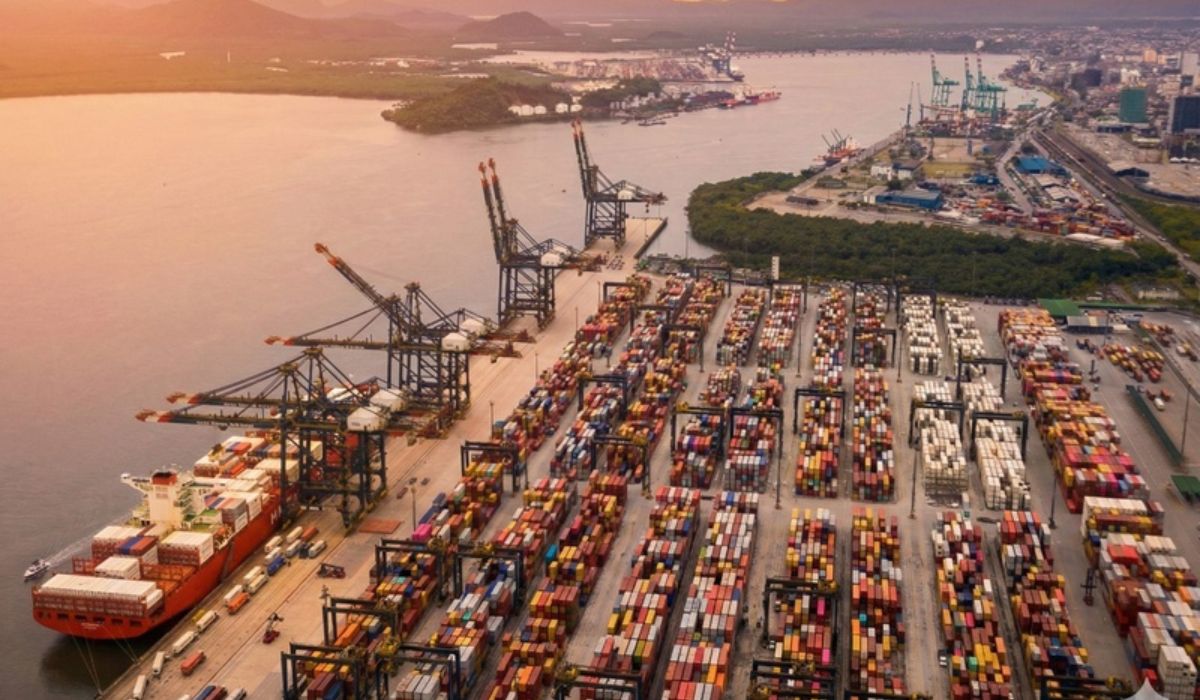
Analysis of the Expansion May Redesign the Perimeter of the Largest Port Complex in the Country, with Logistics, Urban and Environmental Impacts in Four Cities of Baixada Santista, While Administrative Decisions and Historical Barriers Continue to Condition the Progress of the Project.
The Port of Santos, on the coast of São Paulo, may have its official area expanded to up to 20.4 million square meters, nearly three times more than the current 7.8 million m².
The possible expansion depends on authorization from the Ministry of Ports and Airports (MPor) and is related to the review of the polygonal, a term used to define the administrative perimeter of the organized port.
The proposal is being analyzed by the Santos Port Authority (APS) in the context of medium and long-term planning for the complex.
-
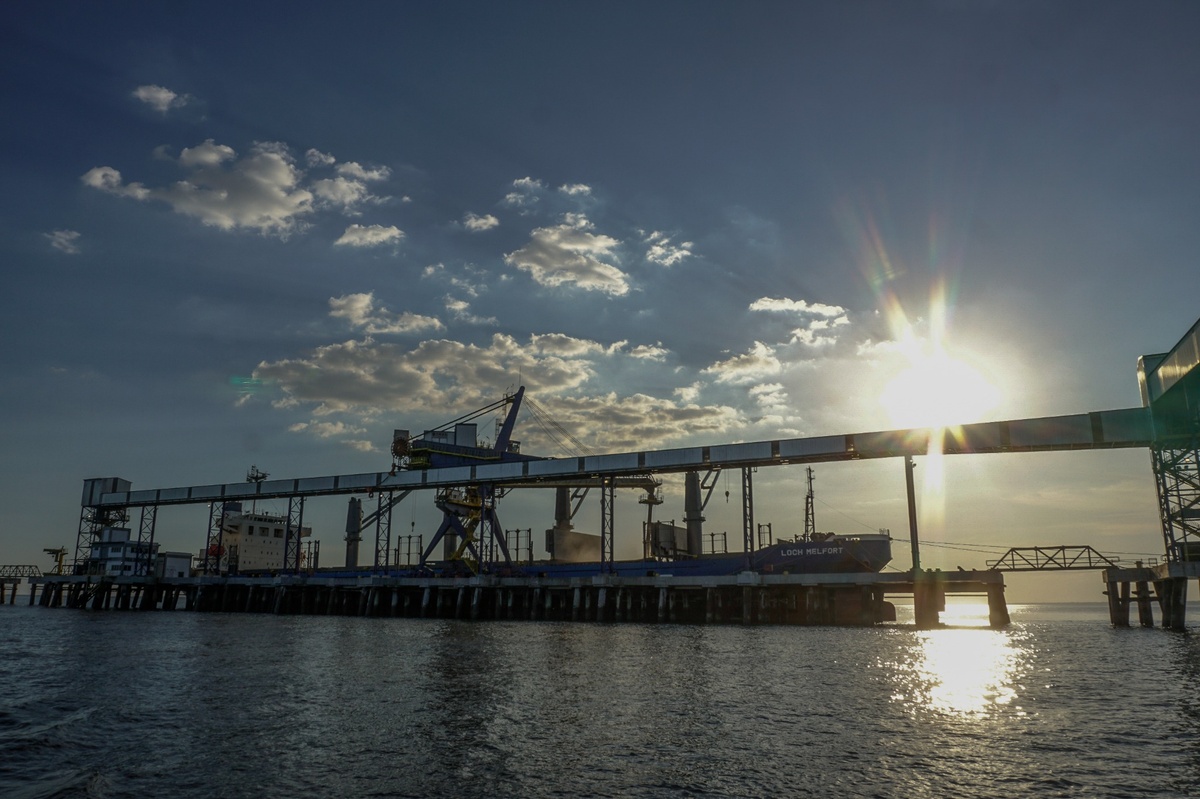
Private ports increased by 14.1% in January 2026 and lead port activity with 66% of the cargo, driven by oil, agribusiness, and exports.
-
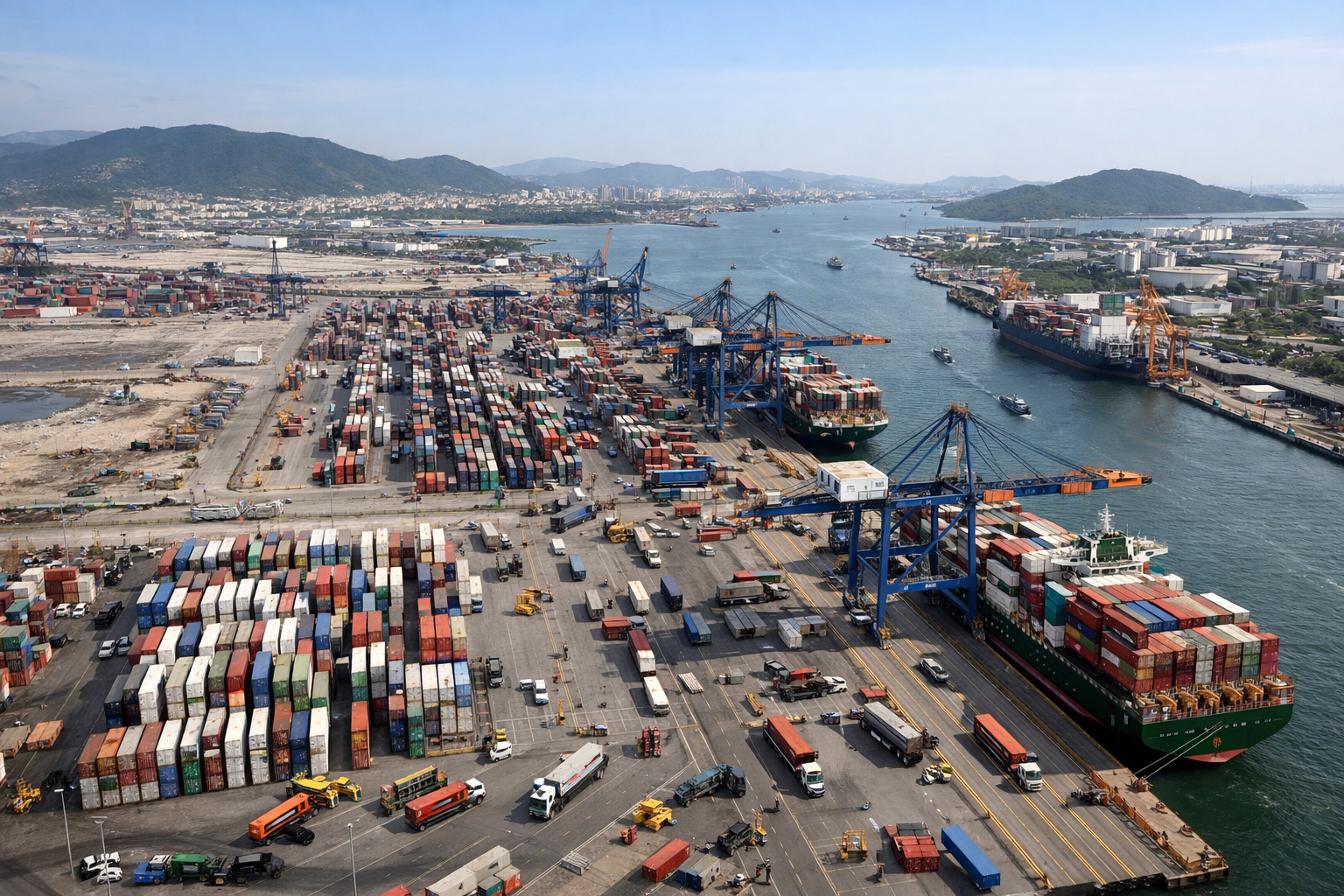
Government Releases R$ 5.1 Billion to Modernize Ports and Generate Over 5,000 Direct Jobs in Brazil
-
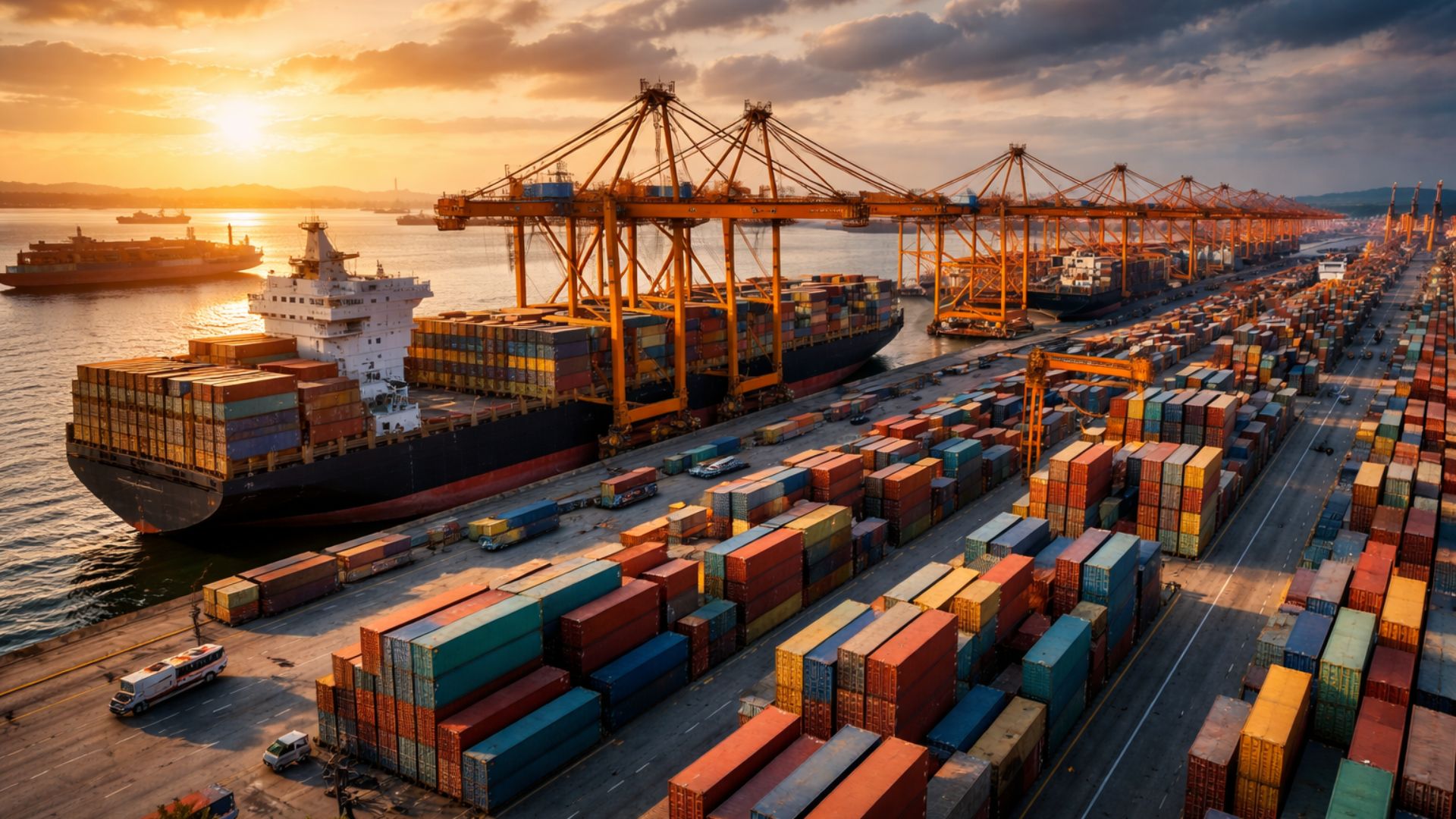
Merchant Marine Fund Approves R$ 5.1 Billion for Port Projects Aiming to Accelerate Port Modernization, Expand Logistics Infrastructure, and Generate Over 5,000 Jobs in Brazil
-
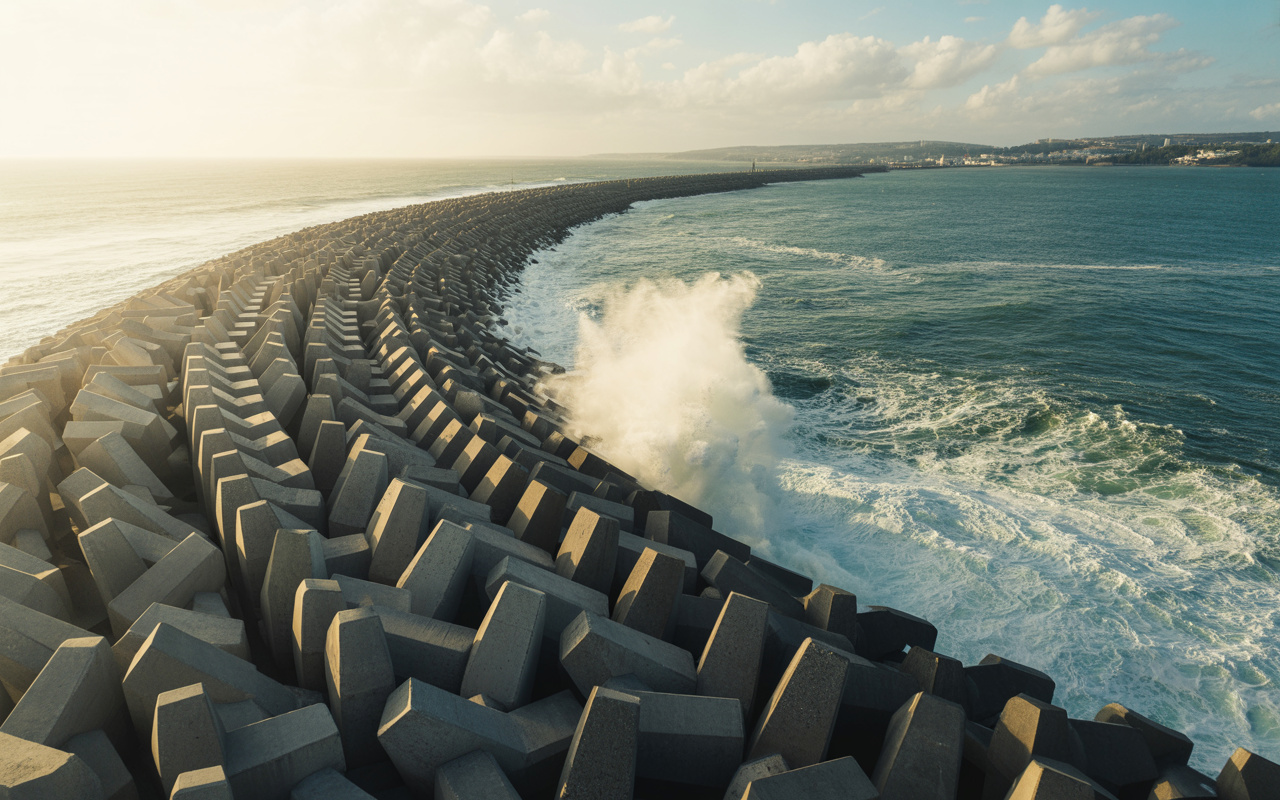
To Protect Portugal’s Largest Deep-Water Port, Engineers Launched Artificial Concrete Blocks Weighing Up to 90 Tons Each Into Open Sea, Creating a Breakwater Capable of Withstanding the Most Violent Atlantic Waves

Currently, Santos leads container movement in Latin America and ranks 37th in an international ranking of the port sector cited by official agencies.
The port accounts for a significant share of Brazilian foreign trade, concentrating almost one third of the value of the country’s exchanges with other markets.
Expansion of the Polygonal of the Port of Santos
The revision of the polygonal provides for the incorporation of areas located in four municipalities of Baixada Santista: Santos, São Vicente, Cubatão, and Guarujá.
The inclusion of these areas legally expands the space allocated for port activities.
This may allow, in the future, the installation of terminals, logistics yards, and support structures, according to specific projects.
The polygonal serves as an administrative instrument that guides planning and land use decisions related to the port.
Being within this perimeter does not necessarily mean the immediate execution of works.
Still, it defines which areas can be considered in studies, licenses, and projects related to the expansion of operations.
According to information from the APS, implementation tends to occur gradually.
Each area will need to undergo technical analyses and its own approval processes.
This model rules out the possibility of simultaneous expansion at all points included in the proposal.
Importance of the Port for Brazilian Foreign Trade
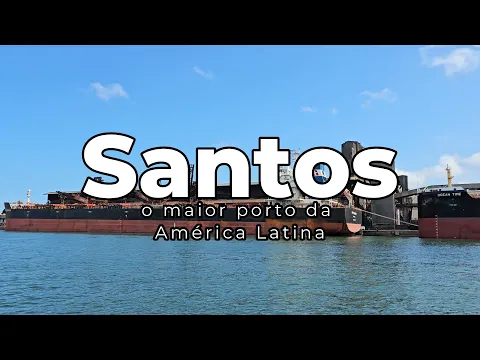
The Port of Santos is the main port complex in the country in terms of volume and value of transported cargo.
Data released by official agencies indicates that, in 2025, around 29.6% of Brazilian foreign trade, by value, passed through the port.
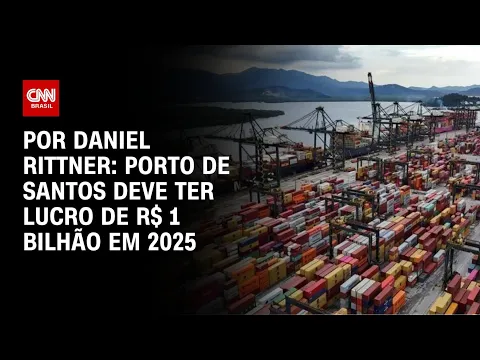

The index is higher than that mentioned in previous surveys.
In the container segment, Santos appears as the busiest port in Latin America.
In an international ranking cited in institutional communications from the federal government, the complex occupies 37th place globally.
In the same survey, it is noted as the only Brazilian port among the world’s hundred largest by this criterion.
Alemoa, Vila dos Criadores and Historical Barriers
Among the areas mentioned in the studies is Vila dos Criadores, located in the Alemoa region, in Santos.
The site is home to thousands of residents.
Public documents indicate that the area concentrates an old landfill deactivated in the early 2000s, identified as a source of environmental contamination.
The situation in the region is marked by judicial disputes that have been ongoing for over two decades.
These processes involve land, environmental, and social issues.
Authorities cite these factors as relevant obstacles to any faster progress on projects related to port expansion in that area.
In addition to legal actions, the debate includes recurring themes in port areas close to urban zones.
Among them are the reconciliation of logistics, housing, environmental recovery, and urban planning.
This type of decision often requires coordination between the federal government, local administrations, and the judiciary system.
What the Santos Port Authority Says
The management of the Santos Port Authority states that the expansion of the polygonal is aligned with the current scale of the complex.
According to the APS, the proposal takes into account projections for the growth of port operations.
The president of the entity, Anderson Pomini, declared that the initiative seeks to provide the Port of Santos with “the size it deserves” to sustain its regional position.
Commenting on the territorial scope of the plan, Pomini stated:
“These are areas in four cities, Santos, São Vicente, Cubatão and Guarujá, that will allow for efficient and assertive port planning. We have the opportunity to prepare the Port of Santos for the next 20 years.”
Despite the institutional signaling, there is no defined public schedule for the start of works related to the expansion.
The APS itself emphasizes that the change of the polygonal does not imply immediate execution of physical interventions.
Each project depends on specific authorizations and compliance with legal requirements.
Administrative Procedures and Limits of Expansion
The revision of the polygonal depends on administrative acts within the federal government.
The process includes the analysis by the Ministry of Ports and Airports.
It also involves technical studies, consultations, and compatibility with urban and environmental plans of the affected municipalities.
Industry sources indicate that the level of complexity varies depending on the area considered.
Regions already established as logistics zones tend to face fewer obstacles.
On the other hand, areas with residential occupancy or environmental liabilities require longer solutions and extended negotiations.
In this scenario, the expansion of the Port of Santos is treated by authorities as a planning process, and not as a single work.
The definition of how and when each area will be effectively used remains conditional on future decisions.
Overcoming historical barriers in the region continues to be a determining factor for the progress of the project.








-

Uma pessoa reagiu a isso.