





 Portuguese
  English
  Spanish
  5 min of reading
  0 comments



The Bankruptcy of Sete Brasil, Which Began as a Huge Promise in the Pre-Salt, Now Causes a Billion-Dollar Impact on the Brazilian Economy. Corruption Scandals, Astronomical Debts, and the Lack of Investments Bring Down the Dream of Prosperity for the Naval Sector. The Crisis Is Knocking at the Door of Thousands of Consumers and Companies.
Sete Brasil, a company created with the aim of transforming the Brazilian naval industry and boosting pre-salt exploration, faced an unexpected fate.
The promise of a project that would generate billions of reais and create jobs turned into an economic collapse.
Recently, the Court of Justice of Rio de Janeiro declared the company’s bankruptcy, marking the end of a trajectory marked by scandals and a devastating financial crisis.
-
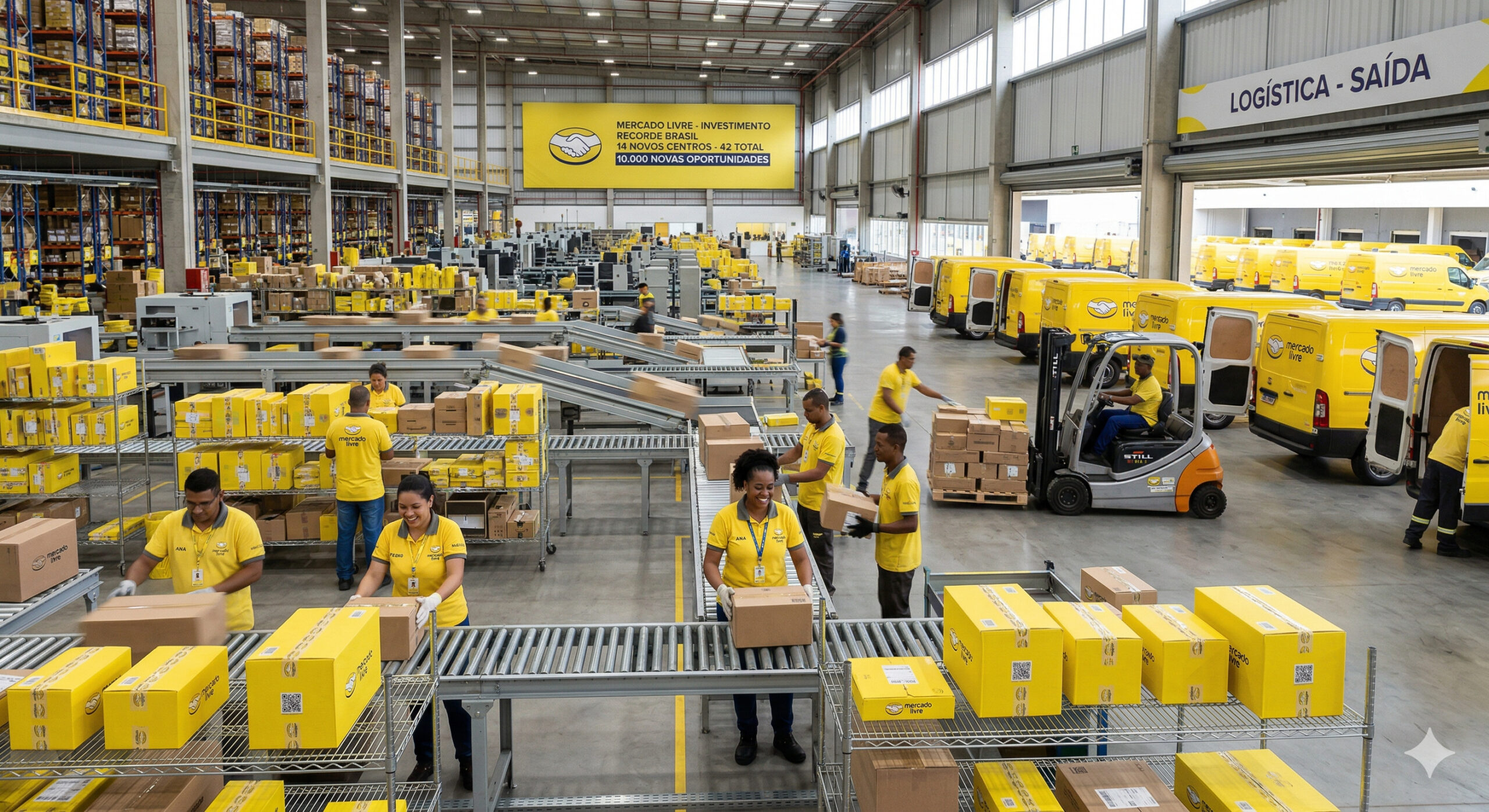
Mercado Livre “opens the vault” and announces a record investment of R$ 57 billion in Brazil in 2026, a value 50% higher than the previous year, with an expansion plan that includes 14 new logistics centers, totaling 42 units in the country and hiring an additional 10,000 employees.
-
How investment in technology can revolutionize the national economy and enhance industrial gains, according to a study that highlights the direct impact on productivity, innovation, and wealth retention within Brazil.

-
The largest food company on the planet, JBS, has just opened a 4,000 square meter laboratory in Florianópolis to develop customized proteins that modulate muscle mass gain, immune response, and metabolic performance.

-
After nearly 30 bids and competition among industry giants, a Spanish company purchases one of the largest airports in Brazil for almost R$ 3 billion and takes over the management of Galeão in a concession that will last until 2039.


Sete Brasil: The Beginning of a Story of Ambition and Crisis
Founded in 2010, Sete Brasil emerged with the promise of providing drilling rigs for Petrobras, and its project to build 28 rigs to operate in pre-salt exploration had an estimated investment of US$ 25 billion.
The initial proposal attracted investors and secured financial support, bringing hope that the company would become a key pillar for Brazil in the oil and gas sector.
However, as the project progressed, problems began to arise.
Operation Car Wash revealed a corruption scheme involving Sete Brasil, with inflated contracts and improper payments, which shook investors’ confidence.
With the allegations, the company lost credibility and saw its financing capacity drastically compromised.
The Escalation of the Crisis and Inevitable Bankruptcy
Starting in 2016, Sete Brasil entered judicial recovery, an attempt to renegotiate its debts and seek a restructuring. However, the situation did not improve.
Only four of the 28 planned rigs were built, while the company’s debts jumped from R$ 21.7 billion to R$ 36 billion.
With impatient creditors and no prospect of new contracts, the collapse became irreversible.
The bankruptcy of Sete Brasil was not only the end of a company but a reflection of how structural problems and lack of transparency can harm a sector essential to the national economy.
The billion-dollar hole left by the company had a profound impact on the naval industry and in various areas of the economy.
Economic Impacts of the Bankruptcy on the Naval Sector and Beyond
The bankruptcy of Sete Brasil had direct and indirect repercussions on the market.
The expectation of reactivating shipyards and creating jobs on a large scale did not materialize.
Companies that depended on Sete Brasil for the supply of parts and services faced financial difficulties, with contract closures and sector contraction.
Rio de Janeiro, where the company concentrated much of its operations, also felt the effects of the bankruptcy.
In addition to the loss of direct and indirect jobs, the collection of oil royalties, which was one of the state’s main sources of revenue, could also be affected.
This jeopardizes investments in infrastructure, public services, and social projects.
Small businesses linked to the offshore exploration supply chain, such as material suppliers and specialized service providers, are already reporting difficulties in staying in the market.
The impact on the local economy was significant, with repercussions that extend far beyond the naval sector.
Sete Brasil: A Reflection of Structural Failures in Brazil
The case of Sete Brasil also illustrates the challenges faced by Brazil in trying to carry out large-scale projects that involve heavy investments and are considered strategic for the economy.
The lack of efficient oversight, coupled with a history of corruption, drove away investors and made these initiatives increasingly risky.
For many companies, bankruptcy is the last resort when all attempts at financial recovery and restructuring fail.
Before declaring bankruptcy, a company may resort to judicial recovery, where it seeks to renegotiate its debts and find a new chance to rise again.
In the case of Sete Brasil, the judicial recovery was a long and ineffective process that did not bring the expected solution.
Without credit, financial support, and investors’ confidence, bankruptcy became an inevitable consequence.
What Bankruptcy Means for Companies and the Economy
Bankruptcy is a legal process designed for when a company can no longer meet its debts and maintain its operations.
When a company declares bankruptcy, its assets are sold to pay part of the debts to creditors, but this rarely resolves all issues.
This process has drastic effects not only on the employees of the company but also on the entire economic ecosystem to which the company belongs.
For many companies reaching this point, bankruptcy is a tragedy, but also a harsh reality that is difficult to avoid.
Although judicial recovery offers a chance for restructuring, it does not always succeed in saving a company that is already without sufficient resources to maintain its operations.
Sete Brasil as a Warning for the Future
The case of Sete Brasil serves as a significant warning for Brazilian companies, especially those involved in large projects with substantial investments and high risks.
The company’s story illustrates how a combination of mismanagement, corruption, and inadequate investments can lead a promising company to financial collapse.
The bankruptcy of Sete Brasil is not only a tragedy for its employees and creditors but also for the entire naval industry and the oil market in Brazil.
With the loss of credibility and trust, it becomes even harder for the country to attract investments in this strategic sector.
The example of Sete Brasil is a lesson on how poorly planned projects can cause significant losses and affect an entire production chain, with consequences that last for years.
The Future of the Naval Sector and Brazil’s Recovery
Now, the Brazilian naval sector finds itself in a moment of reflection.
What happened with Sete Brasil can be seen as part of a vicious cycle of crises, corruption, and structural failures in the sector.
For Brazil to regain growth and investor confidence, deep changes must be implemented in terms of governance, transparency, and oversight.
Do you believe that Brazil will learn from the error of Sete Brasil and avoid new collapses in large projects? Or will the lack of structure and oversight continue to be an obstacle to the country’s development? Share your opinion below.









-

Uma pessoa reagiu a isso.