





 Portuguese
  English
  Spanish
  3 min of reading
  0 comments


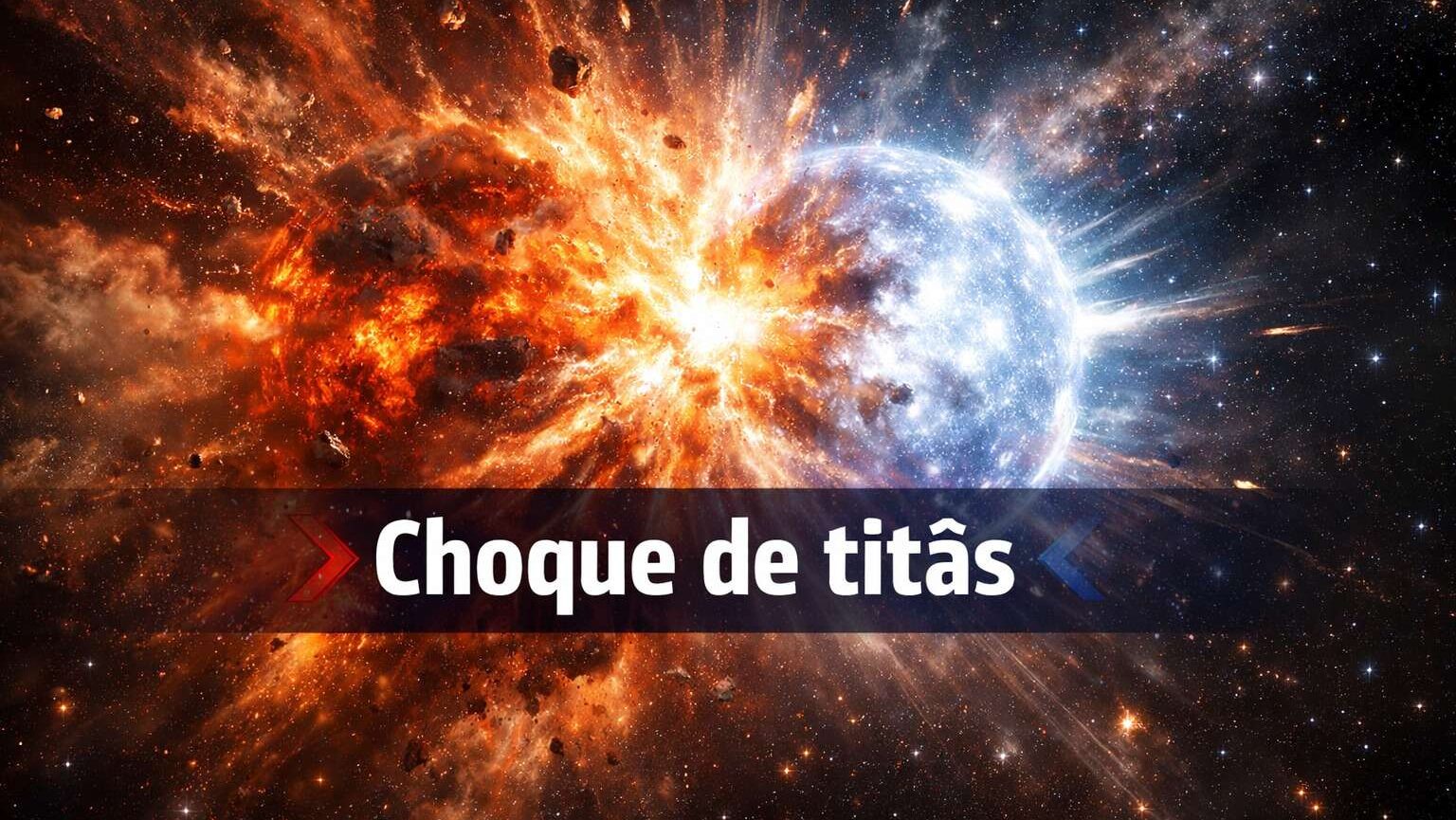
New Images Capture The Collision Of Two Cosmic Giants In A Nearby Stellar System, Leaving Scientists And Astronomers Surprised By The Rare Phenomenon
Scientists have recorded for the first time direct collisions between large objects in the Fomalhaut stellar system. Observations, made with the Hubble in 2004 and 2023, show impacts from planetesimals 37 miles (approximately 60 km) in diameter, clarifying the dynamics of young systems.
Astronomers observed the aftermath of two powerful shocks around the neighboring star called Fomalhaut. The events represent the first collisions between large objects directly recorded in any solar system outside our own.
Paul Kalas, an associate professor of astronomy at the University of California, Berkeley, stated that they witnessed the collision of two planetesimals. He explained that the cloud of dust expelled by the violent event begins to reflect light from the star.
-
Worlds covered by water, atmospheres filled with hydrogen, and the possibility of life beyond Earth: ocean planets are rewriting the map of cosmic search and forcing scientists to rethink where to look.
-
Argentina achieves the unimaginable after more than 110 years and reintroduces the largest native herbivore of South America to the Chaco to restore a lost link in nature.
-
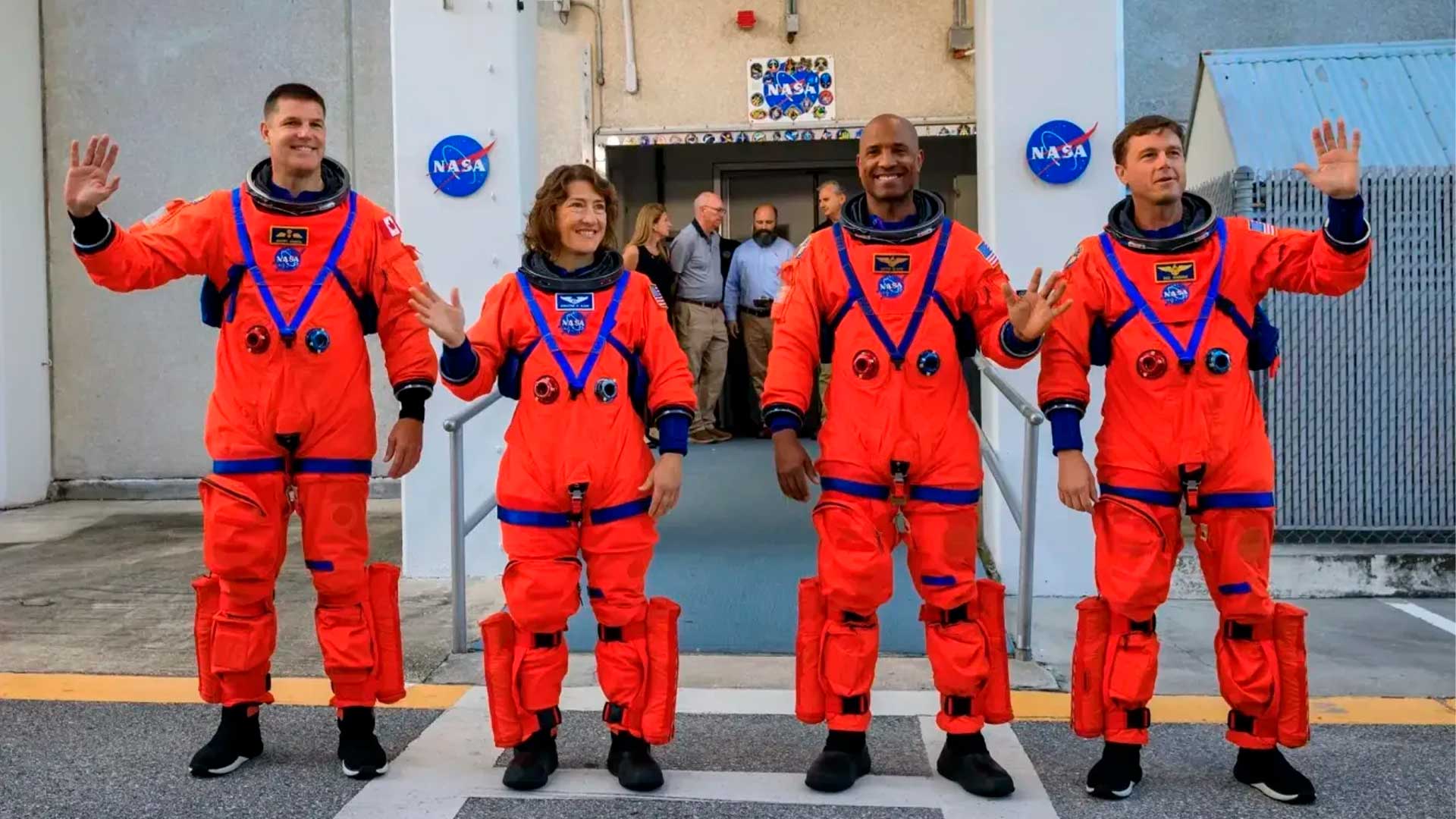
Returning to the Moon now costs a billion-dollar bill and reignites the competition between the USA and China for science, technology, and rare minerals on lunar soil.
-
While the world looks at oil, the war with Iran is already disrupting helium supply from Qatar, affecting car and iPhone chips, threatening AI expansion, and putting pressure on aluminum packaging at the highest value in four years.


The researcher emphasized that they do not directly see the two objects that collided at the time. However, it is possible to observe the consequences of this enormous impact through the dust generated that reflects the intense brightness of the host star.
Dimensions Of The Objects And Impact
The research team revealed that the objects involved are at least 60 kilometers, or 37 miles, in diameter. The calculation is based on the brightness of the events recorded during the observed interval of twenty years.
These bodies are at least four times larger than the object that collided with Earth 66 million years ago. Such an impact resulted in the extinction of the dinosaurs in our planet’s past.
Objects with these specific dimensions are technically classified by scientists as planetesimals. They have a similar size to many asteroids and comets in the solar system, but are much smaller than dwarf planets like Pluto.
The article published in the journal Science reports observations made by the NASA Hubble Space Telescope. The images show the emergence of a second point source in 2023, similar to the appearance recorded twenty years earlier.
The publication interprets this additional source as a cloud of dust produced by a recent impact. The positions and movement of the generated clouds provide important constraints on the collisional dynamics in the debris belt.
Reassessment Of Past Discoveries
The earlier planetary discovery has now turned into dust with the new data. What was thought to be a planet was likely the cloud raised by the collision, as indicated by the new interpretation of the images.
Kalas reported in 2008 having discovered a bright point near the dust disk. He called it Fomalhaut b, following the naming convention for exoplanets, according to a press release.
The current article reveals that the nearby star Fomalhaut is orbited by a compact source. Fomalhaut b had previously been interpreted as a planet wrapped in dust or a cloud generated by collision.
The star Fomalhaut is located just 25 light-years from Earth. It is considered young, at about 440 million years old, serving as an indicator of what our solar system was like during its formative years.
Paul Kalas began searching for a dust disk around the star in 1993. His hope was to see for the first time the debris left after planet formation in that stellar system.
Over tens of thousands of years, the dust around Fomalhaut would be glowing from these collisions. The astronomer compared the continuous visual effect of these occurrences to twinkling Christmas lights.







-

-

-

-

6 pessoas reagiram a isso.