





 Portuguese
  English
  Spanish
  3 min of reading
  0 comments


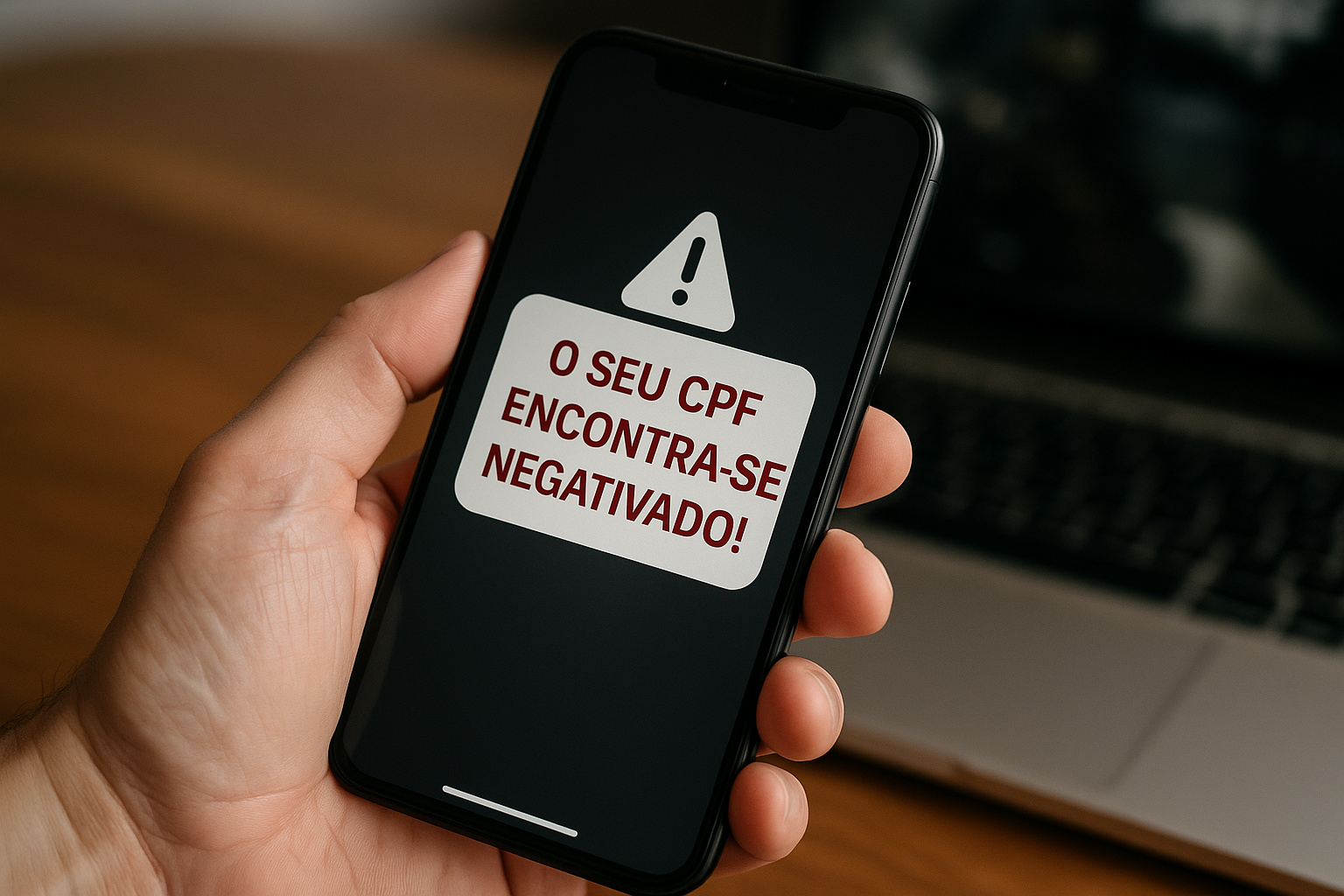
Alarmist Messages About Nonexistent Debts Trigger Quick Emotional Responses and Increase the Risk of Financial Loss
A fraud scheme that gained traction starting in 2023 and intensified throughout 2024 and 2025 has started to worry authorities, consumers, and financial institutions across the country. The so-called dirty name scam uses unexpected messages about a negative CPF, unknown debts, or imminent restrictions to provoke immediate fear. The strategy exploits financial anxiety and leads many people to act quickly without verifying the truth of the information received. This impulsive behavior, therefore, becomes the main ally of the criminals.
How The Dirty Name Scam Is Practiced
The first contact usually occurs via WhatsApp, SMS, email, or phone call, always unexpectedly. The message informs of an outstanding debt or warns about the inclusion of the victim’s name in credit protection agencies. Next, the text adopts an urgent and alarmist tone, mentioning CPF blockage, immediate negative registration, or even supposed legal actions. In this way, the scam creates a pressure scenario that makes rational analysis of the situation difficult.
Emotional Strategy Increases The Success Rate Of The Fraud
The fear of having a dirty name directly affects the feeling of financial security. Credit, reputation, and access to essential services are sensitive topics for most people. Therefore, upon receiving this type of notice, many victims prioritize resolving the problem quickly. As a consequence, they fail to check the origin of the charge, which increases the risk of falling for the scam and making improper payments.
-
The noise law will no longer be in effect at 10 PM starting in June with a new rule valid during the 2026 World Cup.

-
The Chamber opens a debate on driver’s licenses at 16 years old as part of a reform that includes around 270 proposals to change the Brazilian Traffic Code and may redesign rules for licensing, enforcement, and circulation in the country.

-
The new Civil Code could revolutionize marriages in Brazil with “express divorce” and changes that could exclude spouses from inheritance.

-
Banco do Brasil sues famous influencer for million-dollar debt and intensifies debate on delinquency, risks of seizure, and direct impact on Gkay’s credibility.


Psychological Triggers Used By Criminals
To reduce the victim’s critical sense, scammers combine different known emotional triggers. Among the main ones are urgency, with short deadlines for payment, authority, by mentioning banks or agencies like Serasa and SPC Brazil, and threat, with blockage, protest, or legal action. This combination of pressure and fear creates an environment conducive to mistakes and induces hasty decisions.
Indicators That Help Identify Fake Charges
Even when the message appears convincing, some signs reveal the fraud. The most common include payment requests via Pix or direct links, contacts made outside official channels, generic messages without detailed data, pressure to resolve immediately, and websites with similar but unofficial domains. Additionally, it is important to reinforce that credit protection agencies do not make collections via WhatsApp with payment links.
Guidelines When Receiving A Notice Of Negative CPF
Upon receiving a message of this kind, the main recommendation is to remain calm. Not clicking on links, not providing CPF or bank details, and not making immediate payments significantly reduce the risk of loss. The inquiry should be made exclusively through official websites or apps. If any payment has already been made, the guidance is to contact the bank immediately and file a police report. Recommendations reinforced by entities like Febraban and consumer protection agencies throughout 2024 highlight that information and caution remain the main forms of protection.
In light of the increase in this type of fraud and the growing use of digital messages to deceive consumers, to what extent can heightened attention be decisive in preventing financial losses?









Seja o primeiro a reagir!