





 Portuguese
  English
  Spanish
  6 min of reading
  0 comments


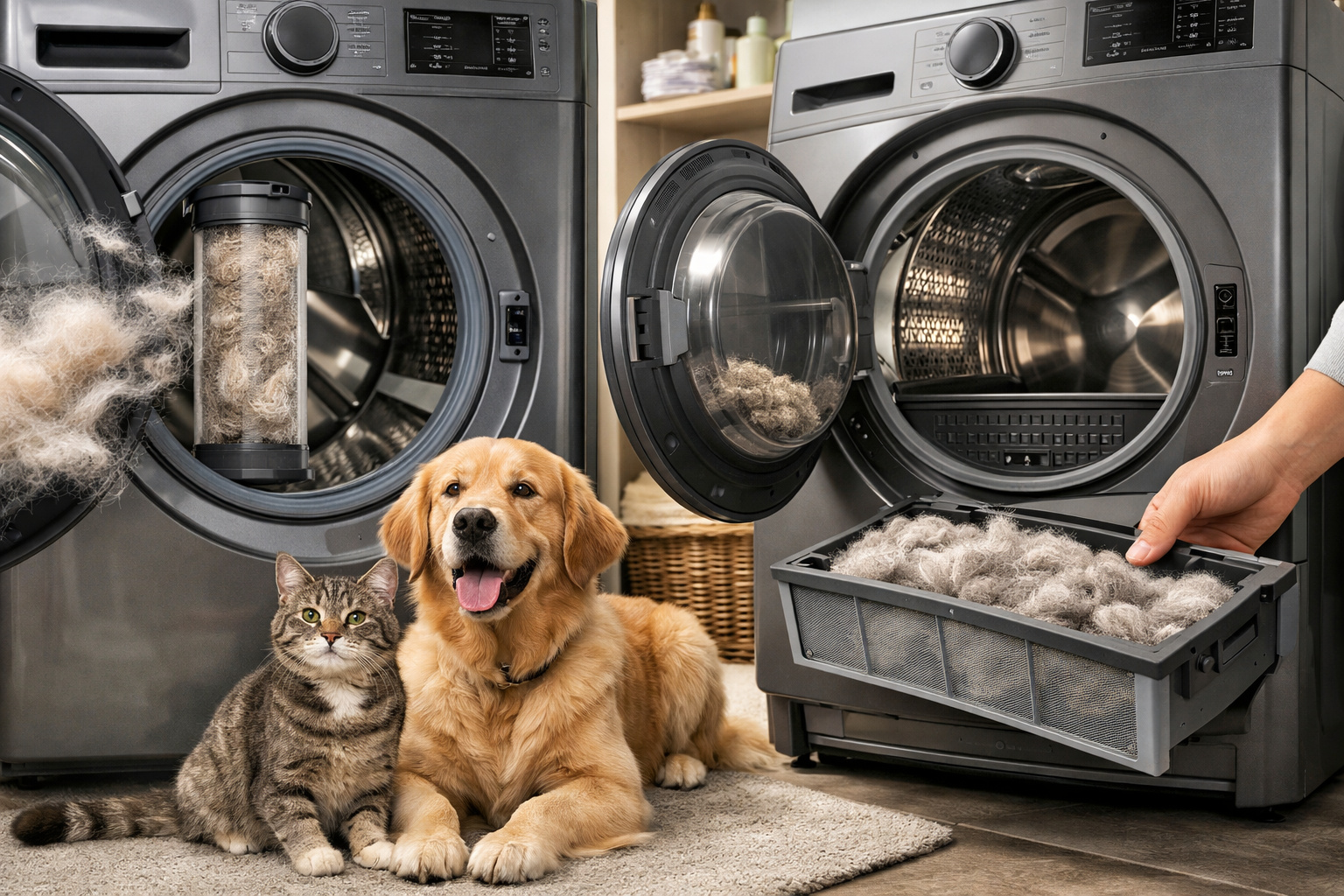
Washer with internal filter for pet hair promises to remove up to 5 times more lint and uses XL lint trap dryer to complete the cleaning.
In 2022, in the United States, the manufacturer Maytag, part of the Whirlpool Corporation group, introduced a line of washers and dryers focusing on a recurring problem in millions of households: the constant presence of pet hair on clothes, blankets, and household fabrics. According to data released by the company itself and analyzed by specialized outlets such as Reviewed and Consumer Reports, the system called Pet Pro System was developed with a specific technical proposal: to remove hair during the washing process and prevent it from returning to the clothes throughout the cycle.
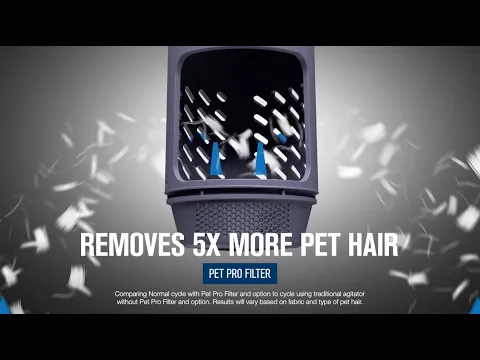
The most relevant data released by the manufacturer indicates that the system can remove up to five times more hair compared to conventional washers, a result obtained in controlled tests that consider fabrics with high lint retention and loads with a significant presence of hair.
Technology uses dedicated internal filter to capture hair during washing
The main technical differentiator of the washer is the presence of an internal filter integrated into the water circulation system, known as the Pet Pro Filter. Unlike traditional machines, which only move the water and fabrics, Maytag’s system was designed to act directly on the physical capture of hair during the cycle.
-
The most overlooked waste in the electricity bill doesn’t come from the refrigerator or the air conditioner; it escapes through almost invisible cracks in doors and windows, operating all day long and can steal up to 20% of the energy used for climate control, while a low-cost seal takes just a few hours to eliminate this loss.

-
German engineers had an idea that no one had tried before: to hide the hydrogen tank inside the tractor’s wheels so that the machine can operate all day in the field without needing diesel.
-
China has created its first space exploration school, an academic structure with 14 areas, 22 new subjects, and a focus on interstellar propulsion to prepare for missions beyond the Moon and Mars.

-
Scientists discover in Fiji that a piece of land surrounded by mangroves is actually a giant mound of shells discarded by ancient inhabitants over 1,200 years ago.



During washing, the agitation of the drum causes hair to detach from the fibers of the fabrics. At the same time, the flow of water is directed in such a way as to carry these residues to the internal filter, where they are retained. This mechanism prevents hair from remaining suspended in the water and redistributing onto the clothes, a common phenomenon in conventional washers.
The presence of this filter significantly alters the dynamics of the process, transforming washing into an active particle removal system, rather than just superficial cleaning.
Specific cycle for clothes with hair alters machine operating parameters
In addition to the filter, the washer incorporates a cycle dedicated to treating fabrics with the presence of pet hair. This cycle modifies fundamental operational variables, such as agitation intensity, washing time, and water circulation pattern.
The logic behind this adjustment is to increase efficiency in releasing hair without damaging the fabrics, especially those with a higher retention capacity, such as cotton and synthetic fabrics. In common washers, these parameters are not optimized for this type of residue, which reduces removal efficiency.

By treating hair as a central element of the process, rather than a secondary one, the system creates more suitable conditions for the separation between fibers and residues.
Dryer with expanded lint trap acts as second stage of the process
Even with removal during washing, some hair remains adhered to the clothes due to static electricity and the structure of the fibers. To address this stage, Maytag developed a complementary dryer equipped with an expanded filtration system.
The equipment has a large-capacity lint trap, known as the XL Lint Trap, which operates during the drying cycle. As hot air circulates through the fabrics, the remaining hair loosens and is directed to this filter.
This second stage is essential to complete the removal process, significantly reducing the amount of hair that remains on clothes after the full cycle. The system works in an integrated manner, with the washer responsible for releasing the hair and the dryer tasked with capturing it definitively.

Structure of textile fibers explains difficulty in removing hair
The adherence of hair to clothes is directly linked to the microscopic structure of the fabrics. Materials such as cotton, polyester, and synthetic blends have irregular surfaces that favor the trapping of particles.
Additionally, the static electricity generated during use and drying further contributes to fixing hair to the fibers. This combination of factors makes complete removal extremely difficult in conventional processes, especially when there is no dedicated system for capturing these residues.
Maytag’s technology acts precisely at this critical point, combining mechanical action, directed water flow, and active filtration.
Tests indicate superior performance, but vary according to use
The claim that the system removes up to five times more hair originates from internal tests conducted by the manufacturer. These tests are carried out under controlled conditions, with specific types of fabric and standardized loads.
In practice, performance can vary according to factors such as type of clothing, amount of hair, frequency of washing, and fabric composition. Nevertheless, independent analyses indicate that there is a real gain in efficiency compared to conventional machines, especially in scenarios with a high presence of hair.
This positions the system as a relevant technical solution, although it does not completely eliminate the problem in all situations.
Growth in the number of pets drives development of specific solutions
The launch of the Pet Pro line occurs in a context of global growth in the number of pets. In various countries, including Brazil and the United States, the presence of pets in households has significantly increased in recent years.

This scenario creates new demands within the household environment, including more frequent cleaning and control of residues such as hair. The home appliance industry has responded to this change with the development of specialized products capable of addressing specific user needs. Lifestyle segmentation is becoming a relevant factor in the design of new appliances.
System does not fully eliminate hair, but significantly reduces the problem
Despite the technical advances, the system does not guarantee total removal of hair in all cases. Efficiency depends on variables such as machine load, type of fabric, and amount of residues present.
The main gain lies in the significant reduction of hair on clothes, especially when compared to traditional washers that do not have dedicated mechanisms. In scenarios with a high concentration of hair, the performance difference tends to be more noticeable. This limitation is common in solutions of this type, which act to reduce the problem, rather than completely eliminate it.
Technology represents a change in the way home appliances are designed
The development of the Pet Pro line indicates an important shift in the home appliance sector. Instead of creating generic products, manufacturers are now developing specific solutions for everyday problems.
The introduction of dedicated filters, specialized cycles, and integration between washing and drying shows an evolution in the level of technical sophistication of these devices. This approach is likely to expand to other areas, with products increasingly tailored to specific usage profiles.

Technical innovation solves real daily problems
The washer with the Pet Pro system represents a direct response to a concrete need within modern households. By combining active filtration, cycle adjustment, and integration with the dryer, the system redefines how pet hair is treated during the washing process.
Even without completely eliminating the problem in all situations, the technology establishes a new standard of efficiency, significantly reducing the presence of hair on clothes and demonstrating how applied engineering can transform common household tasks.
This type of innovation highlights that the future of home appliances is increasingly linked to specialization, with solutions developed to technically and measurably address specific problems.








Seja o primeiro a reagir!