





 Portuguese
  English
  Spanish
  6 min of reading
  0 comments


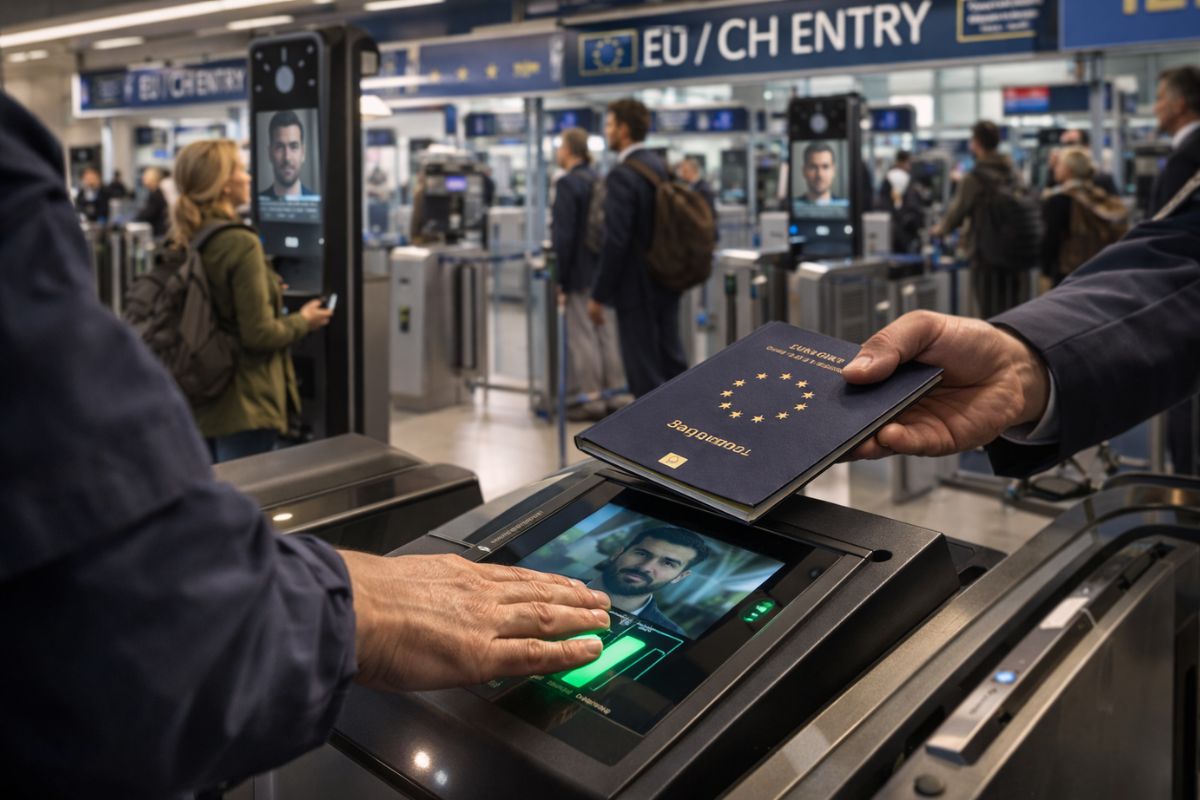
The stamp in the passport has ceased to exist at the borders of the European Union as of this Friday (10). The new digital system requires mandatory biometrics from non-European travelers, including Brazilians, and the Travel to Europe app allows pre-registration to expedite entry.
The passport of those traveling to Europe will never be the same. As of this Friday (April 10), the stamp that marked each entry and exit from the continent will no longer exist. In its place, the European Union has activated the Entry/Exit System (EES), a digital border control system that electronically records the biometric data of all non-European travelers arriving in the Schengen area. In practice, those disembarking in Europe will need to scan their passport at a self-service kiosk, provide fingerprints, and have their face photographed before proceeding to the immigration officer. Brazilians are included.
The system began gradual operation in October 2025 and became fully mandatory in 29 countries this Friday. Ireland and Cyprus are exceptions, as they are not part of the Schengen area. Since the start of the rollout, more than 24,000 people have already been prevented from entering Europe due to expired or fraudulent documents or for not justifying the reason for their trip, according to the European Commission. For frequent travelers, there is a resource that can reduce wait times: the official Travel to Europe app allows users to pre-register biometric data and passport information up to 72 hours before arrival.
How the new system works in practice for those carrying a Brazilian passport
According to the G1 channel, the process is simple, although more time-consuming than the old stamp in the passport. Upon landing at a European airport, the Brazilian traveler heads to a self-service kiosk where they scan their passport. Next, they provide fingerprints and have a photo of their face taken for facial recognition. Only after this biometric step does the passenger proceed to the immigration officer, who may ask additional questions about the reason and duration of the trip.
-
How much does a minimum wage employee really cost in 2026? The amount can reach close to R$ 3,000 and surprises business owners.

-
Man sets fire to giant warehouse of 111 thousand square meters, causing million-dollar losses due to alleged dissatisfaction with payment.

-
Research shows that CLT is the favorite in Brazil, leading among young people and surpassing freelancers and digital platforms, with 95% satisfied in their current jobs and little search for new positions.
-
John Deere will have to pay $99 million after blocking tractor repairs through software in the U.S.; the agreement allows diagnostic tools and reprogramming until the end of 2026 and reopens the fight for the right to repair.

On the first visit, the process tends to be longer because all data needs to be registered from scratch. On subsequent trips, the system will already recognize the traveler, as the information is stored for three years, which should significantly speed up future border crossings. Children under 12 years old do not need to provide fingerprints but will have their faces photographed. Those with biometric passports can use the self-service kiosks for a faster process, while holders of conventional passports need to go through counters with attendants.
Why the European Union decided to abolish the stamp in the passport
The manual stamp in the passport was a 20th-century system that Europe maintained for convenience until it could no longer. The central problem was the inability to accurately control how long each traveler stayed in the Schengen area, as the 90-day rule within a 180-day period was monitored manually. With the stamp, document fraud went unnoticed, overstayers were not systematically identified, and control depended on the individual attention of each border agent.
The EES addresses this by automating tracking. The system automatically calculates how many days the traveler can still stay in Europe within the 90/180-day rule, eliminating human error. In addition to migration control, the new system serves as a security tool: biometrics allow for the identification of fraudulent passports, detection of unauthorized entries, and cross-referencing data with security information databases. The World Tourism Organization has recognized that the additional time spent now should bring benefits in the future as the system consolidates.
The Travel to Europe app and how it can expedite your passage with your passport
For those who want to avoid long lines upon arrival, the European Union has developed the official Travel to Europe app, available for download in the Apple and Google stores. The app allows travelers to pre-register their face photo, passport data, and fill out an entry questionnaire up to 72 hours before arriving in Europe. This pre-registration does not eliminate the need to go through border control, but it reduces the time spent at the biometric kiosk.
Currently, the app is available in some countries like Portugal and Sweden, with plans for expansion throughout the Schengen area. It is important to note that Travel to Europe does not replace in-person control nor does it exempt the presentation of the passport to the immigration officer, but it serves as an early step that speeds up processing. For Brazilians who frequently travel to Europe, the app can become an essential tool, especially during peak season when airport lines tend to be longer.
What happened during the tests and why lines may increase initially
The rollout of the EES has not been without issues. During the testing phase in 2025, airports like Lisbon faced huge lines that generated widespread complaints from passengers and airlines.
The International Airports Council (ACI) reported that processing times increased by up to 70% in some locations due to the additional steps of biometric collection. The experience varied greatly from country to country, with some airports operating smoothly while others faced system failures and inconsistent procedures.
The European Commission acknowledged these challenges and included a safety valve in the legislation: Schengen countries can partially suspend EES checks for up to 90 days after full activation, with the possibility of extending for another 60 days.
This flexibility aims to prevent lines from becoming unmanageable during the European summer when tourist flow peaks. In France, for example, some border points were still not operating with full biometrics until last week. The recommendation for travelers now is to arrive at the airport at least an hour and a half to two hours earlier than usual.
This system is not the ETIAS and the difference matters for those with a Brazilian passport
A frequent point of confusion is the difference between the EES and the ETIAS, two systems that the European Union is implementing in parallel.
The EES, which has now come into effect, replaces the stamp in the passport with digital and biometric records upon arrival at the border. The ETIAS, on the other hand, will be a prior travel authorization, similar to the American ESTA, which will require online pre-registration and a fee of 20 euros before boarding.
The ETIAS is not yet in effect and is expected to launch in the second half of 2026. When it becomes operational, Brazilians and other travelers from visa-exempt countries will need to obtain this authorization before traveling, in addition to going through the biometric control of the EES upon arrival.
Websites currently selling ETIAS are operating fraudulently, as the official system does not yet exist. For now, what changes for those with a Brazilian passport is only the EES: mandatory biometrics, the end of the stamp, and data stored digitally for three years.
What really changes for those who keep the passport as a travel souvenir


Beyond technology and security, the end of the stamp in the passport carries an emotional significance that many travelers feel firsthand.
The stamp was almost a souvenir, a tangible mark of each country visited that turned the passport into a travel diary. With the digital system, this tradition disappears. The document will still be necessary for travel, but its pages will remain blank.
The change has an undeniable practical side. Passports that previously needed to be renewed due to lack of blank pages will now last longer, and the stay control will be more transparent for the traveler, who will be able to check their data in the system.
The nostalgia for the stamp will be replaced by the convenience of faster borders, at least when the system is fully operational. As a Brazilian correspondent in Europe summarized: the memory of the trip stays forever in the mind, even if the passport no longer carries any marks.
The stamp in the passport has become history in Europe. Do you think digital biometrics is a necessary advancement or a loss of charm in travel? Have you used the Travel to Europe app? Share in the comments how your experience with the new system was.










Seja o primeiro a reagir!