





 Portuguese
  English
  Spanish
 3 min of reading



On Tuesday (7), the Governor of the State of Rio de Janeiro, Claudio Castro, met with the Minister of Finance, Fernando Haddad, in Brasília to discuss the fiscal recovery of Rio.
The meeting aimed to review the Fiscal Recovery Regime of Rio and the State Debt, except to provide the Governor’s Permit. The document was finalized last Saturday at the conclusion of the meeting of the Coalition for Southern and Southeastern Integration (Cosud) held in the state capital.
“We met with Minister Fernando Haddad to take an important step to ensure the fiscal health of Rio de Janeiro. We delivered a letter from Cosud to the Minister emphasizing the urgent need to compensate for ICMS losses. I reiterated our strong support for tax reform and discussed the main point of Cosud, which is the debt of states with the Commonwealth. The Southern and Southeastern regions account for 70% of the GDP and 93% of the public debt. This needs to be discussed,” announced the Governor of Rio de Janeiro.
RRF Aims to Help the Taxpayer
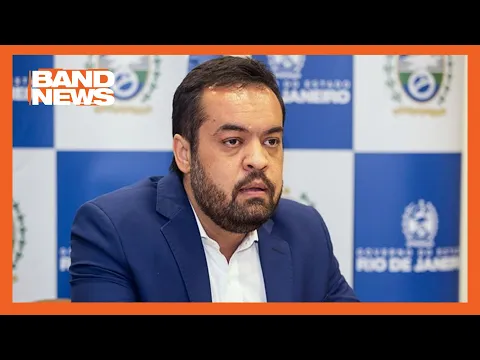

The Governor of Rio de Janeiro detailed that he later discussed the issue of the RRF with the Minister, and signed the tax recovery plan a week before the promulgation of the federal law that restricts ICMS on fuels, energy, and telecommunications.
-
Buying a car may suspend Bolsa Família in 2026 and trigger automatic government oversight.

-
Contactless payments in 2026 soar in Brazil, exposing new invisible fraud gaps and forcing users to double their security precautions with contactless cards.

-
Everyone has started talking about the end of the minimum retirement age in Brazil — but has this “silent change” really happened or are we facing one of the biggest recent rumors about the INSS?
-
The true reason behind the Mercosur and European Union agreement is not in supermarkets or factories but rather buried in Brazilian soil in the form of rare earths and strategic minerals that the entire world desperately needs for the future.

The forecast is that, within 10 days, the ministry and the states will reach a solution regarding the incidence of ICMS on electricity (TUST and TUSD) and fuel, in addition to compensating for the revenue loss of the entity through fiscal cuts in 2022. If there is consensus, the idea is to advance the regime revisions.
Present were Leonardo Lobo, Secretary of Finance of RJ; Nicola Miccione, from the Civil House; Rodrigo Abel, Chief of Staff of the Governor, and Castro, explaining the impact of the reduction of ICMS on the RRF. He emphasized the importance of reformulating the system, considering that the fiscal recovery plan of Rio, approved in June 2022, was designed for a different situation.
State of RJ Has Been Experiencing Contribution Losses
The Fiscal Recovery Plan was developed based on revenue estimates frustrated by the changes in ICMS brought by Federal Complementary Laws 192 and 194. Just last year, Rio lost around R$ 5 billion in fuel, electricity, and telecommunications revenues. However, a survey conducted under the standard of Law 194 showed that the amount of R$ 3.6 billion was reduced due to the ICMS action in other sectors.
In light of this scenario, the states in the Southern and Southeastern regions account for 93% of the federal public debt, around R$ 630 billion. In the letter, the governors of the states of Rio de Janeiro, São Paulo, Espírito Santo, Minas Gerais, Paraná, Rio Grande do Sul, and Santa Catarina reinforced the need for a broader tax reform aimed at improving economic efficiency by simplifying government obligations based on the principle of destination.








Seja o primeiro a reagir!