





 Portuguese
  English
  Spanish
  4 min of reading
  0 comments


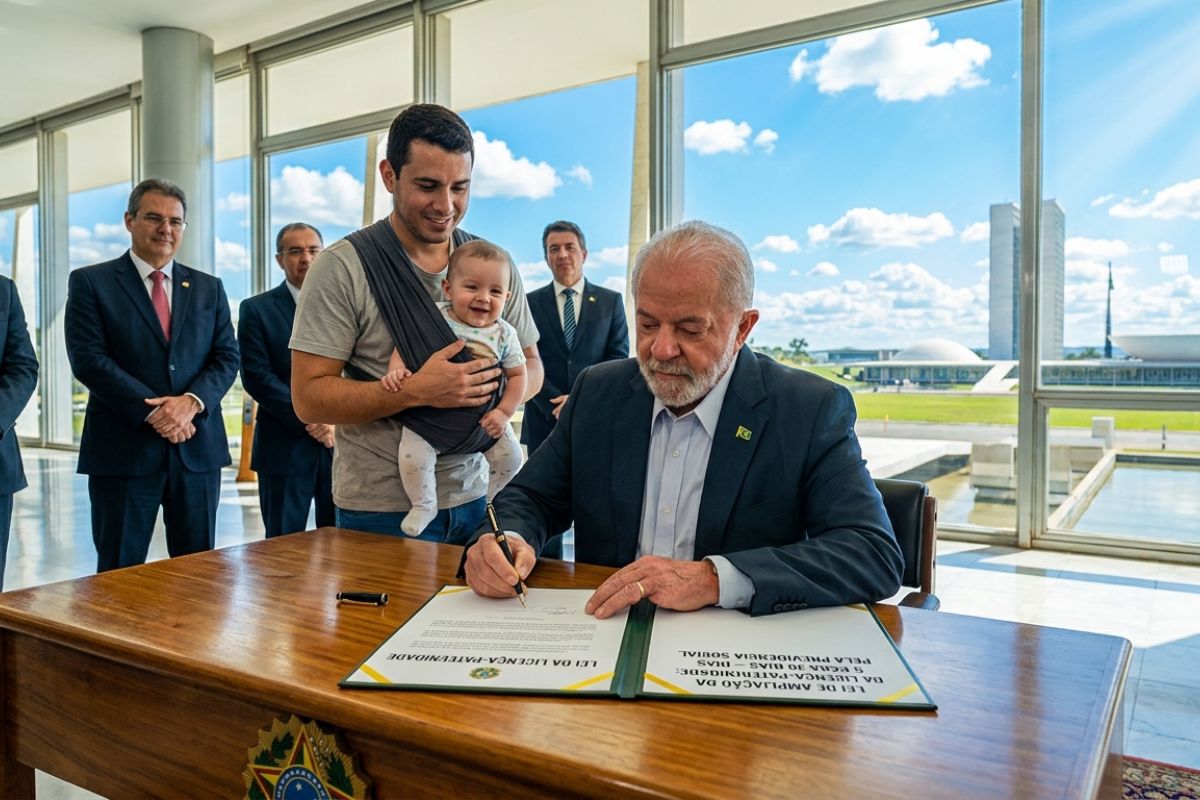
New paternity leave starts with 10 days in 2026 and 2027, increases to 15 in 2028 and reaches 20 in 2029; estimated cost is R$ 5.4 billion by 2030
Paternity leave changed significantly this Tuesday (31/03) in Brazil after the presidential sanction of a new law that expands the leave from 5 to 20 days. The rule does not take effect immediately at the maximum limit, as the increase will be applied gradually over the next few years.
In addition to the new timeframe, the paternity leave will have a different funding model: Social Security will take over the payment of paternity salary, and companies will no longer bear the cost of the father’s absence during the leave period.
What changes in paternity leave with the new law
The main change is the extension of the leave time, with a planned transition. The goal is to move from the 5-day model to 20 days, but with intermediate steps for adaptation.
-
End of the 1-hour lunch break in the CLT? Current labor law maintains the break, allows for negotiated reductions, and defines rules for working hours and home office in Brazil.

-
Employee Fired After Accumulating 114 Days of Medical Leave in One Year, Labor Court Upholds Company’s Decision

-
Employee Fired While Treating Depression Wins in Court and Vale Is Required to Rehire Him Following Decision Based on the CLT and INSS Benefits

-
Workers Should Be Aware! March 6 Will Be The Fifth Business Day Of March And The Final Deadline For Companies To Pay Salaries According To The CLT


Another central point is the creation of the paternity salary, paid by Social Security. With this, the cost of the leave will no longer fall on the hiring company and will shift to the social security system, in a format similar to what already occurs with maternity leave.
How the gradual increase will occur until 2029
The new rule establishes a clear implementation schedule for paternity leave:
- 10 days in the first two years of the law, in 2026 and 2027
- 15 days in the third year, in 2028
- 20 days starting from the fourth year, in 2029
This gradual model was designed to make the change predictable and staged, avoiding an abrupt transition in the labor market.
Who will be entitled to the new paternity leave
The law expands the scope of the benefit. The paternity leave also applies to adoptive parents of children or adolescents, following the rules set out in the approved text.
Additionally, the legislation creates a possibility for organizing the leave: the father can split the period, taking half of the days right after the birth or adoption and using the remainder within a period of 180 days.
What happens if the mother dies
The new norm provides a specific rule for situations of the mother’s death. In these cases, the father will be entitled to a period equivalent to maternity leave, of 120 days.
The law also establishes that the remuneration must be full during the leave, reinforcing that it is not a partial or symbolic benefit, but an effective period of protection and support for the family.
Why Social Security will pay the benefit
The transfer of the cost to Social Security was described as a way to reduce friction with the private sector, as the payment will no longer be the direct responsibility of the company.
In practice, the change seeks to equalize the conditions of paternity leave in relation to the funding model of maternity leave, which is already paid by the federal government. The estimated impact of the extension of the leave is around R$ 5.4 billion by 2030.
The path in Congress and the pressure from the STF
The proposal was approved by the Senate in early March, after having already passed through the Chamber. According to the base text, there was no major resistance from the congressmen.
The movement also responds to a determination from the STF. In 2023, the Supreme Court recognized the omission of Congress and set a deadline for the Legislative to advance on the issue, considering that 5 days were insufficient.
The Court pointed out that, without regulation, paternity leave could start to follow the rules of maternity leave, of 120 days.
What this change can represent in practice
The expansion of paternity leave is likely to directly impact the routine of families during the most delicate period of postpartum or adoption.
More days of the father’s presence can mean more support for the mother, more bonding with the baby, and better organization of care at home, especially in the first weeks.
At the same time, the new funding model seeks to reduce the burden on the employer, shifting the discussion to the social security budget and the design of the public benefit.
Do you think that the 20-day paternity leave, with gradual increase, is sufficient or should Brazil go beyond this period?









Seja o primeiro a reagir!