





 Portuguese
  English
  Spanish
 4 min of reading
  0 comments


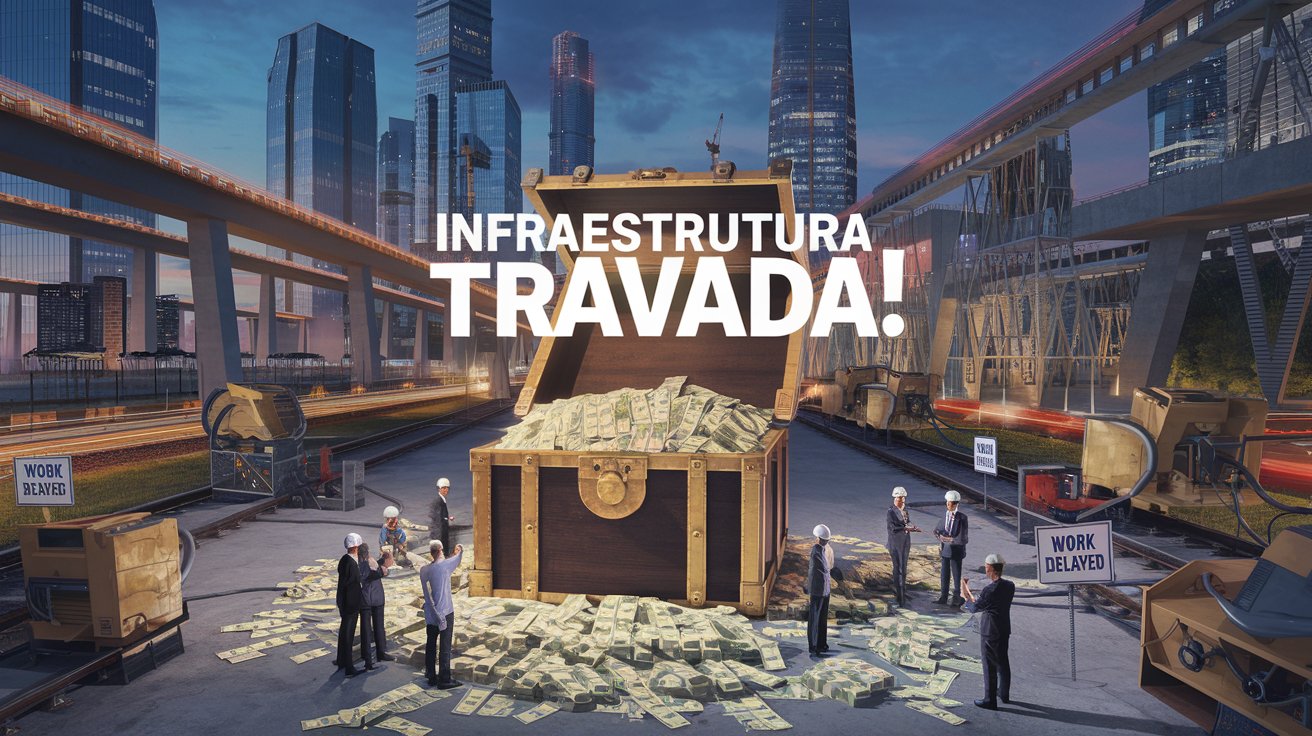
Country Is Feeling The Weight Of Large Infrastructure Projects That Seem To Not Get Off The Ground.
In recent years, there is a country that has been dealing with a series of obstacles in its large infrastructure works, and the outlook is not optimistic. We are talking about Germany.
Despite having a billion-euro financial package approved by the Bundestag (lower house of parliament) and the Bundesrat (upper house), the truth is that the difficulties go beyond the simple lack of resources.
The package includes 500 billion euros, about R$ 3 trillion, to be invested in infrastructure until 2036, but, according to experts, this does not solve the problem.
-
Petrobras sends a message to Brazilian truck drivers after fuel collapse and reveals plan to have 100% domestic diesel.

-
Brazilian city neighboring Paraguay becomes a ‘magnet’ for people seeking quality of life and high standards with exceptional growth and commutes of up to 15 minutes.

-
A rare storm transformed part of the Gulf into an unlikely scene of hail, extreme rain, and tornado risk in the middle of the desert, with volumes that exceeded the annual average in a single day.

-
Brazil catches the world’s attention with ships powered by ethanol and biodiesel that have lower emissions, an unprecedented certification with advantages in chartering, and a revolution in cabotage.
The central issue is the efficiency of processes and the government’s capacity to manage and apply these funds.
In an interview with the Budget Committee of the Bundestag, economist and professor at the Technical University of Nuremberg, Veronika Grimm, stated that the biggest obstacle to using this fund is the lengthy planning process and bureaucratic authorizations.
“Germany is choked by bureaucracy and inefficient structures. There’s no use having money if we cannot use it quickly”, declared Grimm.
The lack of speed in spending these funds has been a constant worry, with estimates suggesting that, despite the abundance of resources, the economy will not see significant immediate results.
The forecast is that the positive impact on finances will only be moderately felt in 2026, depending on how these funds are applied.
Construction Sector Under Pressure: What Is Needed To Resolve The Gaps?
A sector that could be key to revitalizing German infrastructure is construction. However, the scenario is worrying.
40% of companies in the sector report a scarcity of orders, with some projects being suspended due to the economic crisis and rising prices driven by global inflation and the war in Ukraine.
This scarcity of projects has created a mismatch between production capacity and the urgent need for reforms, especially in transportation and defense areas.
Felix Pakleppa, executive director of the German Construction Industry Association, states that the sector is underutilized and that, even with the financial package underway, there is not enough work to absorb these resources.
“Construction can start immediately since there is expertise and technical capacity to carry out these projects. What is lacking are the orders”, emphasized Pakleppa.
The fact that 85% of the time spent on highway construction is only dedicated to planning shows that bureaucracy is one of the biggest obstacles to the advancement of these projects.
Bureaucracy: The Biggest Obstacle To Development
It’s no secret that the project approval process in Germany is extremely slow.
Studies indicate that bureaucracy is costing the German economy up to 146 billion euros per year, an amount that could be invested in tangible improvements if the authorization processes were faster and more efficient.
Construction companies, for example, have to deal with a tangle of legal requirements, such as documentation verifications and checks, data protection requirements, and other factors that delay projects.
Reducing this time and simplifying bureaucracy would be an essential step to freeing up the necessary resources for these infrastructure projects.
The Scarcity Of Qualified Labor May Worsen The Situation
Another growing challenge for Germany is the lack of qualified labor.
The German society is aging, and as the demand for new workers grows, many experienced workers are retiring.
The shortage of qualified professionals has been observed for years, but the pressure has intensified with the economic recession and the increase in temporary vacancies.
It is estimated that by 2040 Germany will need to import about 288,000 foreign workers annually to meet this gap, not counting the demand generated by the expansion of infrastructure and defense projects.
According to Veronika Grimm, the lack of qualified labor could lead to inflation in prices, as companies may increase their service costs due to the shortage of personnel.
If the German government does not find effective ways to attract more qualified workers or improve internal production capacity, prices may rise even further, making it more difficult to execute infrastructure works.
What Is Needed For Germany To Take Advantage Of Its Financial Potential?
The infrastructure of Germany, once considered one of the most advanced in the world, is now in a critical state.
About 5,000 bridges are in poor condition and need urgent repairs, while Deutsche Bahn, the national railway company, is planning the largest renovation project in its history, with the renovation of 4,000 kilometers of tracks in several phases.
However, projections indicate that, even with the available 500 billion euros, this amount may be insufficient to cover the total infrastructure needs of the country, which are estimated to exceed 900 billion euros by 2035.
The great challenge now is finding a way to efficiently apply these funds, considering the limitations of bureaucracy, the scarcity of qualified workers, and the high costs driven by the global crisis.
The question remains: do you think Germany will be able to overcome these obstacles and make its billions of euros truly worthwhile?







Seja o primeiro a reagir!