





 Portuguese
  English
  Spanish
 4 min of reading
  51 comments


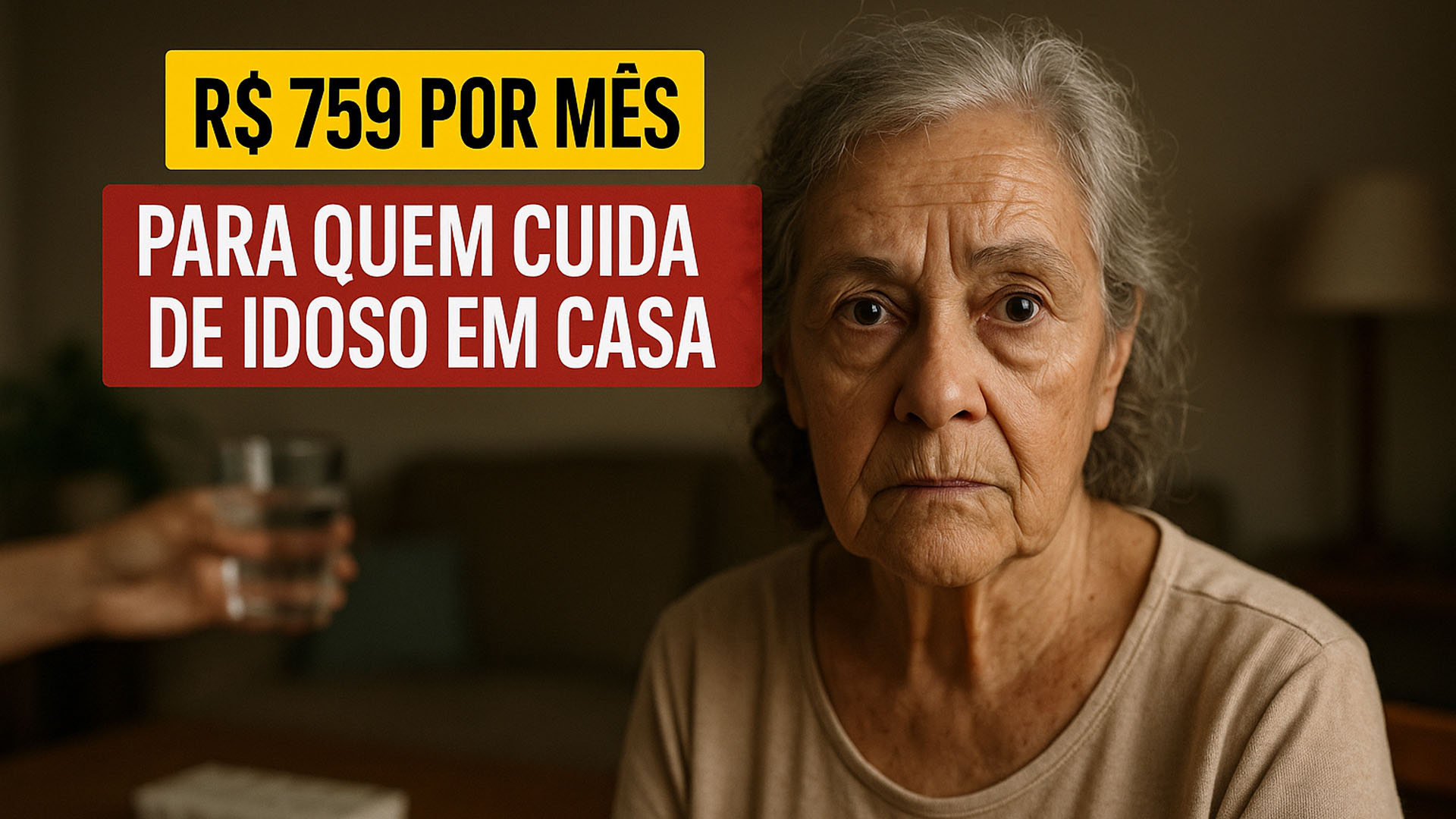


State Program Provides Half a Minimum Wage Monthly for Those Who Care for the Elderly at Home. Decree Was Signed on October 22, 2025, and Launch Is Scheduled for November 24 at Cuida+ Paraná in Curitiba.
The Government of Paraná has regulated the Family Caregiver Grant, a monthly aid of R$ 759 for family members who care for elderly individuals at home. The measure derives from the Law 22,189/2024 (Paraná Friend of the Elderly Program) and was detailed in a state decree of October 22, 2025.
According to the government, the payment lasts up to 24 months per beneficiary.
The official launch is scheduled for November 24 and 25, 2025, during the Cuida+ Paraná event in Curitiba, which brings together managers and technicians in the care sector. The meeting schedule was published on the official page of the School of Management of Paraná.
-
The Senate approves a bill that criminalizes misogyny, hatred, or aversion towards women, and includes the crime in the Racism Law with a penalty of up to 5 years.

-
Chamber Approves Bill That Allows Pepper Spray for Women Over 16 and Imposes Strict Rules for Purchase, Possession, and Use as Self-Defense

-
Chamber Approves Law to Combat Leucaena, Fast-Growing Plant That Dominates Land and Threatens Native Species in Various Regions of the Country

-
Asset Division: Know What Cannot Be Divided in Case of Divorce


According to the government and the Public Ministry of Paraná, the grant is equivalent to half a minimum wage and does not exclude other social benefits. The transfer is directly to the account and can be interrupted in case of the elderly person’s death, withdrawal, or proven negligence.
The first phase will be a pilot in six municipalities. Local and regional channels, based on the Women’s, Racial Equality and Elderly Persons Secretary (Semipi), list Toledo, Cianorte, Guarapuava, Irati, Palmeira, and Ponta Grossa. Expansion to more cities is considered after evaluating the results.
Who Can Receive It and What Are the Requirements
The benefit is intended for the primary family caregiver who lives with the elderly person, is 18 years or older, is registered and has a valid registration in CadÚnico, and is part of a family with per capita income of up to 1 minimum wage.
The elderly person must present clinico-functional fragility registered and not be institutionalized. Residing in the same household as the elderly person is an express requirement.
The State News Agency details that the granting is monthly and successive, with the first payment within 10 business days after the grant, and that the maximum duration is 24 months. The official text also provides for criteria for suspension of the aid.
The Law 22,189/2024 created the Paraná Friend of the Elderly, legal basis for the caregiver grant and other active aging actions. The law was sanctioned on November 13, 2024 and announces two grants: one for vulnerable elderly individuals and another for caregivers.
Where the Pilot Begins and When the Money Will Be Available
The pilot project is expected to start in the municipalities of Toledo, Cianorte, Guarapuava, Irati, Palmeira, and Ponta Grossa, according to local media citing the Semipi. The idea is to test registration, monitoring, and transfer processes before expansion.
Some regional press reports that the payments depend on the launch of an online platform for managing registrations, expected for 2026.
The regulatory decree published on 10/22/2025 confirms rules and operationalization and links the policy to the state program for elderly care. City halls have already begun creating municipal care centers to implement the grant.
The public announcement of the grant has been associated with the Cuida+ Paraná event on November 24 and 25, according to the official event calendar and recent journalistic publications. The state government maintains the agenda and general requirements on its channels.
How to Register and How Monitoring Will Be Done
For the registration, the caregiver must be listed in the State Caregiver Registration, keep the CadÚnico updated, and prove cohabitation with the elderly person.
The elderly person needs to be registered in the Elderly Person Information System of Paraná (SIPI-PR), a platform of the Health Secretary active since December 2023.
The Semipi and the municipalities will form reference centers to identify cases, validate registrations, and monitor families, integrating social assistance and health. This local governance appears in recent official acts and government communications.
The government indicates that the digital platform will unify registration, monitoring, and payments. Part of the press points to a launch at the end of 2025 and improvements in 2026; as a precaution, it is recommended to follow official channels before personal deadlines.
Context and Expected Impact
Paraná has been expanding longevity policies and was recognized in 2025 as a Friend of the Elderly State in actions coordinated by the Semipi. The secretary itself estimates, in notes from 2025, annual investment in the grant and emphasizes the goal of avoiding institutionalization and valuing care.
The law that underpins the program was highlighted by the government when sanctioning the Paraná Friend of the Elderly, with plans for financial grants for elderly individuals and family caregivers. The regulation of 2025 made the Family Caregiver Grant operational.
To prove fragility and guide decisions, the state uses the SIPI-PR, an official tool to monitor the health of the elderly population and support public policies. The system was announced by the government Communication on August 13, 2025.
Do you think the Family Caregiver Grant values invisible work or creates dependency on the state without solving the lack of formal care services? Comment whether the priority should be paying the family caregiver or expanding public spaces for professional caregivers in municipalities.










Eu cuido da minha sogra
Gostaria saber se tenho direito ja q não posso trabalha pra ajuda ela com 86 anos
Quais são os critérios?
Moro em Curitiba. Sou aposentada com 1 salário mínimo. Deixei de trabalhar para cuidar da minha mãe a 5 anos. Faz falta sim. Já que os gastos aumentaram muito. Medicamentos, táxi para exames, consultas etc.
Só quem vive essa situação sabe onde a corda aberta.