





 Portuguese
  English
  Spanish
  5 min of reading
  2 comments


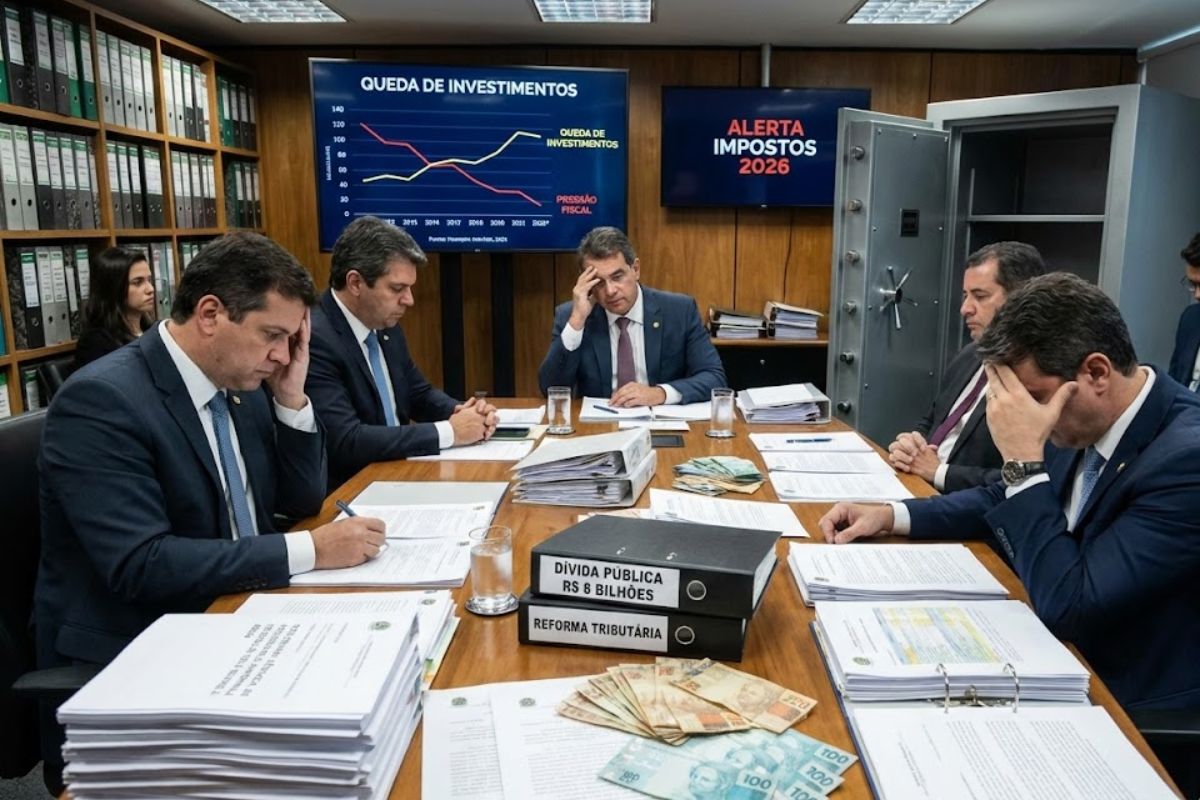


Without Reserving The 8 Billion Promised To The Tax Reform Compensation Fund In 2025, President Lula Weakens The Transition, Increases Fiscal Pressure, Drives Future Tax Burden Up And Raises The Risk Of Investment Flight And Uncertainty For States, Municipalities And Businesses Across The Territory.
The transition of the tax reform already begins under tension. In November 2025, Gazeta do Povo reported that the federal government did not foresee in the 2025 LDO the allocation of 8 billion reais to the Fiscal Benefits Compensation Fund, a mechanism created precisely to soften the end of ICMS incentives to states and municipalities.
In practice, the tax reform is born with a mismatch between the approved text and budget execution. The fund that should guarantee predictability and cushion revenue losses has been supplied with only 80.87 million reais in the 2025 Budget, an amount that still depends on supplementary credit in Congress, which raises the perception of risk among local governments and businesses.
Compensation Fund Empty At The Start
The Fiscal Benefits Compensation Fund is central to the tax reform.
-
Oil surged to $115 a barrel due to the war in the Middle East, and diesel in Brazil has already risen to R$ 7.45 per liter, while the United States…

-
Brazilian city bets on the business environment to generate jobs and attract investments in the energy sector — secretary reveals strategy at Macaé Energy 2026.

-
50 viaducts, 4 tunnels, 28 bridges, and 40 kilometers of bike paths: BR-262 in Espírito Santo will receive 8.6 billion reais for the largest engineering project in the state’s history, inspired by the Immigrant Highway in São Paulo.

-
Brazil produces too much clean energy and doesn’t know what to do with it: over 20% of solar and wind capacity was wasted in 2025 while investors flee and 509 renewable generation projects were abandoned in the last year.


It was designed to make up for part of the revenue lost by states and municipalities with the gradual reduction of ICMS incentives granted to companies over decades.
The plan anticipated that the FCBF would receive 160 billion reais by 2032, distributed throughout the transition.
For 2025, the share of 8 billion would be the first concrete step of this commitment.
Instead, the budget reserves just over 80 million reais, an amount that does not approach the originally announced figure and still depends on political approval.
As a result, the financial mechanism of the tax reform begins without the necessary volume of resources to shield states and municipalities from the loss of fiscal benefits.
The gap between what was expected and what is actually reserved fuels doubt about the federal government’s ability to sustain the agreed framework until the end of the transition.
Bill Pushed To The Next Government
The non-payment of the 8 billion in 2025 pushes the obligation to future governments, which will have to decide whether to restore the fund’s flow, renegotiate the schedule, or absorb the fallout from an incomplete compensation.
According to the very logic of the tax reform, the lack of contributions in one year tends to accumulate in the following ones, creating a snowball effect.
If delays are repeated, starting in 2027 this liability may become significant, compressing the fiscal margin of subsequent administrations and forcing tough choices between higher taxes, spending cuts, or revising promises made to states and municipalities.
Instead of reducing federative conflicts, the underfunding of the fund opens space for disputes among the Union, governors, and mayors, who rely on compensation to absorb the end of tax waivers used for years as a tool to attract companies.
Risk Of Tax Increases And Fiscal Pressure
From the perspective of public accounts, the absence of full funding in the tax reform creates upward pressure on future tax burdens.
In order to honor the commitment of 160 billion by 2032 without cutting other expenses, subsequent governments may be prompted to raise rates, review remaining benefits, or seek new bases for incidence.
This scenario feeds the perception of growing fiscal pressure, exactly at the moment when the tax reform was marketed as an instrument for simplifying and rationalizing the system.
The poorly funded transition reverses the message, reinforcing the fear that the restructuring of the model will be accompanied by additional tightening on businesses and taxpayers.
At the same time, the uncertainty surrounding the real flow of resources to the compensation fund undermines the planning of states and municipalities, which may react by demanding more autonomy to adjust local taxes, reproducing distortions that the reform aimed to reduce.
Uncertainty For Businesses And Risk Of Investment Flight
In the private sector, the reaction is one of caution.
The tax reform promised predictability for investment decisions, with clear transitional rules and funds designed to cushion regional shocks.
When the first significant share of the FCBF does not appear fully in the budget, the credibility of this promise is called into question.
Companies that currently benefit from ICMS incentives or plan new production units in states dependent on these benefits begin to question how and when they will be compensated for losses, or whether they will have to absorb the impact on their own.
This directly affects expansion plans, job creation, and long-term capital allocation.
The combination of tax reform with incomplete fiscal execution and the prospect of increased future tax burdens creates an environment prone to reevaluating investments in Brazil, including the possibility of shifting projects to other countries that offer more stable and predictable tax transitions.
Tax Reform Under Credibility Test
The episode of the FCBF presents the tax reform with its first major credibility test. On paper, there is a commitment of 160 billion reais by 2032.
In the 2025 Budget, there is only a minimal fraction of this amount, subject to later approval by Congress.
This gap between the legal design and budgetary practice fuels the perception that the transition may not be financed as promised, reopening the door to litigation, political disputes, and renegotiations that undermine the goal of providing stability to the rules of the game.
The central question becomes whether the Union will be able to financially sustain the tax reform it approved, without resorting to additional tax increases or abrupt cuts in other sensitive areas of the budget, while trying to preserve the confidence of states, municipalities, and investors.
Given the lack of the 8 billion for the fund in 2025, do you believe that the tax reform will still be able to reduce uncertainty for businesses and states, or has the fiscal risk already compromised confidence in the process?










Sinceramente 8 bilhões significa alguma coisa de dívida para o Brasil? Você tá de brincadeira. Qual a arrecadação de impostos do Brasil em um ano?
Só tenho uma coisa pra falar, se o nine ficar tomofudido, se o nine sair, vai ser igual com o Bolsonaro, vai colocar o país nos trilheiros e a extrema esquerda podre vai perseguir e fazer as fake e narrativas q fizeram e tudo se repete, enquanto isso, nós o povo quesefoda!!!