





 Portuguese
  English
  Spanish
  5 min of reading
  0 comments


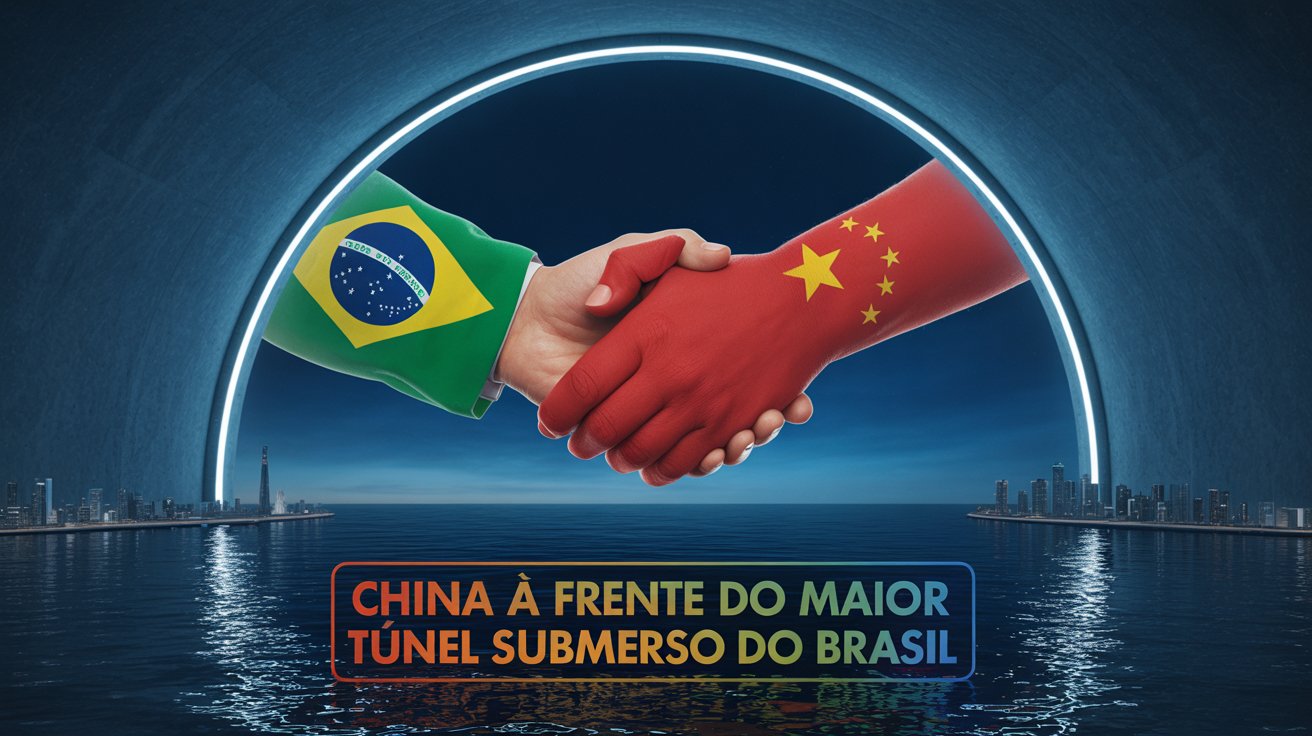
On a Strategic Mission in Asia, São Paulo Presents Mega Projects and Billion-Dollar Opportunities for Investors, Focusing on Modernizing Urban Mobility and Consolidating Unprecedented International Infrastructure Partnerships, Sparking Global Interest in Innovative and Long-Term Projects.
This Monday (16), the government of São Paulo began a strategic mission in Asia, expected to last two weeks.
The itinerary includes visits to China, South Korea, and Japan, countries recognized for their expertise in infrastructure and urban mobility investments.
According to the newspaper Valor Econômico, the main focus is on the Santos-Guarujá Underwater Tunnel project, a pioneering engineering work in Latin America, estimated at R$ 6.8 billion, which may involve large Chinese groups.
-
From ruin to digital culture center, the 1920 mansion on Riachuelo Street is now open and has become a showcase of the revitalization of downtown Curitiba, attracting commerce, tourists, and projects.
-
The valley that looks like another planet: fairy chimneys, churches carved into the rock, and underground cities form the labyrinth of Cappadocia in Göreme, where erosion has created a unique landscape since the 4th century AD.

-
Two years after the floods, Rio Grande do Sul still has ghost villages, uprooted houses, and families in containers with sewage; unfulfilled promises without official response and donations become the last chance to start over.
-
With around 6,000 residents on a single 9 km street, a village in Poland maintains a strong sense of community, cultivates strawberries and potatoes, and becomes the target of a false image created by artificial intelligence.

Additionally, the agenda includes other important concessions for the State, which seek private capital and technological innovation.
Santos-Guarujá Underwater Tunnel
As published by CPG, the bidding notice for the Santos-Guarujá Underwater Tunnel was republished on June 9, 2025, with adjustments that incorporate advancements in geotechnical studies and suggestions made by investors.
The total amount expected for the investment has been adjusted to R$ 6.8 billion, an increase of R$ 840 million compared to the previous proposal, reflecting the project’s technical complexity.
The concession will last for 30 years and will be conducted via a Public-Private Partnership (PPP), a model that combines public and private resources to enable large projects.
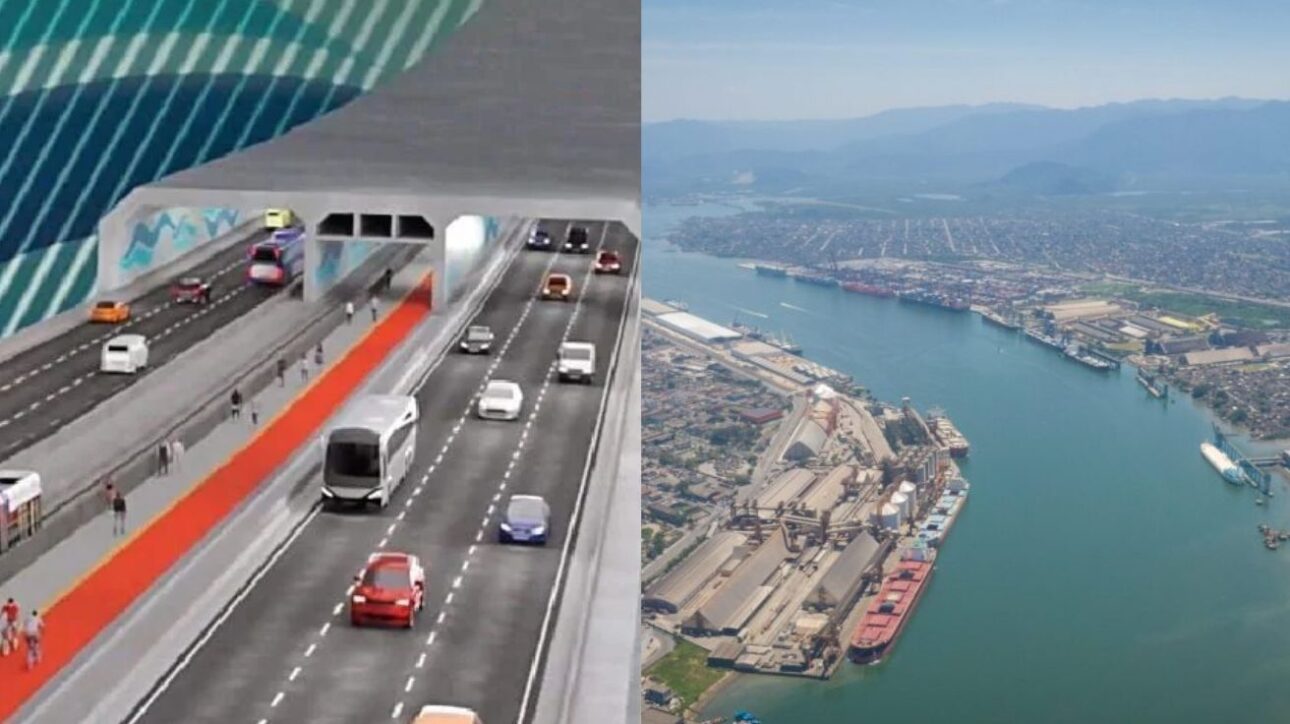
It is anticipated to construct three lanes for vehicles, one exclusive lane for Light Rail Vehicles (VLT), and also a gallery for cyclists and pedestrians, enhancing sustainable mobility in the region.
The update of the base date for cost calculation occurred in January 2025, aligning the values with current prices of inputs such as concrete, dredging, and diaphragm walls.
Specific provisions for expropriations were also defined, a delicate step that may influence deadlines and costs of the project.
The auction is scheduled for September 5, 2025, with the opening of envelopes expected on September 1, at the B3 auction in São Paulo.
Roadshow in Asia
The first round of negotiations took place in Beijing, where representatives of the São Paulo government met with industry giants such as China Communications Construction Company (CCCC), China Railway Signal & Communication (CRSC), China Railway Rolling Stock Corporation (CRRC), and the Bank of China.
Subsequently, the agenda includes meetings in Seoul, South Korea, and Tokyo, Japan, with development banks and international funds focused on infrastructure and transportation.
The package presented includes, in addition to the Santos-Guarujá Underwater Tunnel, the Public-Private Partnership for Lot ABC-Guarulhos and the Sorocaba Intercity Train project, expanding opportunities for interested investors.
PPP Lot ABC-Guarulhos
The Lot ABC-Guarulhos encompasses Lines 10 and 14 of the São Paulo Metropolitan Train Company (CPTM), with expected investments around R$ 19 billion.
Close sources indicate that the CRRC maintains strategic interest in this project, especially in consortium with Comporte, a company from the Constantino group.
The auction for the lot is also expected to occur by the end of 2025, depending on the response from national and international markets.
Sorocaba Intercity Train
The Sorocaba Intercity Train envisions a high-capacity line to connect São Paulo and Sorocaba in about 50 minutes, with investments estimated at R$ 11.9 billion.
In addition to reducing travel time, the project has the potential to decrease congestion on the highways, especially on the Régis Bittencourt, positively impacting air quality.
The railway modal is regarded as one of the most sustainable, which reinforces its role in reducing greenhouse gas emissions in the region.
Technological Mega Project
The Santos-Guarujá Underwater Tunnel will be a true technological mega project, pioneering in Latin America.
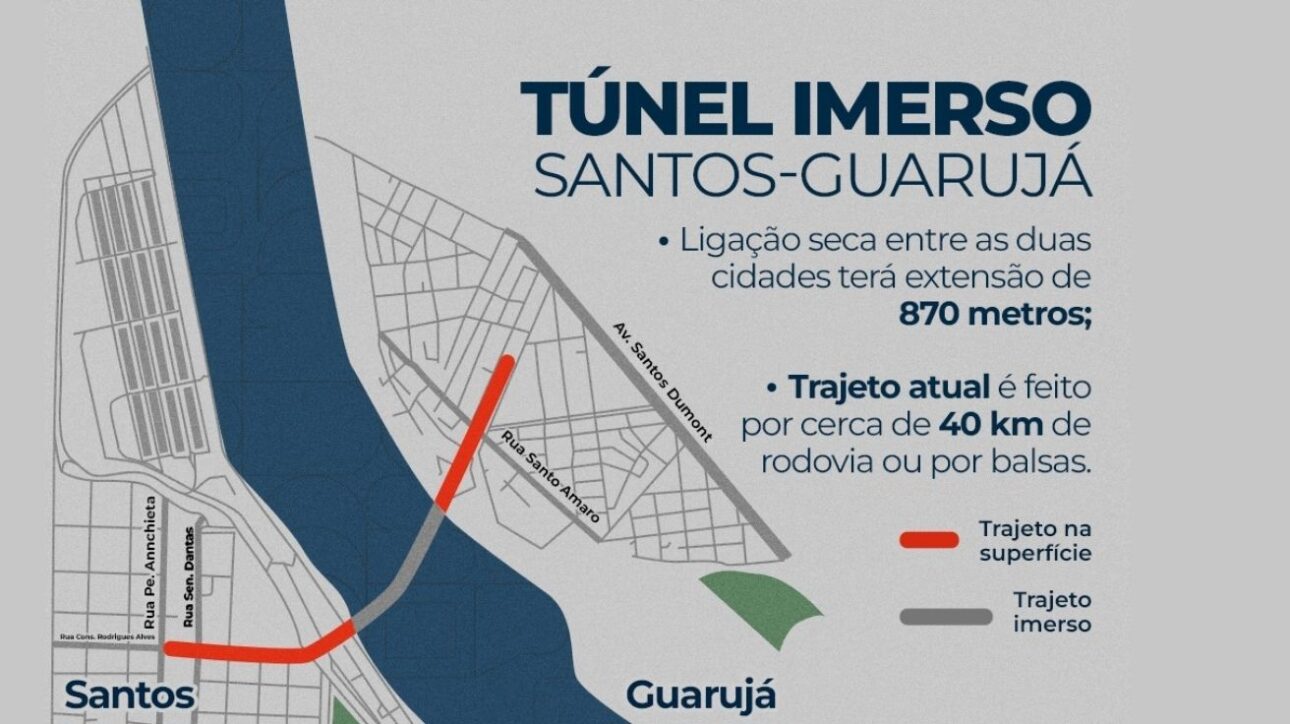
With a total length of 1.5 km, of which 870 meters will be submerged under the channel between Santos and Guarujá, the construction will utilize the immersed tunnel technique.
This method, widely used in European and Asian countries, involves the installation of precast modules on the seabed, requiring rigorous engineering to ensure the watertightness and safety of the structure.
Each module, built in a controlled environment, will be positioned by tugboats and welded in place, a process that requires millimeter precision to avoid leaks and ensure the durability of the work.
Impact on Mobility
Currently, the crossing between Santos and Guarujá is done by ferries that transport, on average, 23 thousand vehicles per day, in addition to approximately 7.7 thousand cyclists and 7.6 thousand pedestrians.
The average crossing time is currently about seven minutes, subject to variations and delays, especially during periods of high demand or adverse weather conditions.
With the opening of the tunnel, this time will be reduced to less than two minutes, promoting a significant change in local and regional mobility.
Additionally, the tunnel will offer greater predictability and safety, reducing the risks of accidents and optimizing the flow of vehicles, cyclists, and pedestrians.
Economic and Environmental Benefits
During the construction phase, the project is expected to generate around 9 thousand direct and indirect jobs, contributing to the local and regional economy.
In operation, the tunnel is expected to boost tourism, facilitate cargo transport, and support port logistics, especially in the Port of Santos, the largest in Latin America.
The infrastructure will also contribute to reducing pollutant gas emissions in the region, with estimates of a reduction of around 30% due to decreased waiting times and fuel burning on the ferries.
Dispute Among Consortiums
Two consortiums have already officially expressed interest in the tunnel concession: one formed by Marquise Infraestrutura and the Italian Webuild, and another led by the Chinese China Communications Construction Company (CCCC).
In addition, the China Railway Rolling Stock Corporation (CRRC), the Spanish Acciona, the Portuguese Mota-Engil, the Italian WeBuild, and the Brazilian Novonor (formerly Odebrecht) have also indicated interest in participating in the bidding.
According to state minister Silvio Costa Filho, the Chinese companies are willing to form consortiums and submit proposals within 30 days after the end of the roadshow, intensifying the competition.
Do you believe that the involvement of Chinese investors will accelerate the execution of the Santos-Guarujá Underwater Tunnel or could it create obstacles due to strategic and political issues?





-

Uma pessoa reagiu a isso.