





 Portuguese
  English
  Spanish
  3 min of reading
  0 comments


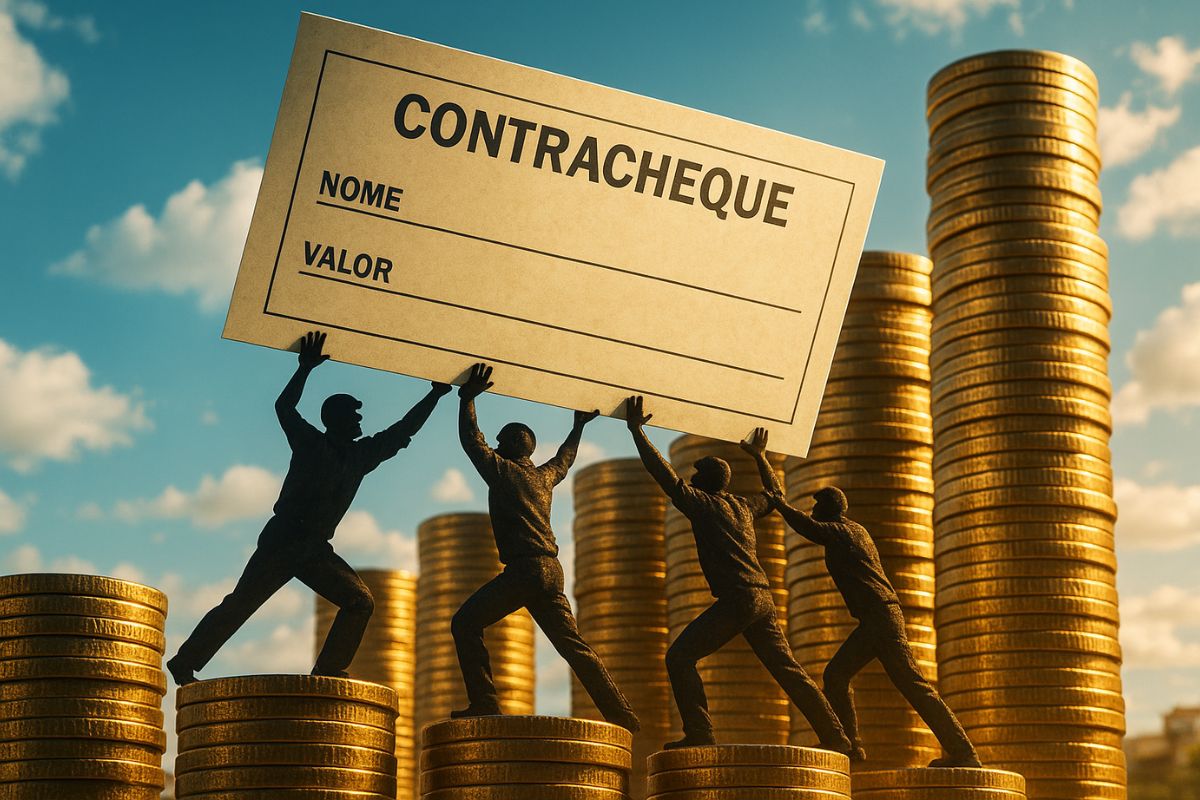
Minimum Wage Adjustment: See What the Increase Projections Are From 2026 to 2029. Federal Government Foresees Gradual Growth of the National Floor; Workers Can Expect a Salary of Up to R$ 1,925 in 2029.
According to the Ministry of Economy, the salary increase projections from 2026 to 2029 indicate that the amount will rise from R$ 1,630 in 2026 to R$ 1,925 in 2029, with intermediate annual adjustments. These numbers reflect expectations of inflation and real gains aimed at protecting workers’ income.
The minimum wage adjustment is one of the most relevant issues for millions of Brazilians, as it directly affects families’ purchasing power and the dynamics of the labor market. According to projections released by Valor Econômico, the Federal Government estimates that the floor will continue on a growth path between 2026 and 2029, in line with the valuation policy already established by law.
What Are the Salary Increase Projections From 2026 to 2029
The salary increase projections from 2026 to 2029 were calculated based on the National Consumer Price Index (INPC) and GDP variation, ensuring that the adjustment takes into account both accumulated inflation and economic growth.
-
Brazilian city bets on the business environment to generate jobs and attract investments in the energy sector — secretary reveals strategy at Macaé Energy 2026.

-
50 viaducts, 4 tunnels, 28 bridges, and 40 kilometers of bike paths: BR-262 in Espírito Santo will receive 8.6 billion reais for the largest engineering project in the state’s history, inspired by the Immigrant Highway in São Paulo.

-
Brazil produces too much clean energy and doesn’t know what to do with it: over 20% of solar and wind capacity was wasted in 2025 while investors flee and 509 renewable generation projects were abandoned in the last year.

-
Piauí will produce a new fuel that replaces diesel without needing to change anything in the truck’s engine and reduces pollutant gas emissions by half: truck drivers from all over the Northeast are already celebrating the news that will arrive later this decade.


- 2026: R$ 1,630
- 2027: R$ 1,724
- 2028: R$ 1,823
- 2029: R$ 1,925
This advancement represents not only an inflation correction but also an attempt to maintain real gains for workers, in accordance with Law No. 14,663/23, which resumed the policy of valuing the national floor.
Impacts of the Minimum Wage Adjustment on Daily Life
The minimum wage adjustment has a direct effect on household economy. For families that depend entirely on this amount, each increase means more resources for food, transportation, and basic bills.
In the labor market, the impact is also significant. The national floor serves as a reference for salary negotiations across various categories and influences the remuneration of social security and assistance benefits. Therefore, the salary increase projections from 2026 to 2029 also affect retirees and INSS beneficiaries.
Recent History and Comparison With Previous Years
In recent years, the minimum wage adjustment has maintained an upward trajectory, but at different levels. In 2025, the amount was set at R$ 1,518, after being set at R$ 1,412 in 2024 and R$ 1,320 in 2023.
The history shows that, in 20 years, the national floor jumped from R$ 300 in 2005 to over R$ 1,500 in 2025. This continuous growth reveals how the valuation policy sought to recover workers’ purchasing power in the face of inflation.
Prospects for Workers and Businesses
For workers, the salary increase projections from 2026 to 2029 represent greater predictability and the chance to better plan their family budget. For businesses, the impact falls on the payroll, requiring financial planning to absorb the additional costs without compromising competitiveness.
Economists emphasize that the challenge will be to maintain a balance between valuing work and fiscal sustainability. The increase in the national floor puts pressure on public spending, particularly in social security and assistance expenses.
The minimum wage adjustment with projections for increases from 2026 to 2029 offers a vision of stability for millions of Brazilians who depend on the national floor. However, the practical effects will depend on the government’s ability to balance economic growth, inflation, and fiscal responsibility.
And you, do you think the projections until 2029 will really guarantee quality of life for workers, or do they still fall short of what is necessary? Leave your opinion in the comments.








-

Uma pessoa reagiu a isso.