





 Portuguese
  English
  Spanish
  5 min of reading
  0 comments


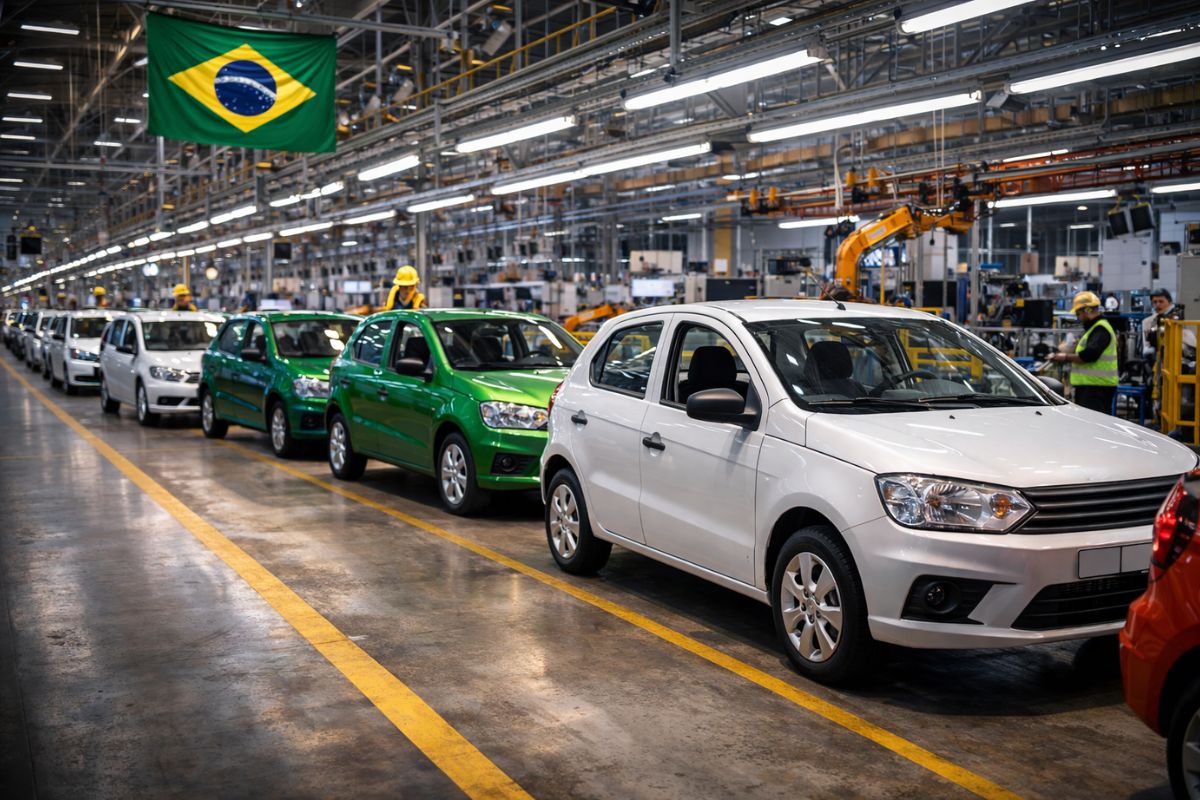
Published in the Official Gazette of the Union on January 22, the Federal Government’s ordinance sets average energy efficiency targets for the fleet, expands audits and tests, and may pressure manufacturers to redesign models, affecting the final price, in the logic of cheaper cars and consumption in the Brazilian market.
The debate about cheaper cars gained new momentum when the Federal Government published an ordinance in the Official Gazette of the Union on January 22, placing average energy efficiency targets for the fleet at the center of oversight over manufacturers. In practice, the rule replaces generic discourse with metrics, deadlines, and checks based on registration data.
The sensitive point is that the same ordinance that aims to reduce the driver’s energy cost may increase engineering, testing, and auditing costs, creating tension between sticker price and total cost of use. It is in this friction that the promise of cheaper cars will be demanded, even by those who do not intend to change their car anytime soon.
What the Ordinance Changes in the Daily Life of Manufacturers
The ordinance issued by the Ministry of Development, Industry, Trade and Services outlines a compliance roadmap: manufacturers need to demonstrate that new cars placed on the market consume less energy, whether fueled by gasoline, ethanol, or electricity.
-
The institute that trained the greatest aerospace engineers in Brazil has just opened its first campus outside São Paulo after 75 years: ITA Ceará will have R$ 445 million, new courses in energy and systems, and classes are expected to start in 2027.

-
Luciano Hang, owner of Havan, goes to Juiz de Fora after the tragedy in February, brings R$ 1 million, hands out R$ 2,000 cards, and donates up to R$ 15,000 to victims in the region.

-
The Brazilian passport allows legal residence in dozens of countries without the need for a prior visa, and most Brazilians are unaware that they can apply for residency directly upon arriving in nations in South America, Africa, and even Europe.

-
Petrobras sends a message to Brazilian truck drivers after fuel collapse and reveals plan to have 100% domestic diesel.


The focus shifts from an isolated model to the average of the set, as the indicator is the average energy efficiency of the fleet.
To support oversight, the Federal Government anticipates using registration data, requiring tests, and auditing the information presented.
This creates an environment in which compliance does not depend on narrative but on technical evidence.
When the ordinance mentions cheaper cars, it embeds a reasoning: if the car consumes less energy, the recurring expense is likely to decrease, even if the entry price does not follow at the same pace.
Why Energy Efficiency Became the Official Path to Cheaper Cars
The Federal Government does not outline a pricing table nor impose a maximum value per vehicle, but it attempts to shift the focus of the debate.
By pushing for energy efficiency, the ordinance seeks to make consumption no longer a driver issue but an industrial problem, with targets that affect the engineering and production line of manufacturers.
The logic is straightforward: a more efficient car promises to reduce the bill at gas stations over time, even if new technologies increase project costs.
The ordinance itself acknowledges the short-term ambiguity by mentioning that buying a car may become more expensive, even though fuel savings may show up later.
In this framework, cheaper cars mean lower total cost, not necessarily lower entry price.
Where Oversight Tightens and Who Might Feel It First
The ordinance states that oversight will be more rigorous, with checks, tests, and audits, and this changes internal incentives.
If the average energy efficiency of the fleet becomes the number that determines regulatory risk, manufacturers are likely to prioritize more efficient versions and reduce options for high-consumption models, which then begin to contaminate the average.
The consequence is that product strategy stops being just a portfolio and becomes fleet mathematics.
A launch that sells well can pull the average down or up, depending on consumption, affecting everything from engine calibration to decisions on versions and equipment.
In the Federal Government‘s narrative, this rearrangement paves the way for cheaper cars by forcing energy efficiency as a standard, not an exception.
What Changes for Consumers in Brazil, Even Without Seeing Prices Drop
In retail, the promise of cheaper cars tends to be perceived in two ways: in the purchase price and in the cost of use.
The ordinance tries to shift the second component to the center, by linking energy efficiency to less energy spending in daily life.
However, consumers may first feel indirect effects, such as a greater availability of efficient versions and less availability of less economical configurations, as manufacturers begin to protect the fleet average.
There is also a technology adoption factor that the Federal Government makes explicit: gasoline, ethanol, or electricity become alternatives, but public preference does not always follow the latest technology.
The government itself admits that electric cars have not yet fully captured popular preference, which places manufacturers in a dilemma: how to deliver energy efficiency at scale without disrupting the market’s pricing logic.
This is the real frontier of the discussion about cheaper cars.
The Detail That Defines Everything: Measure, Prove, and Sustain the Target
In regulatory terms, the heart of the ordinance is data governance.
If the Federal Government is going to assess performance based on registration and demand tests, the outcome depends on clear and reproducible criteria.
The same energy efficiency target can generate different behaviors, such as the anticipation of technologies in some segments and the simplification of offerings in others, as manufacturers try to protect the average.
For manufacturers, this means transforming energy efficiency into a design requirement from the beginning, not just in the final verification stage.
For the Federal Government, it means sustaining the credibility of oversight with consistent audits, as the promise of cheaper cars depends on what can be verified and compared.
Without method, the ordinance becomes rhetoric; with method, it becomes continuous economic pressure.
The ordinance places the Federal Government at the center of the discussion about cheaper cars by replacing slogans with energy efficiency and audits on manufacturers.
The question that remains is who pays the bill for the adjustment at the beginning and who feels the savings at the end. In your city, what weighs more in the purchase decision: entry price, fuel expenditure, maintenance, or technology? And would you accept fewer options to gain energy efficiency?










-

-

-

3 pessoas reagiram a isso.