





 Portuguese
  English
  Spanish
  2 min of reading


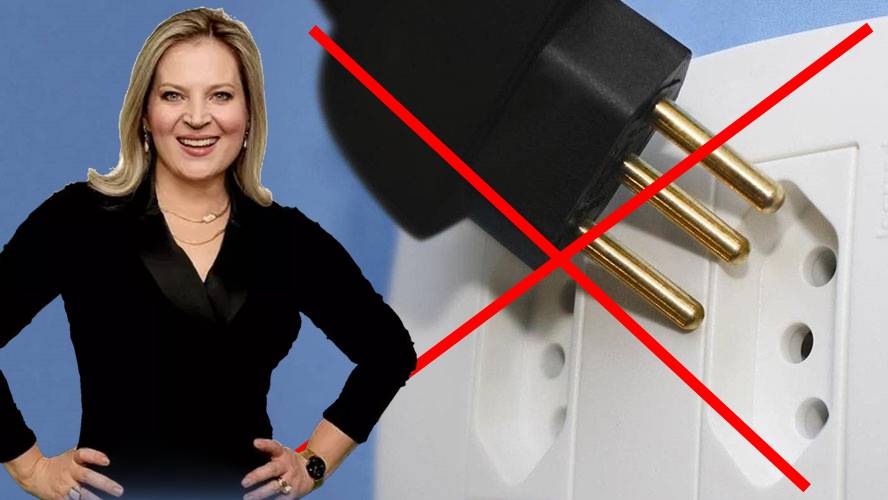
Federal Deputy Joice Hasselmann Polls on Twitter, and Standard Adopted Since 2011 by Inmetro May Be Coming to an End
Federal Deputy Joice Hasselmann (PSL/SP) proposed a poll on Twitter: the end of the three-pin plug. The poll asked who was in favor and who was against.
The poll was in the following format, “Government wants to end the THREE-PIN PLUG model adopted since 2011. Do you agree?”.
On the morning of this Monday (06/17), the poll had already received over 32 thousand votes, with 63% in favor of ending the third pin in the plug.
According to the Special Secretary for Productivity, Employment, and Competitiveness, Carlos Alexandre Jorge Da Costa, three-pin plugs affect competition and productivity.
Recall the Case
In 2011, the Brazilian Standard for Plugs and Sockets was implemented in Brazil and regulated by Inmetro. Our market began to sell only two models of plugs and sockets.
-
While Brazil wants to end the 6×1 work shift, the president of Argentina wants 12 hours for his workers, increasing political tension in the country.

-
The village where two rivers run side by side without mixing in Santarém and Alter do Chão reveals some of the most beautiful freshwater beaches on the planet.
-
Mars is accelerating, and scientists have discovered that the planet’s day is getting shorter, revealing surprising signs of internal activity.

-
Artemis 2 is set to launch on April 1 at 7:24 PM to orbit the Moon with four astronauts, but a class X solar flare and coronal mass ejection could interfere with communications and threaten the launch.


According to the new standard, plugs now have two or three round pins, and sockets have three openings of 4 mm or 4.8 mm, depending on the nominal current, 10 amperes for the thinner plugs and 20 amperes for the thicker plugs (4.8 mm).
The variation in plug diameter is a source of savings, as only equipment that consumes more would require a more robust, and thus more expensive, socket, in addition to prioritizing consumer safety by preventing the connection of high-power equipment to a point not designed for them.
The three-pin plug was designed to make it difficult for fingers to come into contact with the electrical current, and the third pin is used in devices that require grounding (such as air conditioners, refrigerators, computers, etc.)
Consumer safety was one of the most significant factors considered in implementing the standard in 2011. Over the last ten years, DataSUS recorded 13,776 hospitalizations with 379 deaths and an additional 15,418 immediate deaths resulting from accidents related to exposure to electrical currents in homes, schools, nursing homes, and workplaces.
Additionally, among the injured, electric shock is the third leading cause of child mortality.
Another safety issue before standardization in 2011 was the use of fragile adapters to connect devices, as consumers dealt with more than 12 types of plugs and eight types of sockets.








Seja o primeiro a reagir!